Do You Really Need a Whole House Generator? Here’s the Truth
It is 7:00 PM on a Tuesday. Marcus just finished grilling dinner for his family, and the kids are settling in for homework when the sky turns a bruised shade of purple. A sudden crack of thunder echoes through the neighborhood, and just like that, the lights flicker and die. In the sudden silence, the only sound is the rain hitting the roof and the frustrated sigh from the living room because the Wi-Fi just cut out mid-download.
For many homeowners, this is a minor annoyance. For others: those with a sump pump in a flood-prone basement or a family member who relies on a CPAP machine: it’s the start of a high-stress race against the clock. This is usually the moment people start asking themselves: "Do I really need a whole-house generator?"
The truth is, whole-house generators are a significant investment, often costing as much as a used car. This isn't about scaring anyone into a purchase; it’s about looking at your specific lifestyle, your home’s vulnerabilities, and your budget to see if the math actually adds up.
Understanding the "Whole House" Concept
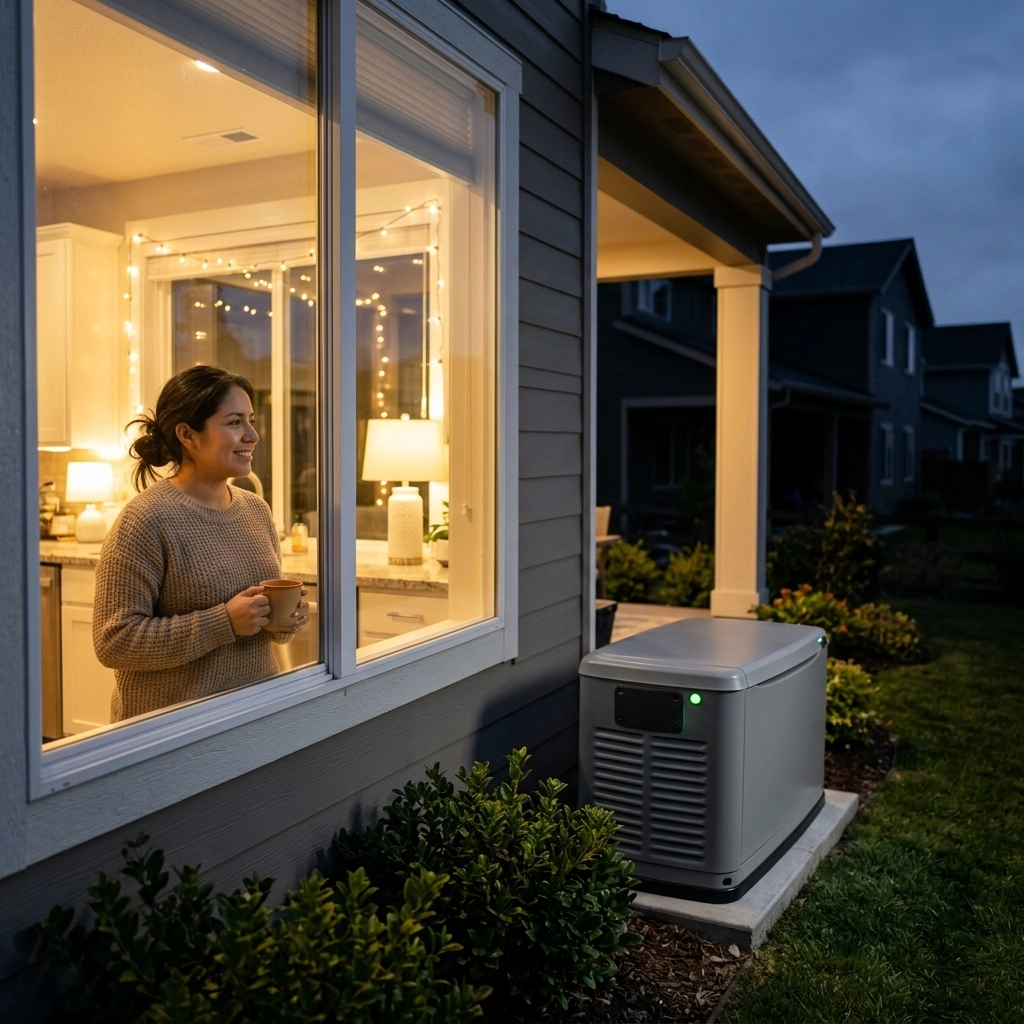
Before diving into whether you need one, it’s important to understand what we’re actually talking about. A whole-house generator, also known as a standby generator, is a permanent fixture installed outside your home, much like an air conditioning unit.
Here is what that really means: unlike a portable generator that you have to drag out of the garage and fill with gasoline, a standby generator is wired directly into your home’s electrical panel and connected to a fuel source like natural gas or liquid propane. When the power from the utility company stops, a device called a transfer switch detects the loss and tells the generator to kick on. Within seconds, your lights are back on without you ever lifting a finger.
Think of it like this: a portable generator is like a window AC unit: it’s great for one room and requires a lot of manual setup. A standby generator is like central air: it’s built-in, covers everything, and works automatically.

The Real Cost: Breaking Down the Numbers
Most people think a generator costs a couple of thousand dollars. While you can get a portable unit for that price, a whole-house standby system is a different beast entirely.
On average, homeowners can expect to spend anywhere from $5,000 to over $25,000 for the unit and installation. Why the huge range? It comes down to two things: power capacity and installation complexity.
- Capacity (Wattage): A generator that only keeps your fridge and a few lights on is much cheaper than one designed to run two 5-ton AC units, the electric oven, and the pool pump simultaneously.
- Installation: This isn't just a "plug and play" situation. You need a professional to install a sub-panel, a transfer switch, and potentially run new gas lines to the unit. If your home’s electrical service is outdated, you might even need an electrical panel upgrade before the generator can even be connected.
While the price tag is high, it can increase property value by 3% to 5%. In many cases, it’s an investment that pays for itself when it comes time to sell, especially in areas where the grid is known to be unreliable.
When a Generator Transitions from "Want" to "Need"
For some, a generator is a luxury. For others, it’s a critical safety net. Let’s look at a few scenarios where the "truth" leans heavily toward needing one.
1. Medical Dependencies
If you or a loved one uses medical equipment like an oxygen concentrator, a home dialysis machine, or a refrigerated medication system, power isn't a convenience: it's a lifeline. Tasha, a homeowner who cares for her elderly mother, found herself in this position last summer. When a storm knocked out power for three days, the stress of trying to keep her mother’s insulin cold and her nebulizer running was enough to make her realize that a backup system was no longer optional.
2. High-Risk Home Infrastructure
If your home relies on a sump pump to keep the basement dry, a power outage during a rainstorm is a recipe for a $30,000 flood. Most sump pumps have a battery backup, but those usually only last a few hours. A standby generator ensures that even if the power is out for three days, your basement stays dry.
3. Remote Work and Connectivity
In today’s world, many of us work from home. A day without power isn't just a day in the dark; it’s a lost day of wages or a missed deadline. If your livelihood depends on a stable internet connection and a powered-up computer, a generator acts as "income insurance."
Common Misconceptions About Maintenance
Homeowners often believe that once a generator is installed, they never have to think about it again. This is a dangerous myth. A generator is an engine, much like the one in your car. It requires oil changes, spark plug replacements, and regular "exercise" runs to ensure the battery stays charged and the parts remain lubricated.
If you aren't prepared to pay for an annual maintenance contract or perform the checks yourself, the generator might not start when you actually need it. Most units are programmed to run a "self-test" once a week for about 15 minutes. This is a signal to you that the system is healthy. If you don't hear that weekly hum, it’s a warning that something is wrong.
Is Your Current System Ready?
Before you even pick out a generator model, you have to look at your home’s current "health." A common mistake is trying to hook a high-tech standby generator up to an old, decaying electrical system. It’s like putting a racing engine into a car with a rusted-out frame.
You should check for signs your panel is struggling before making the jump. If your breakers trip frequently or your lights flicker when the microwave turns on, your home’s wiring needs attention first. You might find that choosing the right pro for an initial inspection saves you thousands in potential damage later.
Alternatives to the Whole-House System
If the $15,000 price tag makes your stomach churn, you aren't alone. There are middle-ground options that provide some protection without the massive investment.
- Portable Generators with a Manual Transfer Switch: This is a "best of both worlds" approach. You buy a high-quality portable generator and have an electrician install a manual transfer switch on your home. When the power goes out, you plug the generator into the switch. This allows you to power specific circuits (like the fridge and lights) safely without using dangerous extension cords.
- Solar Battery Backups: These are becoming more popular. They are silent and don't require fuel, but they often have a higher upfront cost and less "runtime" than a gas-powered generator during prolonged outages.
The Checklist: Do You Really Need One?
To find your truth, ask yourself these five questions:
- How often does my power go out? If it’s once every three years for an hour, you don’t need a standby generator. If it’s three times a year for six hours or more, you’re a prime candidate.
- What is the "cost of failure"? Calculate the value of the food in your freezer, the cost of a flooded basement, or the loss of a day’s work. If that number is high, the generator is a smart hedge.
- Do I have the space and fuel access? You need a spot at least five feet from windows and doors. You also need a natural gas line or a spot for a large propane tank.
- How long do I plan to live here? If you’re moving in two years, you won't see the return on investment. If this is your "forever home," the peace of mind is worth much more.
- Am I okay with manual labor? If you are physically unable to move a 150-pound portable generator and pull-start it in the rain, an automatic standby system is the only viable option.
Final Thoughts
A whole-house generator isn't a necessity for everyone. For many, it's an expensive "just in case" tool that sits idle 99% of the year. But for families like Marcus’s or Tasha’s, it is the difference between a minor inconvenience and a total household crisis.
The goal isn't to live in fear of the next storm, but to understand your home’s limits. Whether you decide to go with a full standby system, a portable backup, or simply a well-stocked candle drawer, being informed is the first step toward staying safe. If you're curious about how your neighbors are preparing, you can read more about why people are bracing for the next big storm.
Take the time to assess your needs realistically. The best time to decide if you need a generator is while the lights are still on.
Key Takeaway: A whole-house generator is an insurance policy for your comfort and safety; evaluate your medical needs, home flood risks, and budget before committing to the investment.