Outdoor Lighting Installation Gwinnett County: Boosting Curb Appeal and Safety at Once
Picture this: Marcus and Tasha Jackson are returning home to Lawrenceville after a long Saturday visiting family. It’s late, the sun has been down for hours, and as they pull into their driveway, the house is a dark silhouette against the night sky. Marcus is carrying a sleeping toddler, and Tasha is juggling three bags and her car keys. They’re navigating the front walkway by the dim glow of a smartphone flashlight, hoping they don't trip over a stray toy or a loose paver.
We’ve all been there. That feeling of fumbling in the dark isn't just annoying; it’s a missed opportunity to make your home feel welcoming and secure. When we talk about outdoor lighting installation Gwinnett County homeowners often think it’s a luxury meant only for those massive estates in Sugarloaf. But the truth is, professional lighting is one of the most effective ways to upgrade your home’s personality and protection at the same time.
Before we dive into the "how-to," let’s clear the air: this isn't about scaring anyone. You’ll hear a lot of talk about "security lighting" as a way to ward off intruders, and while that’s true, good lighting is more about providing peace of mind and preventing accidents than it is about living in fear. It’s about being able to see your path clearly and feeling a sense of pride when you pull into your driveway.
The Magic of Curb Appeal: Making Your Home the Star of the Block
Most homeowners believe that the only way to improve curb appeal is through expensive landscaping or a fresh coat of paint. While those help, lighting is the "secret sauce" that makes those investments pop after the sun goes down. Think of it like a gallery; you wouldn't hang a beautiful painting in a dark room, would you?
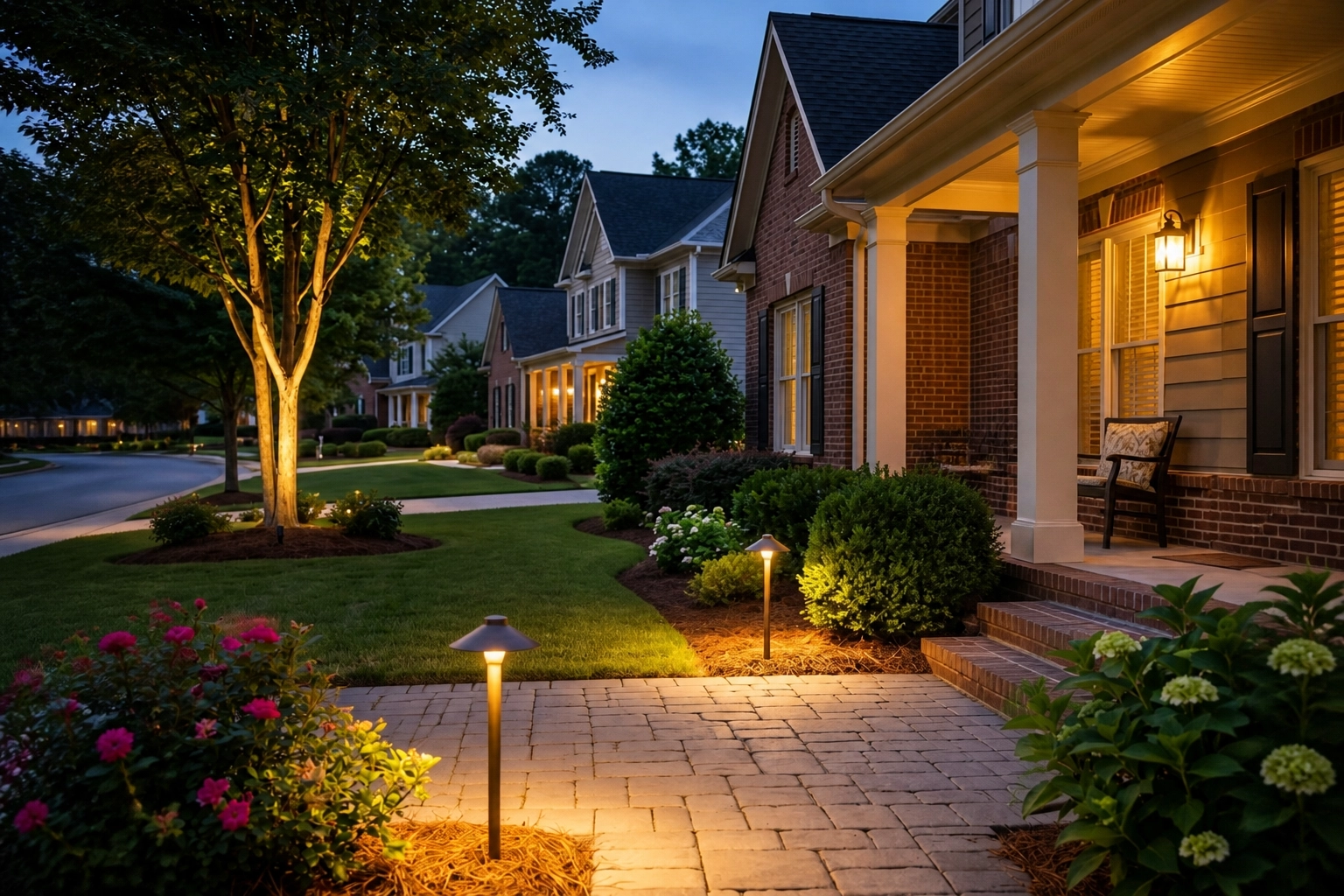
We see lighting as an art form. Accent lighting highlights the unique architectural features of your home. If you have beautiful stone siding or a majestic oak tree in the front yard, accent lights act like a spotlight.
Here’s what that really means: instead of a flat, dark exterior, we create depth. We use "uplighting" to cast light from the ground up, which makes your home look taller and more grand. We might use "moonlighting," where we hide fixtures high up in trees to create a soft, natural glow that filters through the branches. It’s subtle, elegant, and completely transforms the vibe of your property.

Safety First: Why Seeing Where You Step Matters
While aesthetics are the fun part, safety is the foundation. Every year, thousands of people end up with "preventable" injuries simply because they couldn't see a step, a curb, or a patch of ice.
Pathway lighting is the unsung hero of home safety. These are the small fixtures that line your driveway and walkways. Many people think they need a landing strip's worth of bright lights to be safe, but that’s a common misconception. Too much light actually creates "glare," which can temporarily blind you and make shadows even darker.
Professional outdoor lighting installation Gwinnett County involves finding the "sweet spot." We want a gentle overlap of light that guides your feet without overwhelming your eyes. It’s about creating a clear "visual map" of your property.
Security Lighting: The Deterrent That Doesn't Have to Be Ugly
Let’s talk about security lighting. When people hear that term, they usually think of those harsh, blinding floodlights that click on and make you feel like you're in a prison yard. Nobody wants that.
Modern security lighting is much more sophisticated. We often recommend motion-sensor lighting for areas like side alleys, garage doors, and back decks. These lights only kick in when movement is detected.
Think of motion sensors like a silent alarm. They provide a "signal" that something is moving. For a homeowner, it’s a helpful way to see the dog in the backyard or know when a guest has arrived. For anyone who shouldn't be there, it’s a clear sign that the house is being "watched."
These systems can be integrated so they blend in with your home’s design. Smart controls can also let you manage security lights right from your phone. Whether you’re in Duluth or on vacation in Florida, you can check your lights and ensure everything is as it should be.

Breaking Down the Technical Stuff (In Plain English)
Electrical work can feel like a foreign language. Here are a few terms you might hear us use during a consultation and what they actually mean for you:
- Low-Voltage Lighting: Most modern landscape lighting is "low-voltage." This means it runs on 12 volts instead of the 120 volts found in your wall outlets. Here’s the analogy: if your standard home wiring is like a high-pressure fire hose, low-voltage lighting is like a garden misting system. It’s safer for outdoor use and much more energy-efficient.
- The Transformer: This is the "brain" of your lighting system. It takes the high-voltage power from your house and "transforms" it down to the lower voltage your lights need. We always recommend a high-quality transformer that can handle the "load" (the total amount of power) of all your lights combined.
- LED vs. Halogen: You’ve probably heard of LEDs. In the past, people avoided them because the light felt "cold" or blue. Nowadays, LEDs can mimic the warm, golden glow of old-school bulbs while using about 80% less energy. Plus, they last for years, meaning you won’t be climbing ladders to change bulbs every few months.
- GFCI Protection: This stands for Ground Fault Circuit Interrupter. Think of it as a super-fast safety "kill switch." If water gets into a fixture or a wire is nicked, the GFCI shuts off the power instantly to prevent shocks. It’s a non-negotiable for any outdoor electrical work.
Common Misconceptions About Outdoor Lighting
- "I can just do it myself with some solar lights from a big-box store."
We get the appeal of DIY, but solar stakes are often disappointing. They rely entirely on the sun, which can be hit-or-miss in Georgia's rainy seasons, and they usually aren't bright enough to provide real safety. Hard-wired systems installed by a qualified professional provide consistent, reliable light every single night. - "More light equals more safety."
As we mentioned earlier, too much light creates deep, pitch-black shadows where people can hide. It’s better to have low-level, even lighting across the whole yard than one giant blast of light in the center. - "It’s going to make my electric bill skyrocket."
Thanks to high-efficiency LEDs and smart timers, the cost to run a full landscape lighting system is often less than the cost of a couple of lattes a month.

Why a Professional Touch Matters
You might be tempted to call a landscaper for your lighting, but remember: this is electrical work. Wiring that sits in the dirt and is exposed to Georgia’s humidity and heavy rains needs to be handled correctly.
This isn’t just "plug and play." A thorough safety inspection of your current electrical panel helps confirm it can handle the new additions. We’ve seen many DIY jobs where wires were buried too shallowly, only to be cut by a lawnmower a week later.
Local codes matter, and so do site-specific conditions like Georgia’s red clay soil.
Actionable Tips for Your Lighting Project
If you’re ready to start thinking about your home’s lighting, here’s a quick checklist of do’s and don’ts:
- DO walk around your house at night with a high-powered flashlight. Shine it on different areas to see what looks good and where the "trip hazards" are.
- DON'T point lights directly at your neighbors’ windows. "Light pollution" is a real thing, and being a good neighbor means keeping your light on your own property.
- DO consider a timer or a photocell. A photocell automatically turns your lights on at dusk and off at dawn, so you never have to remember a switch.
- DON'T ignore flickering lights. A flicker is a "signal" that there might be a loose connection or a failing transformer. It’s better to address it now than wait for the whole system to go dark.

Wrapping Up: Lighting as an Investment
At the end of the day, outdoor lighting is an investment in your home’s value and your family’s well-being. When Marcus and Tasha finally had a professional lighting system installed, their late-night arrivals changed completely. Now, as they turn onto their street, their home glows warmly, the path to the door is clear and bright, and they can focus on getting that sleeping toddler into bed without a single trip or stumble.
Your home is your sanctuary. Let’s make sure it looks its best and keeps you safe, no matter what time you get home.
Key Takeaway: Professional outdoor lighting combines the "wow factor" of curb appeal with the practical necessity of safety, creating a home that is as secure as it is beautiful.