The Atlanta Homeowner’s “Don’t Get Zapped” Guide: 5 Signs Your Panel is Screaming for an Upgrade
Picture this: It’s a humid July evening in Southwest Atlanta. Marcus and Tasha are hosting Sunday dinner for the family. The air conditioning is humming, the electric range is glowing, and Tasha just plugged in her high-powered air fryer to finish the wings. Suddenly: click: the kitchen goes dark, the AC cuts out, and the hum of the house falls silent.
Marcus sighs, grabs a flashlight, and heads to the garage to flip a breaker. Again.
If this scenario feels familiar, you aren’t alone. Many homeowners in metro Atlanta are living with electrical systems designed for the 1980s while trying to power a 2026 lifestyle. Our goal today isn't to scare you; it’s to help you understand the silent language of your home’s electrical system. Your electrical panel is essentially the "brain" of your house. When it starts to struggle, it doesn't just fail overnight: it sends out signals.
At Radiant Electrical, we believe an informed homeowner is a safe homeowner. Let’s look at the five major signs that your panel is ready for an electrical panel upgrade in Atlanta.
1. The "Safety Switch" is Working Overtime
Most people think a tripping breaker is a nuisance. In reality, a tripping breaker is a hero. It is a safety switch designed to cut off the flow of electricity when a circuit is overloaded. If it didn't trip, the wires would get hot enough to start a fire.
However, if you find yourself visiting your electrical panel once a week (or once a day), that hero is exhausted. Frequent tripping is a signal that your home’s demand for power has exceeded what the panel can safely provide. This is especially common in older homes where the original service was only 100 amps, but modern living often requires 200 amps.
Here’s what that really means: Imagine trying to force a gallon of water through a straw every second. Eventually, the straw is going to burst. Your breakers are tripping to prevent that "burst" from happening in your walls. If you’re constantly resetting switches, it’s a clear sign you need a professional home electrical repair in Atlanta to assess your total load.

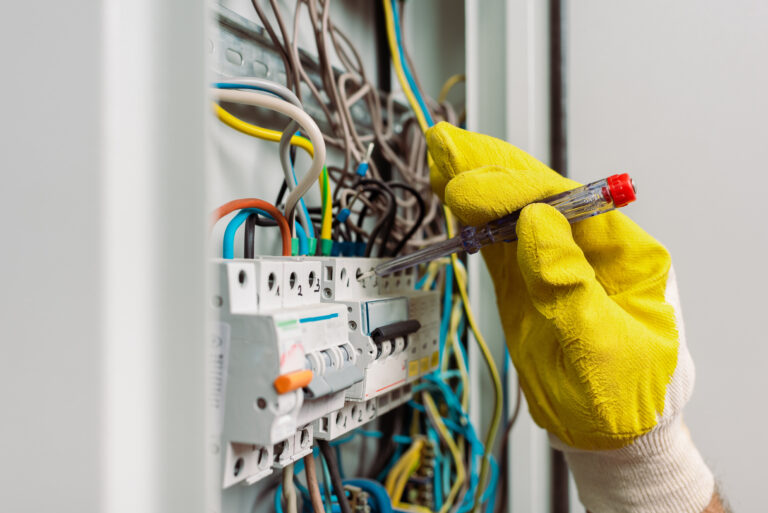
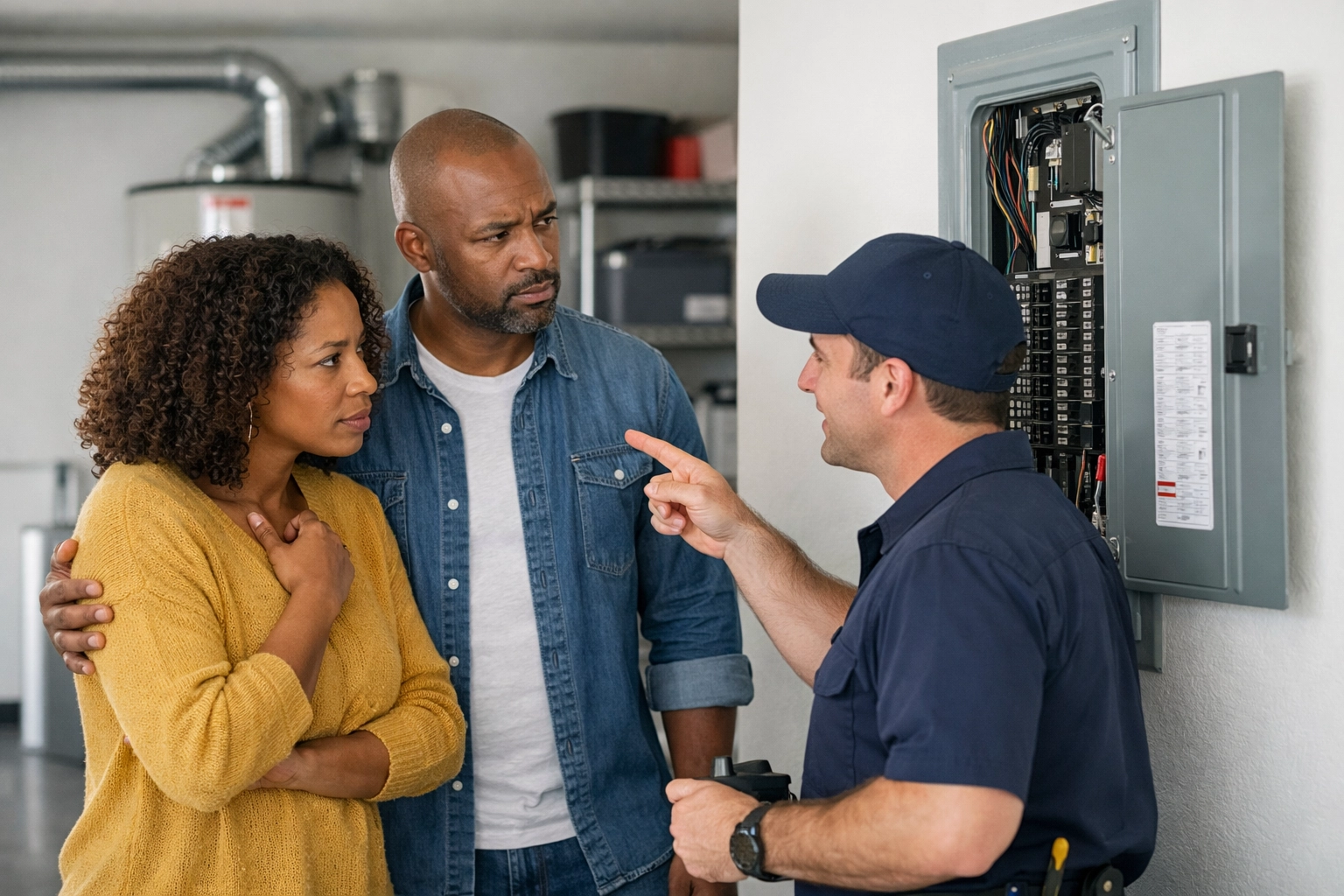
Caption: A licensed electrician explains what the breakers mean during a home safety check.
2. The "Ghost" in the Lights: Dimming and Flickering
Have you ever noticed the lights in the living room dip for a split second when the refrigerator compressor kicks on? Or perhaps the bathroom vanity lights flicker whenever you use the hair dryer?
Homeowners often believe this is just a "quirk" of an older house. It isn't. It’s a phenomenon called a "voltage drop." When a high-draw appliance starts up, it demands a massive "gulp" of electricity. If your panel can’t distribute that power quickly enough, it steals it from other circuits: like your lights.
This tug-of-war for power puts stress on your sensitive electronics. Computers, smart TVs, and LED bulbs are particularly sensitive to these fluctuations. According to the National Fire Protection Association (NFPA), electrical distribution equipment is a leading cause of home fires. Preventing these fluctuations isn't just about convenience; it’s about protecting your investment. For more on preventing these issues, check out these 10 pro electrical tips to keep your metro Atlanta home safe.
3. Physical Red Flags: Heat, Smells, and Scorch Marks
This is the one sign where we move from "you should consider an upgrade" to "you should call us immediately."
Electricity creates heat by nature, but your electrical panel is designed to stay cool. If you touch the door of your panel and it feels warm to the touch, or if you notice a faint smell of ozone or "burning plastic" near the box, your system is in distress.
Here’s what that really means: Think of a stovetop coil. When electricity moves through resistance, it glows red hot. If a wire inside your panel is loose or if a breaker is failing, it creates resistance. That resistance generates heat. If that heat gets high enough, it can melt the plastic insulation on your wires or even scorch the metal bus bar (the main power rail) inside the panel.
If you see brownish or blackish marks around the breakers, do not attempt a DIY fix. This is a critical safety hazard that requires an expert in home electrical repair in Atlanta.

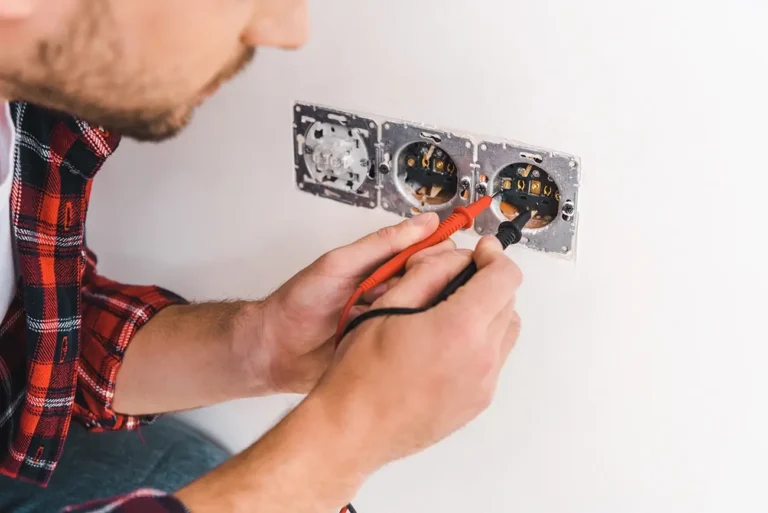
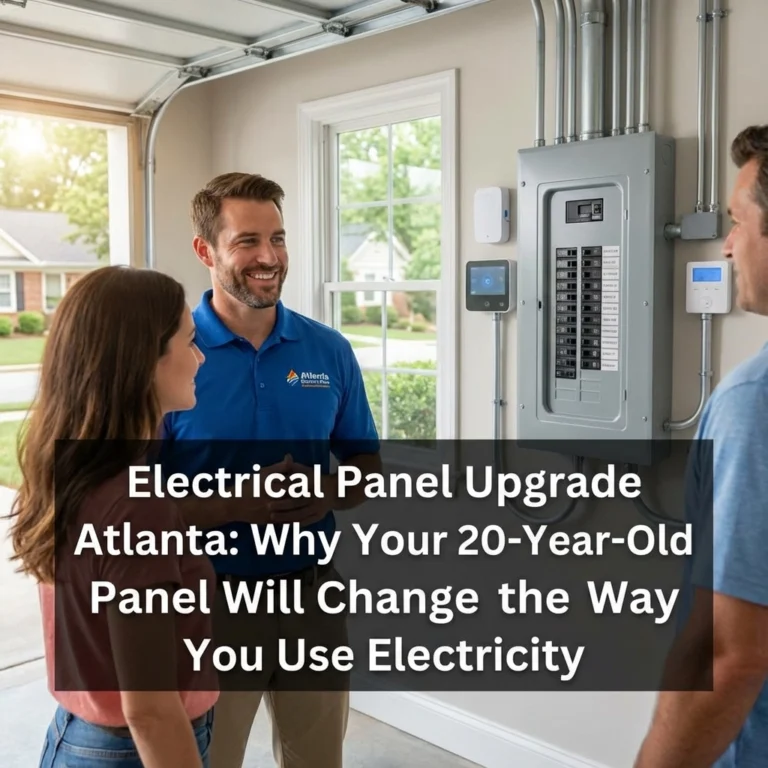
Caption: Reviewing panel wiring and connections with a homeowner is a key part of a safe upgrade plan.
4. Your Home Still Uses "Vintage" Technology
If your home was built before the mid-1990s and has never had an electrical overhaul, your panel is likely a "vintage" model. While we love a mid-century modern aesthetic, we don't love mid-century modern wiring.
Specific brands of panels from the 70s and 80s, such as Federal Pacific Electric (FPE) or Zinsco, are notorious among electricians for failing to trip even when they should. This creates a massive fire risk because the system allows the wires to overheat without cutting the power.
Furthermore, Georgia's electrical standards have changed significantly. As of 2026, there are new requirements for surge protection and Arc Fault Circuit Interrupters (AFCIs). If your panel doesn't have these, you're missing out on the latest safety technology. You can learn more about how these changes affect you in our guide to Georgia's 2026 electrical code changes.
The 25-Year Rule: Most electrical panels have a lifespan of about 25 to 30 years. If yours is older than a Quarter Pounder with Cheese, it’s time for an evaluation.
5. You’re Leveling Up Your Lifestyle
Sometimes, the sign that you need an electrical panel upgrade in Atlanta isn't a failure: it's progress.
Are you planning to install an EV charger in your Marietta garage? Are you adding a hot tub to the deck? Maybe you’re finally finishing the basement to create a home cinema. These upgrades add significant "load" to your home.
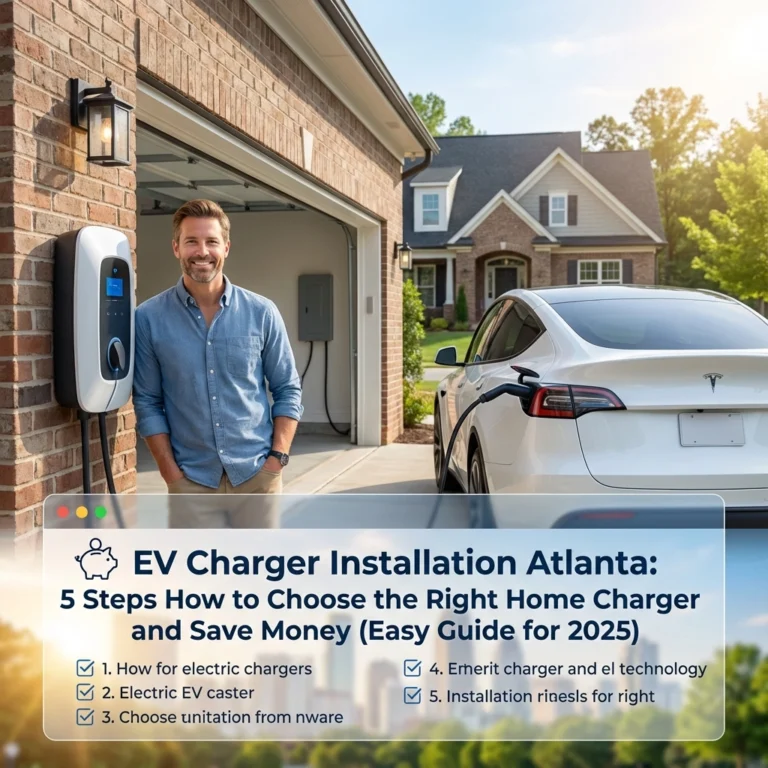
Most EV chargers, for example, require a dedicated 40 to 60-amp circuit. If your current panel is already near its 100-amp or 150-amp limit, adding a car charger is like trying to add a second story to a house without reinforcing the foundation. Before you buy that Tesla or Rivian, you need to ask: Is your garage ready for an EV charger installation?

Caption: EV charging is a big electrical load—confirming panel capacity first keeps your home safe and code-compliant.
Why This Matters Right Now
In the Metro Atlanta area, we deal with intense summer heat and unpredictable spring storms. Our electrical systems work harder than in many other parts of the country. A struggling panel doesn't just put your safety at risk; it also hurts your wallet. When your electrical system is inefficient, it generates more heat and wastes energy, leading to higher monthly bills. Upgrading your panel is one of the 7 ways to slash your Atlanta electric bill.
The Radiant Electrical Approach: Education Over Ego
We know that calling an electrician can feel daunting. You might worry about the cost or whether someone is going to try to sell you something you don't need.
At Radiant Electrical, our process is transparent:
- Load Calculation: We don't guess. We calculate exactly how much power your home uses.
- Safety Inspection: We check for those "hidden" signs of heat and wear that aren't visible to the naked eye.
- Code Compliance: We ensure your home meets the latest 2026 Georgia standards to protect your property value and insurance eligibility.
If you’re wondering about the investment, we’ve broken down the cost to rewire or upgrade a house in Metro Atlanta so you can plan your budget with confidence.
Clear Takeaway:
Your electrical panel shouldn't be a source of stress. If you’re experiencing flickering lights, frequent trips, or you’re simply living in a home with an aging system, the "signals" are there for a reason. Listening to them now prevents an emergency later.
Ready to give your home the "brain" it deserves? Contact Radiant Electrical today for a comprehensive panel evaluation. We'll help you decide if you really need an electrical panel upgrade and get your home running safely and efficiently.