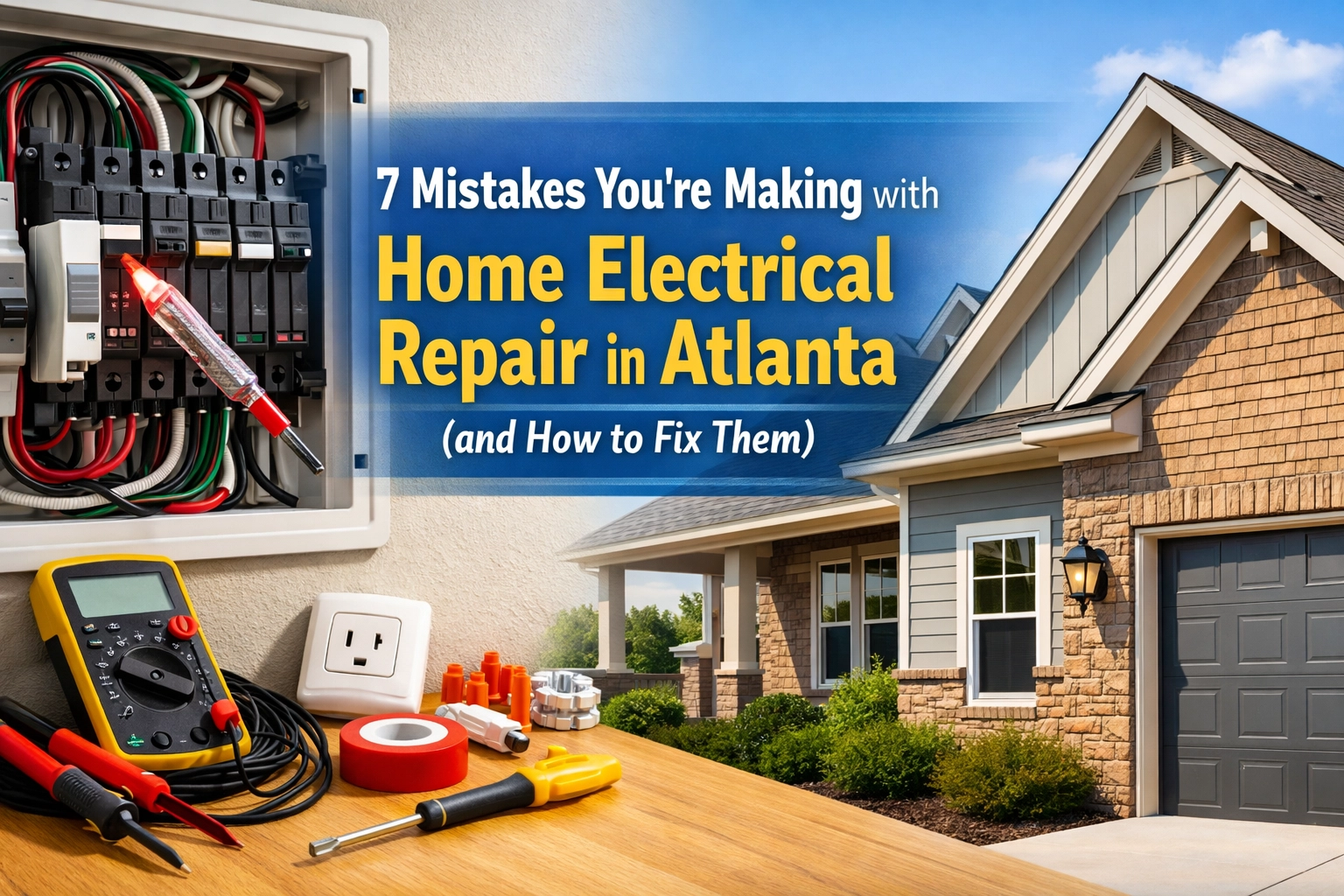
7 Mistakes You’re Making with Home Electrical Repair in Atlanta (and How to Fix Them)
You just moved into a beautiful bungalow in Kirkwood or perhaps a modern townhome in South Fulton. You’re setting up your home office, and suddenly, the lights flicker. Or maybe you’re like Marcus, a homeowner in Cascade Heights who spent his Saturday trying to install a new smart dimmer switch, only to find that the outlet sparked the moment he turned the breaker back on.
Situations like these are common for any home electrical repair in Atlanta. Whether you are dealing with aging infrastructure in historic neighborhoods or modern demands on newer systems, DIY electrical work often feels like a quick way to save money. However, small errors can lead to big problems.
Before we dive in, let’s get one thing straight: this isn’t about scaring anyone. We want you to feel empowered and informed about how your home works. Most electrical issues aren’t catastrophic failures; they are simply “signals” from your home that something needs attention. By understanding these seven common mistakes, you can keep your family safe and ensure your electrical system runs smoothly.
1. Overloading Circuits with High-Power Appliances
Imagine your home’s electrical system is a series of highways. Each “highway” (or circuit) has a speed limit (the amperage). When you try to cram too many “cars” (appliances) onto that highway at once, you get a traffic jam, which, in electrical terms, means a tripped breaker or overheating wires.
Most people think that if a plug fits into an outlet, it’s safe to use. Homeowners often believe that a power strip turns one outlet into six independent ones. In reality, that power strip is still drawing from the same single circuit.
The Mistake: Plugging an air fryer, a microwave, and a high-end coffee maker into the same kitchen circuit. This is a common issue in older Atlanta homes where the kitchen might only have one or two 15-amp circuits.
The Fix: Spread the load. High-wattage appliances (anything that gets hot, like a toaster or space heater) should ideally have their own dedicated space. If you find yourself constantly resetting breakers, it’s a signal that you need a professional home electrical repair in Atlanta to install additional circuits.
2. Reversing Hot and Neutral Wires (Reversed Polarity)
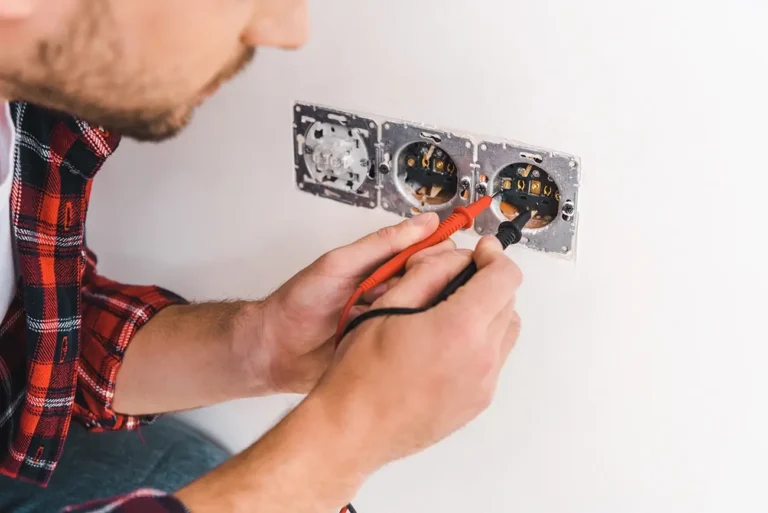
This sounds technical, but here is what it really means: Electricity flows in a loop. It comes in through the “hot” wire and returns through the “neutral” wire. Reversing them is like putting batteries in a remote control backward, except with much higher stakes.
The Mistake: Connecting the black (hot) wire to the silver screw and the white (neutral) wire to the brass screw on an outlet.
The Danger: The device will still “work,” which is why this mistake is so common. However, the internal parts of the lamp or appliance remain “energized” even when it’s turned off. If you go to change a lightbulb in a lamp plugged into a reversed outlet, you could receive a significant shock even if the switch is off.
The Fix: Remember the golden rule of DIY wiring: Brass to Black. The brass-colored screw on an outlet always gets the black (hot) wire. The silver screw always gets the white (neutral) wire. You can buy a simple plug-in outlet tester at any hardware store in Gwinnett County to check your home for this specific issue.
3. Attempting Repairs While the Power is Still “Live”
We’ve all been there, you’re in a rush, and you think, “I’ll just swap this outlet quickly without walking all the way down to the basement to hit the breaker.”
The Mistake: Working on a “hot” circuit. Even professional electricians prefer to work on de-energized systems whenever possible.
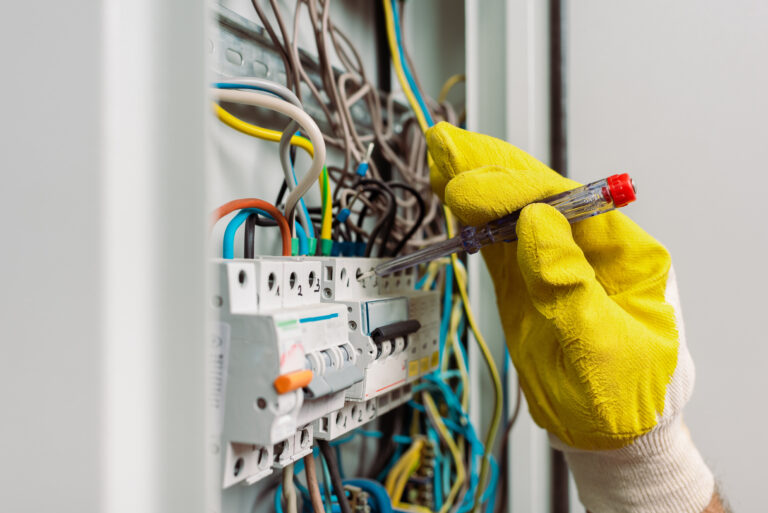
The Fix: Never trust a wall switch to “turn off” the power to a fixture. Always shut off the main breaker for that specific zone. Furthermore, use a non-contact voltage tester. This is a small tool that looks like a pen; when you hold it near a wire, it beeps or lights up if there is electricity present. It is the most important $20 investment a homeowner can make.
4. Skipping GFCI Protection in Wet Areas
GFCI stands for Ground Fault Circuit Interrupter. Here’s what that really means: It’s a super-fast safety switch that monitors the flow of electricity. If it senses that the current is “leaking” (perhaps through water or a person), it shuts off the power in a fraction of a second.
The Mistake: Using standard outlets in bathrooms, kitchens, garages, or outdoor patios. Many older homes in the Atlanta area still have standard outlets near sinks.
The Fix: Ensure every outlet within six feet of a water source is a GFCI outlet. If you live in an older home, you might even have two-pronged outlets that aren’t grounded at all. Upgrading these is a critical safety step. For more on how local standards are changing, check out Georgia’s 2026 electrical code updates.
5. Using the Wrong Wire Gauge
Think of a wire like a garden hose. A thin hose can handle a little bit of water pressure, but if you try to hook it up to a fire hydrant, it will burst. In the electrical world, “bursting” means the wire gets so hot it can melt its insulation and start a fire.
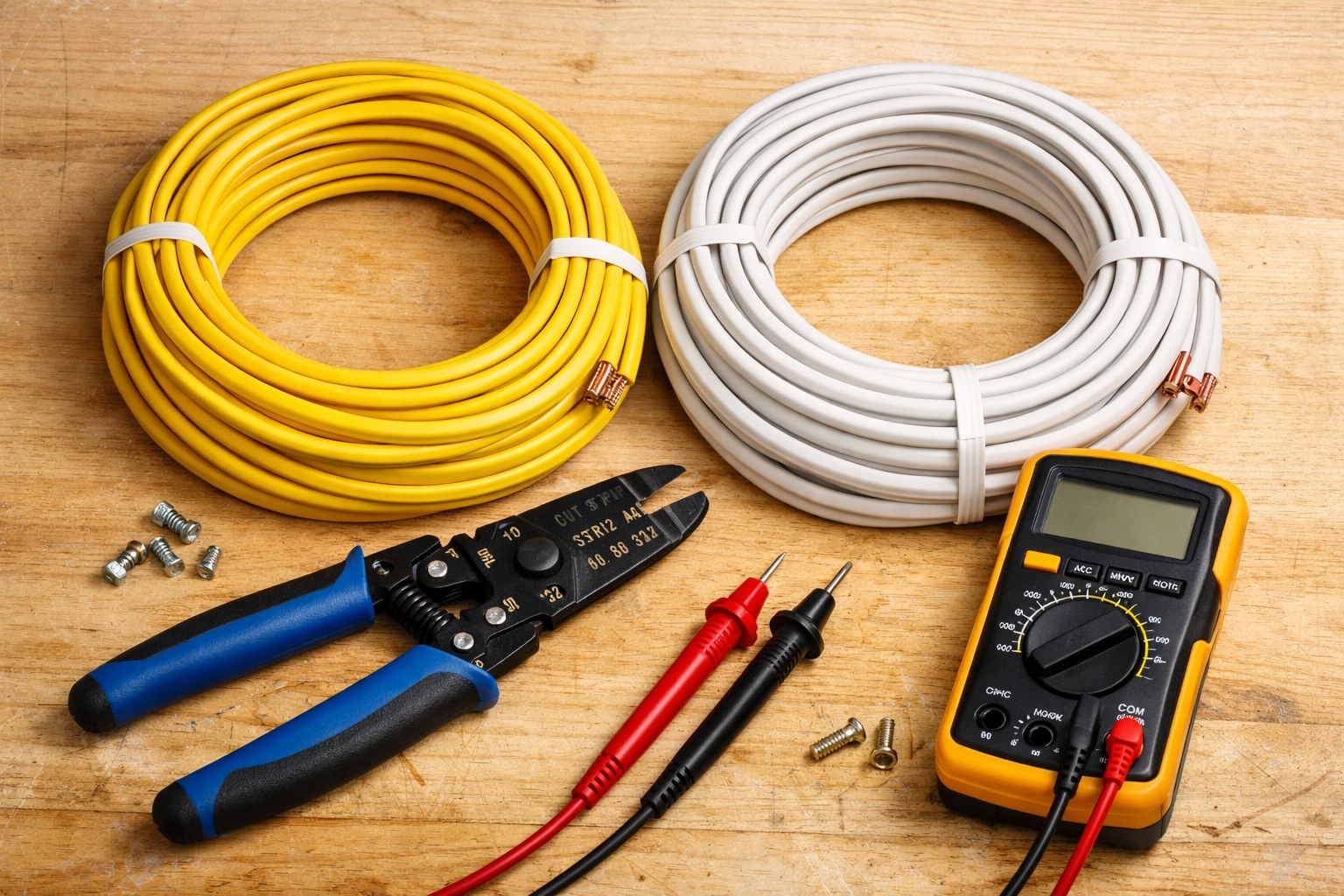
The Mistake: Using 14-gauge wire (which is thinner) on a 20-amp circuit that requires 12-gauge wire (which is thicker).
The Fix: Match your wire to your breaker.
- 15-amp breakers = 14-gauge wire.
- 20-amp breakers = 12-gauge wire.
If you aren’t sure which is which, it is always safer to use the thicker 12-gauge wire, though it is harder to bend and work with. Using a wire that is too thin for the power load is one of the leading causes of electrical fires in residential properties.
6. “Double-Tapping” the Circuit Breaker
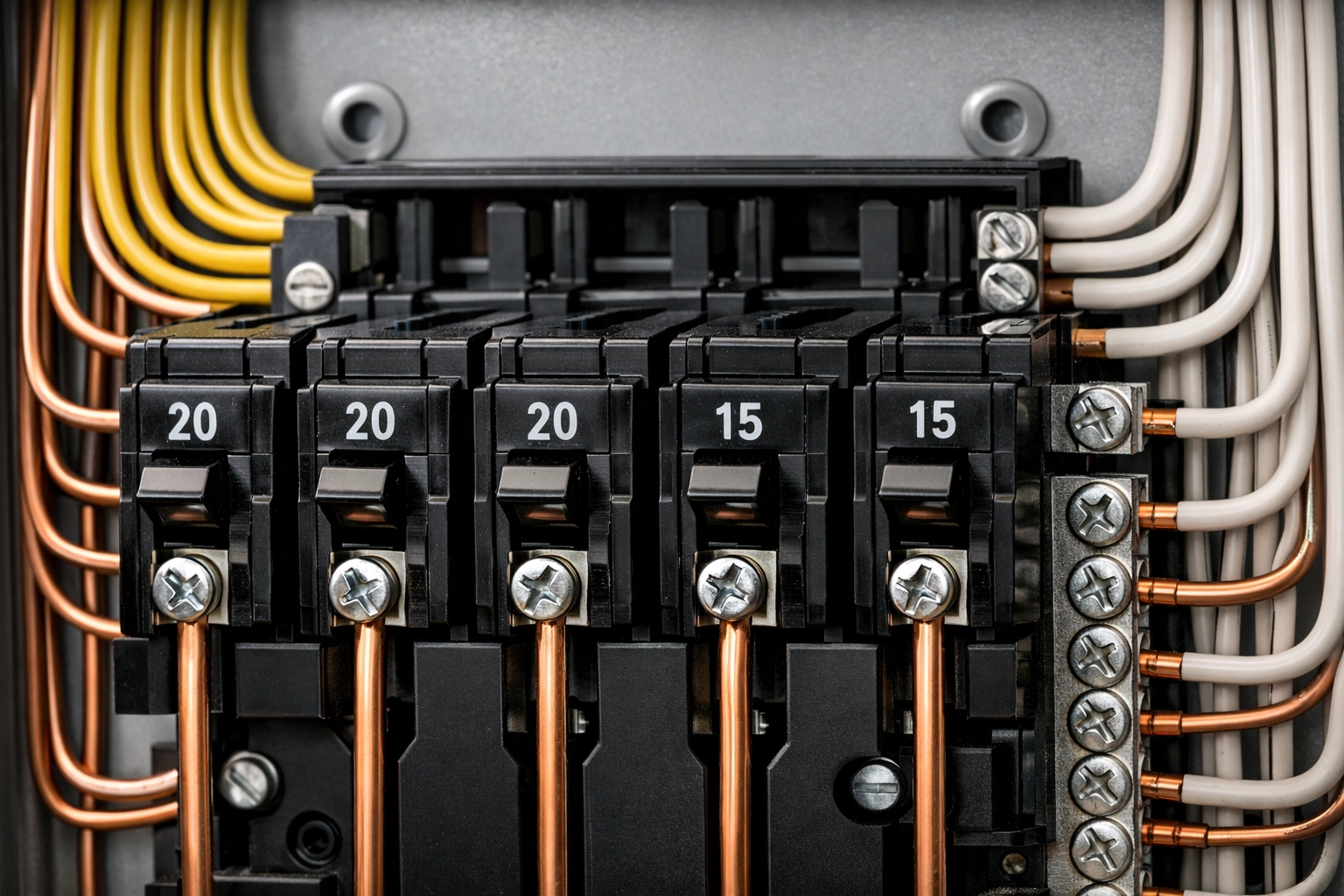
When you look inside your electrical panel, you should see one wire going into each circuit breaker.
The Mistake: Homeowners sometimes try to add a new circuit by cramming two wires into a single breaker slot designed for only one. This is known as “double-tapping.”
Why it’s a problem: Most breakers aren’t designed to hold two wires securely. Over time, one wire will become loose. A loose connection creates “arcing”, which is essentially tiny lightning bolts jumping across a gap. Arcing creates intense heat.
The Fix: If your panel is full, don’t double-tap. You may need a “tandem breaker” (if your panel supports it) or a sub-panel. This is a moment where calling a professional for home electrical repair in Atlanta is the smartest move to ensure your panel remains code-compliant and safe.
7. Ignoring Damaged Cords and “Cheap” Materials
We often see homeowners like Tasha, who lives in a charming mid-century home in Collier Heights. She noticed her vacuum cord was frayed but kept using it, occasionally seeing a blue spark. She thought, “It still works, so it’s fine.”
The Mistake: Using electrical tape to “fix” a frayed cord or buying the cheapest, unbranded outlets and dimmers from online marketplaces that aren’t UL-listed.
The Fix: If a cord is frayed, replace the appliance or have the cord professionally replaced. Electrical tape is for minor insulation nicks, not for structural repair of a power lead. Additionally, always look for the “UL” (Underwriters Laboratories) symbol on any electrical component you buy. This ensures the product has been tested for safety.
When Should You Call a Pro?
We love a proactive homeowner. Knowing how to change a light fixture or swap an outlet is a great skill. However, electricity is the one area of home maintenance where “trial and error” can have serious consequences.
If you encounter any of the following, please put the screwdriver down and give us a call:
- A burning smell (usually like “fish” or burning plastic) coming from an outlet or the panel.
- Buzzing sounds coming from the walls or switches.
- Frequent tripping of the main breaker.
- Flickering lights that happen when a large appliance (like the AC) turns on.
At Radiant Electric, we believe in doing the job right the first time. We’ve helped thousands of neighbors across Atlanta and Gwinnett County navigate the complexities of home wiring. Whether you need a simple safety inspection or a full panel upgrade, we’re here to help keep your home’s “highway” running smoothly and safely.
Summary Takeaway: Most electrical mistakes come from a lack of information, not a lack of effort. By using the right tools, matching the right wires, and knowing when to call for help, you can protect your home and your peace of mind. For more information on our services and how we can help with your next project, visit our main site.