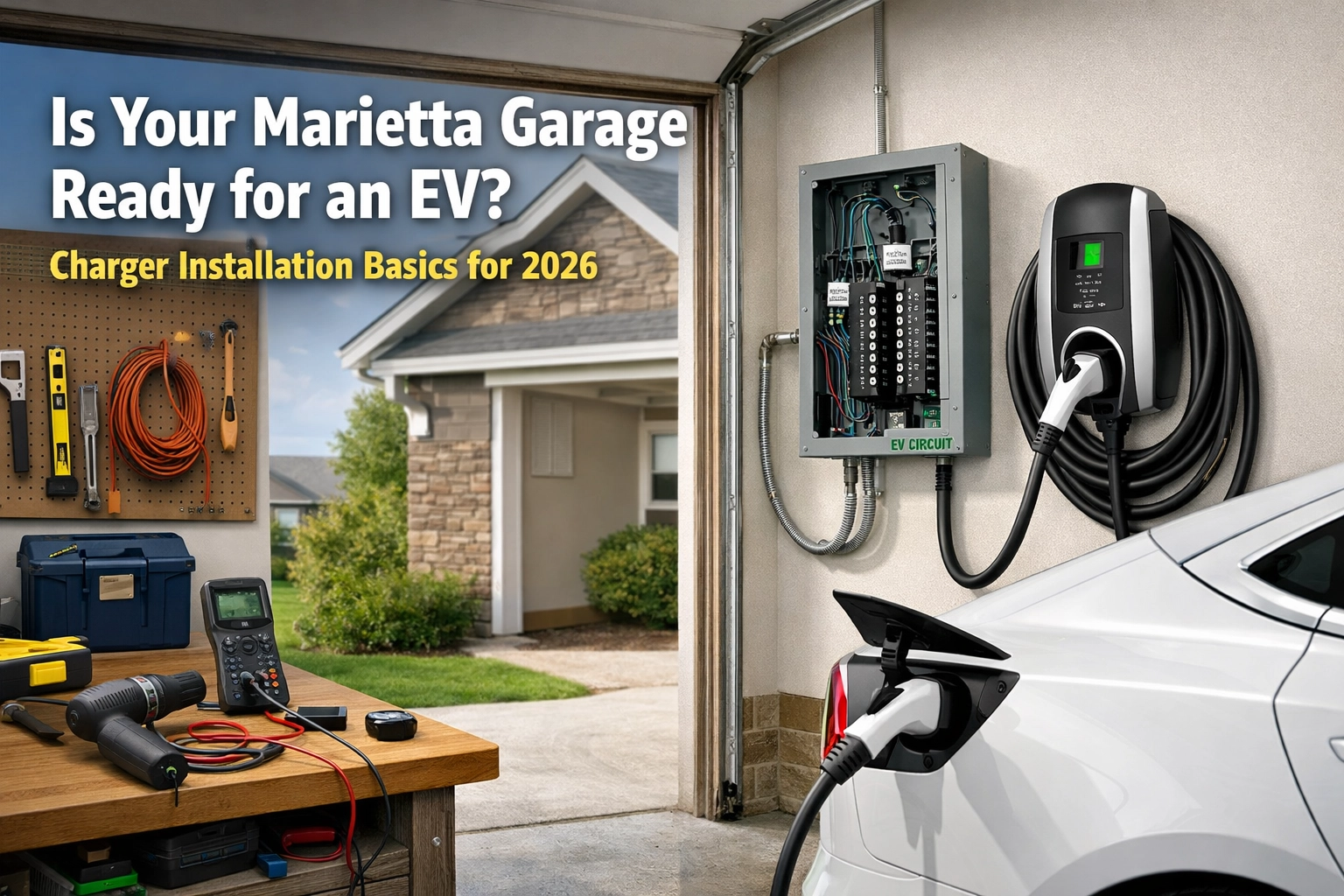
Is Your Marietta Garage Ready for an EV? Charger Installation Basics for 2026
You've been eyeing that new electric SUV for months. The tax incentives look good, the monthly savings on gas are real, and your neighbor down the street just installed a sleek charging setup in their garage. But before you sign the papers on that EV, there's one question that needs answering: Is your Marietta garage actually ready for a home charger?
This isn't about scaring anyone. It's about making sure your home's electrical system can handle the load before you're stuck charging at public stations every other day. Here's what you need to know about ev charger installation atlanta style, the real requirements, the actual costs, and what homeowners in Cobb County are dealing with in 2026.
Your Electrical Panel: The Make-or-Break Factor
Most Marietta homeowners hit the same wall when planning EV charger installation. It's not about finding wall space in the garage. It's about whether your electrical panel can deliver the juice.
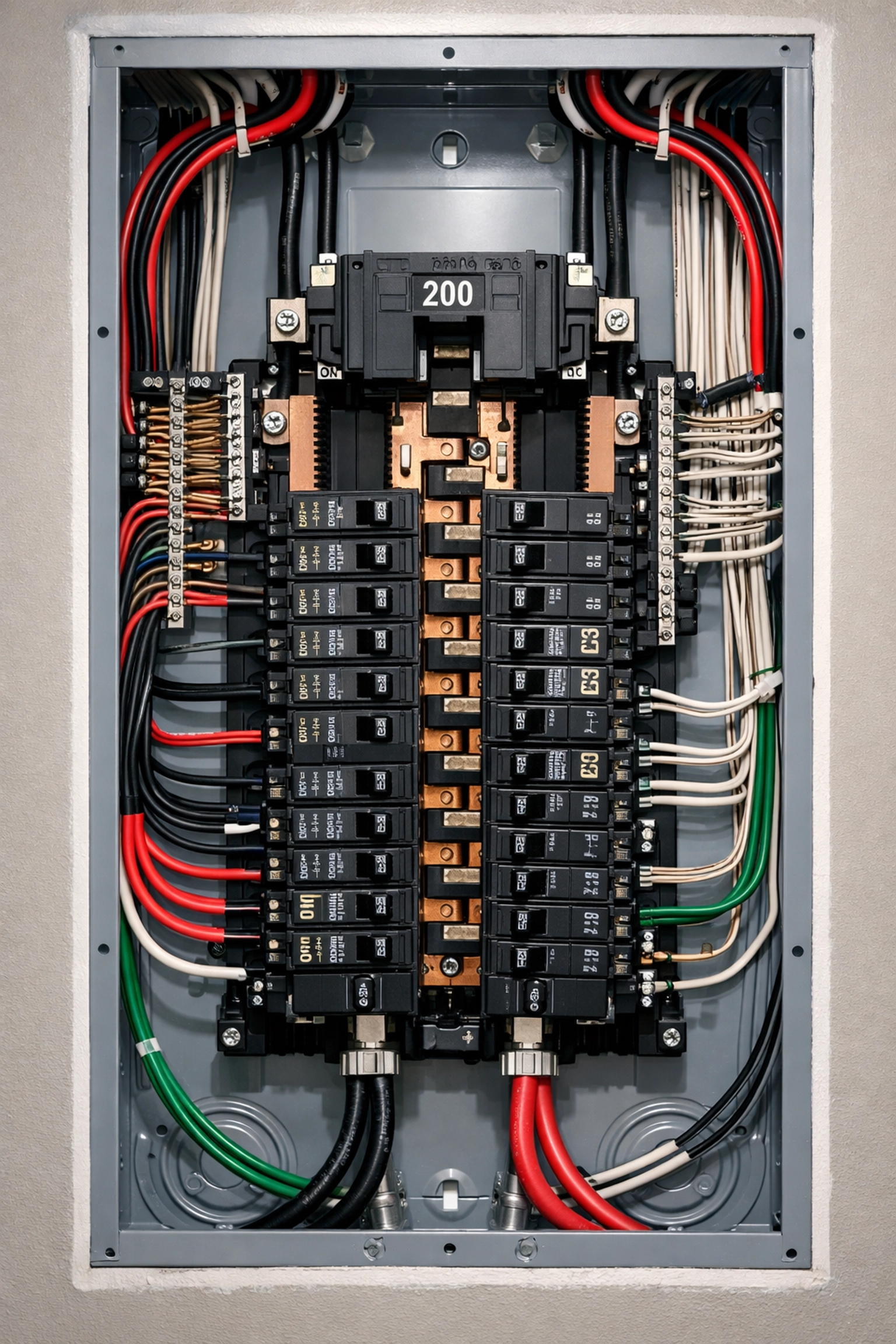
Here's what that really means: Your home's electrical panel is like a distribution center. Every circuit in your house, your HVAC, your kitchen appliances, your garage outlets, pulls power from that panel. An EV charger isn't a small ask. Level 2 home chargers (the kind worth installing) typically draw 30 to 50 amps of continuous power. That's similar to running a second air conditioning unit.
Homes built since the late 1980s usually have 150-200 amp service panels. These can typically handle EV charging alongside your existing electrical load without breaking a sweat. But if you're in one of those charming older Marietta homes with original electrical systems? You're probably working with a 100-amp panel, and that changes the conversation entirely.
Most people think they can just add another circuit to their existing panel. What they don't realize is that a licensed electrician needs to calculate your total electrical load, everything your home uses at peak times. If you're already pushing 80% of your panel's capacity, adding EV charging means you need an electrical panel upgrade atlanta before anything else happens.
What "EV Ready" Actually Means in 2026
Georgia updated its residential electrical codes for EV charging, and Marietta's building department follows suit. Here's what compliance looks like now:
Dedicated Circuit Requirements: Your EV charger needs its own dedicated 240-volt circuit. You can't split this with your garage outlets or your workshop tools. The circuit must be sized appropriately for your charger's amperage, typically 40 or 50 amps for most residential Level 2 chargers.
Wire Sizing Matters: The distance from your electrical panel to your garage charging location determines wire gauge. Longer runs require thicker wire to prevent voltage drop and overheating. This isn't negotiable, it's physics.
Ground Fault Protection: All EV charging installations require GFCI protection. This immediately shuts off power if it detects any current leakage, which is critical for safety when you're working with high-amperage outdoor or garage installations.
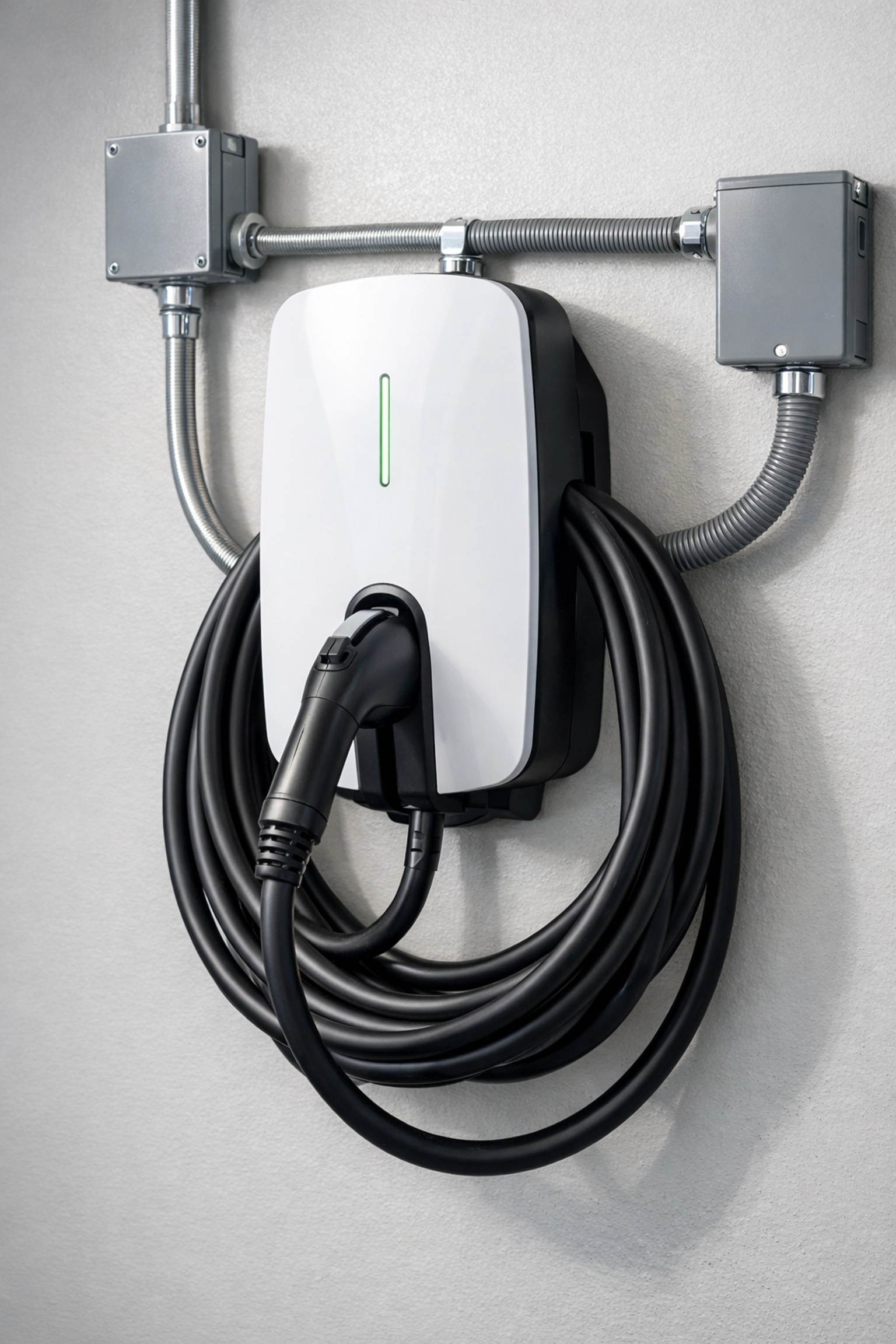
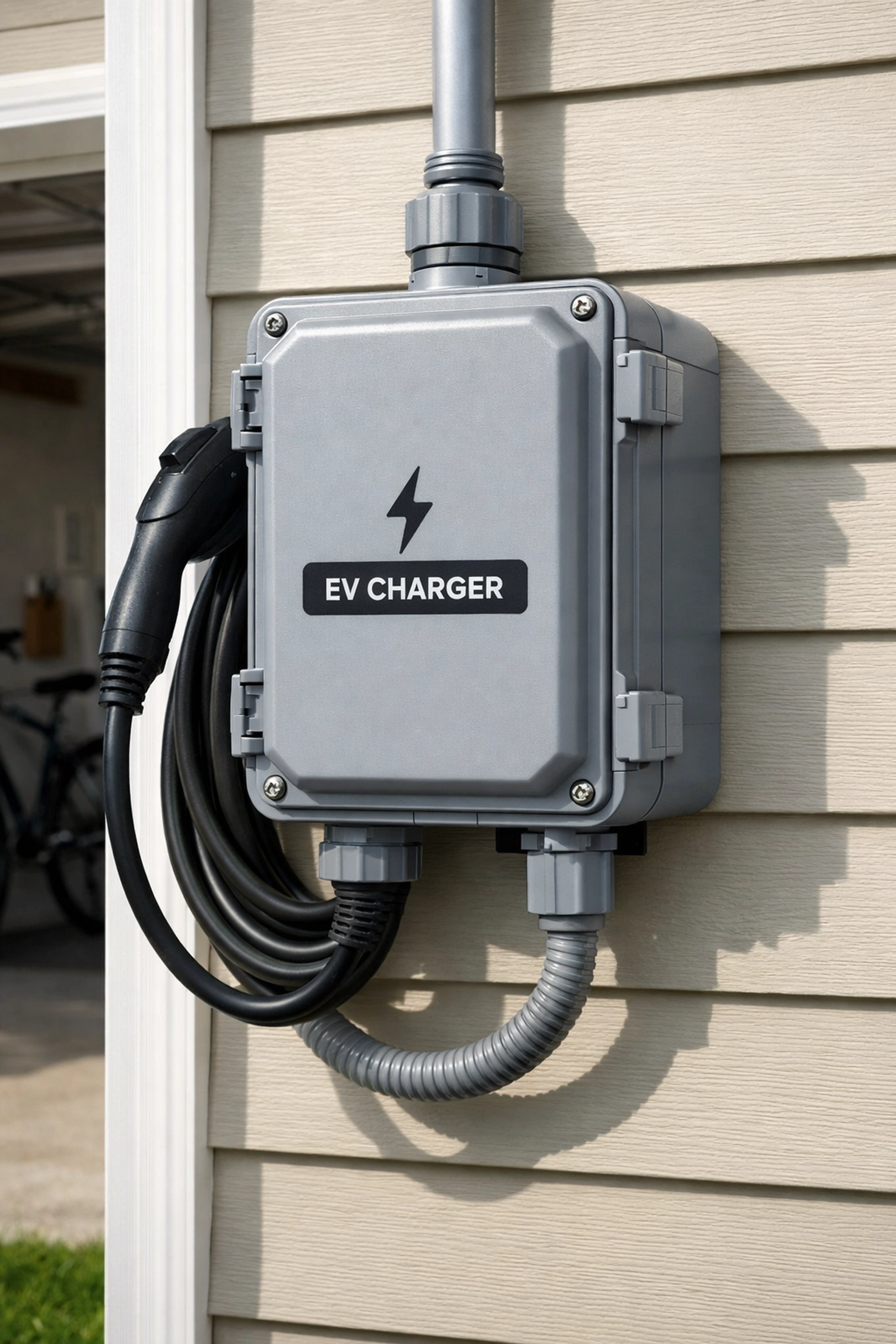
Weatherproofing Standards: Even if your charger lives inside your garage, Georgia humidity and temperature swings mean proper weatherproofing isn't optional. Outdoor installations require NEMA-rated enclosures that can handle everything from summer storms to winter freezes.
The takeaway: Professional installation by a licensed electrician isn't about upselling you, it's about meeting code requirements that keep your home safe and your insurance valid.
The Real Installation Process (What Actually Happens)
Most homeowners think installation means bolting a charger to the wall and plugging it in. Here's what actually happens when you schedule ev charger installation atlanta:
Step 1: Site Assessment (Week 1)
A qualified electrician comes out to inspect your electrical panel, measure the distance to your preferred charging location, and assess your home's total electrical load. They're checking for panel capacity, existing circuit availability, and whether your main service needs upgrading. This visit determines everything that follows.
Step 2: Permitting (Weeks 2-3)
Your electrician submits permit applications to Marietta's building department. This includes detailed wiring diagrams, equipment specifications, and load calculations. Yes, permits add 1-2 weeks to your timeline. No, you can't skip this step: unpermitted electrical work creates liability issues and can tank your home's resale value.
Step 3: Installation Day (4-8 hours)
The actual installation moves quickly once permits are approved. Your electrician will:
- Run a dedicated circuit from your panel to the charger location
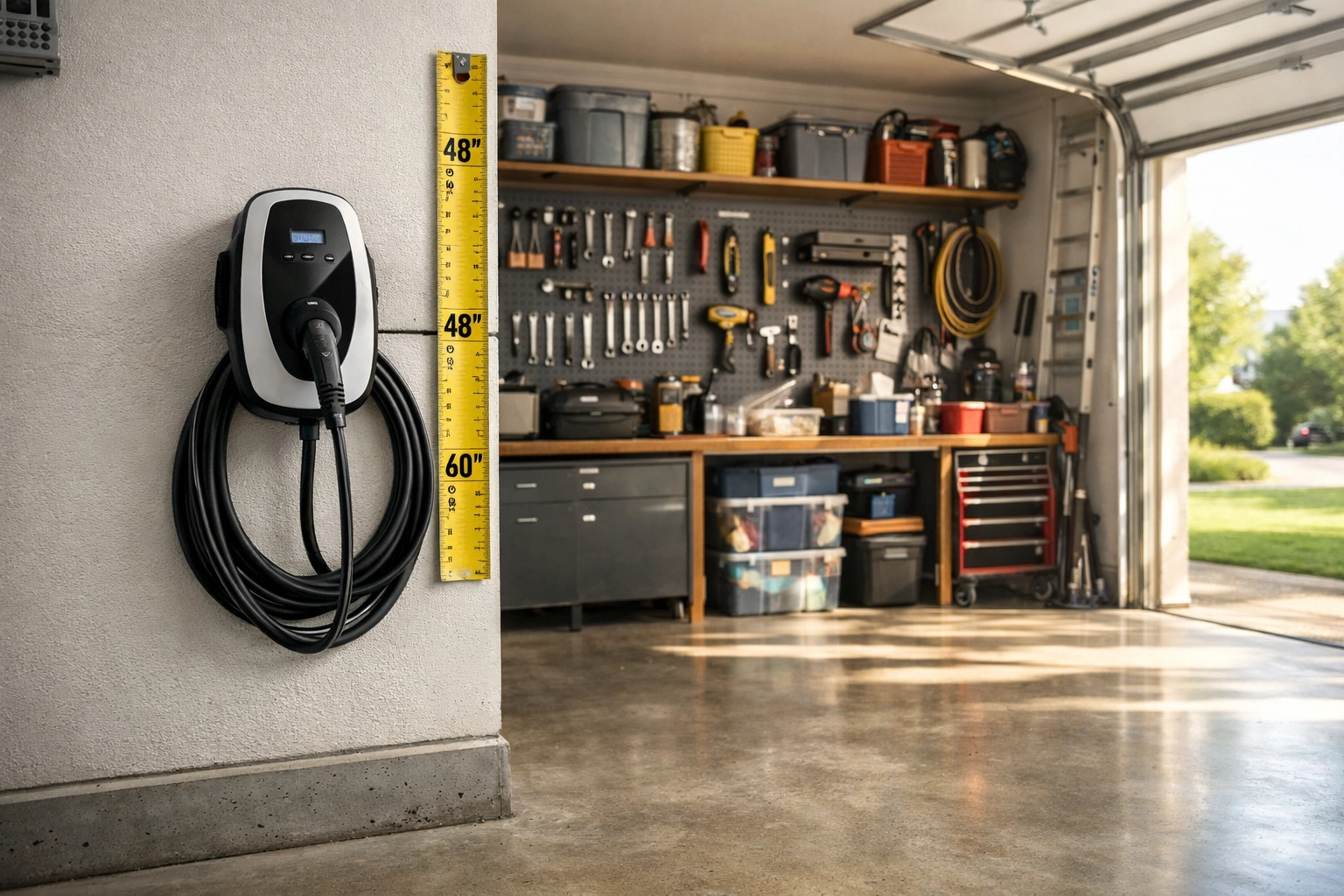
- Mount the charging unit (typically 48-60 inches from the floor for optimal cord reach)
- Make all electrical connections with proper wire sizing
- Install GFCI protection and verify proper grounding
- Weatherproof all connections and mounting points
- Test the complete system under load
Step 4: Inspection (Week 4)
A municipal inspector verifies everything meets current code requirements. Once approved, you're clear to start charging.
Total timeline for straightforward installations: 3-4 weeks from assessment to final approval. Panel upgrades add another 1-2 weeks.
Let's Talk Real Numbers: What Installation Actually Costs
The national average for EV charger installation sits around $1,000, but Marietta homeowners typically see costs ranging from $600 to $2,000 depending on specific circumstances.
Here's what drives those numbers:
Basic Installation ($600-$900): You have adequate panel capacity, the charger mounts within 25 feet of your panel, no drywall or exterior wall penetrations required, and you're providing the charger unit.
Standard Installation ($1,000-$1,500): Moderate distance from panel (25-50 feet), some wall penetration needed, and installation includes permit fees and inspection costs.
Complex Installation ($1,500-$2,000+): Long wiring runs beyond 50 feet, outdoor mounting with weatherproof conduit, or installations requiring panel upgrades.
Panel upgrades add significant cost: typically $1,500-$3,000 depending on whether you need a service upgrade from the utility or just a larger distribution panel. But if your home needs it, you need it. There's no workaround that's both safe and code-compliant.
Incentives That Actually Apply in 2026
The federal landscape for EV charging incentives shifted significantly. Here's what Marietta homeowners can actually access right now:
Federal Alternative Fuel Infrastructure Tax Credit: If your property is located in a qualifying low-income or non-urban census tract, you may qualify for a tax credit covering 30% of installation costs, up to $1,000. The catch? Your charger must be placed in service by June 30, 2026. Check the Department of Energy's Alternative Fuels Data Center to verify eligibility for your address.
Georgia Power EV Time-of-Use Rate: While not a direct installation incentive, Georgia Power offers special time-of-use rates for EV owners. Overnight charging (11 PM – 7 AM) costs significantly less per kWh: sometimes half the standard rate. This doesn't help with upfront installation costs, but it accelerates your payback timeline.
Local Utility Programs: Check if your local utility offers EV-specific programs. Some metro Atlanta utilities provide rebates or reduced connection fees for homes installing EV charging infrastructure. Visit Georgia Power's EV resources for current program details.
Manufacturer Rebates: Don't overlook vehicle manufacturer incentives. Several EV makers offer installation credits or bundled charging equipment with vehicle purchase. These typically range from $500-$1,000 in installation support.
When Your Garage Needs More Than Just a Charger
Here's a scenario that plays out constantly in older Marietta neighborhoods: A family buys an EV, calls about charger installation, and discovers their electrical panel can't support it without upgrades. This isn't a dealbreaker: it's just reality for homes built before 1990.
Take Marcus and Jennifer's situation in East Cobb. They bought a 1985 ranch with a 100-amp service panel. Beautiful home, solid bones, but the electrical system was maxed out between their HVAC, kitchen remodel, and home office setup. Adding EV charging meant a complete panel upgrade to 200-amp service.
The upgrade cost them an additional $2,200, but here's what they gained: Not just EV charging capability, but the electrical capacity to handle future needs: a pool pump, upgraded HVAC, or additional home office equipment. The panel upgrade wasn't just about the EV; it was about bringing their home's electrical infrastructure into 2026.
Most people think panel upgrades are unnecessary expenses. What they don't realize is that undersized electrical panels create ongoing safety risks and limit home functionality. If an electrician recommends a panel upgrade for EV charging, they're not upselling: they're preventing circuit overloads that cause breaker trips, equipment damage, and fire hazards.
The DIY Temptation (And Why It's a Bad Idea)
YouTube makes EV charger installation look straightforward. You'll find dozens of videos showing wall mounting, wire connections, and final testing. What those videos don't show: the electrical code requirements, permit processes, load calculations, and liability issues that come with improper installation.
Georgia requires licensed electricians for high-voltage installations. Period. This isn't about protecting electricians' jobs: it's about protecting homeowners from electrical fires, code violations, and insurance claim denials.
DIY electrical work might save a few hundred dollars upfront, but it creates massive problems:
- Insurance Issues: Most homeowner policies won't cover damage from unpermitted electrical work
- Resale Complications: Home inspectors flag unpermitted electrical installations, killing sales or forcing costly corrections
- Safety Risks: Improper wire sizing, inadequate grounding, or incorrect breaker sizing creates fire hazards
- Warranty Voids: Most EV charger manufacturers require professional installation to maintain product warranties
The bottom line: Professional EV charger installation atlanta costs more than DIY, but it's the only way to ensure safe, compliant, insurable results.
Making Your Marietta Garage EV-Ready
So is your garage ready for an EV charger? Here's the honest answer: Maybe.
If you have a modern electrical panel with available capacity, reasonable distance to your garage, and budget for professional installation, you're probably good to go. If you're in an older home with limited electrical service, you'll need upgrades before charger installation makes sense.
Either way, the first step is the same: Get a professional electrical assessment. A qualified electrician can evaluate your specific situation, provide accurate cost estimates, and outline the complete installation process: permits, timelines, and all.
Your EV is a long-term investment in lower operating costs and reduced environmental impact. Your charging infrastructure deserves the same thoughtful approach. Done right, home EV charging is convenient, cost-effective, and adds genuine value to your Marietta property.
Done wrong? You're dealing with code violations, safety hazards, and potential insurance nightmares that make public charging stations look pretty appealing.
The choice is yours. Just make sure your garage: and your home's electrical system( is actually ready for it.)