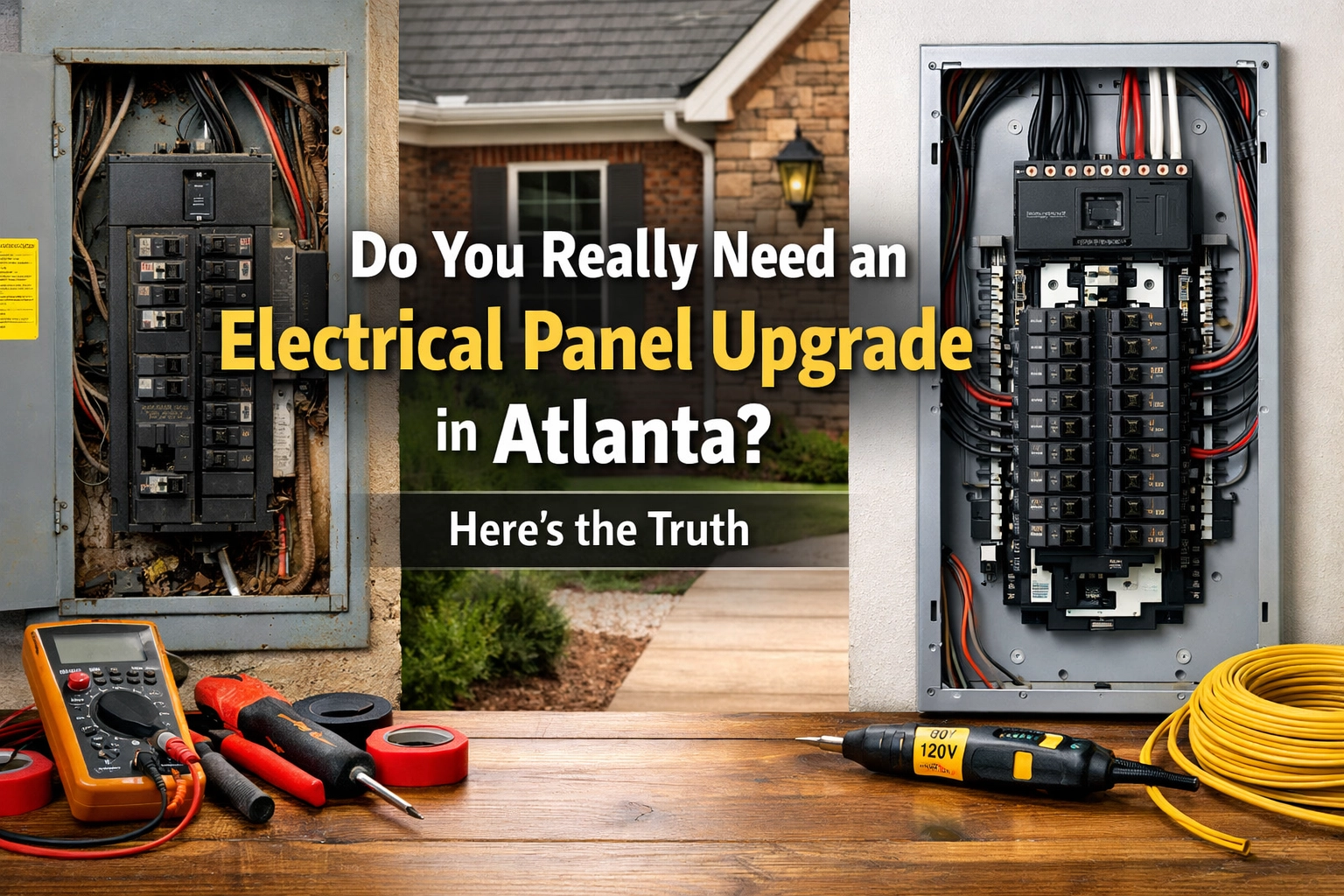
Do You Really Need an Electrical Panel Upgrade in Atlanta? Here’s the Truth
Imagine this: Tasha is hosting a dinner party in her beautiful historic home in Cascade Heights. The music is playing, the oven is roasting a chicken, and the dishwasher is humming along. Suddenly, as soon as someone taps the microwave to warm up an appetizer, the kitchen goes dark. The music stops. The only sound is the frustrated sigh of a homeowner who has to go find a flashlight and head to the garage to flip a breaker, again.
If you live in Atlanta, this scenario probably feels familiar. Whether you’re in a 1920s bungalow in Virginia-Highland or a mid-century ranch in Collier Heights, your home’s electrical system is the unsung hero of your daily life. But as we plug in more devices, install EV chargers, and upgrade to high-efficiency HVAC systems, that hero can start to struggle.
The big question we hear at Radiant Electric almost every day is: "Do I really need an electrical panel upgrade, or is someone just trying to sell me something I don't need?"
This post isn't about scaring anyone. Our goal is to peel back the mystery of that metal box on your wall and give you the honest truth about when an upgrade is a luxury, when it’s a necessity, and when it’s a critical safety matter.
The "Traffic Controller" of Your Home
To understand if you need an upgrade, you first need to know what that panel actually does. Think of your electrical panel as the main traffic controller or the "brain" of your home's power. Electricity comes in from the utility company in a big stream, and the panel’s job is to divide that stream into smaller "branches" or circuits that go to your lights, outlets, and appliances.
Each circuit has a limit on how much electricity (measured in amps) it can carry. A circuit breaker is essentially a safety switch. If too much electricity tries to flow through a wire, which causes the wire to heat up like a stovetop coil, the breaker "trips" and shuts off the power to prevent a fire.
Here’s what that really means: Your panel is the only thing standing between a minor electrical overload and a potential house fire. If the panel is too old or too small, it can't handle the "traffic," leading to those annoying trips or, worse, a failure to shut off when things get dangerously hot.
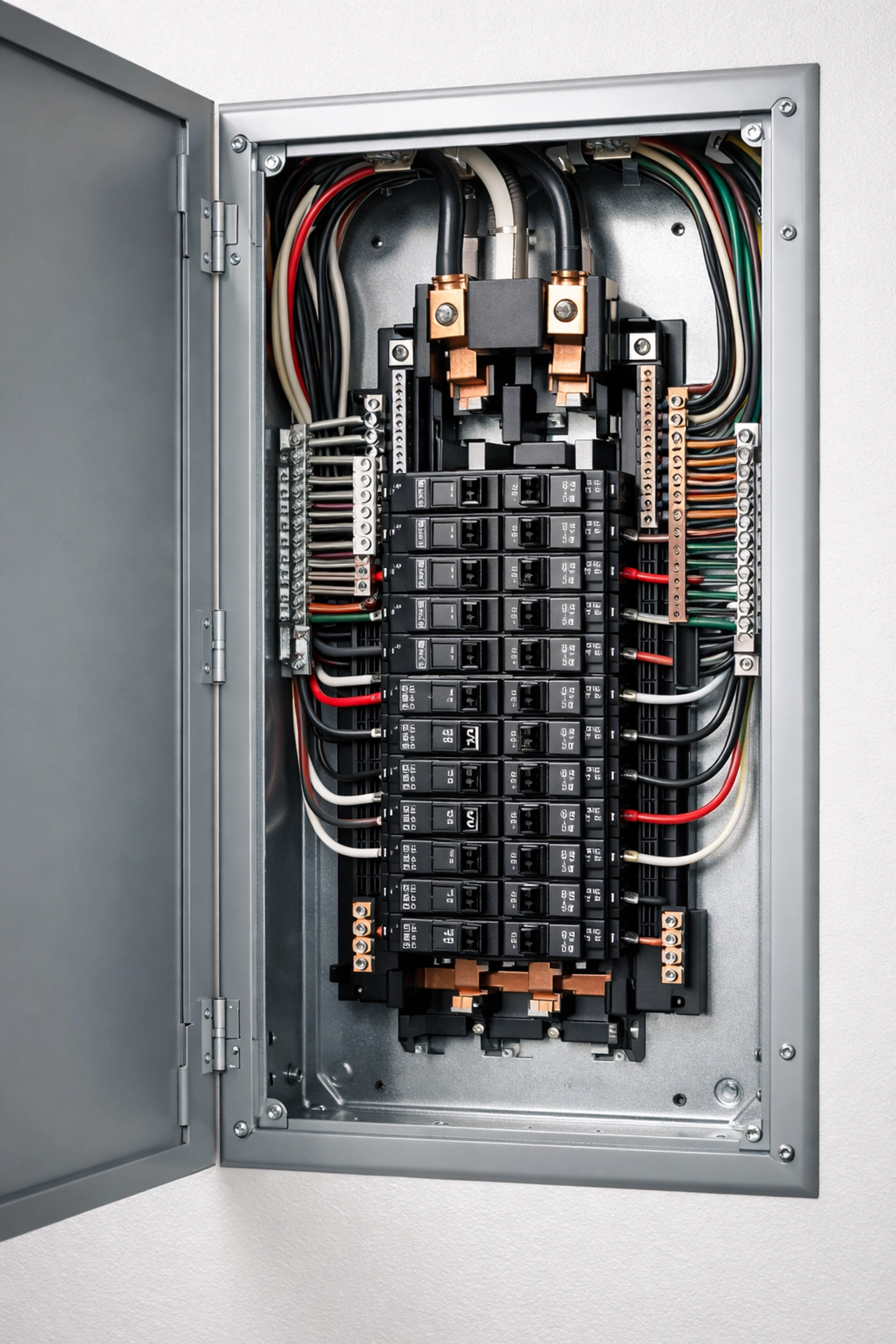
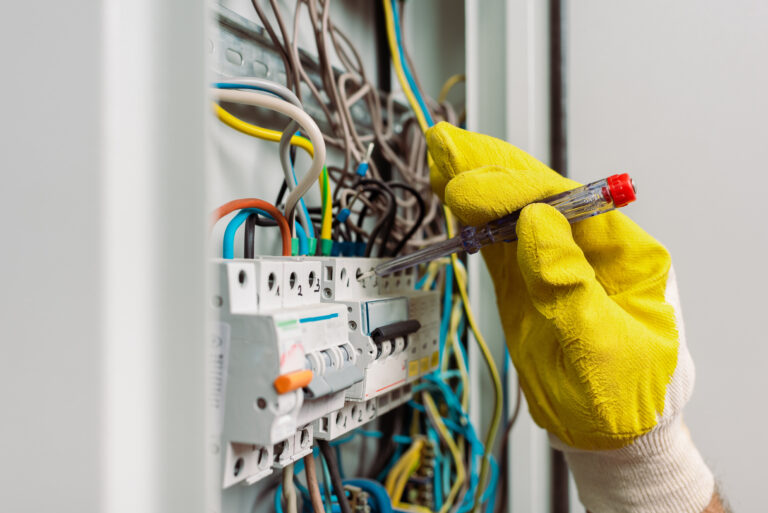
Visual: A close-up of a modern circuit breaker panel with clearly labeled switches and neat wiring.
Signals That Your Panel is Struggling
Most homeowners think a panel only needs replacing if it stops working entirely. In reality, your system will usually send you "signals" long before a total failure occurs. We like to think of these as the home's way of asking for help.
1. The "Flicker and Dim" Routine
Have you ever noticed your lights dim for a split second when the air conditioner kicks on or when you start the vacuum? Most people think this is just a quirk of an old house.
The Truth: This is a sign that the appliance is "starving" for power and pulling it away from the lights. It means your panel is struggling to distribute enough current to go around.
2. Physical Heat or "Burning Toast" Smells
If you ever touch your panel door and it feels warm, or if you smell something faintly like burning plastic or toast near the electrical box, stop what you are doing.
The Truth: This isn't just a sign of an old panel; it's a sign of "arcing" or overheating wires. Wires should never get hot enough for you to feel it through the panel cover. This is a critical safety warning that requires immediate professional attention. According to the Electrical Safety Foundation International (ESFI), arc faults are a leading cause of home fires.
3. The "Hiss" and "Pop"
A healthy electrical panel should be silent. If you hear buzzing, hissing, or clicking sounds coming from the box, the breakers may be failing to seat properly, or there could be a loose connection.
The Truth: In the electrical world, a loose connection is a hot connection. Constant buzzing means the electricity is literally jumping across a gap to complete the circuit, which creates intense heat.
4. Rust and Corrosion
Atlanta is humid. If your panel is located in a damp basement or a garage that isn't climate-controlled, moisture can lead to rust.
The Truth: Rust is an insulator, not a conductor. If your breakers or the bus bars (the metal tracks they snap into) are corroded, they won't make a solid connection. This leads to heat buildup and can actually "weld" a breaker in the ON position, meaning it won't trip even if there's a short circuit.
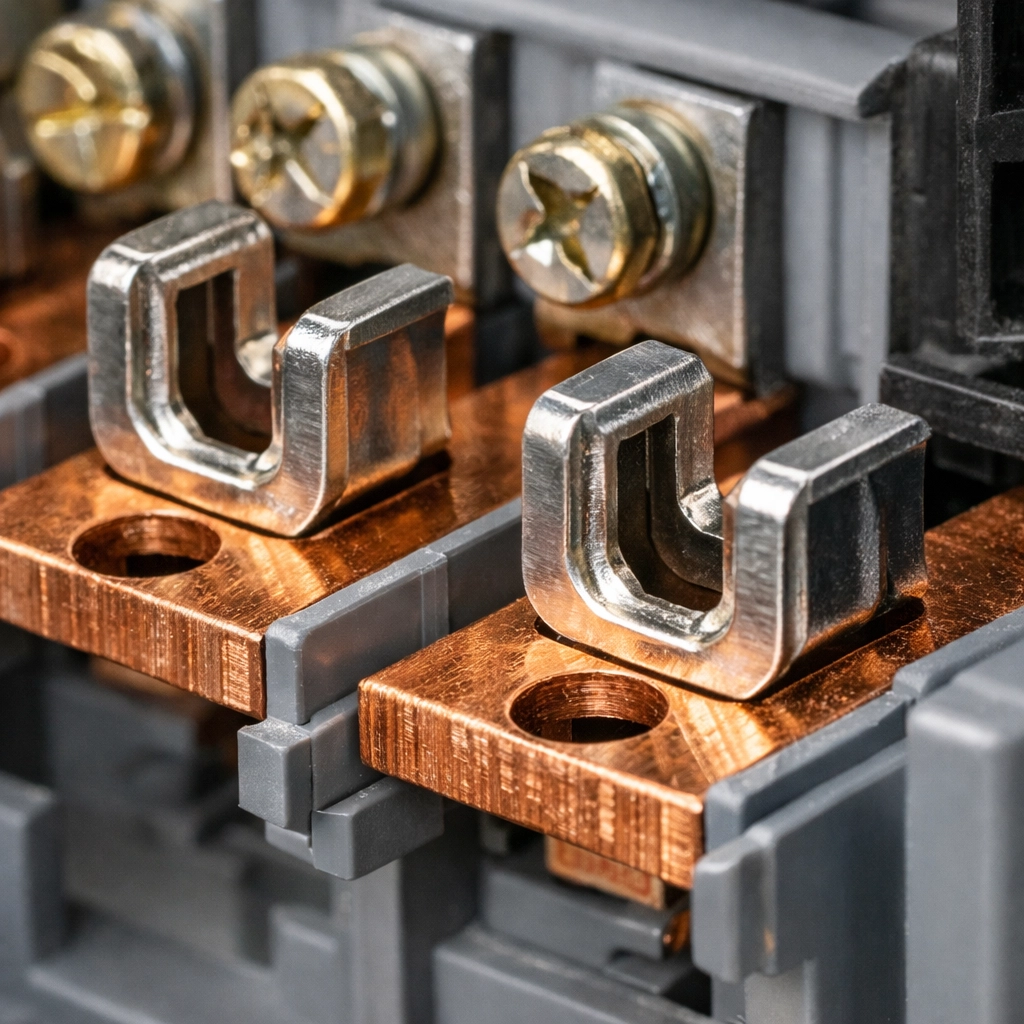
Visual: Detailed shot of an electrical panel interior focusing on the copper bus bars and the connection points of the breakers.
The "Red List" of Panels
Sometimes, the truth about your panel has nothing to do with how it’s behaving and everything to do with who manufactured it. If your Atlanta home was built between 1950 and 1990, you might have a "legacy" panel that is inherently dangerous.
- Federal Pacific Electric (FPE) Panels: These were installed in millions of homes. Testing has shown that these breakers have a shockingly high failure rate, they often fail to trip when they should, leading to fires.
- Zinsco Panels: These are known for a design flaw where the breakers can actually melt to the bus bar, making it impossible for them to shut off power during an overload.
- Old Fuse Boxes: While fuses are actually quite safe, most fuse boxes were designed for a time when a home only had a few lights and a radio. Modern life, with 70-inch TVs, computers, and refrigerators, simply demands more than a 60-amp fuse box can provide.
If you have one of these, an electrical panel upgrade in Atlanta isn't just an "improvement", it's a necessary safety correction. You can check our guide on Georgia electrical code red flags to see if your home is falling behind modern safety standards.
Modern Life Demands Modern Power
Even if your panel is perfectly safe, it might simply be "maxed out." Marcus and his wife recently bought a home in Southwest Atlanta. They wanted to add an EV charger for their new car and a dedicated circuit for a home office. When we opened their panel, every single slot was full.
Most people believe that if there is a physical space in the box, they can just keep adding stuff.
The Truth: It’s not just about the number of switches; it’s about the total capacity (amperage). An older 100-amp panel might have been plenty in 1985, but with today’s technology, it’s like trying to run a high-speed internet connection through a dial-up modem. It just can't keep up.
If you are planning on:
- Installing a Level 2 EV Charger
- Adding a Hot Tub or Sauna
- Upgrading to a Tankless Electric Water Heater
- Adding a suite or finishing a basement
…you will likely need a panel upgrade to ensure you have the "overhead" to handle the new load without blowing the main breaker.
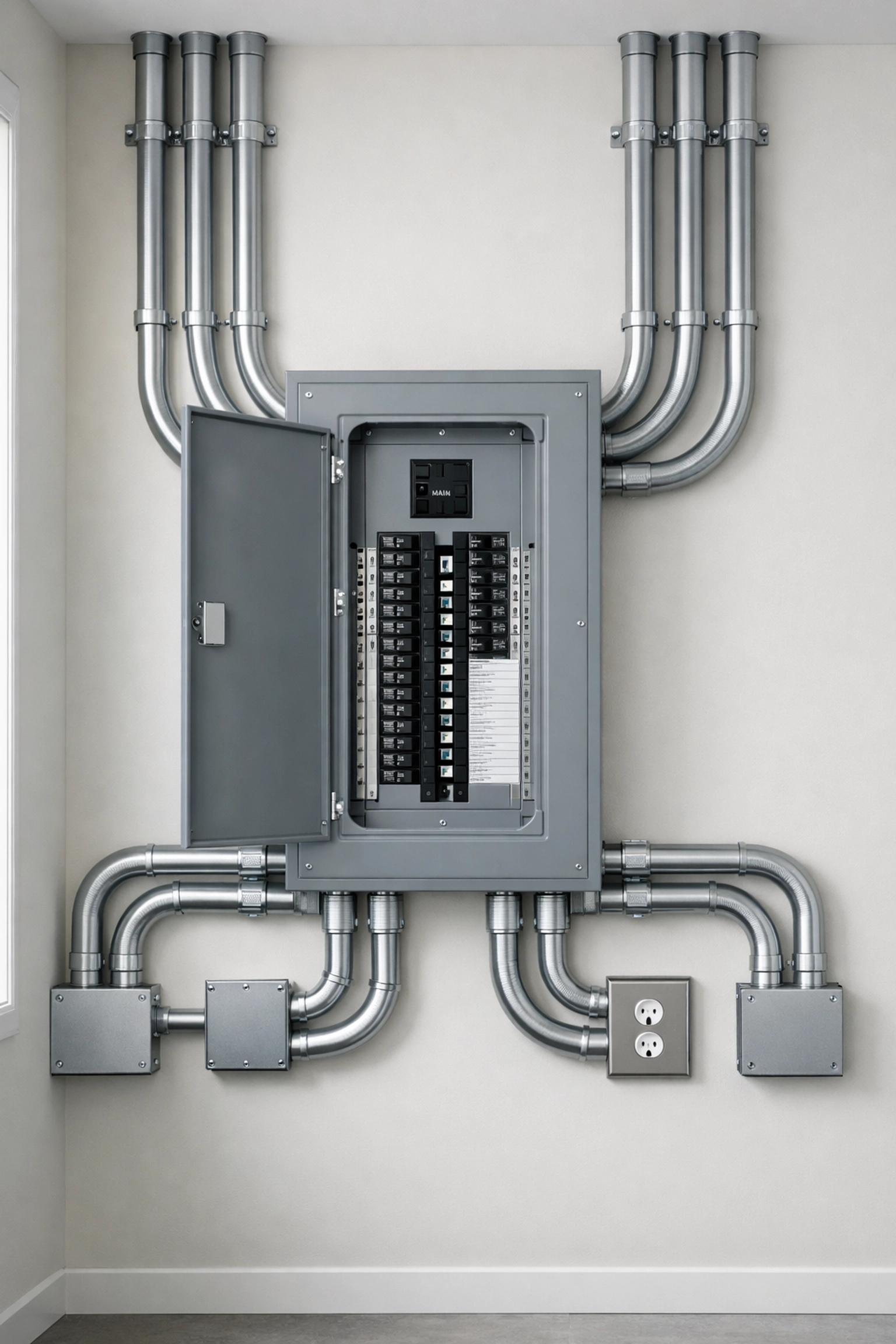
Visual: A clean, new electrical sub-panel installation with organized, color-coded wiring.
The Cost of Waiting vs. The Cost of Upgrading
We understand that an electrical panel upgrade is a significant investment. However, it's important to look at the "hidden costs" of waiting.
- Insurance Issues: Many insurance companies in Georgia are now refusing to renew policies for homes with Federal Pacific or Zinsco panels. Some may even deny a claim if a fire was caused by a known faulty panel type.
- Home Value: If you decide to sell your home, a dated or dangerous panel will almost certainly come up in the inspection. You'll likely end up paying for the upgrade anyway to close the deal, often in a rush.
- Appliance Health: Frequent voltage drops (those dimming lights) are hard on your expensive electronics. Your $2,000 refrigerator and $1,500 computer need stable, consistent power to last as long as they should.
Do's and Don'ts for Atlanta Homeowners
- DO take a look at your panel once a year. Look for rust, listen for noises, and make sure everything is labeled correctly.
- DO call a professional if you feel heat coming from the panel door.
- DON'T try to replace a breaker yourself unless you are trained. The "main lugs" in a panel stay live even when the main breaker is off. One wrong move can be fatal.
- DON'T simply "upsize" a fuse or breaker if it keeps tripping. If a 15-amp breaker trips, putting a 20-amp breaker in its place is a recipe for a fire, as the wire behind it isn't rated for that much heat.
The Final Verdict
So, do you really need an electrical panel upgrade?
- If your panel is warm, making noise, or smelling like smoke: YES. This is an emergency.
- If you have an FPE or Zinsco panel: YES. The risk is simply too high.
- If you are adding major appliances or an EV charger: PROBABLY. Your current system likely doesn't have the capacity.
- If your lights flicker when the AC kicks on: IT'S TIME FOR AN INSPECTION. You might just need a dedicated circuit, or it might be a sign of a failing main panel.
At Radiant Electric, we believe in providing the residents of Atlanta with the facts, not fear. Our goal is to ensure your home's "brain" is healthy enough to support your lifestyle and keep your family safe. For more information on maintaining your home's system, feel free to browse our electrical services blog.
Takeaway: An electrical panel isn't just a box of switches; it’s a safety device that must be matched to your home's power demands to function correctly. If you haven't had yours inspected in the last 10 years, it’s time to give it a look.
For professional assistance or a safety audit of your home’s electrical system, you can always reach out to the experts at Radiant Electric. Safety is a journey, not a destination: let’s make sure your home is on the right path.