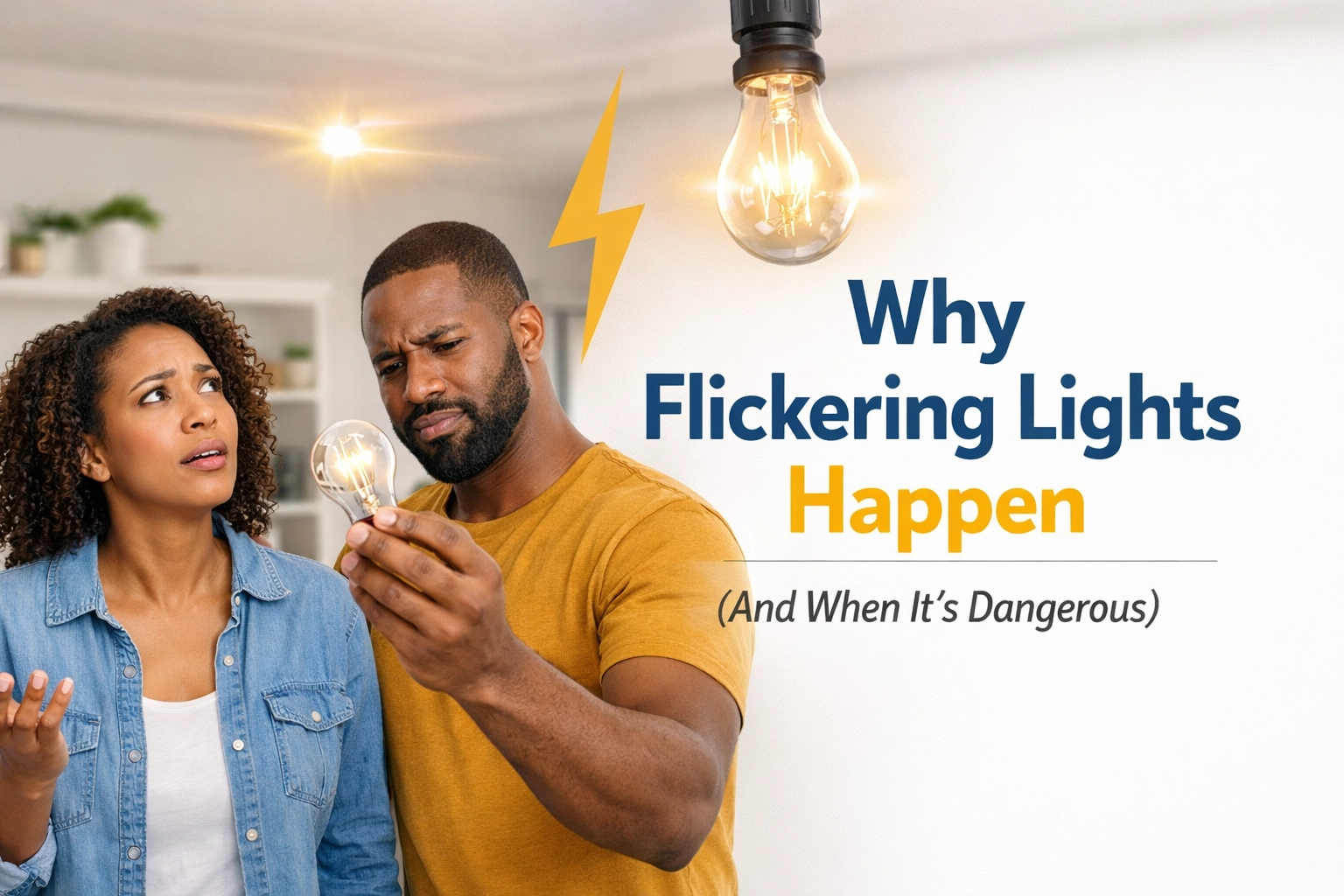
Why Flickering Lights Happen (And When It's Dangerous)
You're settling in for the evening. Maybe you're cooking dinner or catching up on your favorite show. Then it happens, the lights flicker. Once. Twice. Maybe they dim for a second before coming back to full brightness.
Your mind starts racing. Is something wrong? Is this normal? Should you be worried?
Here's the thing: flickering lights are one of the most common electrical concerns homeowners bring up. And while many causes are completely harmless, some flickering patterns are your home's way of sending you a warning signal that something needs attention.
This isn't about scaring anyone. It's about helping you understand what your home is telling you so you can take the right action at the right time.
The Harmless Stuff: Flickering That's Usually No Big Deal
Before we get into the serious stuff, let's cover the everyday causes that typically don't require a service call.
Loose Light Bulbs
This one sounds almost too simple, but it's incredibly common. If a bulb isn't screwed in tightly, the connection between the bulb and the socket becomes inconsistent. The result? Flickering.
What to do: Turn off the light, let the bulb cool down, and tighten it securely. Problem solved in most cases.
Incompatible Dimmer Switches
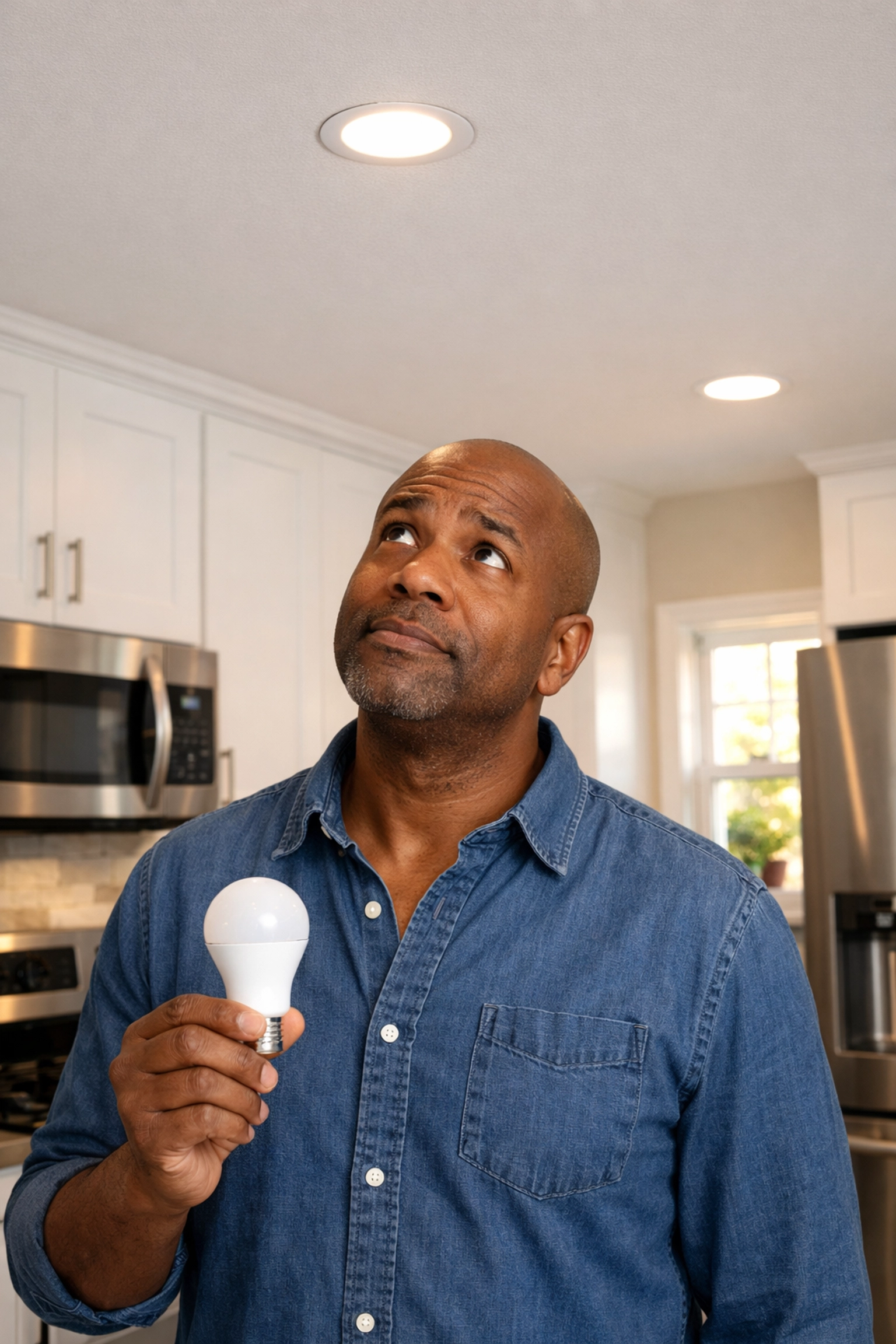
Here's something that trips up a lot of homeowners. You swap out your old incandescent bulbs for energy-efficient LEDs, and suddenly they won't stop flickering, especially when dimmed.
The issue is that older dimmer switches were designed for incandescent bulbs. LEDs operate differently, and that mismatch creates flickering. Marcus, a homeowner in Gwinnett County, dealt with this exact situation after upgrading all his kitchen lights to LEDs. The solution was straightforward: installing LED-compatible dimmer switches.
The takeaway: If your LEDs flicker on a dimmer, check whether your switch is rated for LED bulbs.
Worn-Out Light Switches
Light switches don't last forever. After years of use, the internal contacts can wear down and become less reliable. If flickering only happens with one specific light and the bulb is fine, the switch itself might be the culprit.
The fix: Replacing a light switch is a relatively simple job for a licensed electrician and usually resolves the issue quickly.
When Appliances Cause a Momentary Dip
Ever notice your lights briefly dim when your air conditioner kicks on? Or when someone fires up the vacuum cleaner?
This is called a voltage drop, and it's usually normal, to a point.
High-powered appliances draw a surge of electricity when they start up. That sudden demand can momentarily reduce the voltage available to other devices on the same circuit, including your lights.
Here's what's normal:
- A brief, barely noticeable dim that lasts less than a second
- Lights returning to full brightness immediately after
Here's what's NOT normal:
- Significant dimming that lasts several seconds
- Lights that flicker repeatedly while the appliance runs
- Flickering that affects lights throughout your entire home
If you're experiencing the latter, your electrical panel may be struggling to handle the load. This is especially common in older homes throughout Metro Atlanta where electrical systems weren't designed for today's high-demand appliances.
The Warning Signs: When Flickering Becomes Dangerous
Now we need to talk about the flickering patterns that require your attention. These are signals that something in your electrical system needs professional evaluation.
Flickering Across Multiple Rooms
When flickering is isolated to one light or one room, it's often a localized issue, a bulb, a switch, or a single connection. But when multiple rooms flicker simultaneously? That's a different story.
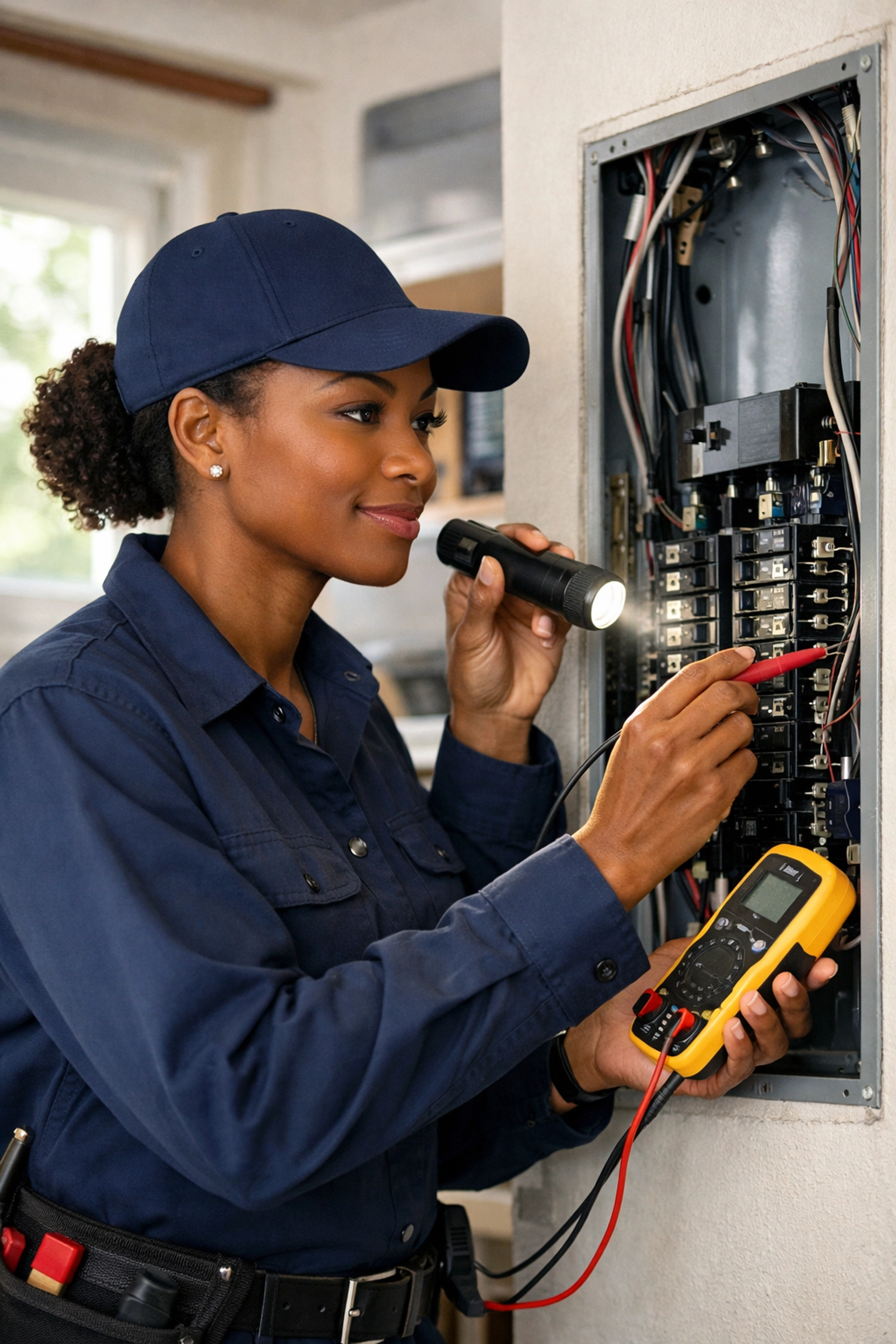
This pattern usually points to a problem closer to your electrical panel or even your main service connection. Loose connections at the panel, issues with your meter base, or problems with the utility feed can all cause whole-home flickering.
Why it matters: Loose connections generate heat. Heat damages wiring. Damaged wiring can cause fires. It's a chain reaction you want to interrupt early.
Flickering Accompanied by Buzzing or Burning Smells
This combination is a red flag. Full stop.
Buzzing sounds often indicate arcing, that's when electricity jumps across a gap in a loose or damaged connection. Think of it like a tiny lightning bolt happening inside your wall. Each arc generates intense heat.
If you smell something burning or notice a warm outlet or switch plate, stop using that circuit immediately and call a licensed electrician.
The bottom line: Buzzing plus flickering equals an urgent call for help.
Persistent Flickering That Won't Stop
Occasional, brief flickering might be nothing. But flickering that happens regularly, follows a pattern, or seems to be getting worse over time deserves investigation.
Latoya, a homeowner in Lawrenceville, noticed her living room lights would flicker every evening around the same time. She initially thought it was a neighborhood power issue. Turns out, the wiring connections at her electrical panel had loosened over the years. Once tightened and inspected by a professional, the flickering stopped completely.
Key point: Persistent flickering is your home asking for a checkup.
Homes with Aluminum Wiring
If your home was built between the mid-1960s and mid-1970s, there's a chance it has aluminum wiring. Aluminum was commonly used during that period, but it expands and contracts more than copper, which can loosen connections over time.
Homes with aluminum wiring have a statistically higher risk of electrical fires. If you have aluminum wiring and you're experiencing flickering, this combination warrants a professional inspection.
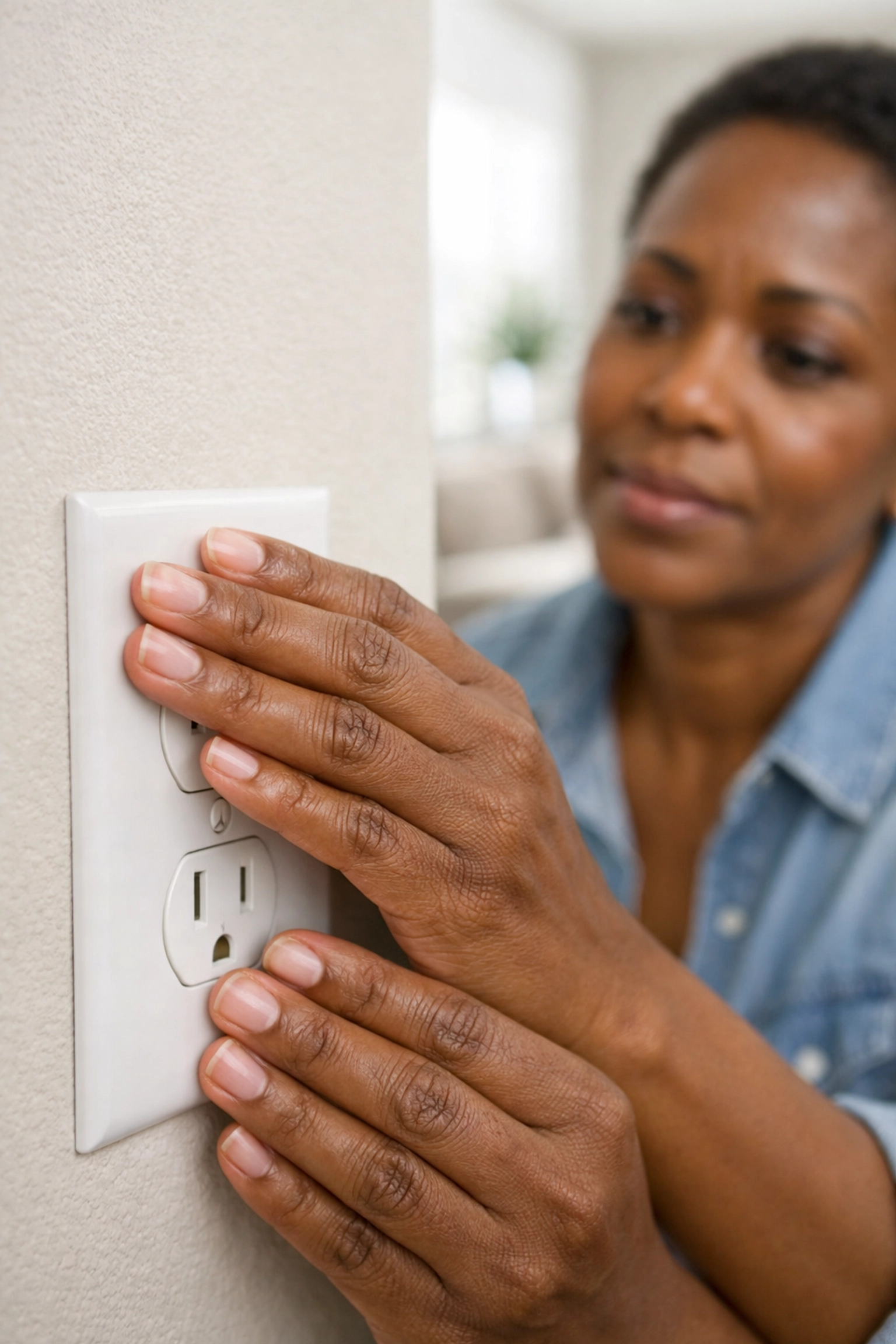
Understanding Overloaded Circuits
Most people think of overloaded circuits as "too many things plugged in." That's partly true, but here's what's really happening.
Every circuit in your home is designed to handle a specific electrical load, measured in amps. When the combined demand from everything on that circuit exceeds its capacity, the circuit becomes stressed. The wiring heats up. Connections can loosen. And yes: lights flicker.
Older homes in Gwinnett County and throughout Metro Atlanta often have electrical systems that were designed decades ago. Back then, a household might have had a refrigerator, a few lamps, and a television. Today? We're running refrigerators, multiple TVs, computers, gaming systems, HVAC units, phone chargers, and smart home devices: all at once.
If your lights flicker when you run multiple appliances, your home may benefit from a panel upgrade or additional dedicated circuits.
What You Should Do Right Now
Here's a simple guide for responding to flickering lights:
If flickering is isolated to one light:
- Check that the bulb is screwed in tightly
- Try replacing the bulb
- Test whether the switch feels loose or makes crackling sounds
If flickering affects multiple rooms or your whole home:
- Note when it happens and how long it lasts
- Check whether it coincides with appliance use
- Contact a licensed electrician for an inspection
If flickering is accompanied by buzzing, burning smells, or warm outlets:
- Stop using the affected circuit immediately
- Do not attempt DIY repairs
- Call a professional right away
When to Call Radiant Electric
Flickering lights are common, but they shouldn't be ignored when patterns suggest something deeper is happening. Your home's electrical system is designed to work quietly in the background. When it starts sending signals: through flickering, buzzing, or other irregularities: it's worth listening.
If you're in Gwinnett County or anywhere in the Metro Atlanta area and your lights are trying to tell you something, reach out to our team at Radiant Electric. We'll help you figure out what's causing the issue and whether it needs attention now or can wait.
Because at the end of the day, peace of mind is worth a phone call. And knowing your home is safe? That's priceless.