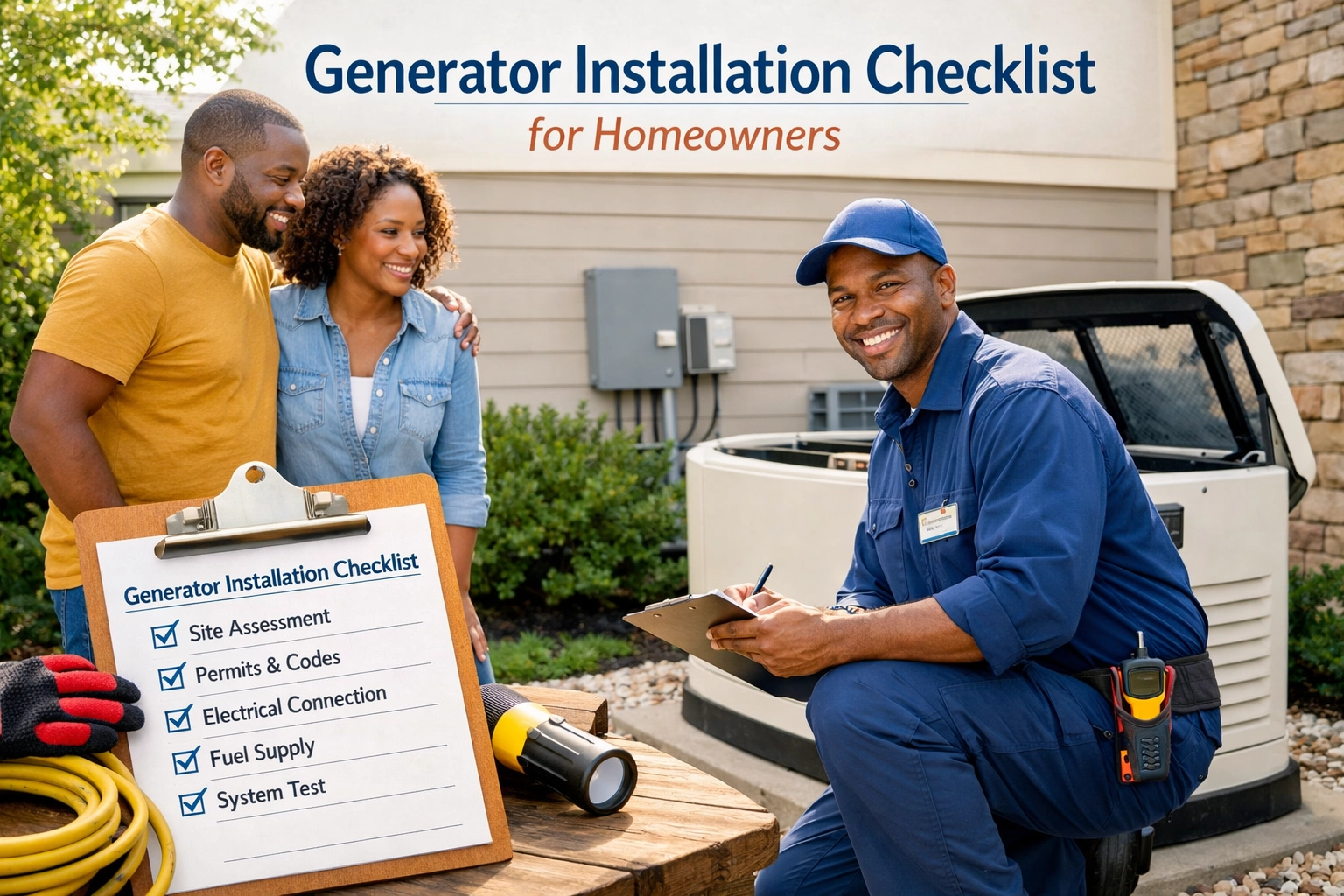
Generator Installation Checklist for Homeowners
Picture this: It's 2 AM during a summer thunderstorm in Gwinnett County. The power flickers once, twice, and then everything goes dark. Your refrigerator stops humming. The AC cuts out. And you're left wondering how long it'll be before Georgia Power gets things running again.
For Marcus and Tanya Williams, a couple in Lawrenceville, that scenario played out three times in one year. After the third outage, which lasted 18 hours and cost them a freezer full of groceries, they decided it was time to invest in a whole house generator.
Sound familiar? You're not alone. More and more Atlanta homeowners are realizing that backup power isn't a luxury anymore. It's becoming a necessity.
This isn't about scaring anyone. It's about helping you understand exactly what goes into getting a generator installed at your home so you can make smart, informed decisions. Think of this as your complete roadmap, a checklist you can actually use.
Step 1: Figure Out Your Power Needs
Before you even think about shopping for a whole house generator in Atlanta, you need to know what you're working with.
Start by making a list of everything you'd want powered during an outage. We're talking the essentials:
- Refrigerator and freezer (nobody wants spoiled food)
- HVAC system (crucial during Georgia summers and winter cold snaps)
- Water heater
- Sump pump (if you have one)
- Medical equipment (absolutely non-negotiable for some families)
- Wi-Fi router and phone chargers
- Lights in key areas
Here's the thing most people don't realize: appliances have two different wattage ratings. There's the running wattage (what it uses during normal operation) and the starting wattage (the extra power surge needed to kick on). Your HVAC system, for example, might run at 3,500 watts but need 7,000 watts to start up.
Add up both numbers for everything on your list. This total tells you what size generator you actually need, not what you think you need, not what your neighbor has, but what your home requires.

Step 2: Understand Permits and Local Regulations
Here's where things get real. Installing a whole house generator in Atlanta isn't a DIY weekend project. You'll need permits, and you'll need to follow specific codes.
In Gwinnett County specifically, you'll need to check with the local building department before any installation begins. The good news? Most permits get issued the same day you apply. But skipping this step can create major headaches down the road, especially if you ever try to sell your home.
A few things you'll need to verify:
- Electrical codes for your specific municipality
- Zoning requirements (where you can place the generator on your property)
- Noise ordinances (yes, generators make noise, and your neighbors might have opinions)
- Setback regulations (how far from property lines and structures)
If you live in an HOA community, don't forget to submit your plans for approval before moving forward. Some HOAs have strict guidelines about generator placement and even the type of enclosure you can use.
The takeaway: Do your homework on permits first. It'll save you from costly do-overs later.
Step 3: Choose the Right Location
Where your generator sits matters more than you might think.
Your installation spot needs to check several boxes:
- Code compliant (meeting all those setback requirements we just talked about)
- Easily accessible for maintenance and repairs
- Close to your fuel source (natural gas line or propane tank)
- Near your electrical connection to minimize wiring runs
- Away from windows, doors, and vents (generators produce exhaust)
- Not blocking any utilities
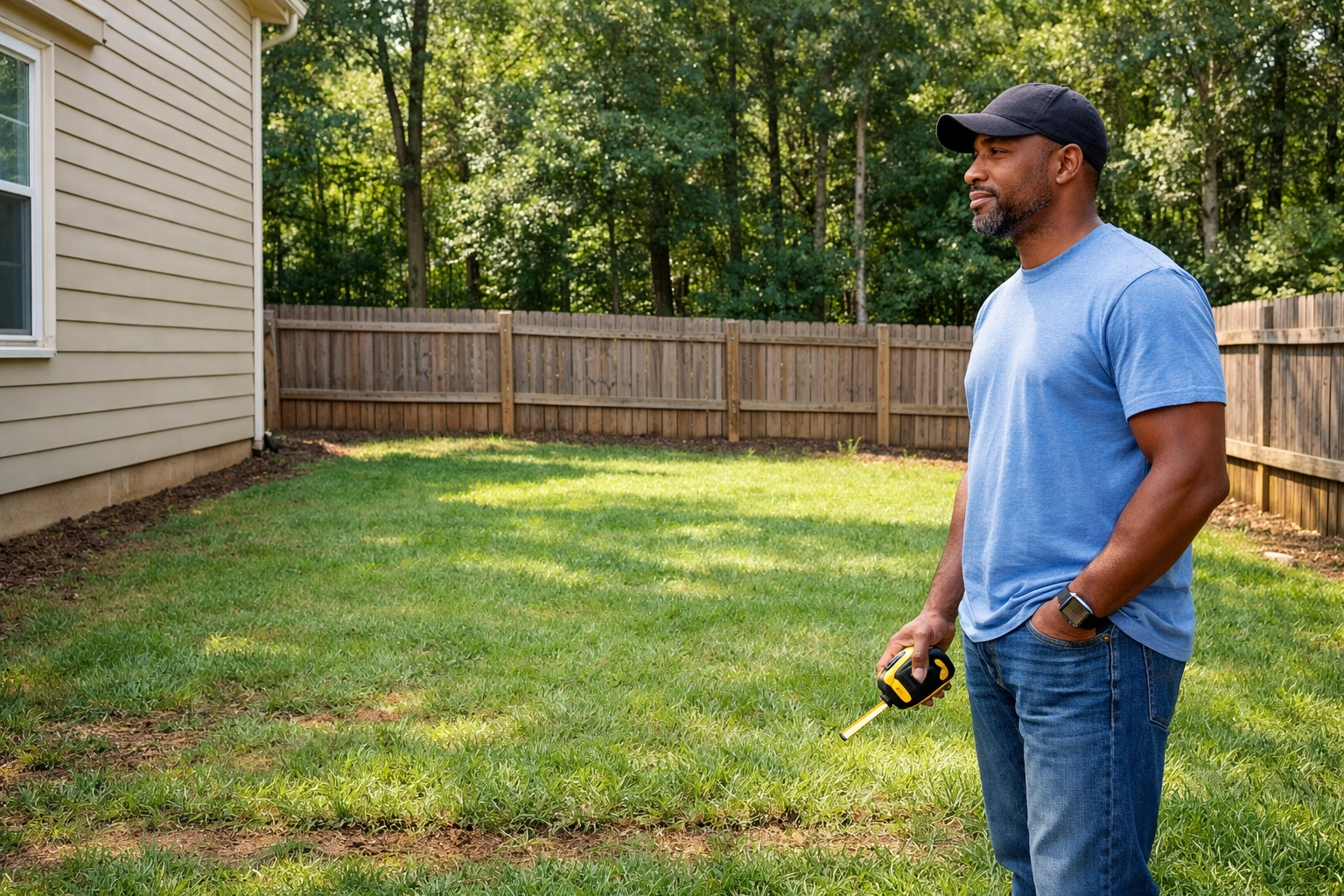
Here are the specific numbers to keep in mind: Your generator should be at least 60 inches away from any doors, windows, or vents. It needs to be at least 5 feet from all building areas it serves. And the top of the unit should sit at least 60 inches below your roofline.
Also, think about drainage. Georgia storms dump a lot of water fast. You want a spot that's flat, naturally elevated, or has good drainage so your generator isn't sitting in a puddle.
Step 4: Prepare the Foundation
Your generator needs a solid base. We're talking a concrete or composite pad that's:
- Level (this is non-negotiable)
- Larger than the generator's footprint
- Strong enough to support the weight
- Able to keep the unit above any standing water
This pad anchors your generator in place and protects it from ground moisture. Some homeowners try to skip this step or use makeshift solutions. Don't. A proper foundation extends the life of your investment and keeps everything operating safely.
Your installer should handle the rough-in work, the pad, any necessary plumbing connections, and electrical prep, before the generator itself arrives.
Step 5: Hire a Licensed Professional
This might be the most important item on the entire checklist.
A whole house generator installation involves serious electrical work, gas line connections, and integration with your home's existing systems. This isn't YouTube tutorial territory.
When choosing an installer, look for:
- Proper licensing (ask to see credentials)
- Insurance coverage (protects you if something goes wrong)
- Proven experience with generator installations in your area
- Detailed written estimates (not just a ballpark number)
- References you can actually call
At Radiant Electric, we've helped countless Metro Atlanta homeowners through this exact process. We know the local codes, we pull the permits, and we handle everything from pad preparation to final inspection.
Step 6: Understand the Electrical and Fuel Setup
Here's what happens during the actual installation:
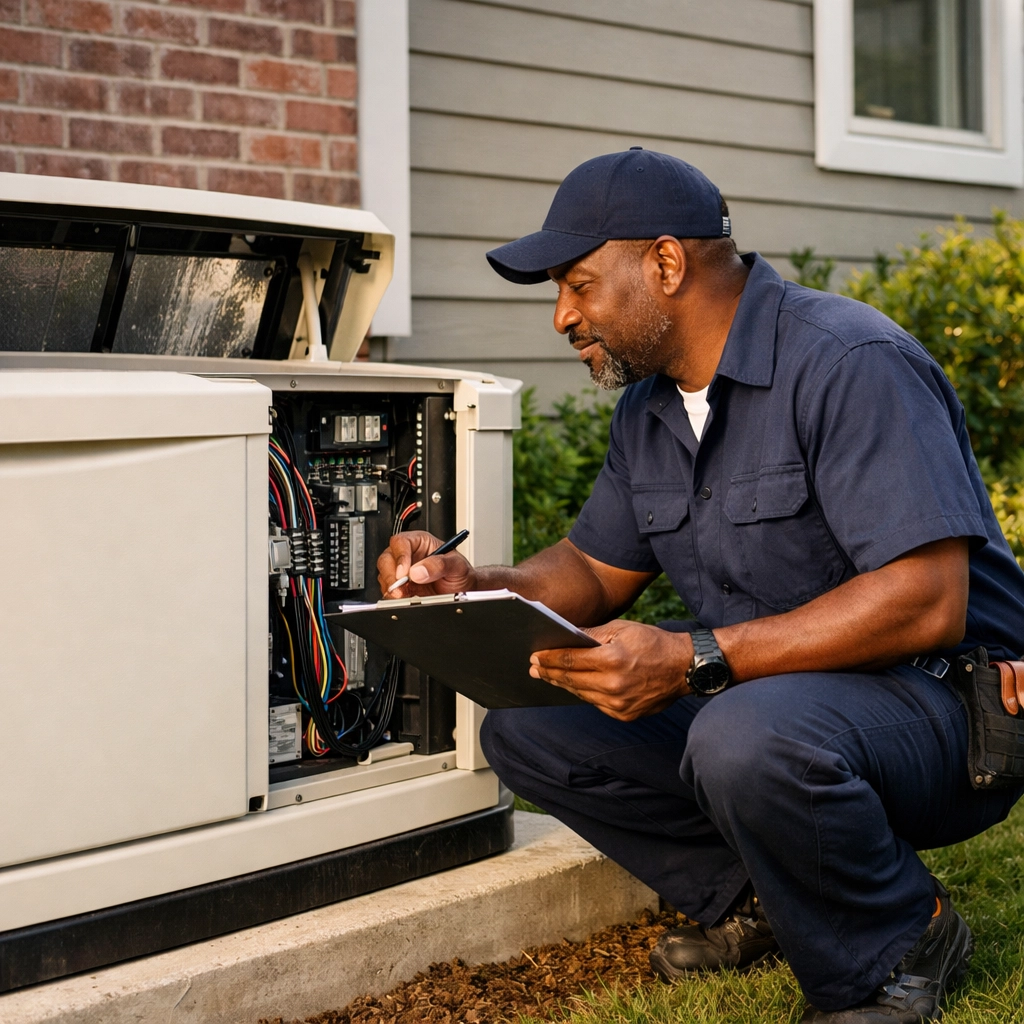
On the electrical side, your installer will add a sub-panel alongside your main electrical panel. They'll also install a transfer switch, this is the device that automatically detects when utility power goes out and tells your generator to kick on. Critical circuits from your main panel get redirected to run through this sub-panel.
On the fuel side (assuming you're going with natural gas, which is most common for a whole house generator in Atlanta), a trench gets dug connecting your generator to your home's gas meter. A gas line and trace wire go in, and everything gets inspected for potential leaks.
If you've recently upgraded any major systems, tankless water heater, pool pump, solar panels, make sure your installation team knows about it. These details affect how your generator integrates with your home.
Step 7: Schedule Inspections
Once the installation is complete, you're not quite done. Local building departments need to inspect and verify the work.
Call your building department to schedule inspections at the appropriate stages. After your unit is fully assembled, connected, and tested, you'll need a final inspection sign-off before everything is officially approved.
Keep all your documentation, permits, diagrams, receipts, inspection reports, and any correspondence. You'll want these records for warranty purposes, insurance claims, and if you ever sell your home.
Step 8: Set Up Ongoing Maintenance
A generator that sits unused for months can develop problems. Most modern whole house generators run automatic self-tests (usually weekly) to keep things in working order. But you'll still need regular professional maintenance.
Plan for:
- Annual professional inspections
- Oil and filter changes on schedule
- Battery checks (yes, your generator has a battery)
- Fuel system inspections
Think of it like your car. Regular maintenance keeps everything running smoothly when you actually need it.
Your Next Steps
Getting a whole house generator installed is a process, but it doesn't have to be overwhelming. When you break it down step by step, it's completely manageable.
Start by assessing your power needs. Research local permit requirements in your area: whether that's Gwinnett County, Marietta, or anywhere else in Metro Atlanta. Find a licensed, experienced installer who can guide you through site selection, preparation, and the actual installation.
The peace of mind you get from knowing your family will have power during the next outage? That's worth every bit of planning.
Ready to talk about a whole house generator for your Atlanta home? Reach out to Radiant Electric and we'll walk you through exactly what your home needs.