What Causes Breakers to Trip Repeatedly? (homeowner guide + when it's an emergency)
You're in the middle of making dinner. The rice cooker is going, the air fryer just kicked on, and your teenager decided this was the perfect moment to blow-dry their hair in the bathroom down the hall.
Then it happens. Click. Everything goes dark.
You head to the electrical panel, flip the breaker back on, and within ten minutes, click, it trips again.
Sound familiar? If you're a homeowner in Gwinnett County or Metro Atlanta, you've probably done the breaker-reset shuffle more times than you'd like to admit. But here's the thing: your circuit breaker isn't trying to ruin your evening. It's actually doing exactly what it's supposed to do, protecting your home.
This isn't about scaring anyone. This is about understanding what your electrical system is telling you and knowing when a minor inconvenience crosses into emergency territory.
What Your Circuit Breaker Actually Does
Think of your circuit breaker as the bouncer at a club. Its entire job is to stop trouble before it starts. When too much electrical current tries to flow through a circuit, the breaker "trips" and cuts off power to prevent overheating, damaged wiring, or worse, an electrical fire.
Here's what that really means: your breaker tripping is a good thing. It's your home's electrical system saying, "Hey, something's not right here, and I'm shutting things down before it becomes a problem."
The real concern isn't when a breaker trips once. It's when that same breaker keeps tripping over and over again.
The 5 Main Reasons Breakers Trip Repeatedly
Let's break down the usual suspects. Understanding these causes will help you figure out whether you're dealing with a quick fix or something that needs professional attention.

1. Overloaded Circuits (The Most Common Culprit)
This is the number one reason breakers trip, especially in older homes throughout Atlanta and Gwinnett County.
An overloaded circuit happens when you're asking more from a circuit than it can safely deliver. Picture it like this: your circuit is a garden hose, and electricity is the water. If you try to push too much water through at once, something's going to give.
Common scenarios that cause overloads:
- Running the dishwasher, microwave, and coffee maker simultaneously
- Space heaters plugged into the same circuit as other appliances
- Multiple high-wattage devices in the same room (hair dryers pull around 1,800 watts alone!)
- Holiday lighting displays added to already-busy circuits
Carlos, a homeowner in Lawrenceville, called us last summer because his kitchen breaker was tripping every evening around dinner time. Turns out, his family's routine of running the air fryer, instant pot, and microwave all at once was overwhelming a circuit designed decades ago for much simpler cooking setups.
The fix: Spread high-wattage appliances across different circuits, or consider having additional circuits installed in high-demand areas like kitchens.
2. Short Circuits
A short circuit is more serious than an overload. It happens when a "hot" wire (the one carrying electricity) touches a neutral wire, creating a path with almost no resistance. This causes a massive surge of current that trips the breaker immediately.
Warning signs of a short circuit:
- Breaker trips the instant you plug something in
- Burning smell near outlets or the panel
- Visible scorch marks or discoloration around outlets
- The breaker feels warm to the touch
Short circuits often occur due to damaged wiring inside walls, frayed appliance cords, or loose connections. They're not a DIY situation.
3. Ground Faults
Ground faults are similar to short circuits, but instead of the hot wire touching the neutral wire, it touches a ground wire or a metal surface it shouldn't.
These are especially common in areas with moisture: bathrooms, kitchens, laundry rooms, and outdoor spaces. Water and electricity don't mix, and ground faults are often the result of that unfortunate combination.
This is exactly why building codes require GFCI outlets (those outlets with the "test" and "reset" buttons) in wet areas. If your older Metro Atlanta home doesn't have them, that's something worth addressing. You can learn more about current Georgia electrical code requirements to see what updates might benefit your home.

4. Faulty Appliances
Sometimes the problem isn't your electrical system at all: it's a specific appliance that's gone bad.
Maria in Duluth spent two frustrating weeks dealing with a tripping breaker in her living room. She'd reset it, everything would work fine for a day or two, then trip. After some detective work, she discovered her older floor lamp had damaged internal wiring. Once she unplugged it, the problem disappeared completely.
How to test for a faulty appliance:
- Unplug everything on the affected circuit
- Reset the breaker
- Plug devices back in one at a time, waiting a few minutes between each
- When the breaker trips, you've found your culprit
If the breaker trips with nothing plugged in, the issue is in your wiring: not your appliances.
5. Worn-Out or Defective Breaker
Circuit breakers don't last forever. If yours is 15-20+ years old, it may be tripping simply because it's worn out and can no longer accurately sense electrical loads.
A defective breaker might trip even when there's no actual overload, short circuit, or ground fault. It might also fail to trip when it should: which is actually the more dangerous scenario.
Many homes in Gwinnett County and the greater Atlanta area still have their original electrical panels from the 1980s or 1990s. If your panel falls into this category, it's worth having a professional inspection. Check out our guide on signs your electrical panel needs attention for more details.
Simple Troubleshooting You Can Do Safely
Before calling an electrician, there are a few safe steps you can take to diagnose the problem:
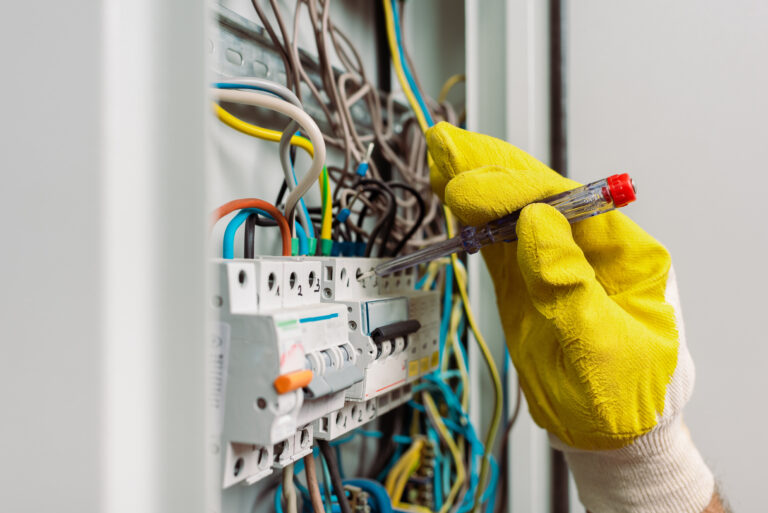
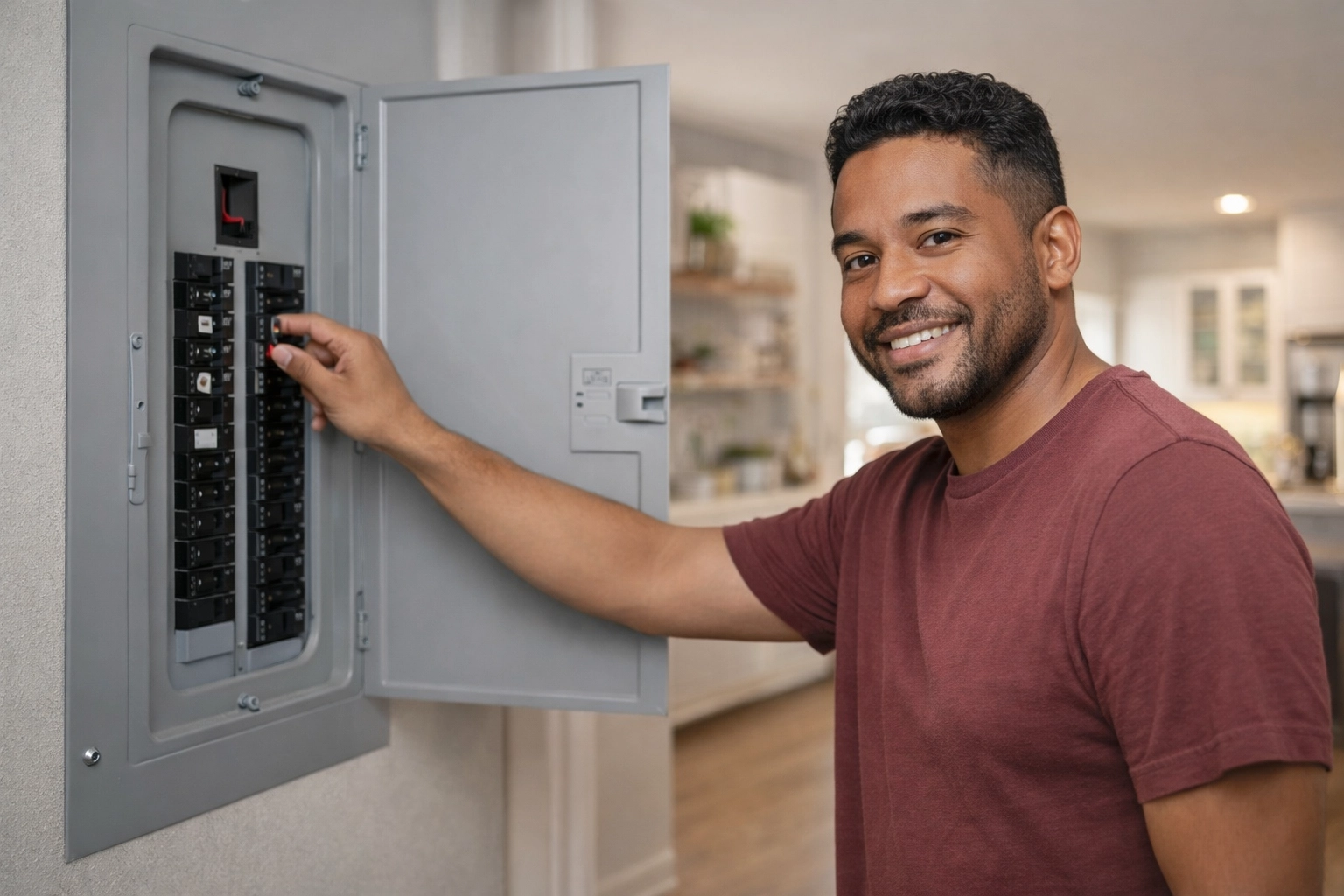
Step 1: Identify which circuit is tripping
Your panel should have labels indicating which breaker controls which area. If it doesn't, now's a great time to map it out.
Step 2: Reduce the load
Unplug or turn off devices on that circuit. If you've been running multiple high-wattage appliances, this is likely your issue.
Step 3: Check for obvious problems
Look for damaged cords, scorch marks on outlets, or any burning smells. If you notice any of these, stop troubleshooting and call a professional.
Step 4: Reset the breaker properly
Push it firmly to the "off" position first, then flip it back to "on." A breaker that won't stay reset has a more serious issue.
Step 5: Test with one device at a time
If the breaker holds with nothing plugged in, reconnect devices individually to identify any faulty appliances.

When It's an Emergency (Call an Electrician Immediately)
Most people think a tripping breaker is just an annoyance. And sometimes it is. But certain situations require immediate professional attention.
Call a licensed electrician right away if:
-
You smell burning or see smoke : This indicates potential fire danger. Don't reset the breaker. Leave it off and call immediately.
-
The breaker trips with nothing plugged in : This points to a wiring problem inside your walls.
-
You see sparks when plugging in devices : Sparking is never normal and suggests damaged wiring or outlets.
-
Outlets or switches feel warm : Heat means resistance, and resistance means potential fire risk.
-
The breaker panel itself is warm or making buzzing sounds : This is a serious warning sign of panel failure.
-
Water is involved : If a breaker is tripping after flooding, leaks, or water exposure, don't touch the panel. Call a professional.
-
The same breaker trips repeatedly despite troubleshooting : Persistent tripping after you've addressed obvious causes means something deeper is wrong.
For true electrical emergencies in the Atlanta area, Radiant Electric offers emergency electrician services to get your home safe quickly.
What NOT to Do
A few important don'ts to keep in mind:
-
Don't keep resetting a breaker that won't stay on. Each reset sends a surge through potentially damaged wiring.
-
Don't replace a breaker with a higher-amp version. This removes the protection and creates a fire hazard. The breaker's amp rating must match the wire gauge.
-
Don't ignore the problem. A tripping breaker is your home communicating with you. Listen to it.
-
Don't open your electrical panel if you're not comfortable. There's live electricity in there, and mistakes can be fatal.
The Bottom Line
A circuit breaker that trips once in a while? Usually just your home doing its job. A circuit breaker that trips repeatedly? That's your electrical system waving a red flag.
Understanding the difference between an overloaded circuit (annoying but manageable) and a short circuit or ground fault (potentially dangerous) helps you respond appropriately. When in doubt, calling a licensed electrician isn't overcautious: it's smart homeownership.
If you're in Gwinnett County, Lawrenceville, Duluth, or anywhere in Metro Atlanta and dealing with stubborn breakers, the team at Radiant Electric can diagnose the issue and get your electrical system running safely. Because peace of mind is worth more than another trip to the breaker panel.