From Panic Doors to Smart Lighting: Protecting Our Local Schools with Advanced Security Tech
Every weekday morning across Georgia, thousands of parents like Marcus go through the same routine. He helps his daughter, Maya, double-check her backpack for her lunchbox, walks her to the front doors of her elementary school, and gives her a high-five before she heads inside. As he watches those heavy glass doors click shut, he wants to feel one thing: complete confidence.
School communities know these hallways well. When we talk about school security systems, we aren’t just talking about wires, cameras, or metal doors. We are talking about the sanctuary where children learn and grow.
This isn’t about scaring anyone. In fact, it’s quite the opposite. By understanding how modern technology works behind the scenes, it becomes easier to move from a place of "what if" to a place of "I know they’re safe." Today’s school security is a quiet, sophisticated invisible shield designed to support safer learning environments.
The Foundation: Why Smart Panels are the Brain of the Operation
When most people think of security, they think of a camera or a lock. But those devices are just the hands and eyes. The "brain" of the entire system is the electrical panel. In many older Georgia schools, the electrical infrastructure wasn't designed to handle the high-tech demands of 2026.
This is where smart panels come into play.
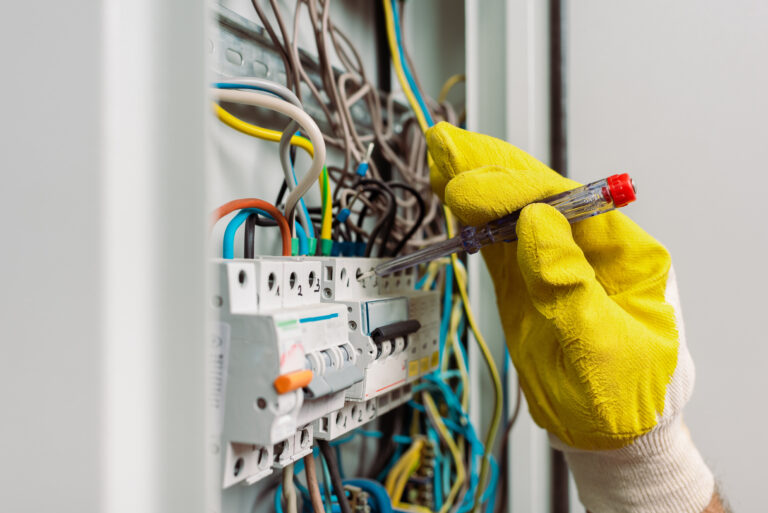
You might hear an electrician talk about "load management" or "integrated busbars." Here’s what that really means: A smart panel is like a traffic controller for your electricity. Instead of just being a box of fuses that flip off when things get too hot, a smart panel communicates with us in real-time. It tells us if a specific security circuit is drawing too much power or if a backup battery is starting to fail.
For a school, this is a game-changer. If a standard breaker trips in the middle of the night, the security cameras might go dark without anyone knowing until the next morning. With a properly integrated smart system, the facility manager gets an instant alert on their phone. In many cases, the issue can be identified before the first bell rings.

School Lockdown Doors: More Than Just a Lock
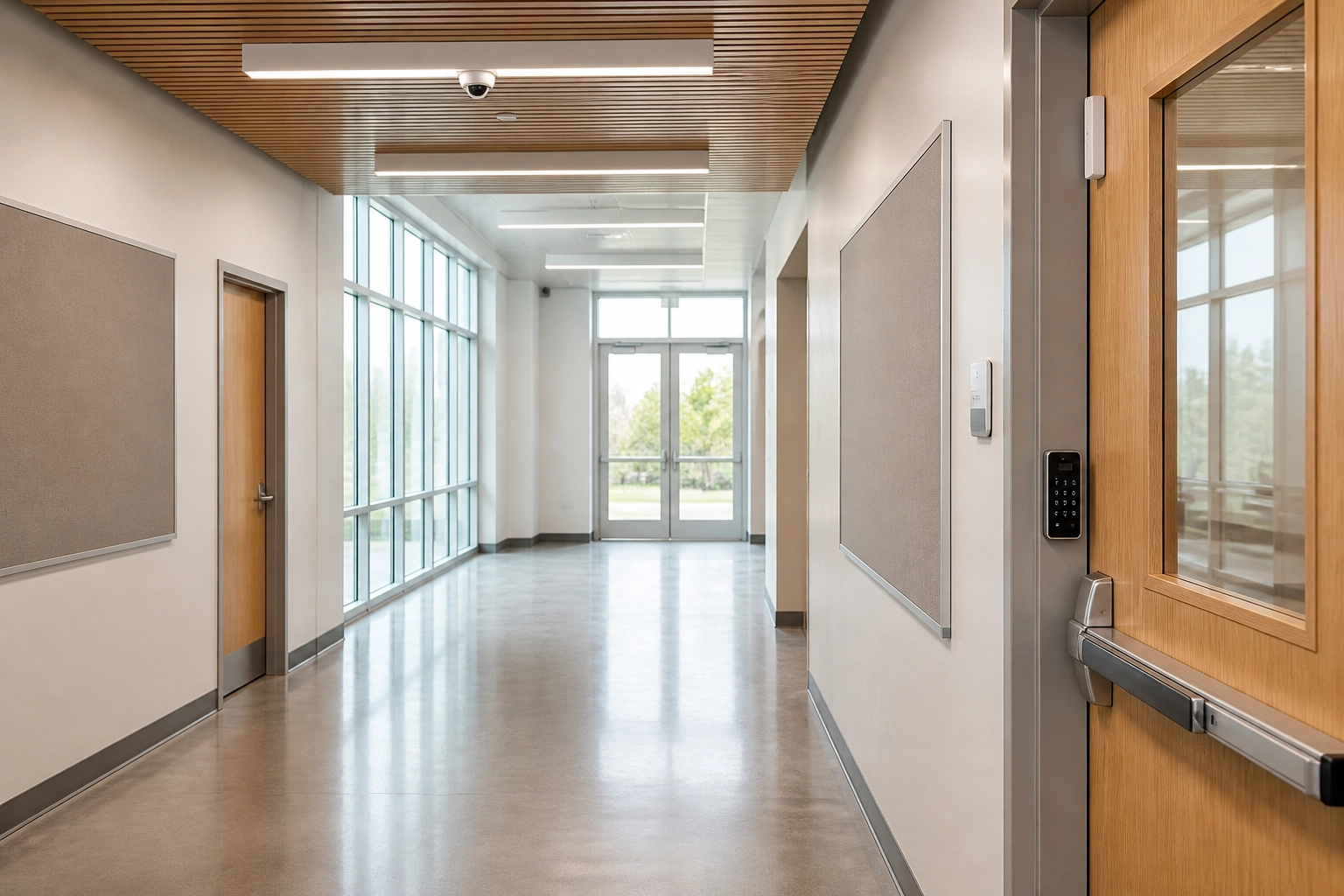
We’ve all seen the traditional "panic bar" on a school door: that long metal handle you push to get out. While those are still vital for fire safety, modern school security systems require something much more intelligent.
Modern school lockdown doors are now integrated into the building’s centralized nervous system. High-grade magnetic locks (mag-locks) and electrified strikes can be triggered instantly from the front office or even via a mobile app used by authorized staff.
Most people think that "locked" just means the handle won't turn. In a high-security environment, "locked" means the door is actively communicating its status. If a door is propped open by a stray rock or isn’t fully latched, the system sends a signal. In well-designed systems, the wiring for these doors is redundant. This means even if one power source is cut, the door stays secure.
It’s about creating layers. Think of it like your home’s front door. You might have a deadbolt, a chain, and a doorbell camera. Schools use a similar layered approach, but on a much larger, commercial scale.
Lighting the Way: The Role of Smart Lighting in Emergencies
It sounds simple, but lighting is one of the most effective security tools we have. However, we aren't just talking about keeping the parking lot bright (though that’s important too!).
We are now implementing "Alert Route Lighting Systems." Here is what that really means: In the event of an emergency, the lights can actually communicate instructions. For example, if a fire alarm is triggered, smart LED panels can turn green to show the safest exit path or pulse red in areas that should be avoided.
Homeowners often believe that security lighting is just about "on" or "off." In a modern school, smart lighting is about information. We use advanced sensors that detect movement; if someone is in a hallway where they shouldn't be after hours, the lights in that specific zone can jump to 100% brightness while simultaneously alerting the monitoring team. This acts as a deterrent and provides crystal-clear footage for the AI-enabled surveillance cameras.

Reliability is the Only Metric That Matters
A security system that works 99% of the time is a failing system. When it comes to our local schools, we aim for 100%. This is why we emphasize the "unseen" parts of the job: the backup generators, the Uninterruptible Power Supplies (UPS), and the surge protection.
In Georgia, schools get their fair share of wild weather. A summer thunderstorm can knock out power in a heartbeat. If the power goes out, the security system shouldn't go with it. Well-integrated systems are designed so that the transition from "grid power" to "backup power" is so seamless you wouldn't even notice the lights flicker.
Thermal imaging is one of the specific tools used during inspections. This allows teams to see "hot spots" inside walls or panels before they ever cause a problem. Think of it like a medical X-ray for your building’s veins. If a wire is running too hot: like a stovetop coil starting to glow: it needs immediate attention. Schools require that same level of urgency when safety systems are involved.
A Collective Responsibility
We recently worked with a school administrator named Sarah. She was concerned that adding more security would make the school feel like a "fortress" and intimidate the students. We showed her that modern tech is actually more discreet than the old-fashioned way.
By using smart sensors and integrated security systems, it was possible to remove some of the clunky, visible hardware and replace it with streamlined, intelligent solutions. The result was a school that felt more open and welcoming, yet was significantly more secure than it had been for decades.
This is the goal. We want our teachers to focus on lesson plans, not on whether the side door is locked. We want our students to focus on their math problems, not on the "what-ifs."

Clear Takeaways for School Safety
If you are a parent, a teacher, or a school board member, here are the key signals to look for in a robust electrical security setup:
- Integrated Power: Does the security system have its own dedicated backup, or is it tied to the general building power?
- Real-time Monitoring: Are the panels "smart" enough to tell you when a component is failing before it actually breaks?
- Layered Lighting: Is the lighting used as a tool for guidance, or is it just there to keep the dark away?
- Redundant Communication: If the Wi-Fi goes down, does the security system still talk to the local authorities?
The wiring is only one part of the bigger safety net. Whether it's a small private academy or a massive public high school, the principles of reliability and community care remain the same.
Protecting local schools requires thoughtful planning, dependable infrastructure, and technology that works when it matters most. Smart panels, advanced door hardware, layered lighting, backup power, and real-time monitoring all play a role in creating safer facilities for students and staff.
School safety technology works best when it is reliable, layered, and built to support fast, informed response.