Do You Really Need a Panel Upgrade for an EV Charger?
Marcus had just pulled his new electric SUV into his driveway in Decatur. He’d spent months researching battery ranges and regenerative braking, but as he looked at the standard 120-volt outlet in his garage, a new worry set in. He knew that "trickle charging" from a standard wall plug would take days to fill his battery. He needed a Level 2 charger, and he’d heard whispers from neighbors that his 1960s-era home might need a massive, expensive electrical panel upgrade in Atlanta before he could even plug it in.
If you’re in the same boat, take a deep breath. This isn't about scaring anyone. You might have been told that an EV charger automatically means you need to rip out your entire electrical system and start over. That isn't always the case.
Understanding your home’s electrical capacity is about education, not fear. While adding a high-powered charger is a big step, it’s a manageable one. Here is what you actually need to know about your panel, your power, and your options.
The Brain of Your Home: What the Panel Actually Does
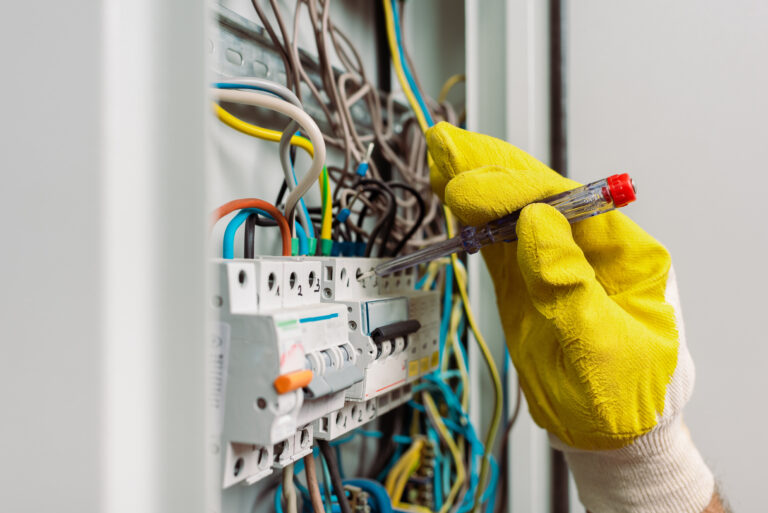
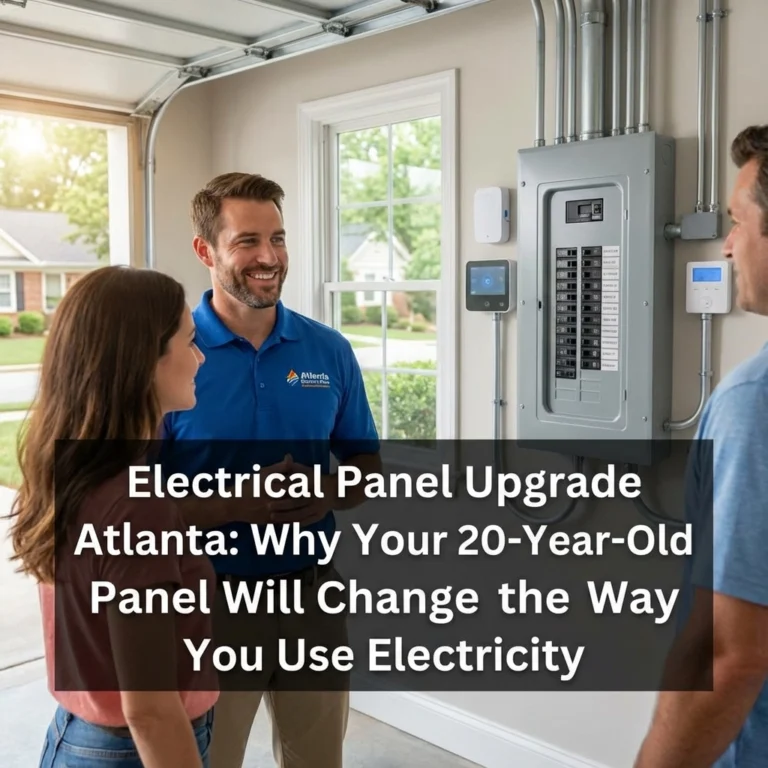
Think of your electrical panel as the brain of your house. It takes the massive amount of electricity coming from the utility line and decides how to distribute it safely to your lights, your refrigerator, and your microwave. Inside that panel are circuit breakers, those little switches that "trip" or flip off if a circuit gets overloaded.
Most people think that if they have an empty slot in their panel, they can just pop in a new breaker for an EV charger. Unfortunately, it’s not just about physical space; it’s about total capacity.
Imagine your electrical panel is like a main water pipe coming into your house. You can add as many faucets as you want (breakers), but if that main pipe only provides a certain amount of water, you can't run the shower, the dishwasher, and the garden hose all at once without losing pressure, or in the case of electricity, blowing a fuse.
Why an EV Charger is a "Different Beast"
Most of the appliances in your home are "intermittent." Your toaster runs for two minutes. Your microwave runs for five. Even your air conditioner cycles on and off.
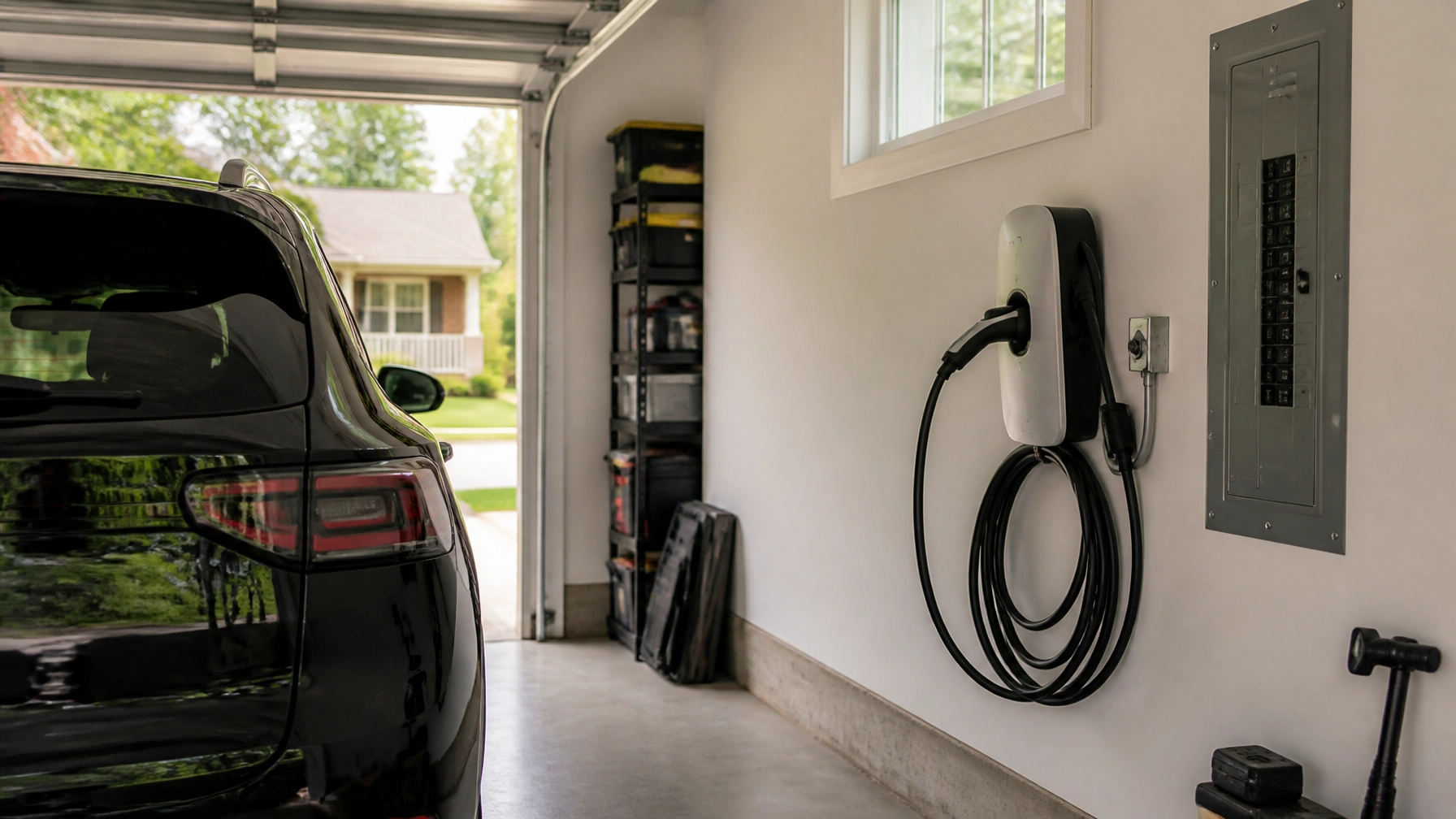
An EV charger is what electricians call a continuous load. When you perform an ev charger installation in Atlanta, that device will likely pull a massive amount of electricity at a steady rate for five, eight, or even twelve hours straight.
Because of this constant pull, the National Electrical Code (NEC) requires that the circuit be able to handle 125% of the charger's actual power draw. If you buy a charger that pulls 40 amps, the wire and the breaker must be rated for 50 amps. This extra "headroom" prevents wires from overheating, much like how a stovetop coil stays red hot, if a wire gets that hot inside your walls, it’s a major safety hazard.
The 100-Amp vs. 200-Amp Reality
In many older Metro Atlanta neighborhoods, like those in Smyrna or Marietta, homes were originally built with 100-amp or 150-amp service. Back then, we didn't have high-definition TVs in every room, dual-zone HVAC systems, or electric cars.
- 100-Amp Panels: If your home has a 100-amp panel, you are a prime candidate for an electrical panel upgrade in Atlanta. Adding a 40-amp or 50-amp car charger to a 100-amp panel that is already running an electric range and an AC unit is often pushing the math too far.
- 200-Amp Panels: If you have a 200-amp panel, you are usually in good shape. This is the modern standard for residential services, and it generally provides enough "lanes on the highway" to accommodate an EV charger without a full upgrade.
Here’s what that really means: Your "amperage" is simply the total volume of electricity your home can handle at one single moment. Upgrading from 100 to 200 amps doubles that volume, giving your home the breathing room it needs for modern technology.

The "Load Calculation": The Only Number That Matters
Before you commit to a major upgrade, a professional should perform a load calculation. This isn't a guess; it’s a specific mathematical formula required by code.
An electrician will look at the square footage of your home and the "fixed loads", things like your electric oven, dryer, water heater, and that big AC unit that works overtime during Georgia summers. They add these up, apply a "diversity factor" (because you probably aren't roasting a turkey while drying five loads of towels at 3:00 AM), and see how much room is left for the car.
If the math shows your current panel will be pushed to 95% capacity, that’s a signal. We don't want your home's "brain" running at maximum capacity for eight hours every night. It leads to heat, and heat leads to wear and tear.
Signals, Not Failures: When an Upgrade is Mandatory
Homeowners often believe that if their lights aren't flickering, their panel is fine. However, your system might be sending you "signals" that it’s struggling with the new demand. Think of these as early warning lights on a dashboard:
- Warm to the Touch: If the front of your electrical panel feels warm when the car is charging, that is a signal that the bus bars inside are struggling with the load.
- The "Buzz": A faint humming or buzzing sound from the panel when the charger kicks on is a sign of a loose connection or a breaker that is vibrating under high stress.
- Flickering Lights: If your kitchen lights dim for a split second when the car starts charging, your system is experiencing a "voltage drop."
Addressing these signals early makes the issue manageable rather than catastrophic. It’s the difference between a planned upgrade and a midnight call for an emergency electrician.
Can You Avoid the Upgrade?
Sometimes, yes. If your load calculation is just slightly over the limit, you have a few modern workarounds:
- The "Lower-Amp" Charger: You don't have to install a 50-amp circuit. Many Level 2 chargers can be adjusted to 16 or 24 amps. It will charge your car slower, but it might fit safely within your 150-amp panel’s limits.
- Smart Load Management: There are modern devices that act like a traffic cop for your electricity. If your AC and oven are both running, the device will temporarily pause or slow down your car charger. Once the oven is off, it ramps the car charging back up.
- Sub-Panels: If your main panel is full of breakers but your total power capacity (amperage) is fine, adding a small sub-panel in the garage can solve the physical space problem without a full service upgrade.
The Atlanta Context: Humidity and Heat
In places like Lawrenceville or Sandy Springs, our electrical systems face a unique challenge: the heat. In July and August, your air conditioner is already pulling a massive amount of power just to keep the humidity at bay.
When you add an ev charger installation in Atlanta to that equation, you’re asking your electrical panel to perform at its peak during the hottest part of the year. Older panels, especially those located on the sunny side of a house or in a stifling garage, can degrade faster under this kind of heavy, high-heat use. This is why a safety inspection is so critical before you plug in for the first time.
Specific Guidance: The Do’s and Don’ts
To make sure your transition to an EV is smooth and safe, follow these clear guidelines:
- DO ensure your electrician pulls a permit. In most of Metro Atlanta, including Decatur, a permit is required for an EV charger. This ensures a third-party inspector verifies the work is up to code.
- DON'T use a "dryer splitter" or cheap adapters to plug your car into an existing 240V outlet. These are often not rated for the continuous heat generated by an EV charger.
- DO check for utility rebates. Many local power companies offer significant credits for both the charger installation and the panel upgrade.
- DON'T ignore a tripping breaker. If the breaker for your charger trips once, it might be a fluke. If it trips twice, there is a fundamental safety issue that needs a professional look.
Final Takeaway
You don't always need a panel upgrade for an EV charger, but you always need a professional assessment. If you have a 200-amp panel in a newer home, you’re likely ready to go. If you’re living in a beautiful older home with 100-amp service, an upgrade isn't just an "extra cost": it's an investment in the long-term safety and value of your home.
By taking the time to understand the "why" behind the wiring, you can charge your new car with total peace of mind, knowing your home’s "brain" is more than capable of handling the load.