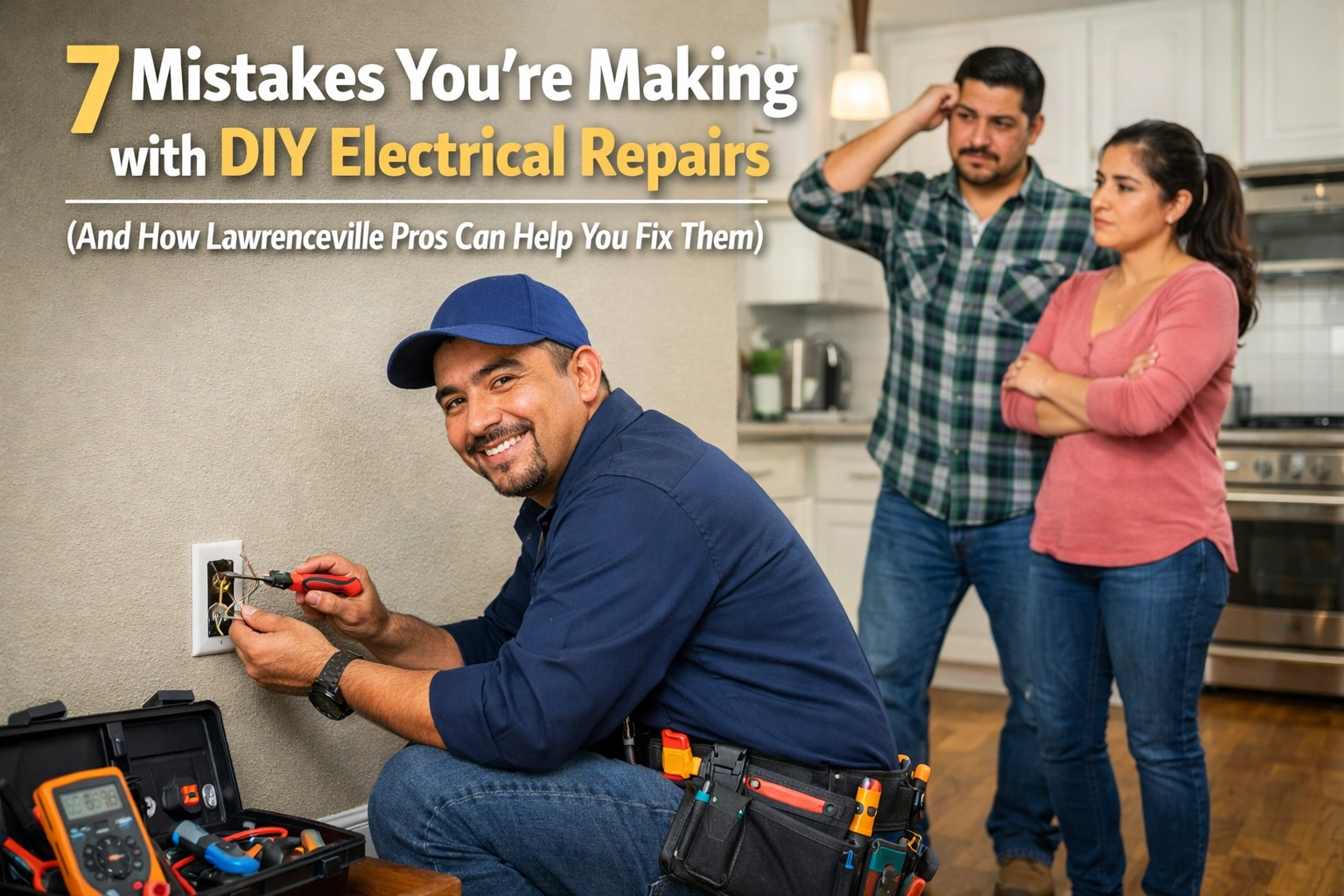
7 Mistakes You’re Making with DIY Electrical Repairs (And How Lawrenceville Pros Can Help You Fix Them)
You’ve probably been there: it’s a Saturday afternoon in Lawrenceville, and that one outlet in the kitchen has been acting up for weeks. You’ve watched a couple of YouTube videos, you’ve got a screwdriver, and you figure, "How hard can it really be?" We see this all the time at Radiant Electrical. Whether it’s a homeowner in Gwinnett County trying to save a few bucks or a DIY enthusiast in Marietta tackling a weekend project, the temptation to handle your own wiring is strong.
Before we go any further, I want to be clear: this isn't about scaring anyone. We love a good DIY spirit. But electricity isn't like painting a room or fixing a leaky faucet. If you mess up a paint job, you just repaint it. If you mess up an electrical circuit, the consequences are a lot heavier. Understanding these common pitfalls is about keeping your family safe and ensuring your home stays up to the 2026 Georgia safety codes.
Here is a breakdown of the seven most common mistakes we see on the job site and why they matter for your home’s long-term health.

Caption: A professional Radiant Electrical technician, an African American man in his 40s, explains a circuit layout to a Mexican-American homeowner in a well-lit Lawrenceville garage.
1. Using the Wrong Wire Gauge
Most people think "a wire is a wire," but that couldn't be further from the truth. We often walk into homes in the Metro Atlanta area and find "Bell wire" or thin lamp cords used for permanent fixtures.
The Signal: Your lights flicker when the microwave kicks on, or the wires feel warm to the touch.
What it really means: Imagine trying to push the volume of a fire hose through a skinny garden hose. The pressure builds up, and eventually, something has to give. In electrical terms, that "pressure" is heat. Using a wire that is too thin (undersized) for the electrical load causes the insulation to melt. Once that insulation is gone, you have bare, red-hot copper sitting against your wooden wall studs.
At Radiant Electrical, we ensure every circuit uses the correct gauge: usually 12-gauge or 14-gauge for standard household circuits: to keep the "flow" safe and cool.
2. Making Loose or Poor Connections
We recently visited a home near Sugarloaf Mills where the homeowner, Marcus, had replaced his own outlets. He was frustrated because his TV kept cutting out. When we pulled the outlet from the wall, the wire literally fell out of the terminal.
The Warning: A "sizzling" or "crackling" sound coming from your walls.
The Fix: Every connection needs to be tight. When a wire is loose, the electricity has to "jump" across the gap to complete the circuit. This is called arcing.
Here’s what that really means: Arcing is essentially a tiny, continuous lightning bolt happening inside your wall. It generates massive amounts of heat and is one of the leading causes of house fires in Gwinnett County. Using high-quality wire nuts and properly wrapping the wire around terminal screws (clockwise!) is a small step that makes a massive safety difference.
3. Working on "Live" Circuits
This sounds like common sense, but you’d be surprised how often people skip the breaker panel because "it’s just a quick swap." Even if you flip the wall switch off, the wires inside the box can still be carrying a full 120 volts of electricity.
The Pro Move: Never trust a switch. Always use a non-contact voltage tester.
Real Job Site Vibe: Our techs never touch a wire until they’ve verified it’s "dead" with a calibrated meter. Most people think if the light is off, the power is off. In reality, a miswired "hot" wire could still be waiting to give you a dangerous shock. If you aren't sure which breaker controls which room, check out our electrical panel upgrade and rewiring project in metro atlanta to see how a properly labeled system should look.

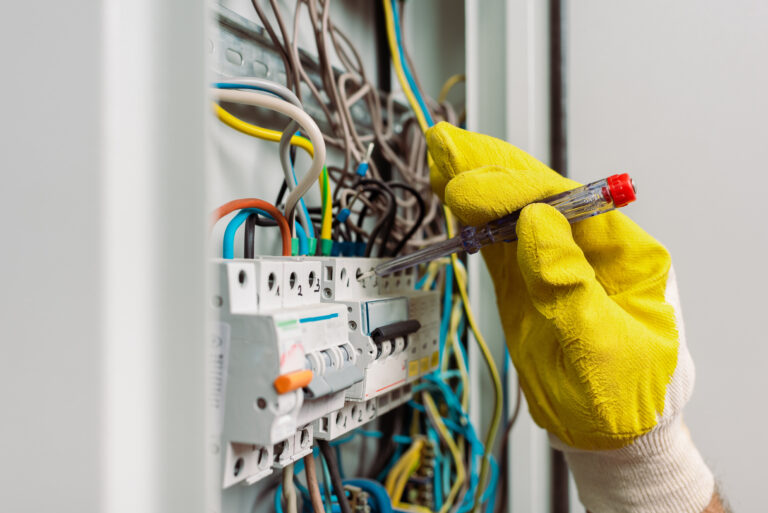
Caption: Close-up of a realistic, modern electrical panel in a Lawrenceville home, showing clean, organized wiring and clearly labeled circuit breakers.
4. "Double Tapping" Breakers
When homeowners run out of space in their electrical panel, they sometimes try to squeeze two wires into one circuit breaker. This is known as "double tapping."
The Misconception: "There's an extra screw hole, so why not use it?"
The Reality: Most breakers are designed to hold only one wire. When you put two in there, neither one is truly secure. Over time, the vibration of electricity moving through the wires causes them to loosen. This leads to the arcing and overheating mentioned earlier. If your panel is full, you don’t need a DIY hack; you need a professional panel upgrade. It's much cheaper than dealing with a panel fire.
5. Stripping Wires Like a Pro (Or Not)
When you're stripping the plastic insulation off a wire, it’s easy to get carried away. We often see DIY jobs where there's an inch of bare copper sticking out from behind a wire nut or a terminal.
The Danger: If that bare copper touches the metal electrical box or another wire, it creates a short circuit.
What it really means: A short circuit is when electricity takes a "shortcut" it wasn't supposed to take. It results in a massive burst of energy that usually trips the breaker immediately: or, if the breaker fails, starts a fire. You only need enough bare copper to make the connection; any more is a hazard.
6. Forgetting the Ground Wire
In many older Lawrenceville and Marietta homes, the grounding system isn't up to modern standards. We see DIYers install new three-prong outlets but leave the green "ground" wire unattached because they don't see a place for it.
The Signal: You get a tiny "zip" or shock when you touch a metal appliance like your toaster or fridge.
The "Why": The ground wire is your safety net. If a wire inside an appliance comes loose and touches the metal casing, the ground wire gives that electricity a safe path back to the earth. Without it, you become the path to the earth when you touch the appliance.

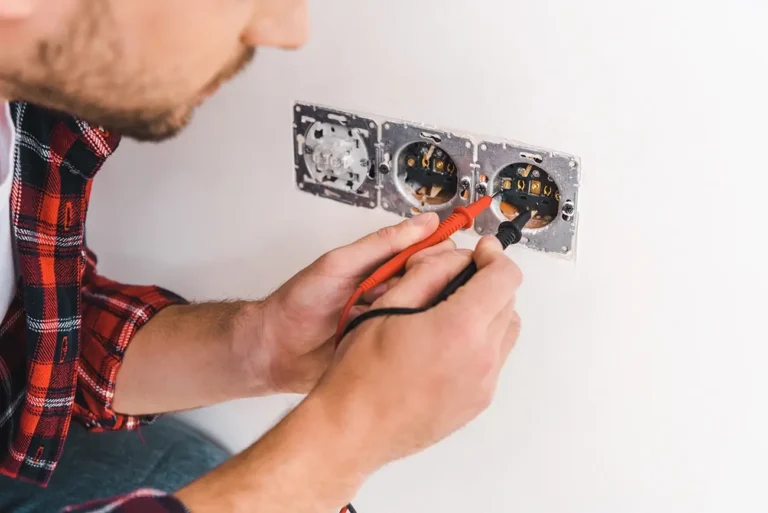
Caption: A Mexican-American electrician from Radiant Electrical using a digital tester to ensure a kitchen outlet is properly grounded in a renovated Atlanta home.
7. Messing with the Main Panel Interior
This is the big one. While changing a light fixture is one thing, opening the main "dead front" cover of your electrical panel is a whole different ball game.
The Truth: Even with the main breaker turned off, the large "lugs" (the big metal blocks where the power comes into the house) are always live. They carry enough amperage to be fatal instantly.
The Recommendation: As one of the leading electric companies in lawrenceville ga, we strongly advise leaving panel work to the pros. Whether it’s swapping a breaker or installing a whole-home surge protector, the risks of working inside that box without professional training are simply too high.
How Radiant Electrical Fixes the "Oops" Moments
If you’ve started a project and realized you’re in over your head, don't sweat it. We aren't here to judge. Our team at Radiant Electrical spends a lot of our time helping neighbors in Lawrenceville, GA, finish what they started: safely.
When you call a professional team like ours, you aren't just paying for someone to turn a screwdriver. You're paying for:
- Code Compliance: We know the 2026 Georgia amendments inside and out.
- The Right Tools: From thermal imaging cameras that find "hot spots" to circuit tracers that map your whole house.
- Peace of Mind: Knowing that when you flip the switch, your house is safe for your kids and your pets.

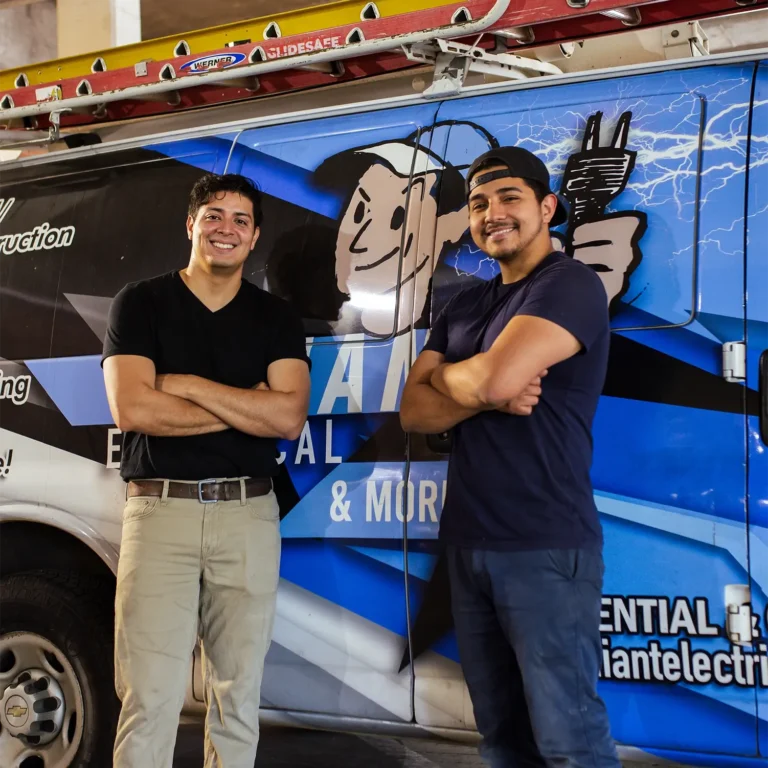
Caption: A diverse team of Radiant Electrical pros: including an African American lead and a Mexican apprentice: smiling in front of their service van parked in a Gwinnett County residential neighborhood.
Why Local Expertise Matters
Choosing from the many electric companies in Lawrenceville GA can feel overwhelming. You want someone who knows the local housing stock: from the older builds near the Historic Courthouse to the new developments out toward Grayson.
We live here, we work here, and we care about the safety of our community. If you’re seeing warning signals like flickering lights, warm outlets, or a panel that looks like a "spaghetti mess" of wires, it’s time to stop the DIY and call in the experts.
Key Takeaway: Electrical safety isn't a suggestion; it's the foundation of your home. Small mistakes today can become big problems tomorrow.
If you're ready to get your home's electrical system checked or need to fix a DIY project that went sideways, check out our reviews to see how we’ve helped your neighbors, or contact Radiant Electrical today. We'll get the job done right the first time, so you can get back to enjoying your home.