The Ultimate Guide to School Lockdown Doors: Why Georgia Schools are Upgrading in 2026
Think back to your typical Tuesday morning routine. Maybe you’re handing a lunchbox to your son, Andre, or reminding your daughter, Tiana, to grab her gym shoes before she hops out of the car. As parents, our biggest concern is usually whether they’ll pass that algebra quiz or if they remembered their water bottle. We want our schools to be places of learning, laughter, and growth.
Lately, however, the conversation around school safety has shifted. In 2026, Georgia schools are making some of the most significant security technological leaps in decades. This isn't about scaring anyone or creating an atmosphere of fear. Instead, it’s about providing the same level of modern protection to our children that we expect in high-security office buildings or government facilities. It’s about peace of mind.
At Radiant Electrical, we’ve seen firsthand how the right infrastructure can transform a building's safety profile. From smart lighting to heavy-duty school lockdown doors, the "security tech" landscape is changing, and Georgia is leading the way.
Why 2026 is the Year of the Upgrade
You might be wondering why there is such a sudden push for these upgrades right now. It boils down to a combination of new state laws, a massive influx of funding, and a collective realization that older door hardware just isn't designed for modern challenges.
The Georgia Safe Schools Act (HB 147) has moved from a suggestion to a strictly enforced standard. This law mandates that every public school conducts annual "Intruder Alert Drills." But a drill is only as effective as the equipment you have on hand. Governor Brian Kemp’s administration recently funneled over $158 million into school safety grants. For many schools, that translates to roughly $68,000 per campus: funds specifically earmarked for things like "secure entry points" and "effective surveillance."

What Exactly is a School Lockdown Door?
Most people think a door is just a door. You turn the handle, it opens; you turn the key, it stays shut. But in a high-stakes environment, that simple mechanism has some serious flaws.
Traditional locks often require a teacher to step out into a hallway with a physical key to lock the door from the outside. In a crisis, every second counts, and putting a staff member in the line of sight is a risk we don’t want to take.
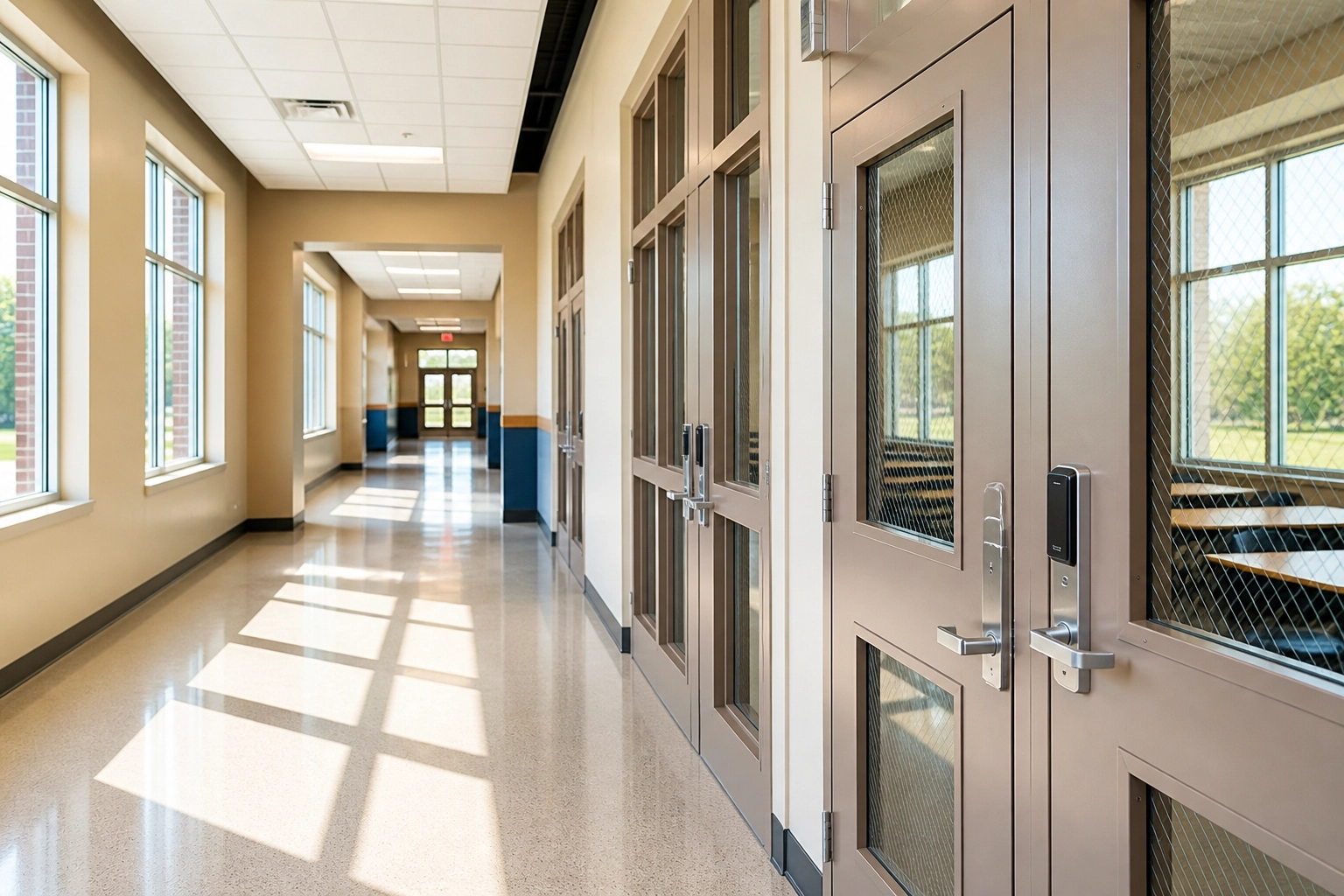
Modern school lockdown doors utilize advanced security tech to change the game. Here is a breakdown of what that really means in plain English:
- Single-Motion Egress: This is a fancy way of saying you can always get out easily, even if the door is locked from the outside. This prevents anyone from being trapped during a fire or emergency while keeping the "bad guys" out.
- Visual Indicators: Have you ever yanked on a door only to realize it was locked? In a lockdown, you can’t afford to guess. Modern systems use "Red/Green" indicators that are visible from across the room. If it's red, it's locked. It’s that simple.
- Ballistic Resistance: This isn't just a heavy door; it’s reinforced material designed to withstand forced entry and even gunfire.
- Electromagnetic Locks (Mag-Locks): These use powerful magnets to hold a door shut with thousands of pounds of force. Here’s the catch: they require a constant, stable flow of electricity. This is where your infrastructure matters.
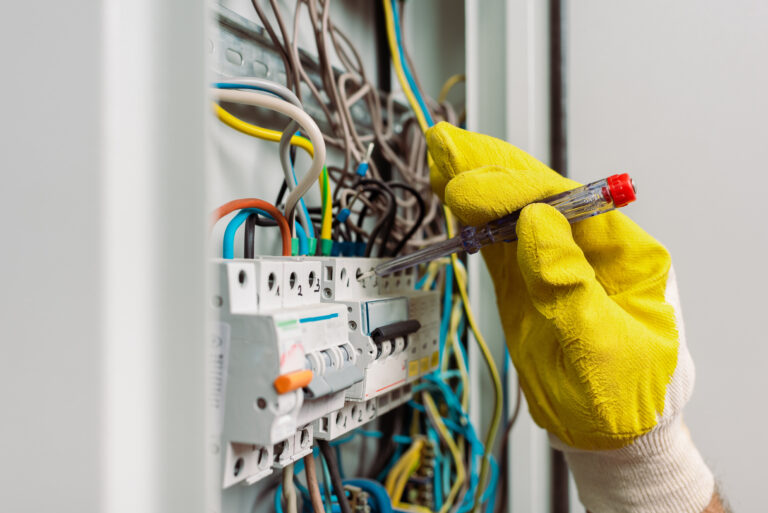
If a school’s electrical system is outdated, these high-tech doors can actually become a liability. We often tell school administrators that before they install the latest security tech, they need to look at the "heart" of the building. Often, an electrical panel upgrade is necessary to handle the constant draw of electromagnetic locks and the integrated cameras that usually go with them.
The Technical Side: "Fail-Safe" vs. "Fail-Secure"
When we talk to facility managers like Marcus, who oversees a large district in Gwinnett County, we often have to dive into the technicalities of power. Marcus recently realized that his older schools were using "fail-safe" locks on perimeter doors.
- Fail-Safe: If the power goes out, the door unlocks. This is great for fire safety but terrible for security.
- Fail-Secure: If the power goes out, the door stays locked from the outside.
In 2026, the gold standard is a hybrid system that communicates with the fire alarm. If the fire alarm goes off, the doors unlock for exit. If a lockdown is triggered, they stay shut. This level of communication between systems requires expert wiring. It’s not just about hanging a door; it’s about the miles of low-voltage and high-voltage wiring hidden behind the drywall.

The Role of Smart Lighting in School Safety
A lockdown door is only one part of the puzzle. Imagine a scenario where a school goes into lockdown, but the hallways remain dimly lit or flickery. It creates confusion and panic.
At Radiant Electrical, we advocate for integrated security lighting. Modern security tech allows the lights to react to the door status. When a lockdown is initiated, exterior lights can flash to alert first responders, while interior lights can shift to a specific "emergency mode" that provides clear visibility for evacuation without highlighting occupants.
Think of your electrical system like a nervous system. The doors are the muscles, but the wiring and the panels are the nerves and the brain. If the brain is overwhelmed because the panel is 30 years old, the muscles won't react when you need them to. This is why we've completed several rewiring projects in Metro Atlanta specifically to prepare buildings for these safety upgrades.
Common Misconceptions About School Security Tech
Homeowners and parents often believe that "more tech" means "more things to break." While it’s true that a smart lock is more complex than a deadbolt, the reliability of modern components has skyrocketed.
Another misconception is that these doors are "unfriendly." People worry that schools will start looking like prisons. On the contrary, many of the 2026 upgrades are "stealth." They look like standard, attractive school doors, but they house internal steel stiffeners and invisible electronic strikes. You’d never know how secure they are just by walking past them.
Most people also think these systems are "plug and play." In reality, adding dozens of electronic locks to a school can significantly increase the load on the electrical system. If you try to add this much tech to an old system, you’ll get the electrical equivalent of a "blown fuse" right when you need the system to work.

The Radiant Electrical Commitment
We take these projects personally. When Radiant Electrical is called to consult on a school project, we aren't just looking at blueprints; we’re looking at a place where our neighbors' children spend eight hours a day.
Our team specializes in ensuring that the infrastructure: the panels, the breakers, and the dedicated circuits: is robust enough to support the latest security tech. We’ve seen what happens when schools try to cut corners, and it’s why we insist on the highest standards. You can see the quality of our work in our recent project gallery or read what our clients say in our reviews.
Actionable Tips for Parents and School Boards
If you’re a parent or a member of a local school board, here are three signals that your school might need an electrical "health check" before upgrading its security:
- Flickering Lights: If the lights dim when the AC kicks on, the system is already struggling. Adding electronic lockdown doors will only make it worse.
- Buzzing at the Panel: An electrical panel should be silent. If it’s buzzing, it’s a warning sign of heat and potential failure.
- Outdated Labels: If the circuit breaker labels look like they were written in the 1980s, it’s time for a professional to verify if the system can handle modern security loads.
Final Takeaway
Safety in 2026 isn't just about a stronger lock; it’s about a smarter building. By combining high-quality school lockdown doors with a robust electrical foundation and integrated security tech, Georgia schools are becoming some of the safest in the country.
At Radiant Electrical, we’re proud to play a role in that transformation. Whether it’s a residential panel upgrade or a massive commercial security installation, we bring the same level of professional expertise to every job. Let's make sure our schools are powered for the future: and protected for the people inside them.