
Commercial Electrical Maintenance Checklist for Small Businesses
Running a small business in Gwinnett County or Metro Atlanta means you're juggling about a thousand things at once. Between managing employees, keeping customers happy, and watching your bottom line, electrical maintenance probably isn't at the top of your mind.
Until something goes wrong.
Picture this: It's a busy Saturday afternoon at your shop in Lawrenceville. The register is ringing, customers are browsing, and suddenly: everything goes dark. Your POS system crashes. Your refrigerated display cases start warming up. And you're standing there wondering what just happened.
This isn't about scaring anyone. It's about helping you avoid that scenario altogether. A solid electrical maintenance routine keeps your business running smoothly, protects your equipment, and: most importantly: keeps your employees and customers safe.
Why Electrical Maintenance Matters for Your Business
Most business owners think electrical systems are "set it and forget it." You flip the switches, the lights come on, and that's that. But here's what that really means: your electrical system is working hard every single day, and like any hardworking system, it needs regular attention.
Commercial spaces demand a lot from their electrical infrastructure. You've got lighting, HVAC systems, computers, equipment, security systems, and probably a coffee maker (or three) all pulling power simultaneously. Over time, connections loosen, components wear down, and small issues become big problems.
Marcus, who owns a print shop in Duluth, learned this the hard way. A loose connection in his main panel caused intermittent power issues for months. He assumed it was just "the building being old." Then one afternoon, that loose connection created an arc that scorched his panel and knocked out power to half his equipment. The repair bill? Over $4,000. The lost business while he waited for repairs? Even more.
Regular maintenance would have caught that loose connection for a fraction of the cost.

Your Monthly Electrical Maintenance Checklist
Breaking this down into manageable tasks makes everything less overwhelming. Here's what you or your maintenance team should check every month:
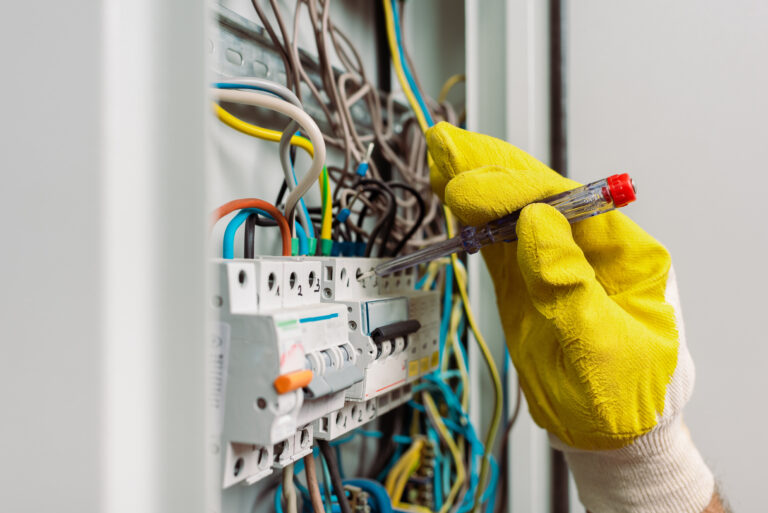
Electrical Panel Inspection
Your electrical panel is the heart of your business's power system. Take five minutes each month to:
- Look for warning signs – burnt marks, discoloration, or a burning smell near the panel indicate serious problems
- Check for corrosion – especially important in older buildings around Atlanta where humidity can cause issues
- Verify circuit breaker labels are readable – when something trips, you need to know which circuit controls what
- Listen for buzzing or humming sounds – these noises signal loose connections or failing components
If you notice any of these warning signs, don't wait. Contact a licensed electrician immediately.
Safety Device Testing
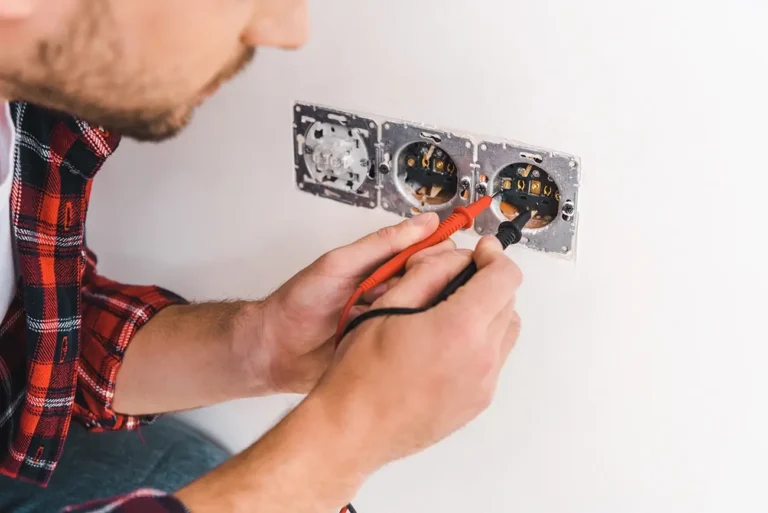
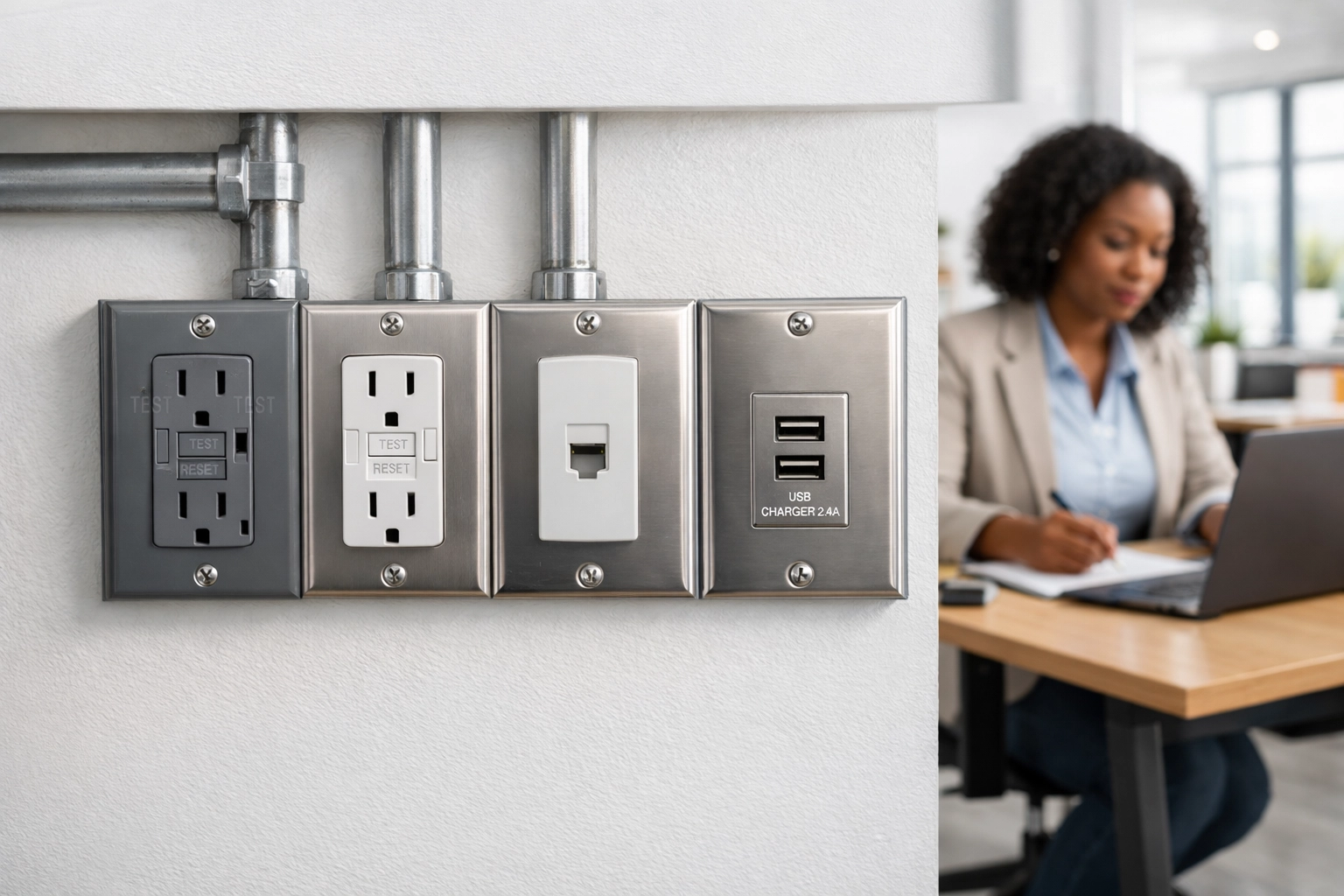
GFCIs (Ground-Fault Circuit Interrupters) and surge protectors are your first line of defense against electrical hazards. Testing them takes less than a minute:
For GFCIs:
- Press the "TEST" button – the power should cut off
- Press "RESET" to restore power
- If nothing happens when you press TEST, that outlet needs replacement
For surge protectors:
Check indicator lights and inspect for any physical damage. Surge protectors don't last forever: most need replacement every 3-5 years, or immediately after a major storm. Georgia summers bring plenty of lightning, and each surge degrades your protection a little more.
Wiring and Cable Inspection
Walk through your space and visually inspect any exposed wiring or cables. You're looking for:
- Cracked or frayed insulation
- Signs of pest damage (rodents love chewing on wires)
- Cables pinched under furniture or equipment
- Extension cords being used as permanent solutions
That last one is huge. If you've had "temporary" extension cords running across your stockroom for the past two years, it's time to install proper outlets. Extension cords aren't designed for permanent use, and overloading them creates fire hazards.
Circuit Load Assessment
Here's something many small business owners overlook: how much you're asking each circuit to handle.
Think about it like a highway. Each circuit can only carry so much "traffic" before it gets congested. When you plug your industrial coffee maker, microwave, mini-fridge, and space heater all into the same circuit, you're creating a traffic jam.
Signs of overloaded circuits include:
- Breakers that trip frequently
- Lights that dim when equipment turns on
- Outlets that feel warm to the touch
- A burning smell near outlets or switches
Spread high-demand equipment across multiple circuits. If you don't have enough circuits to do this safely, it might be time to consider a panel upgrade.
Emergency System Testing
Test your emergency lighting and exit signs monthly. These aren't just nice-to-haves: they're required by code and could save lives during a fire or power outage.
Press the test button on each emergency light fixture and verify:
- The light activates immediately
- It stays on for at least 30 seconds during testing
- The bulbs are bright enough to illuminate the path
Replace any bulbs that flicker, appear dim, or don't light up at all.
Quarterly and Annual Maintenance Tasks
Some tasks don't need monthly attention but shouldn't be ignored either.
Every Quarter:
- Clean electrical panels – dust buildup can cause overheating
- Inspect outdoor electrical components – check for weather damage, especially after Georgia's stormy seasons
- Review your energy bills – sudden increases might indicate equipment problems or electrical issues
- Test smoke and carbon monoxide detectors – replace batteries as needed
Annually:
- Schedule a professional inspection – a licensed electrician should thoroughly examine your entire system once a year
- Thermal imaging scan – this technology identifies hot spots that indicate problems invisible to the naked eye
- Update your electrical documentation – keep records of all maintenance, repairs, and equipment changes
- Review your surge protection strategy – consider whole-home surge protection for comprehensive coverage

Documentation: Your Best Friend During Inspections
Keep detailed records of everything. Every inspection, every repair, every piece of equipment added or removed.
Why does this matter? When you sell the business, apply for insurance, or face a code inspection, having organized documentation makes everything easier. It also helps electricians troubleshoot problems faster: which means lower repair bills for you.
Create a simple system:
- Maintenance log – date, what was checked, any issues found, actions taken
- Repair records – what broke, who fixed it, cost, warranty information
- Equipment inventory – major electrical equipment, installation dates, power requirements
- Panel schedules – keep updated diagrams inside or near your electrical panel
Tamika, who runs a salon in Sandy Springs, keeps a simple binder near her office. Every time the electrician visits or she does her monthly walkthrough, she logs it. When her insurance company asked about her electrical maintenance history during renewal, she had everything ready. Her premium actually decreased because she could demonstrate consistent upkeep.
When to Call a Professional
Your monthly checklist catches a lot of potential problems, but some issues require professional attention immediately:
- Burning smells from outlets, switches, or panels
- Sparking when plugging in or unplugging equipment
- Breakers that won't stay reset after tripping
- Any signs of water damage near electrical components
- Flickering lights throughout your space (not just one fixture)
- Outlets or switches that feel hot
Don't try to diagnose or fix these yourself. Commercial electrical work requires a licensed professional who understands Georgia's electrical codes and the specific demands of business environments.
Building Your Maintenance Schedule
The key to consistent electrical maintenance is making it part of your routine. Pick a specific day each month: maybe the first Monday or the 15th: and block 30 minutes for your walkthrough.
Create a simple checklist you can print out and use each time. Check things off as you go. Note anything that needs follow-up. Then file that completed checklist in your documentation binder.
It's not glamorous work. But those 30 minutes each month protect your investment, your employees, and your customers.
Your business deserves to run without electrical surprises. A little prevention goes a long way.
Need help creating a maintenance plan for your Gwinnett or Metro Atlanta business? The team at Radiant Electric specializes in commercial electrical services and can conduct a thorough assessment of your system. Check out our FAQs or reach out to schedule your annual inspection.