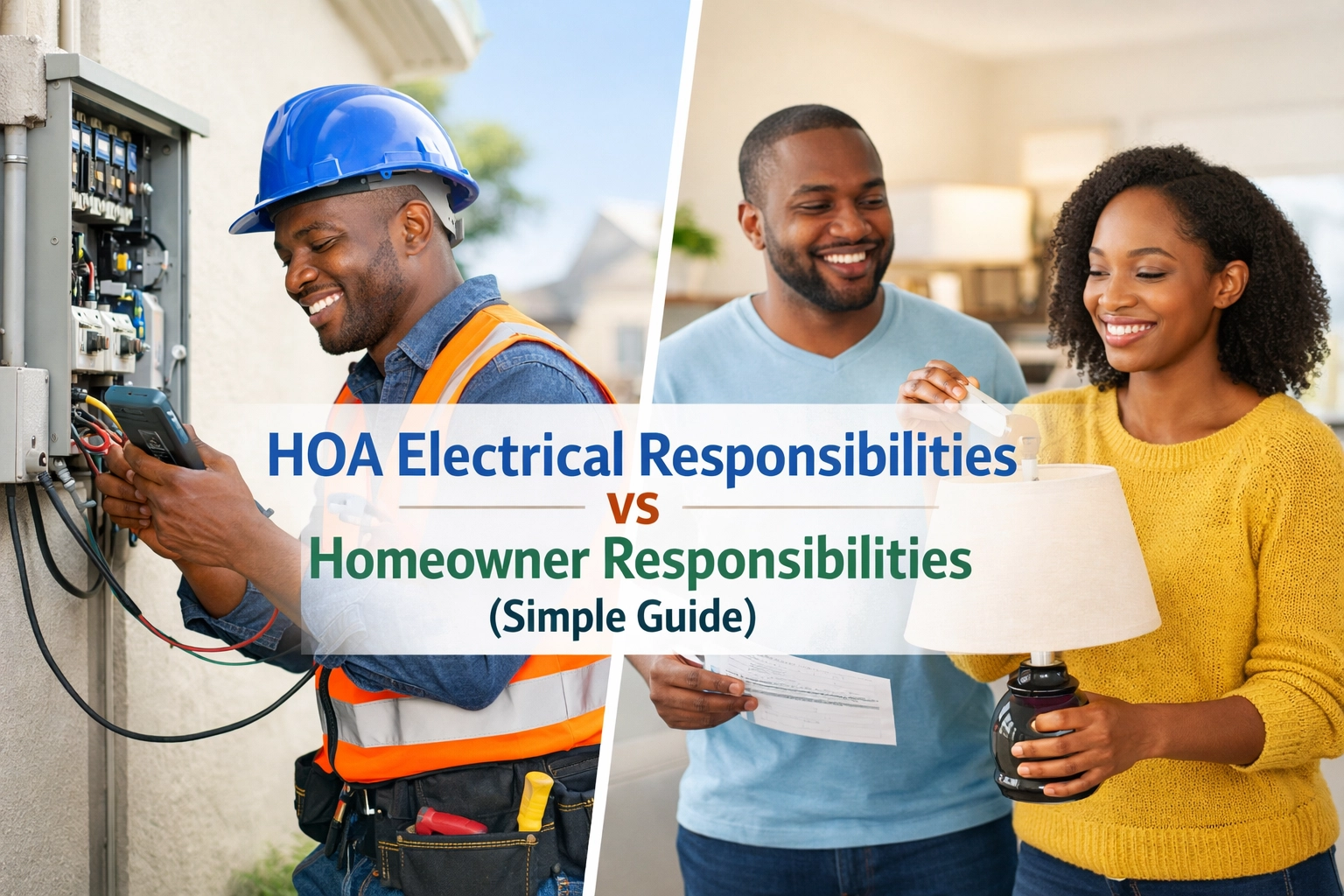
HOA Electrical Responsibilities vs Homeowner Responsibilities (Simple Guide)
You just moved into a beautiful townhome in a Gwinnett County community. The neighborhood is well-maintained, the landscaping looks great, and your HOA fees seem reasonable. Then one day, the outdoor lights near your front door stop working. You think, "I should probably call someone to fix that." But wait: is that your responsibility, or does the HOA handle it?
This is one of the most common questions homeowners in managed communities ask. And honestly, it can get confusing fast.
This guide isn't about scaring anyone or making HOA living seem complicated. It's about giving you a clear picture of who handles what when it comes to electrical systems in your home and community. Because knowing this stuff upfront can save you time, money, and a whole lot of frustration.
Why This Matters More Than You Think
When Marcus and his wife Tanya bought their first condo in Lawrenceville, they assumed the HOA covered pretty much everything outside their walls. So when a circuit kept tripping in their kitchen, Marcus called the property manager expecting them to send someone out.
Turns out, that was 100% on them.
The tripping circuit was connected to wiring that served only their unit. It wasn't a shared system issue: it was their responsibility to hire a licensed electrician and cover the repair costs.
Understanding these boundaries before something goes wrong helps you budget appropriately and respond quickly when issues pop up.
What You're Responsible For (As the Homeowner)
Here's the general rule of thumb: if it only serves your unit, it's on you.
That includes:
- All wiring inside your walls that connects to your outlets, switches, and appliances
- Interior lighting fixtures like ceiling fans, recessed lights, and chandeliers
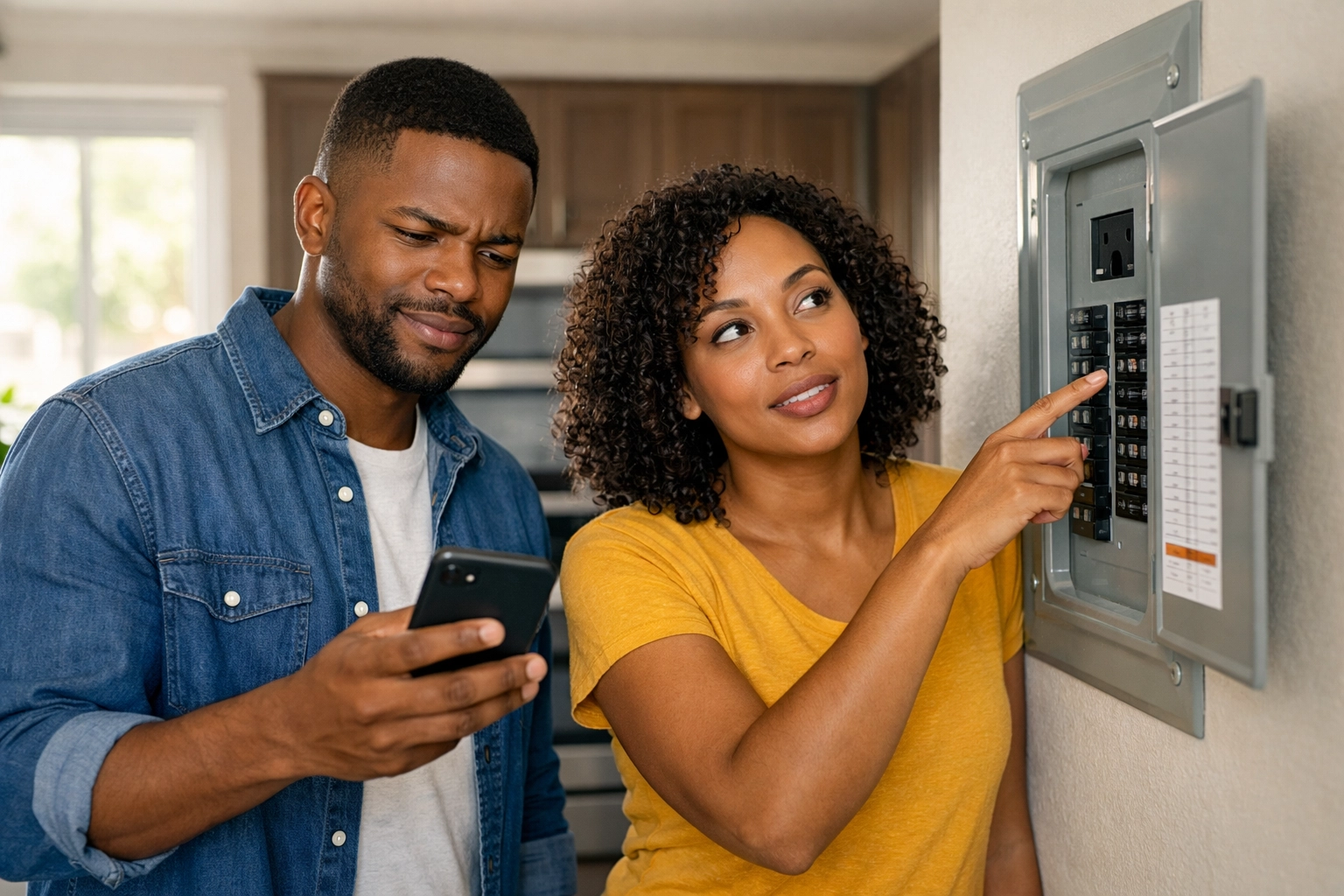
- Your electrical panel if it's dedicated to your unit (common in townhomes)
- Outlets and switches throughout your living space
- Appliances and anything plugged into them
- Smart home devices like thermostats, doorbells, or security systems you've installed
If something electrical breaks down and it's contained within your space, you'll need to handle it yourself. That means hiring a licensed electrician, scheduling the work, and footing the bill.
The key takeaway: If the electrical system or component serves only you, the responsibility is yours.
What the HOA Typically Handles
Now here's where the HOA steps in. They're responsible for electrical systems that serve the community as a whole or multiple units at once.
This usually includes:
- Common area lighting in hallways, lobbies, parking lots, and exterior walkways
- Main electrical panels and feeder lines that distribute power to the building or community
- Wiring that passes through shared walls and serves multiple units
- Electrical systems in community amenities like pools, clubhouses, fitness centers, and gates
- Exterior lighting fixtures attached to common structures
- Safety inspections and maintenance of shared electrical infrastructure
Many HOAs also budget for replacing outdated electrical systems: especially those over 30 years old: as part of their long-term maintenance planning.
The key takeaway: If it's shared infrastructure or serves the community, the HOA is typically on the hook.

The Gray Areas (And How to Navigate Them)
Here's where things can get tricky. Some electrical components don't fall neatly into one category or the other.
For example:
- An outdoor light fixture attached to your townhome's exterior: is that yours or the HOA's?
- Wiring running through your walls that also feeds into a neighbor's unit: who maintains that?
- The electrical panel in a shared utility closet that serves your unit and two others: is that your problem?
The answer depends on one very important document: your HOA's Declaration or Master Deed.
This legal document spells out exactly which elements are considered individual unit responsibility and which are common elements managed by the association. It's not the most exciting read, but it's the definitive guide when questions come up.
Pro tip: If you don't have a copy of your Declaration, request one from your property manager or HOA board. Keep it somewhere accessible so you can reference it when needed.
When you're unsure, reach out to your property manager or HOA board before you start any electrical work. They can clarify the gray areas and make sure you're not accidentally stepping on toes: or worse, breaching association policies.
Real Talk: Communication Is Everything
Keisha, a homeowner in a Sandy Springs community, learned this the hard way. She noticed the lights in the breezeway outside her unit were flickering constantly. Assuming it was a community issue, she submitted a maintenance request and waited.
And waited.
Three weeks later, she followed up and discovered the HOA had closed the ticket because those particular lights were actually attached to her unit: not the common area. The HOA's position was that anything attached to her exterior walls was her responsibility per the Declaration.
Was that frustrating? Absolutely. But once Keisha understood the boundaries, she was able to call Radiant Electric and get the issue resolved within days.
The lesson here? Don't assume. Ask questions early, get clarification in writing if possible, and keep records of your communications.

Before You Start Any Electrical Work
Whether you're upgrading your lighting, adding outlets, or troubleshooting a problem, here are some steps to follow:
1. Check Your HOA Guidelines First
Many HOAs have rules about modifications: even inside your own unit. Some require you to submit an architectural review request before making changes. Others have approved vendor lists you're expected to use.
2. Hire a Licensed Electrician
This isn't optional. All electrical work should be performed by a licensed professional to maintain safety, comply with local codes, and meet HOA regulations. DIY electrical work can void warranties, create safety hazards, and put you in hot water with your association.
3. Pull Permits When Required
In Gwinnett County and throughout metro Atlanta, certain electrical work requires permits. Your electrician should handle this, but it's worth confirming. Unpermitted work can cause problems when you try to sell your home down the road.
4. Document Everything
Keep copies of invoices, permits, inspection reports, and any communication with your HOA. If a dispute ever arises about who was responsible for what, you'll have a paper trail to back you up.
When to Loop In Your HOA
Sometimes electrical issues start in your unit but point to a larger problem with shared infrastructure.
Signs that the issue might be on the HOA's side:
- Multiple units experiencing the same problem at the same time
- Flickering or dimming lights that seem to affect the whole building
- Power outages that impact common areas and multiple residences
- Visible damage to exterior wiring or main electrical components
If you notice any of these, report it to your property manager immediately. They'll need to bring in their own licensed electrician to assess whether it's a shared system issue.
For more on what flickering lights might mean, check out our post on why flickering lights happen and when it's dangerous.
Quick Reference Chart
| Your Responsibility | HOA Responsibility |
|---|---|
| Interior outlets and switches | Common area lighting |
| Wiring inside your walls (serving only your unit) | Main electrical panels and feeder lines |
| Interior lighting fixtures | Wiring serving multiple units |
| Your dedicated electrical panel | Community amenity electrical systems |
| Appliances and smart home devices | Exterior lighting in common areas |
| Hiring a licensed electrician for in-unit work | Safety inspections of shared infrastructure |
The Bottom Line
Living in an HOA community in metro Atlanta comes with plenty of perks: shared amenities, maintained common areas, and a sense of community. But it also means understanding where your responsibilities begin and end.
When it comes to electrical systems, the rule is pretty straightforward: if it serves only you, it's yours to maintain. If it serves the community or multiple units, the HOA handles it.
When in doubt, check your Declaration, communicate with your property manager, and always hire a licensed electrician for any work that needs to be done.
Got electrical questions about your Gwinnett County home? The team at Radiant Electric is here to help you figure out what needs attention: and get it handled safely and professionally.