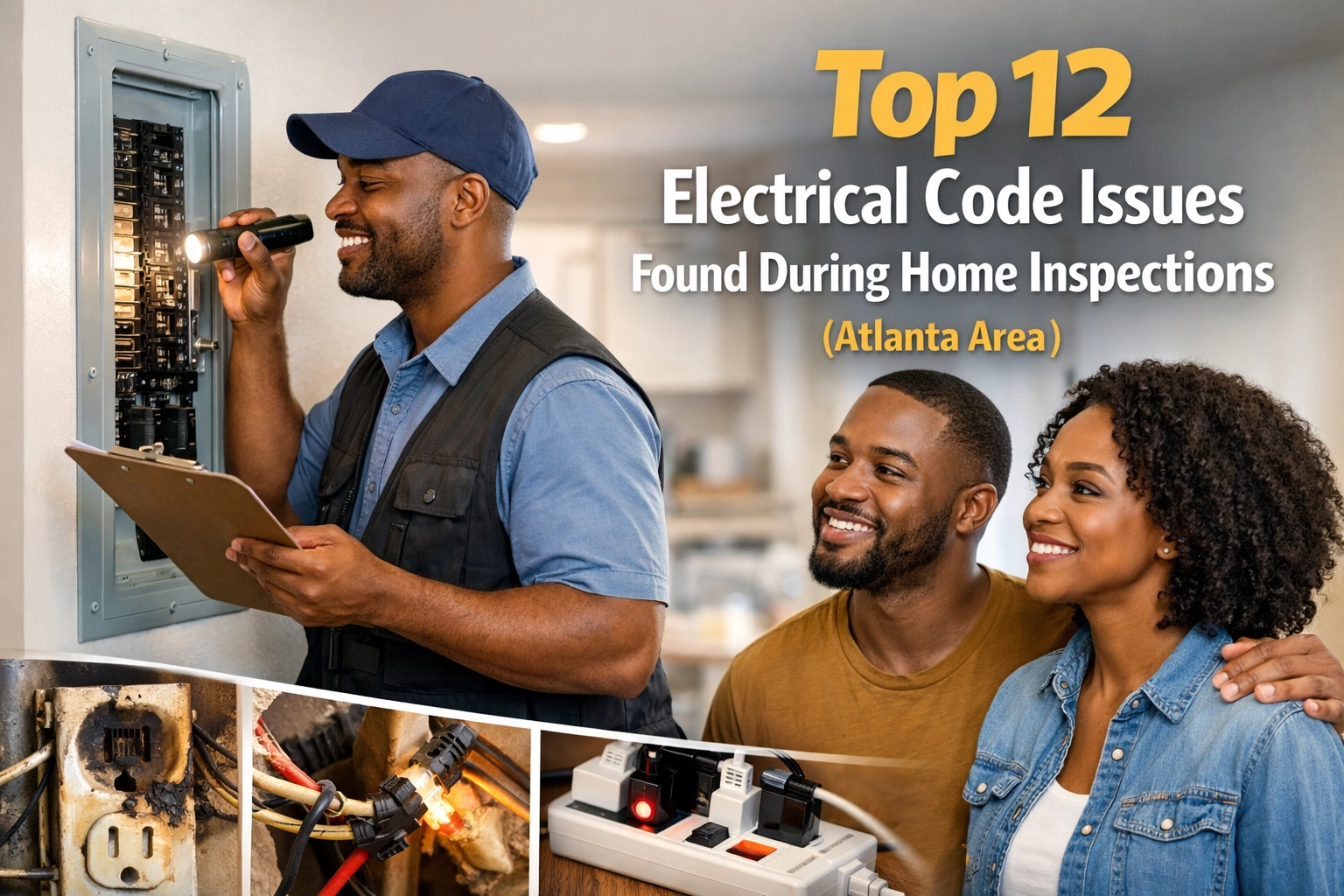
Top 12 Electrical Code Issues Found During Home Inspections (Atlanta Area)
You just found your dream home in Gwinnett County. The kitchen is gorgeous, the backyard is perfect for summer cookouts, and the neighborhood feels right. Then you get the home inspection report back, and suddenly there's a whole section highlighted in red about electrical issues.
Sound familiar?
If you're buying, selling, or just curious about your current home's electrical health, understanding code violations can save you thousands of dollars and keep your family safe. This isn't about scaring anyone, it's about giving you the knowledge to make smart decisions about one of the biggest investments of your life.
Home inspectors across the Atlanta metro area flag the same electrical issues over and over again. From older homes in Decatur to newer construction in Suwanee, these problems show up constantly. Here's what you need to know about each one.
1. Overcrowded Electrical Boxes
Think of your electrical box like a kitchen junk drawer. Stuff a few things in there, no problem. But keep cramming more in, and eventually nothing fits right, things get tangled, and you can't find what you need.
When too many wires get packed into a single electrical box, they generate heat. That heat has nowhere to go. The National Electrical Code (NEC) sets specific limits on how many wires can safely fit inside different box sizes, and for good reason.
The real-world risk: Overheating wires can melt insulation and spark fires inside your walls where you can't see them.
What you should do: If an inspector flags this, don't ignore it. A licensed electrician can install larger boxes or redistribute circuits properly.
2. Unprotected Electrical Wires
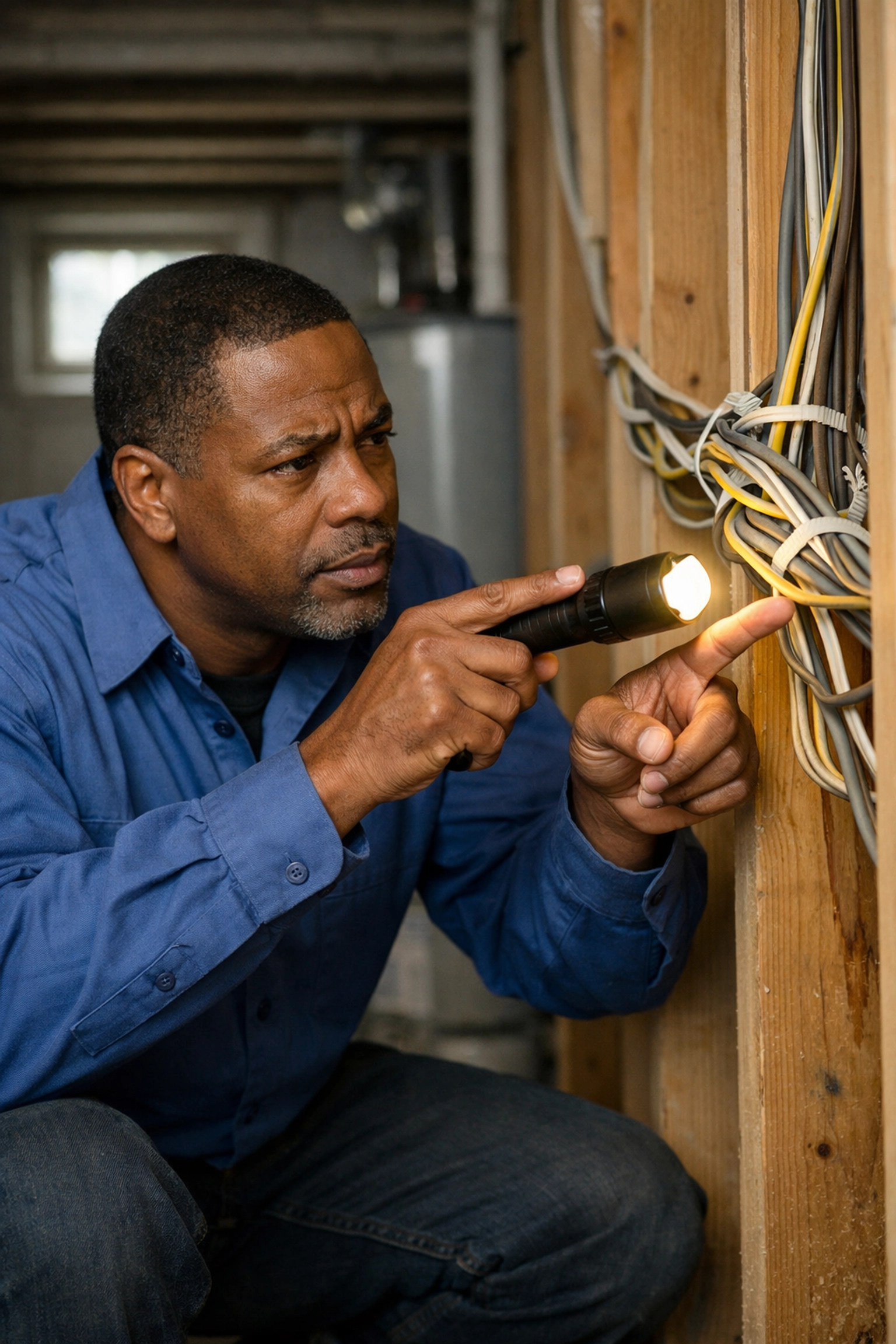
Marcus, a homeowner in Sandy Springs, called us after discovering loose wires running along his basement wall during a DIY project. Someone had bundled them together with zip ties and stapled them to exposed studs. Creative? Sure. Safe? Absolutely not.
Electrical wires need proper protection. That means running them through walls correctly or housing them in electrical conduit. Wires should also be secured at specific distances from the floor to prevent damage.
The takeaway: If you can see and touch wires that aren't in a finished junction box or proper conduit, that's a code violation waiting to cause problems.
3. Missing GFCI Outlets
GFCI stands for Ground-Fault Circuit Interrupter. Here's what that really means: it's a special outlet that cuts power instantly when it detects electricity going somewhere it shouldn't, like through water. Or through you.
Any area that might get wet needs GFCI protection:
- Bathrooms
- Kitchens (especially near sinks)
- Laundry rooms
- Garages
- Outdoor outlets
- Basements
Most Atlanta-area homes built before the mid-1970s didn't require GFCIs anywhere. If your home still has regular outlets in these locations, inspectors will flag it every single time.
The fix is simple: A licensed electrician can swap out standard outlets for GFCI-protected ones in about an hour for most homes.
4. Outdated Electrical Panels
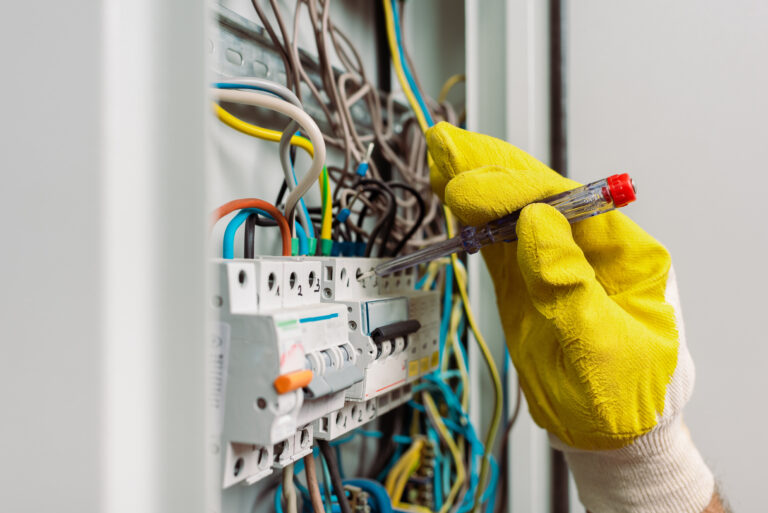
This one gets serious fast. Certain electrical panels manufactured decades ago have documented safety problems. Federal Pacific Electric (FPE) and Zinsco panels are the big offenders.
The issue? These panels may not trip when they're supposed to. A circuit breaker's entire job is to shut off power when something goes wrong. If it fails to do that, wires overheat and fires start.
Red flag signs:
- Your panel has "Federal Pacific" or "Stab-Lok" on it
- You see "Zinsco" or "Sylvania" branding
- Breakers feel loose or don't click firmly into place
- Burn marks or melted plastic anywhere on the panel
If your Atlanta home has one of these panels, replacement isn't optional, it's essential. Check out our electrical services for panel upgrade options.
5. Extension Cords Used as Permanent Wiring
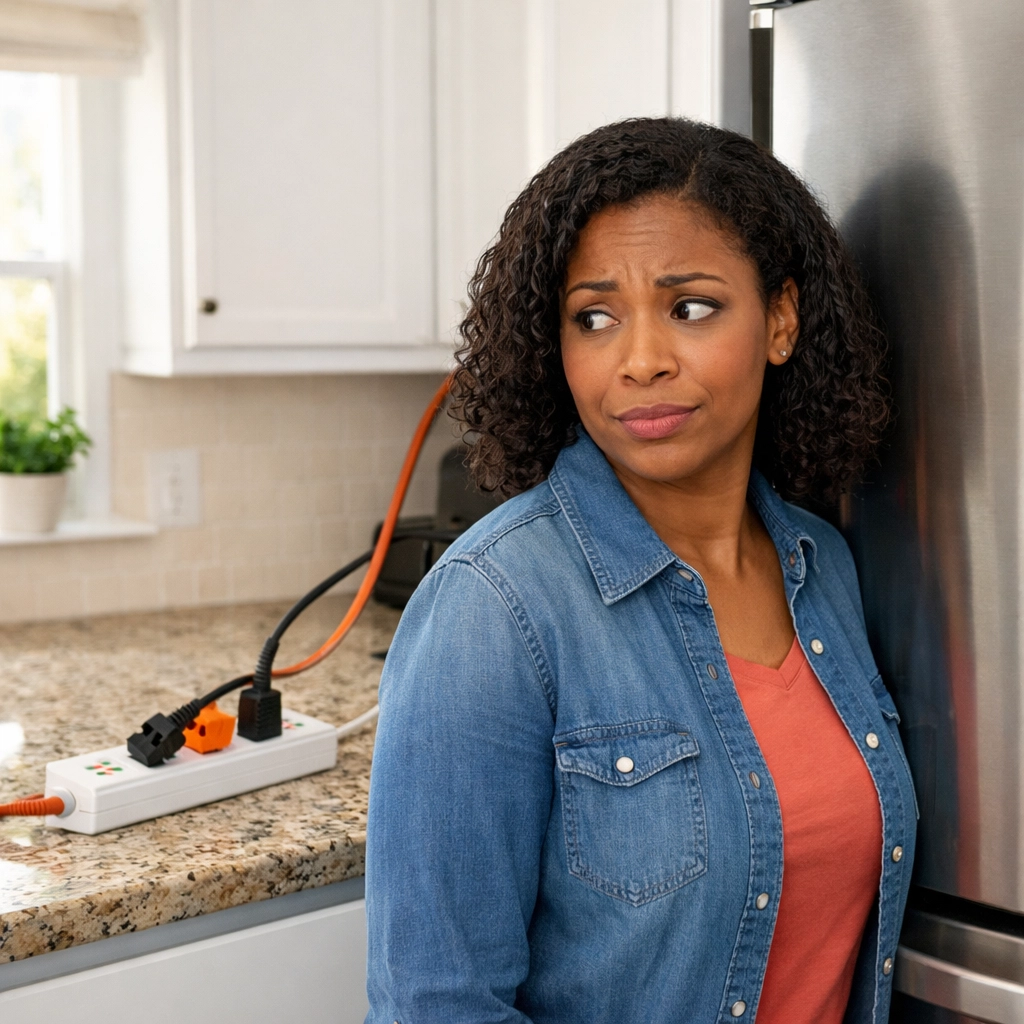
Here's a scenario we see all the time: a homeowner in Marietta needed an extra outlet for a window AC unit. Instead of calling an electrician, they ran an extension cord behind furniture and called it a day.
Extension cords are designed for temporary use. Period. They're not rated for permanent installation, and they definitely shouldn't power high-draw appliances like air conditioners, space heaters, or microwaves.
Why it matters: Extension cords can overheat when used continuously, especially with heavy loads. They also create trip hazards and can get damaged over time.
The rule: If something needs to stay plugged in permanently, it needs a proper outlet.
6. Open or Uncovered Junction Boxes, Switches, and Outlets
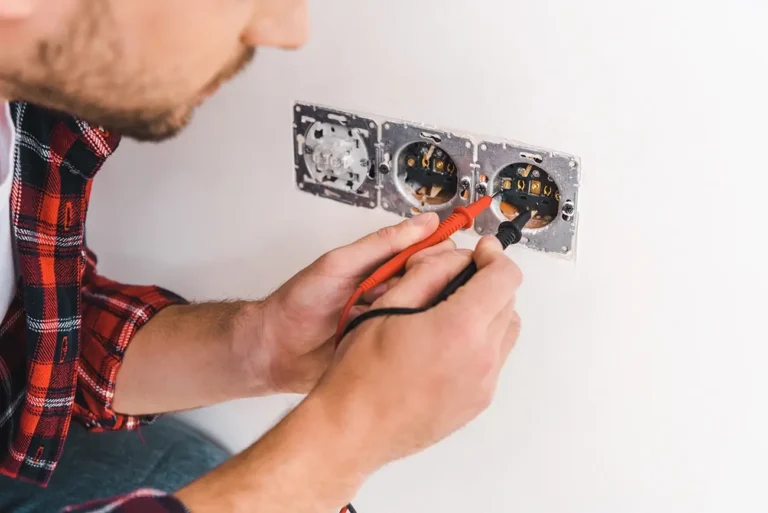
Every electrical connection in your home should be covered. Those plastic plates on your outlets and switches aren't just for looks, they prevent accidental contact with live wires behind the wall.
Inspectors frequently find missing covers in:
- Unfinished basements
- Attics
- Garages
- Behind appliances
- Areas where renovation work was done
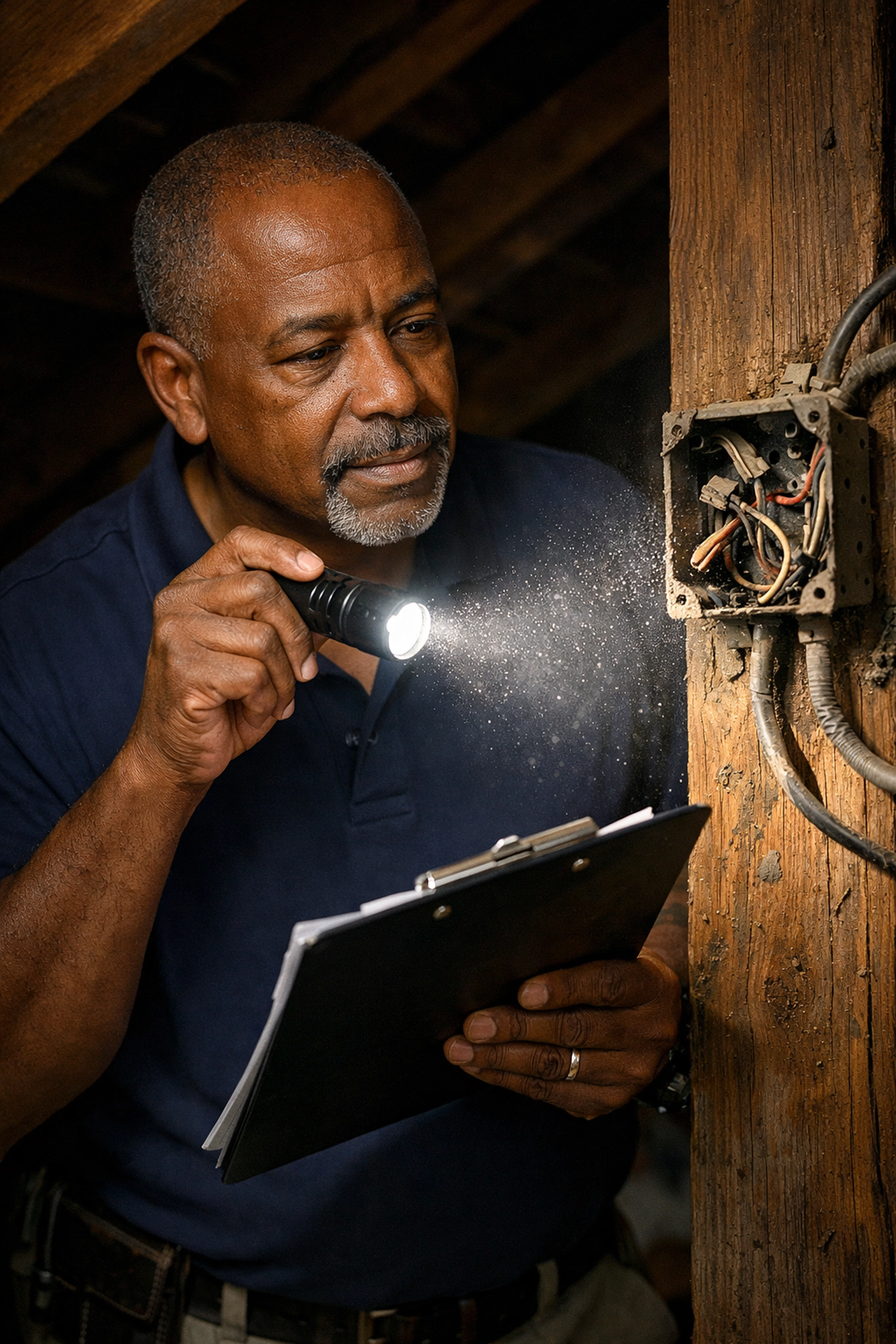
Tanya, who recently bought a home in Norcross, found three uncovered junction boxes in her attic during her inspection. Someone had done electrical work up there and never finished the job.
Quick fix: Outlet and switch covers cost a few dollars at any hardware store. Junction box covers are similarly cheap. No excuse to leave these open.
7. Illegal Splices
When you need to connect two or more wires together, you can't just twist them and wrap with electrical tape. (Yes, people do this. No, it's not okay.)
Proper splices require:
- A junction box to contain the connection
- Wire nuts to secure the splice
- A cover plate on the box
Bare splices: wires twisted together outside of a box: are dangerous code violations. They can arc, spark, and start fires in hidden spaces.
What to look for: If you see exposed wire connections anywhere in your home, especially in attics, basements, or crawl spaces, call a professional immediately.
8. Old Wiring That Can't Keep Up
Homes built before 1950 often still have original wiring. That wiring was designed for a world without computers, multiple TVs, kitchen appliances on every counter, and dozens of devices charging constantly.
Old wiring problems include:
- Insufficient capacity for modern electrical demands
- Lack of grounding (those two-prong outlets are a clue)
- Deteriorated insulation that can crack and expose bare wire
If your Atlanta-area home has knob-and-tube wiring or cloth-covered wiring, an inspector will definitely note it. Insurance companies often have concerns about these systems too.
The bottom line: Old wiring isn't automatically dangerous, but it needs professional evaluation to ensure it's still safe.
9. Wrong Wire Size at Circuit Breakers
This is one of those invisible dangers that can cause major problems. Every circuit breaker is designed to work with a specific wire gauge. Use the wrong size wire, and you've got trouble.
Here's an analogy: imagine a garden hose that's too small for the water pressure running through it. Eventually, something's going to give.
When wires are too small for the breaker size, they can overheat before the breaker ever trips. The breaker thinks everything is fine while the wire is getting dangerously hot inside your wall.
This is a job for professionals. If an inspection reveals mismatched wiring and breakers, don't attempt to fix it yourself. Our team at Radiant Electric can evaluate and correct these issues safely.
10. Overloaded Circuits
DeShawn noticed his kitchen lights dimmed every time his wife ran the microwave. Classic sign of an overloaded circuit.
When too many devices draw power from a single circuit, it exceeds the circuit's capacity. Breakers should trip to prevent problems, but constantly pushing circuits to their limits wears out breakers and creates heat in your wiring.
Warning signs include:
- Frequent breaker trips
- Lights flickering when appliances turn on
- Outlets that feel warm to the touch
- Burning smell near outlets or panels
The solution: Add dedicated circuits for high-draw appliances or redistribute your electrical load across multiple circuits.
11. Missing Outlet Covers
This seems minor, but inspectors flag it constantly: especially in homes where recent renovation work was done. Someone removes a cover to paint or do work, then forgets to put it back.
Missing outlet covers expose you (and curious kids) to live electrical components. It takes two seconds to reinstall them.
After any home project: Do a walkthrough and make sure every single outlet and switch has its cover plate reinstalled.
12. Aluminum Wiring
Many homes built in the 1960s and 1970s used aluminum wiring instead of copper. Aluminum conducts electricity just fine, but it has a significant problem: it expands and contracts more than copper as it heats and cools.
Over time, this creates loose connections. Loose connections cause arcing. Arcing causes fires.
If your Gwinnett County home has aluminum wiring, don't panic. It doesn't necessarily need to be completely replaced. Special connectors and proper maintenance can make aluminum wiring safe. But it absolutely needs professional attention.
What Happens When Inspectors Find These Issues?
Finding code violations during a home inspection doesn't mean the deal is dead. Most of these issues are fixable. The question becomes: who pays for the repairs?
During a real estate transaction, buyers often negotiate for:
- The seller to make repairs before closing
- A credit toward closing costs to cover repair expenses
- A price reduction reflecting the cost of needed work
If you're a seller, getting ahead of these issues before listing can make your home more attractive and prevent negotiation headaches.
Protect Your Home and Your Family
Whether you're buying, selling, or just want peace of mind about your current home, understanding electrical code issues puts you in control. These aren't obscure technical details: they're practical safety concerns that affect real families across the Atlanta metro area every day.
If your home inspection revealed electrical concerns, or if you want a professional evaluation before any surprises pop up, Radiant Electric serves homeowners throughout Gwinnett County, Decatur, Sandy Springs, Marietta, and the entire metro Atlanta area.
Your electrical system is the backbone of your home. Make sure it's up to code and keeping your family safe.