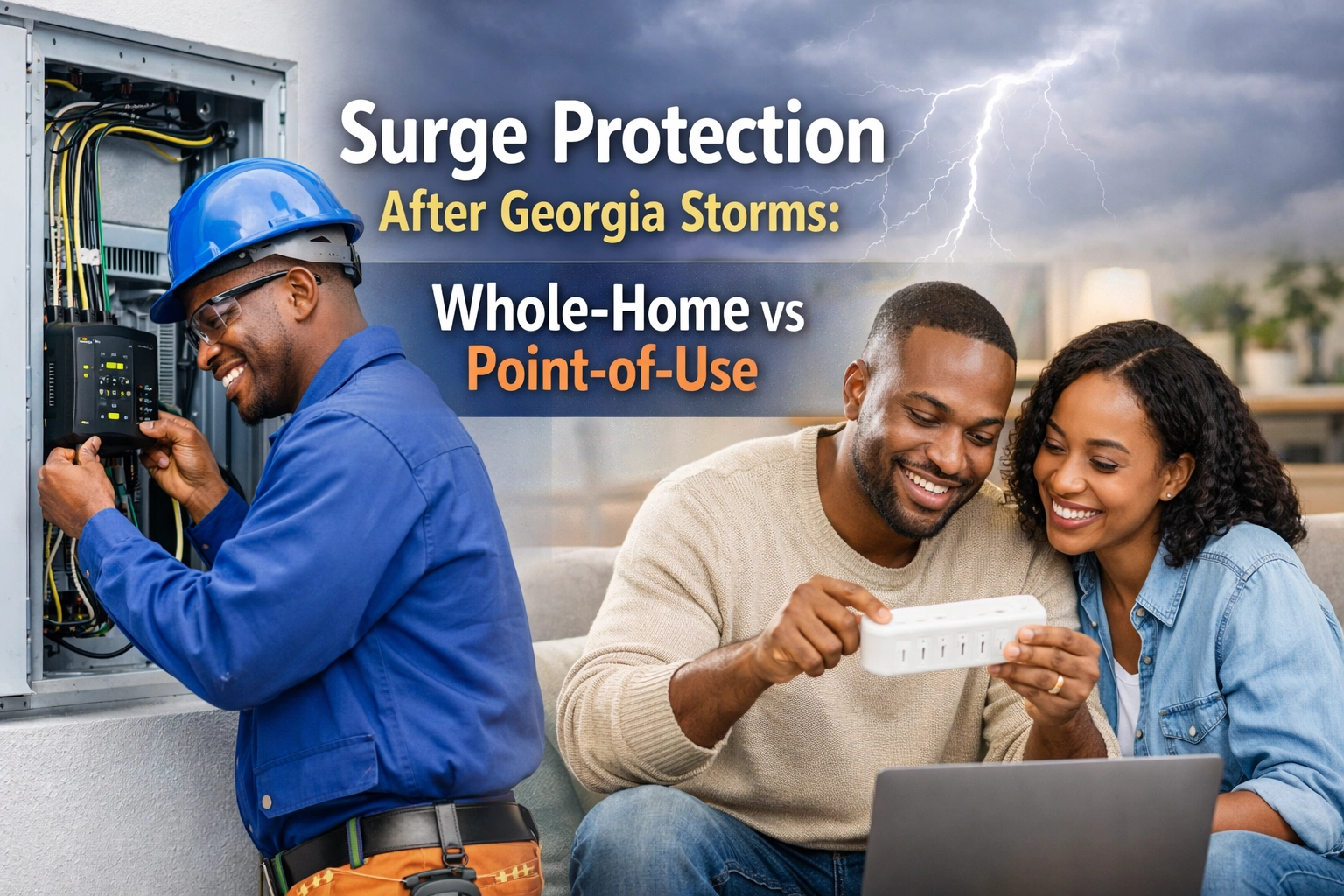
Surge Protection After Georgia Storms: Whole-Home vs Point-of-Use
Picture this: It's a Thursday evening in Gwinnett County. The Johnsons are settling in for family movie night when the sky turns that unmistakable shade of greenish-gray. Thunder rolls in from the west. The kids grab blankets, the popcorn's ready, and nobody's worried: because they know their home is protected.
That peace of mind? It comes from understanding surge protection.
Georgia storms are no joke. We're talking about a state that ranks in the top ten for lightning strikes annually. Those dramatic summer thunderstorms that roll through Metro Atlanta can send thousands of volts surging through power lines in an instant. And this isn't about scaring anyone: it's about making sure you understand what's happening and how to protect your home and everything in it.
So let's break down the two main types of surge protection and figure out what actually makes sense for your situation.
What Exactly Is a Power Surge?
Before we dive into protection options, you need to understand what you're protecting against.
A power surge is a sudden spike in electrical voltage that travels through your home's wiring. Think of it like water pressure in a garden hose. Normally, electricity flows at a steady, predictable rate: around 120 volts for most household circuits. But during a surge, that voltage can jump to hundreds or even thousands of volts in a fraction of a second.
Here's what that really means: All your electronics, appliances, and devices are designed to handle 120 volts. When something way higher comes rushing through, it's like trying to drink from a fire hose. Components get overwhelmed. Circuits fry. And sometimes the damage isn't even obvious right away: it accumulates over time until one day your refrigerator just… stops working.
Why Georgia Storms Create Such a Problem
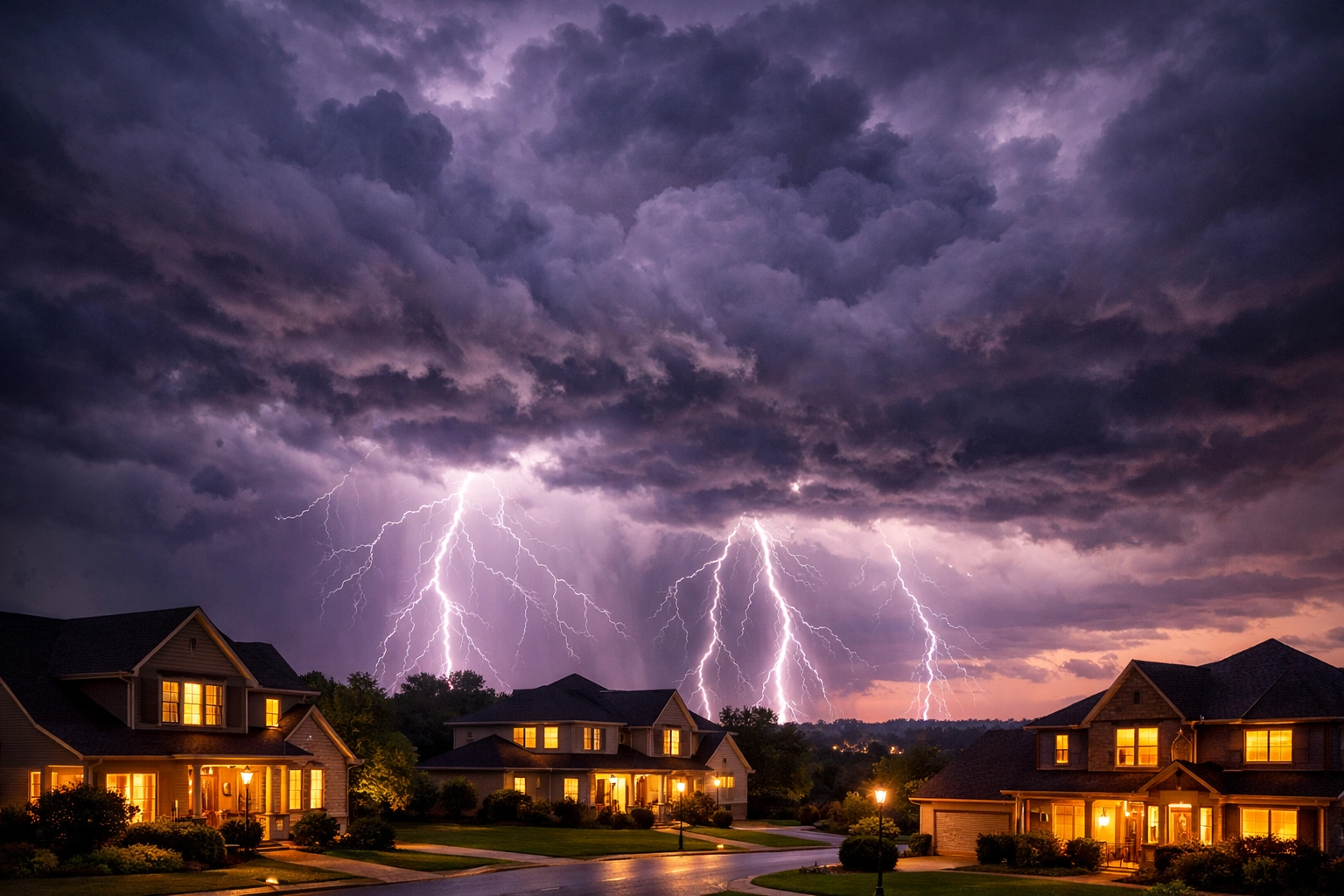
Most people think lightning has to strike your house directly to cause damage. Not true.
Lightning can strike a power line miles away from your home, and that energy surge will travel through the electrical grid straight to your panel. Georgia's storm season: roughly April through September: brings an average of 50 to 70 thunderstorm days per year in the Metro Atlanta area. That's a lot of opportunities for surges to sneak into your system.
But storms aren't the only culprit. Power surges also happen when:
- Large appliances cycle on and off (your AC unit is a big one)
- Power is restored after an outage
- Utility companies switch grids
- Downed trees affect local power lines
In Gwinnett County and surrounding areas, we see all of these scenarios regularly. The combination of severe weather and an aging power infrastructure means your home faces surge risks more often than you might realize.
Whole-Home Surge Protection: Your First Line of Defense
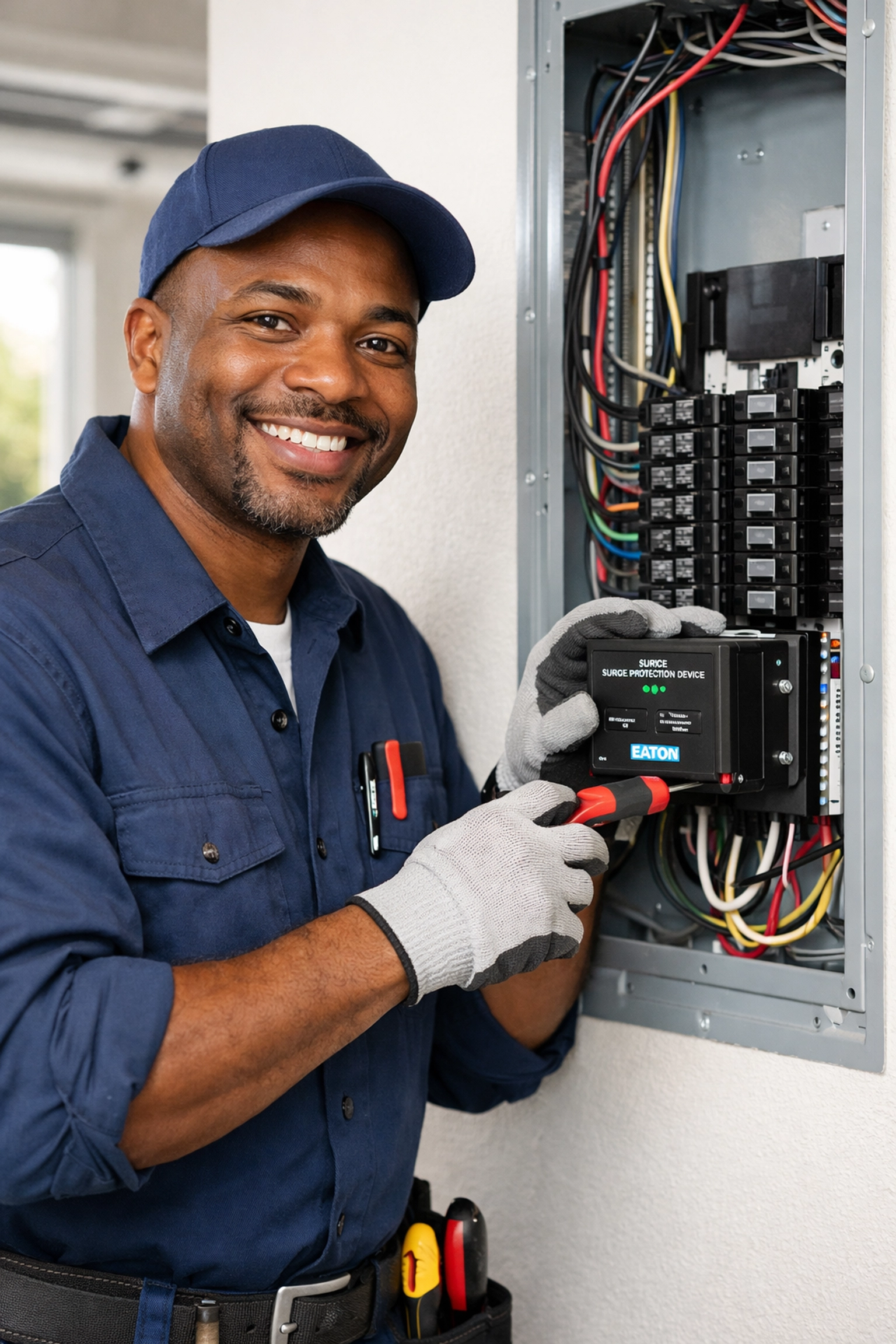
Whole-home surge protection is exactly what it sounds like: a system that protects your entire house at once. A licensed electrician installs a hardwired surge protector directly at your electrical panel. This device sits between the incoming power from the utility company and every circuit in your home.
When a surge comes through, the protector detects the voltage spike instantly and diverts that excess energy safely to the ground wire before it can reach your outlets, appliances, or electronics.
The benefits are significant:
- Comprehensive coverage for every outlet and circuit in your home
- Protection for hardwired appliances like your HVAC system, water heater, and built-in dishwasher
- Defense against external surges from lightning and utility grid issues
- One-time installation that works 24/7 without you thinking about it
For homeowners in storm-prone areas like Decatur, Sandy Springs, Snellville, and throughout Gwinnett County, whole-home protection is the foundation of any surge defense strategy.
What Gets Protected
Your HVAC system alone can cost $5,000 to $15,000 to replace. Your refrigerator, washer, dryer, and other major appliances? Another several thousand. And that's before we even talk about smart home devices, computers, gaming systems, and entertainment centers.
A whole-home surge protector shields all of it. Every light switch, every outlet, every hardwired component in your house gets the same level of protection.
Installation Considerations
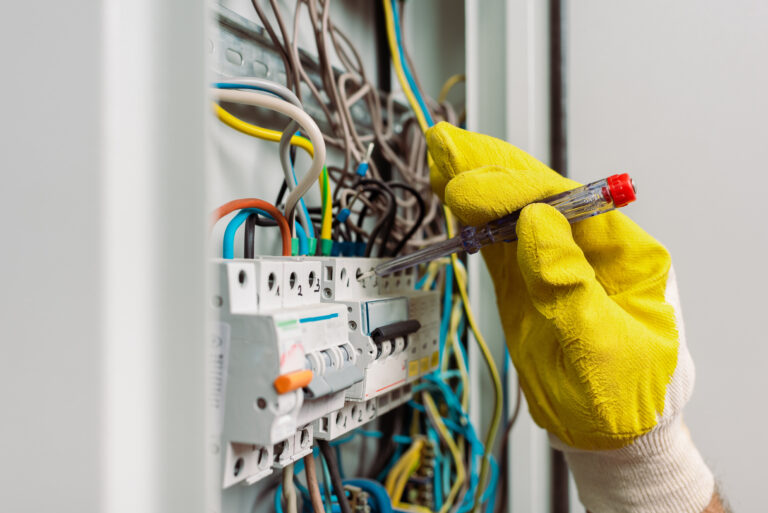
Here's something homeowners often don't realize: your electrical panel matters. An overloaded or outdated panel can actually increase your risk of surge-related damage. During installation, a qualified electrician will evaluate your panel's condition and capacity to make sure everything is set up correctly.
If your home has an older panel: especially if it's been more than 20-25 years since it was installed: this evaluation is crucial. You might need an electrical panel upgrade before adding surge protection.
Point-of-Use Surge Protection: Targeted Backup
Point-of-use surge protectors are the power strips and plug-in devices you're probably already familiar with. You plug them into a wall outlet, then plug your electronics into them. They provide protection specifically for whatever's connected to that device.
These work well for:
- Home entertainment centers
- Computer workstations
- Smart home hubs and devices
- Gaming consoles
- Kitchen counter appliances
Point-of-use protectors serve as a secondary layer of defense. They catch smaller surges and provide extra protection for your most sensitive electronics: the devices with delicate circuitry that can be damaged by even minor voltage fluctuations.
The Limitations
Here's the thing most people don't understand about those surge protector power strips: they can't protect what they're not connected to.
Your refrigerator plugs directly into the wall. So does your washing machine. Your HVAC system is hardwired. None of these benefit from point-of-use protection. And these are often your most expensive appliances to repair or replace.
Point-of-use protectors also have a lifespan. Every time they absorb a surge, they lose some of their protective capacity. Eventually, they stop working entirely: but they don't always tell you that. The power strip might still function, but the surge protection component could be completely depleted.
The Smart Approach: Layered Protection

The best strategy isn't choosing between whole-home and point-of-use protection. It's using both.
Think of it like this: whole-home protection is your castle wall. It stops the major threats before they can get inside. Point-of-use protection is like extra locks on your most valuable rooms. It provides targeted backup for the things you care about most.
Here's how a layered approach works:
- Whole-home surge protector at your panel catches external surges from storms, utility issues, and grid problems
- Point-of-use protectors on sensitive electronics provide additional defense against internal surges and smaller fluctuations
- Regular maintenance and inspection ensures everything stays functional over time
This combination gives your home the most complete protection available against surge damage.
Signs Your Home Needs Surge Protection
Not sure if surge protection should be a priority? Consider these questions:
- Have you replaced electronics or appliances unexpectedly in the past few years?
- Do your lights flicker during storms or when large appliances kick on?
- Have you experienced multiple power outages recently?
- Is your home more than 20 years old?
- Do you live in an area with frequent thunderstorms?
If you answered yes to any of these, surge protection deserves your attention.
Taking Action Before the Next Storm
Marcus and Denise Williams, homeowners in Lawrenceville, learned this lesson the hard way. A summer storm rolled through, and even though their power was only out for a few minutes, the surge that came when it restored fried their smart thermostat, damaged their garage door opener, and shortened the lifespan of their HVAC compressor. The total damage? Over $3,000.
A whole-home surge protector typically costs a fraction of that: installed.
Georgia's storm season will always bring uncertainty. But your home's electrical safety doesn't have to be uncertain at all.
If you're in Gwinnett County or anywhere in Metro Atlanta and want to learn more about protecting your home, the team at Radiant Electric can evaluate your current setup and recommend the right solution. We also offer generator installation for homeowners who want complete storm preparedness.
The bottom line: Whole-home surge protection is your foundation. Point-of-use protection is your backup. Together, they give you and your family the peace of mind to actually enjoy those cozy storm nights instead of worrying about what's happening to your electrical system.