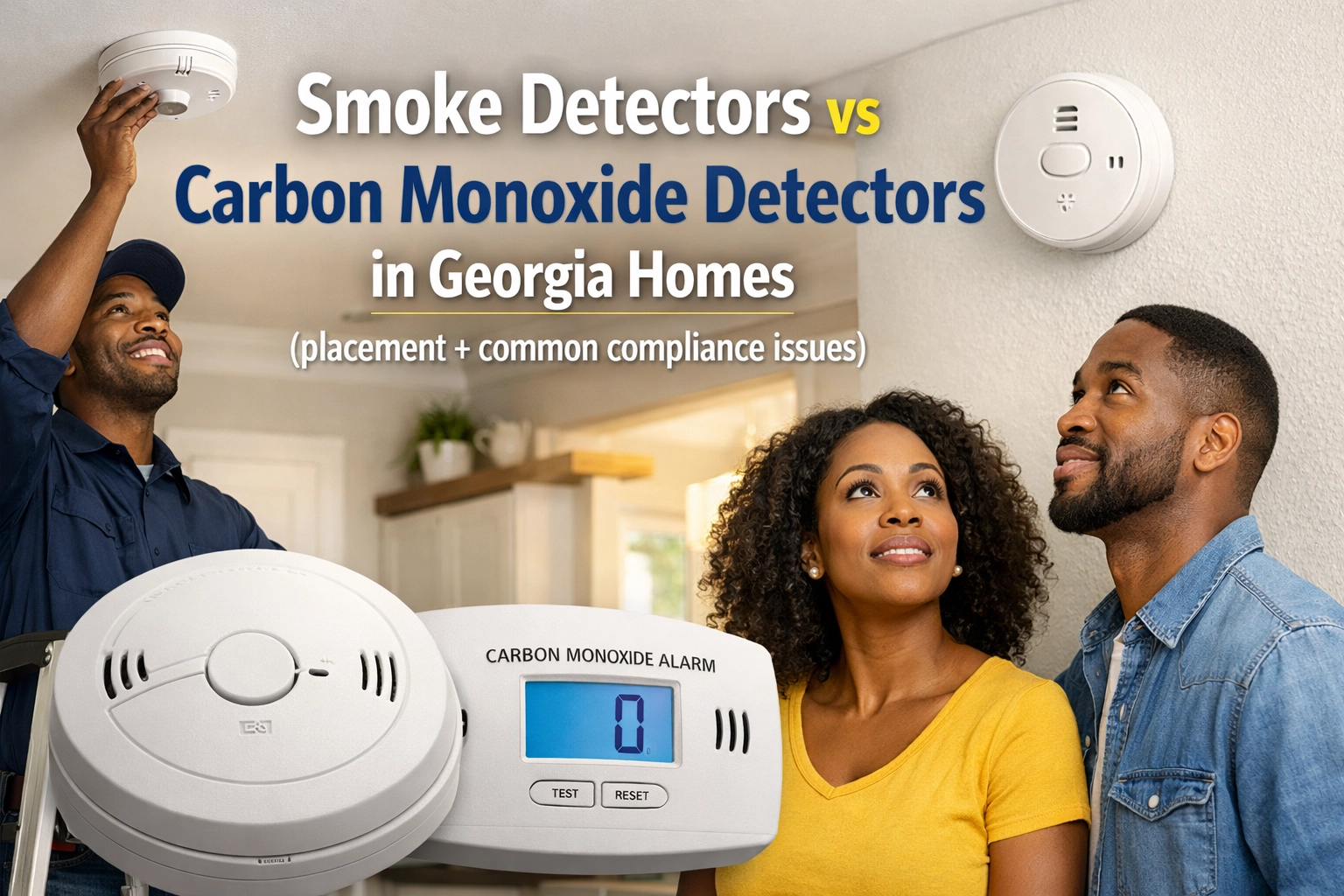
Smoke Detectors vs Carbon Monoxide Detectors in Georgia Homes (placement + common compliance issues)
Picture this: You're standing in the detector aisle at Home Depot, staring at about forty different boxes, wondering if you need smoke detectors, carbon monoxide detectors, or those combo units that claim to do both. Maybe you just moved into a house in Lawrenceville and noticed the detectors look like they've been there since the Reagan administration. Or perhaps you got a note from your home inspector about "compliance issues."
Either way, you've got questions. And this isn't about scaring anyone, it's about understanding what these devices actually do, where Georgia law says they need to go, and how to avoid the mistakes that trip up homeowners during inspections.
They're Not the Same Thing (And That Matters)
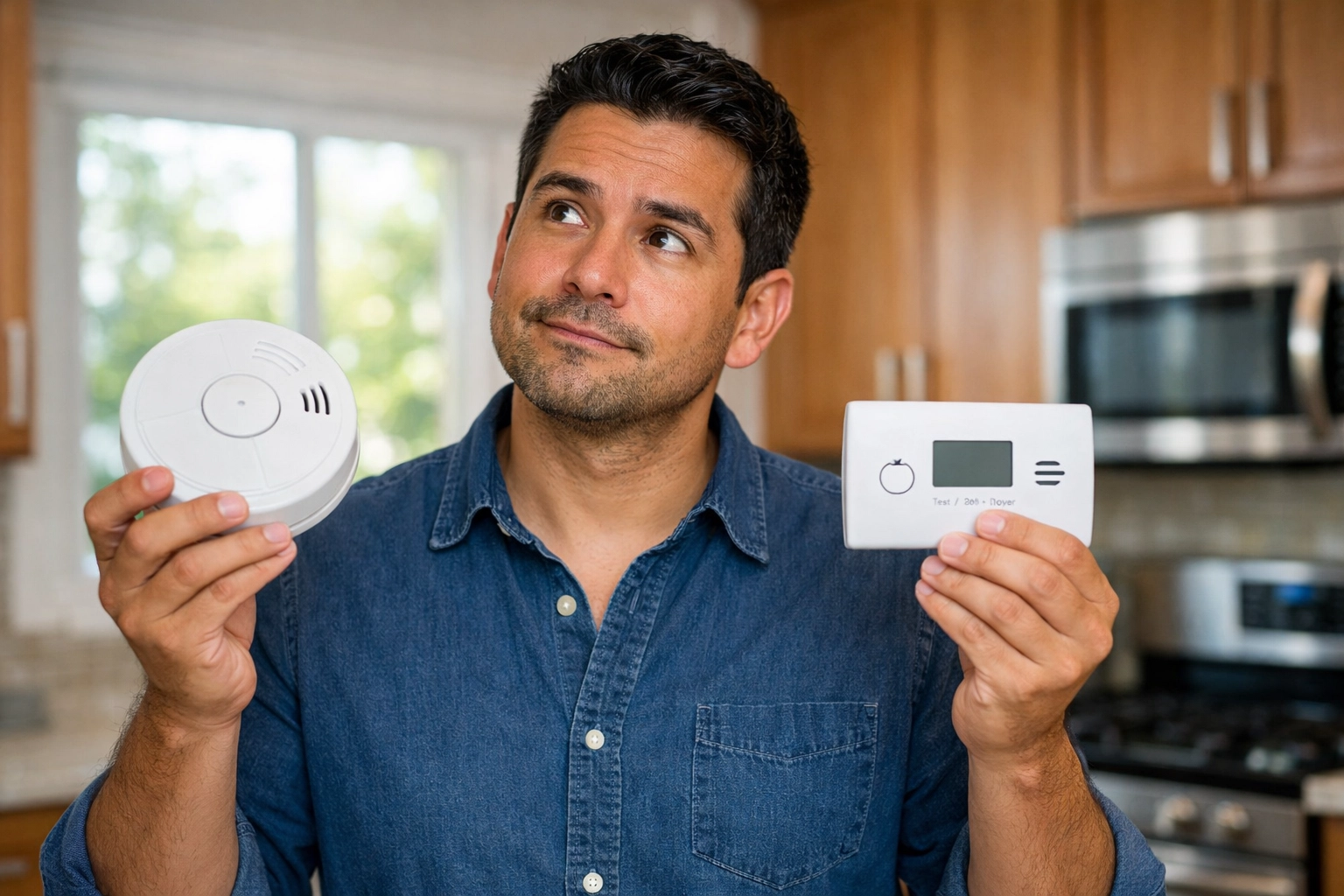
Here's what most people don't realize: smoke detectors and carbon monoxide detectors protect you from completely different dangers.
Smoke detectors sense particles in the air from fire. They're your early warning system when something's burning, whether that's an electrical fire starting in your walls or your teenager's forgotten pizza in the oven.
Carbon monoxide detectors identify CO gas, which is colorless and odorless. This stuff comes from fuel-burning appliances like your gas furnace, water heater, or that generator you run during power outages. You literally cannot smell it, taste it, or see it. That's what makes it so dangerous.
So no, one detector cannot replace the other. They're solving different problems entirely.
Georgia's Placement Requirements (The Official Rules)
Georgia follows the International Residential Code, which means there are specific rules about where these detectors need to live in your home. Here's the breakdown:
Smoke Detector Placement
Your smoke alarms must be installed:
- Inside every bedroom , not just near them, actually inside each sleeping room
- Outside each sleeping area on every level of your home
- On every level of the house, including basements
- In the middle of ceilings whenever possible (one detector per 1,200 square feet per level)
- In or near the kitchen , yes, even though cooking sets them off sometimes
Where NOT to put smoke detectors:
- Crawl spaces
- Unfinished attics
- Directly above furnaces or fireplaces (the heat causes false alarms)
Carbon Monoxide Detector Placement
CO detectors are required outside each separate sleeping area if your home has:
- Any fuel-burning appliances (gas furnace, water heater, stove, fireplace)
- An attached garage
Additional CO detectors should go:
- On each level that contains fuel-burning appliances
- In the general vicinity of bedrooms and sleeping areas
Avoid placing CO detectors:
- In direct sunlight
- Near heating vents (the airflow affects readings)
The bottom line? Most Georgia homes need both types of detectors, and they need to be in specific locations.
Hardwired vs. Battery-Powered: What Georgia Requires
This is where things get a little more complicated, so let's break it down by situation.
New Construction:
Both smoke and CO detectors must be hardwired with battery backup. They also need to be interconnected, meaning when one goes off, they all go off throughout the house. This is actually a really smart safety feature because if a fire starts in your basement while you're sleeping upstairs, you'll still hear the alarm.
Existing Homes:
Battery-powered detectors are permitted. There's no requirement to rip out walls and install hardwired units in older homes. However, if you're doing major renovations that require building permits, the new code requirements kick in for those areas.
The Upgrade Worth Considering:
Even if it's not required, hardwired interconnected detectors with battery backup are the gold standard. When the Martinez family in Duluth had us upgrade their 1990s home last spring, we installed interconnected units throughout. Mrs. Martinez mentioned that her mother-in-law lives in the basement apartment, and she wanted to make sure everyone would hear an alarm no matter where it started.
Common Compliance Issues We See in Metro Atlanta
After years of working with homeowners, home inspectors, and real estate agents across Gwinnett County and Metro Atlanta, here are the compliance problems that pop up most often:
1. Missing Bedroom Detectors
Homeowners often believe that one smoke detector in the hallway covers all the bedrooms. It doesn't. Georgia code requires detectors inside each bedroom, not just nearby.
2. Detectors Past Their Expiration Date
Here's something that surprises a lot of people: smoke detectors expire. Most have a 10-year lifespan, and there's usually a date stamped on the back. CO detectors typically last 5-7 years. If your detectors are older than that, they may not work properly even if the battery test button seems fine.
3. Wrong Placement Near Kitchens and Bathrooms
Detectors placed too close to cooking appliances or bathroom steam get disabled because they go off constantly. We've walked into homes where the kitchen detector was just… gone. The homeowner got tired of the false alarms and removed it entirely. That's a code violation and a serious safety risk.
4. No CO Detectors With Attached Garages
Many homeowners don't realize that having an attached garage triggers the CO detector requirement, even if you don't have any gas appliances in the house. Car exhaust contains carbon monoxide, and it can seep into living spaces.
5. Not Interconnected After Renovation
If you've had significant work done that required permits, your detectors may need to be upgraded to interconnected hardwired units. This catches people off guard during inspections, especially when selling a home.
Combination Units: A Smart Solution?
Yes, combination smoke and CO detectors are permitted in Georgia and must meet UL 217 and UL 2034 standards. These can simplify things significantly: instead of mounting two separate devices, you've got one unit handling both jobs.
The catch: You still need to follow placement rules for both types of detectors. If a location requires a smoke detector but not a CO detector (like an unfinished attic access), a smoke-only unit makes more sense. Combo units work best in bedrooms and hallways where both types are required anyway.
The Hernandez family we helped in Suwanee went with combo units throughout their new build, and it cut down on the number of devices they needed to maintain and test.
Testing and Maintenance (The Part Everyone Forgets)
Having the right detectors in the right places only matters if they actually work. Here's your maintenance checklist:
Monthly:
- Press the test button on each detector
- Make sure you can hear it from where you'd typically be (bedroom, living room)
Every 6 Months:
- Vacuum around the detector to remove dust
- This is also a good time to change batteries in battery-powered units (many people sync this with daylight saving time changes)
Annually:
- Check expiration dates
- Replace any units that are past their lifespan
After Any Renovation:
- Verify that detectors weren't damaged, removed, or disconnected
- Check that interconnected systems still work properly
When to Call a Professional
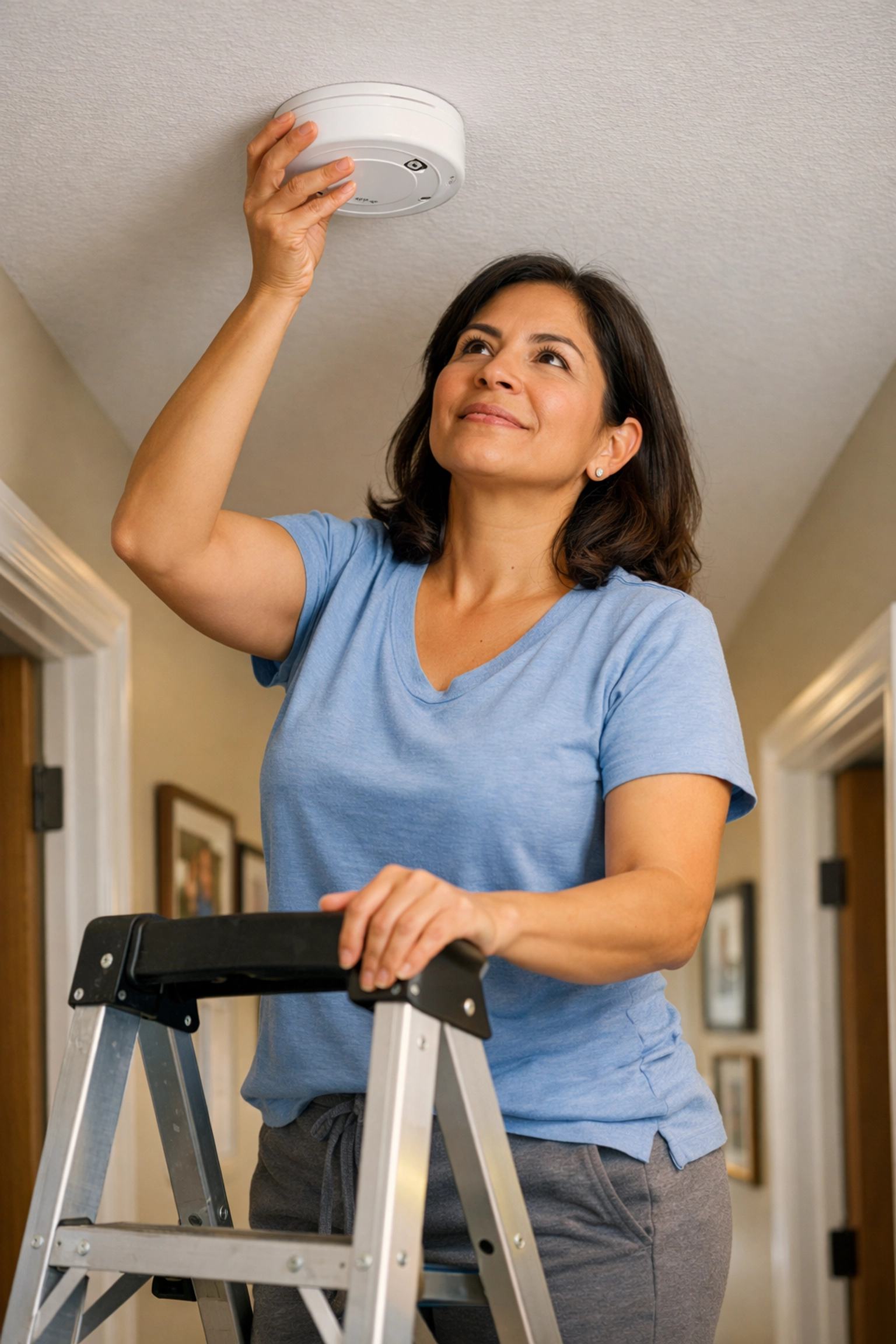
Some detector situations are DIY-friendly. Swapping out a battery-powered smoke detector? You've got this.
But certain upgrades really do need a licensed electrician:
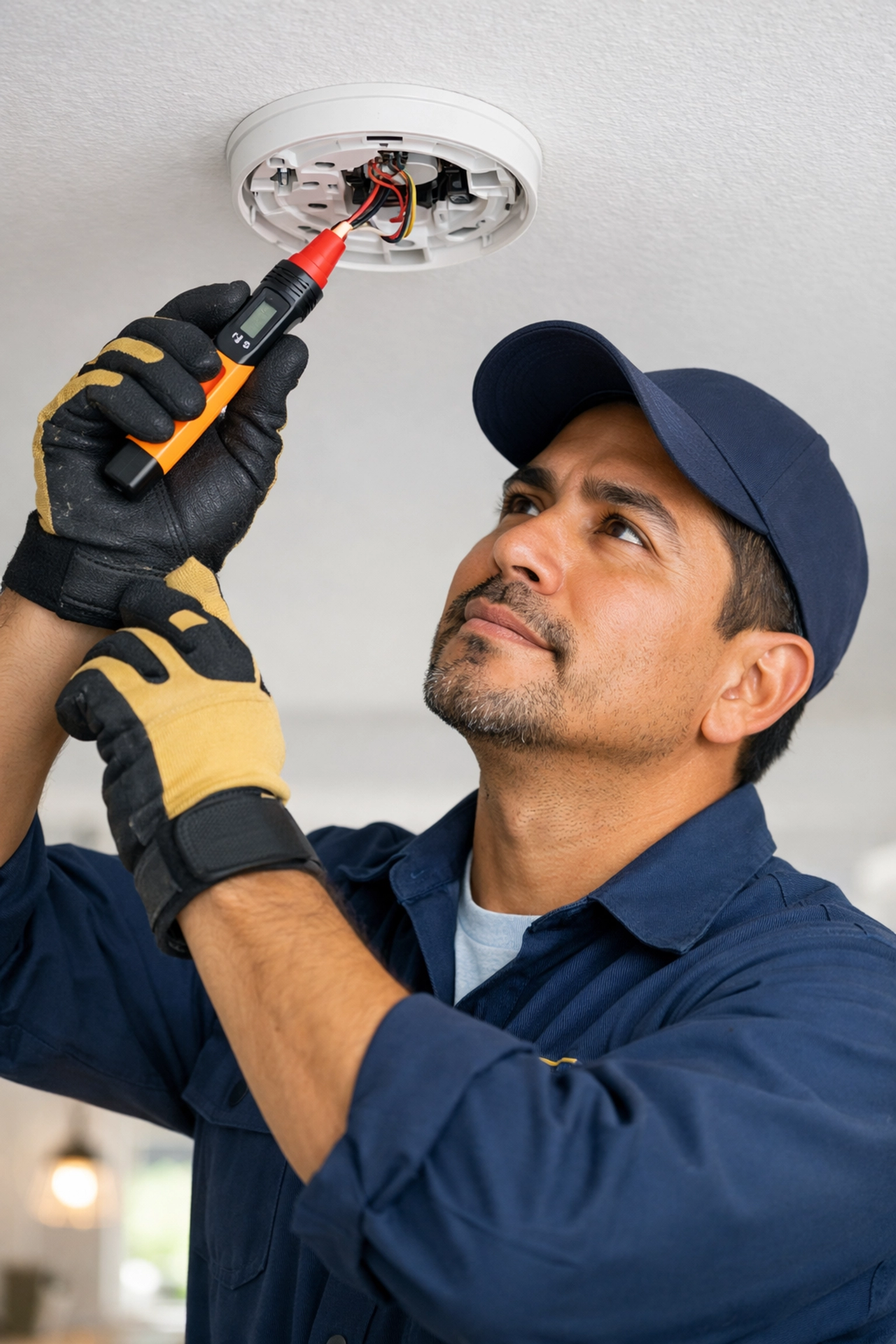
- Installing hardwired detectors requires working with your home's electrical system
- Setting up interconnected systems involves proper wiring between units
- Adding detectors during renovations may need to meet current code requirements
- Troubleshooting detectors that chirp or malfunction after you've replaced batteries
At Radiant Electric, we handle detector installations and upgrades throughout Gwinnett County and the Metro Atlanta area. We'll make sure everything is placed correctly, wired properly, and ready to pass inspection. You can learn more about our services at radiantelectricatl.com.
The Bottom Line
Smoke detectors and carbon monoxide detectors aren't interchangeable: they protect you from different dangers, and Georgia code has specific rules about where each type belongs. Most compliance issues come down to missing bedroom detectors, expired units, or improper placement.
Take twenty minutes this weekend to walk through your house. Check dates, test buttons, and count detectors. If something's off, now you know exactly what needs to happen to fix it.
Your family's safety is worth the effort.