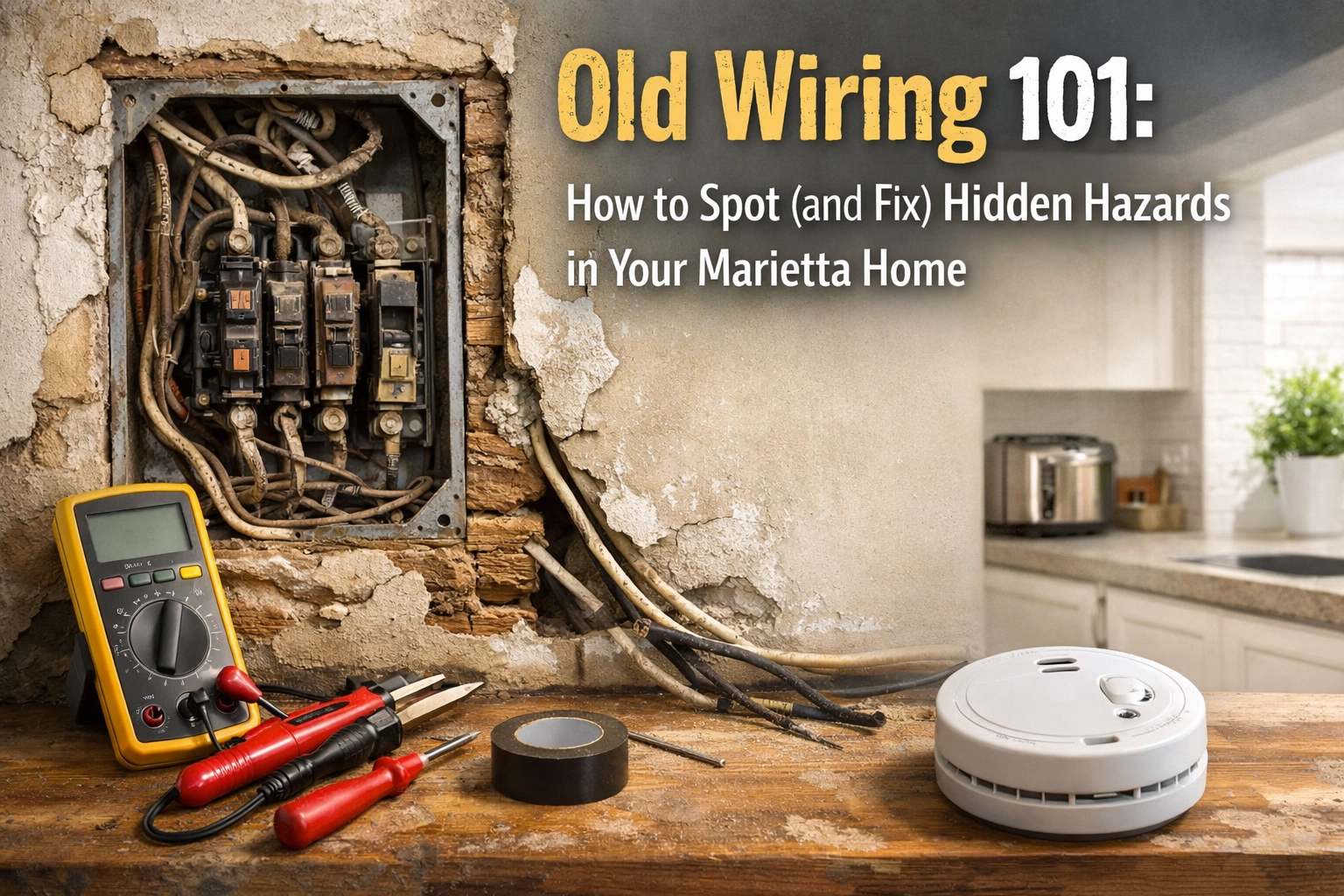
Old Wiring 101: How to Spot (and Fix) Hidden Hazards in Your Marietta Home
Your Marietta home has character. Maybe it's a charming 1950s ranch in East Cobb, or a cozy bungalow near the square in historic Decatur. The hardwood floors, the original molding, the mature trees in the yard, there's so much to love about these older homes.
But here's what most homeowners don't realize: that same vintage charm often comes with electrical systems that haven't been updated since bell-bottoms were in style.
This isn't about scaring anyone. It's about education. Because when Marcus and Keisha bought their 1962 ranch off Johnson Ferry Road last year, they had no idea that the flickering lights in their kitchen weren't just "quirky old house things", they were warning signals of dangerous knob-and-tube wiring hidden behind the walls.
Most people think if the lights turn on and the outlets work, everything's fine. That's not how electrical safety works. Hidden hazards don't always announce themselves with sparks and smoke. Sometimes they whisper through warm outlets, buzzing switches, and breakers that trip when you run the microwave and coffee maker at the same time.
If your home was built before 1980, you need to read this.
The Wiring Systems Hiding Behind Your Walls
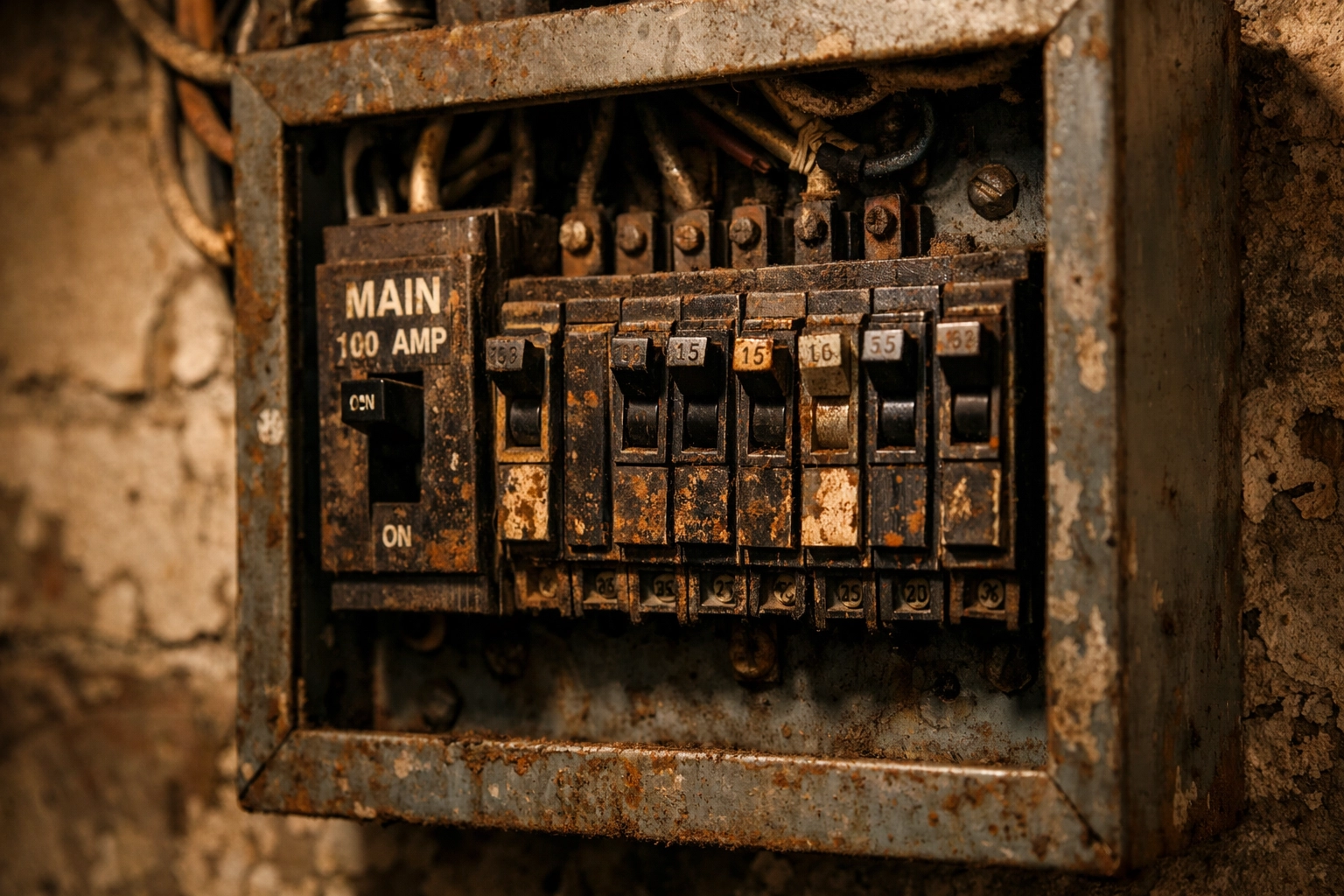
Walk through any older neighborhood in Marietta or Sandy Springs, and you're likely walking past homes with one of three outdated wiring systems still doing the heavy lifting.
Knob-and-Tube Wiring (Pre-1960s homes)
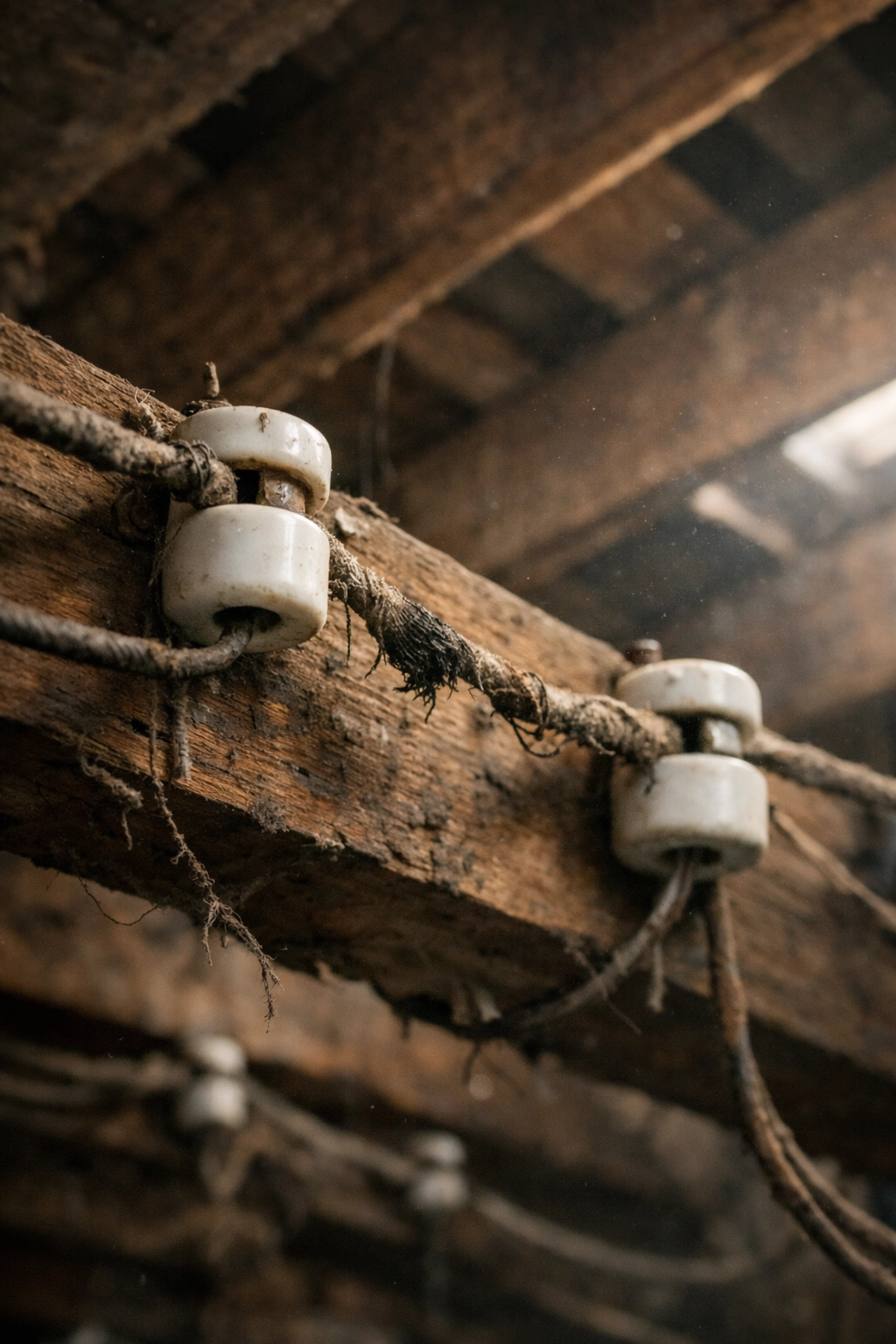
This is the granddaddy of electrical problems. If your home was built before the 1960s and hasn't been rewired, there's a decent chance you've got knob-and-tube wiring snaking through your walls and ceilings. Picture ceramic knobs holding individual wires in place, separated by air gaps.
Here's what that really means: This wiring has zero grounding. None. It was designed for a world where the most demanding appliance in your house was probably a toaster. The insulation deteriorates over time, becoming brittle and cracked. That exposed copper wire is now sitting inches from your wooden framing. According to the National Fire Protection Association, homes with outdated wiring are twice as likely to have electrical fires.
Aluminum Wiring (1960s-1970s homes)
Copper prices skyrocketed in the 1960s, so builders switched to aluminum wiring. Seemed like a smart cost-saving move at the time. Turns out, aluminum has a nasty habit: it expands and contracts with temperature changes more than copper does.
Every time you turn on a high-wattage appliance, that aluminum wire heats up and expands slightly. When it cools down, it contracts. Over decades, this creates loose connections at outlets and switches. Loose connections create resistance. Resistance creates heat. Heat creates fires.
Cloth-Covered Wiring (1920s-1960s)
Also called rubber-insulated cables, this wiring features a cloth coating over rubber insulation. That rubber breaks down over time, literally crumbling away and leaving live conductors exposed inside your walls. Touch the wrong wire in your attic or crawlspace, and you're getting shocked, or worse.
The Panel Problem Nobody Talks About
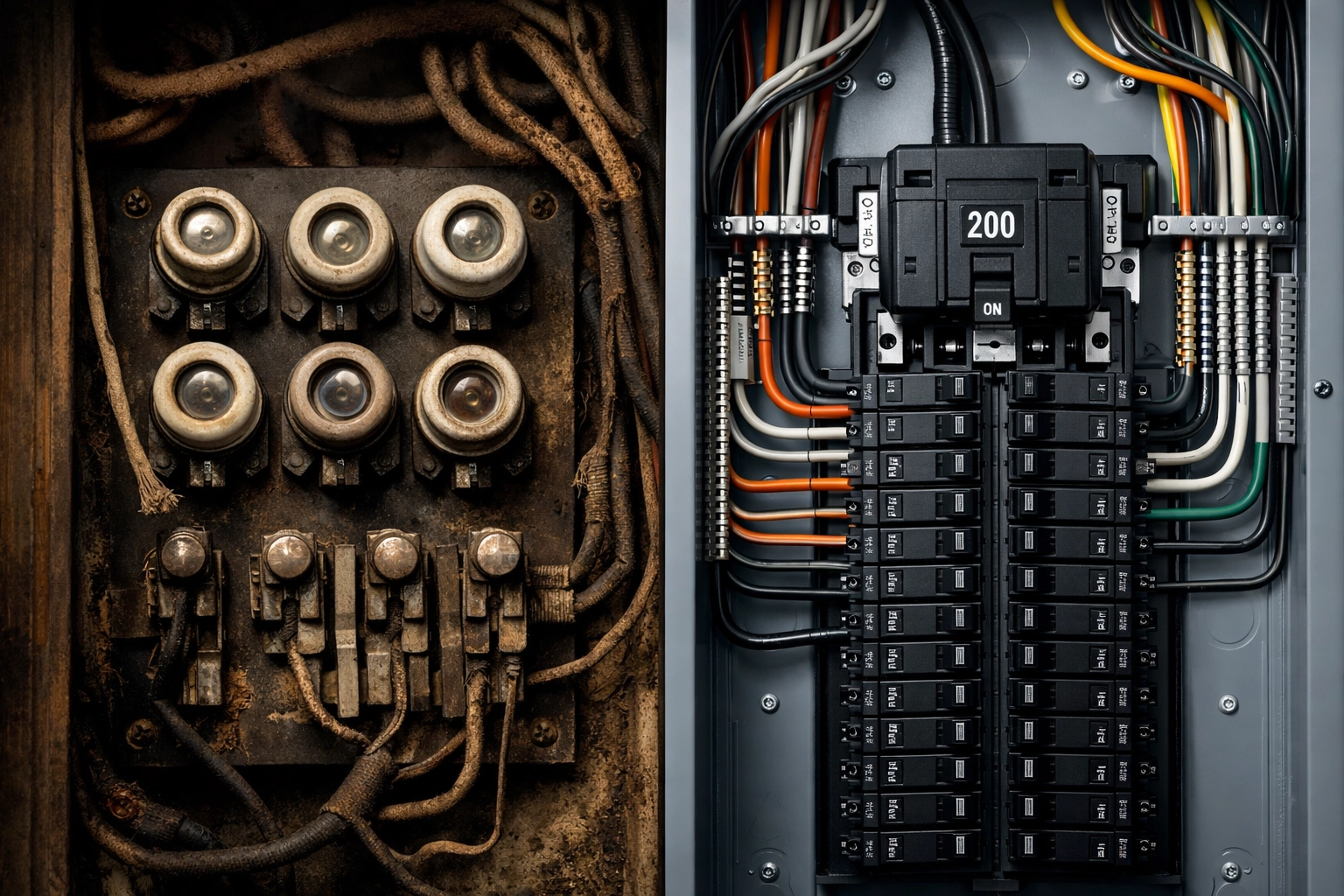
Here's a scenario that plays out every day: A family in Decatur buys a beautiful 1970s split-level. Everything seems fine until they try to live like it's 2026. They plug in their electric vehicle charger, run the HVAC, fire up the oven, and suddenly the breaker trips. Again. And again.
That's not a coincidence. Older electrical panels were designed for a 60-amp or 100-amp service. Modern homes typically need 200 amps minimum. Your grandparents' electrical panel was built for a world with one TV, no computers, no smart home devices, and definitely no EV chargers pulling 40 amps in the garage.
When your panel can't handle the load, it does one of two things: trips the breaker (the safe response), or overheats without tripping (the dangerous response). Some older panels, particularly Federal Pacific and Zinsco brands, are notorious for failing to trip when they should, allowing dangerous overcurrent situations that can spark fires.
If you're in Marietta or anywhere in Metro Atlanta and your panel is over 25 years old, you need an electrical panel upgrade atlanta inspection, period.
Warning Signs You Can't Ignore
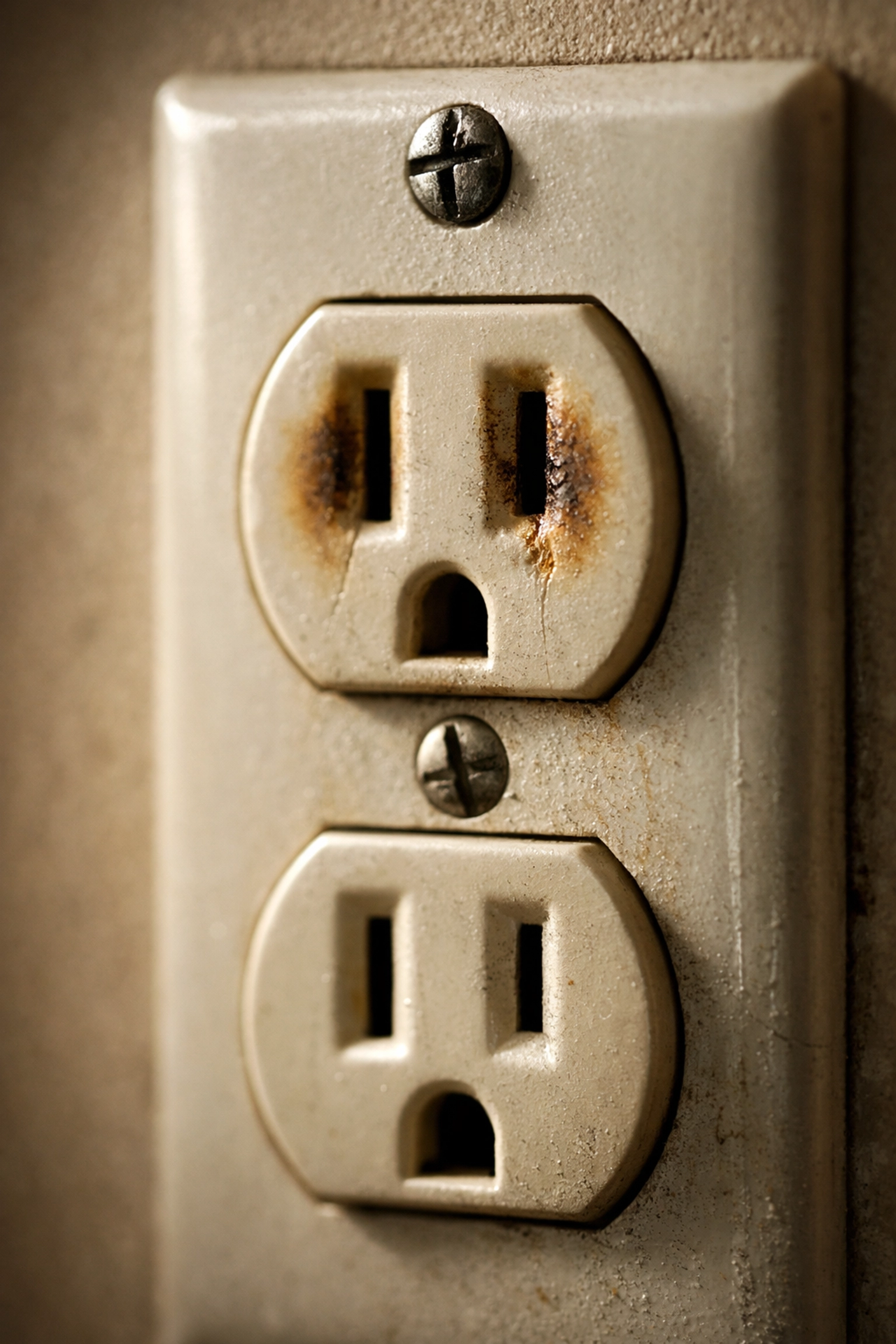
Most electrical problems give you warnings before they become emergencies. Here's what to watch for:
Warm or Hot Outlets
Touch the outlets in your home right now. Not just looking at them, actually touch them. They should feel room temperature. If an outlet is warm to the touch, that's heat generated by resistance somewhere in the connection. That resistance shouldn't exist. It means electricity is struggling to flow properly, creating heat in the process.
This is like your car engine running hot, it's telling you something's wrong before the engine seizes completely.
Flickering or Dimming Lights
When Janelle turned on her hair dryer in her Smyrna bathroom and the lights dimmed throughout the entire house, she thought it was normal for an older home. It's not. That dimming indicates your electrical system is overloaded, pulling voltage from one circuit to feed another. That's a signal your home's wiring can't handle your current power demands.
Frequently Tripping Breakers
Breakers are supposed to trip occasionally, that's their job as safety devices. But if you're resetting breakers weekly (or daily), that's not protection working correctly. That's a system failing to keep up with demand, and it means you're operating right at the edge of your electrical system's capacity.
Two-Prong Outlets Everywhere
See two-prong outlets instead of three-prong grounded outlets? That's not just inconvenient for your modern appliances, it means your electrical system lacks proper grounding. Without that third prong creating a grounding path, there's no safe route for excess electricity if something goes wrong. That excess electricity will find some path to ground, and it might be through you.
Buzzing Sounds from Outlets or Switches
Electricity should be silent. If you hear buzzing, humming, or sizzling sounds from outlets, switches, or your electrical panel, that's arcing, electricity jumping gaps it shouldn't be jumping. That creates extreme heat in localized spots. That's a fire waiting for the right conditions.
The Hidden Danger: Missing GFCI Protection
Walk into your kitchen right now and look at the outlets near the sink. See a little rectangular button that says "Test" and another that says "Reset"? That's a GFCI outlet (Ground Fault Circuit Interrupter). Its job is to detect even tiny differences in electrical current and shut off power in milliseconds if it senses electricity flowing where it shouldn't, like through water or through you.
Most older homes don't have these. At all. According to the Electrical Safety Foundation International, GFCIs prevent about 70% of electrocution deaths that would otherwise occur in homes. They're required by code in bathrooms, kitchens, garages, and outdoor areas, anywhere water might be present.
If you've got standard outlets in these moisture-prone areas, you're gambling with safety every single day.
What Actually Needs to Happen
Here's where most homeowners get nervous. "Is this going to cost me a fortune?" Maybe. But here's the better question: What's the cost of an electrical fire or someone getting seriously hurt?
Start with a professional inspection. Not a quick glance, a comprehensive evaluation by a licensed electrician in Marietta who knows what to look for. They'll check:
- Wire types throughout your home
- Panel capacity and condition
- Grounding and bonding systems
- GFCI protection in required areas
- Overall system compliance with current safety codes
This inspection typically costs $150-$300. That's cheap insurance compared to the alternative.
Common upgrades you might need:
Complete rewiring for homes with knob-and-tube or severely degraded cloth wiring. Yes, this is expensive ($8,000-$15,000 for a typical home), but it's also comprehensive. You're essentially giving your home a new electrical nervous system designed for modern life.
Panel upgrades to 200-amp service if you're still running on 60-100 amps. This usually runs $2,000-$4,000 and dramatically improves safety and functionality.
GFCI outlet installation in all required locations: kitchens, bathrooms, garages, outdoor areas. Each outlet costs $150-$300 installed, and it's worth every penny.
Grounding system upgrades to bring two-prong outlets up to modern three-prong grounded standards, including proper grounding rods and bonding to your water supply system.
Can you DIY any of this? Absolutely not. This isn't changing a light fixture or installing a ceiling fan. This is life-safety electrical work that requires deep knowledge of electrical codes, proper materials, and testing procedures. Home electrical repair Atlanta work isn't the place to learn on the job.
The Bottom Line
That beautiful older home in Marietta? It's got character, history, and potentially dangerous electrical systems designed for a world that no longer exists. The good news is that these hazards are fixable. Every single one of them can be addressed by qualified professionals who understand both the challenges of older homes and the solutions that bring them up to modern safety standards.
When you spot warm outlets, flickering lights, or frequently tripping breakers, you're not seeing problems: you're seeing early warning signals. Signals that give you time to act before they become emergencies.
The question isn't whether your older home has electrical issues. If it was built before 1980 and hasn't been updated, it probably does. The question is: are you going to address them proactively, or wait until they address themselves in ways you definitely won't like?
If you're in Marietta, Decatur, Sandy Springs, or anywhere in Metro Atlanta and your home is giving you these warning signals, it's time for a professional assessment. Your electrical system is literally the invisible force powering every aspect of your daily life: it deserves the same attention you'd give your roof or your HVAC system.
Don't wait for the warning signs to become emergencies.