Aluminum Wiring in Older Georgia Homes (risks, insurance issues, safest fixes)
You're checking out a charming 1970s ranch in Lawrenceville. The hardwood floors are gorgeous, the backyard is perfect for your kids, and the price is right. Then the home inspector drops a phrase that changes everything: "This home has aluminum wiring."
Suddenly, you're wondering if you should walk away entirely.
Here's the thing: this isn't about scaring anyone. Thousands of Georgia homes have aluminum wiring, and many families live in them safely every single day. But understanding what you're dealing with, how it affects your insurance, and what your options are? That's just smart homeownership.
Why Do So Many Georgia Homes Have Aluminum Wiring?
During the late 1960s and early 1970s, copper prices skyrocketed. Builders needed an affordable alternative, and aluminum fit the bill. It conducted electricity well enough and cost a fraction of what copper did.
The result? Homes built between roughly 1965 and 1973 across Metro Atlanta, Gwinnett County, and the surrounding areas often have aluminum branch circuit wiring running to outlets, switches, and light fixtures.
At the time, it seemed like a perfectly reasonable solution. Nobody predicted the long-term issues that would emerge decades later.
The Real Risks of Aluminum Wiring (What Actually Happens)
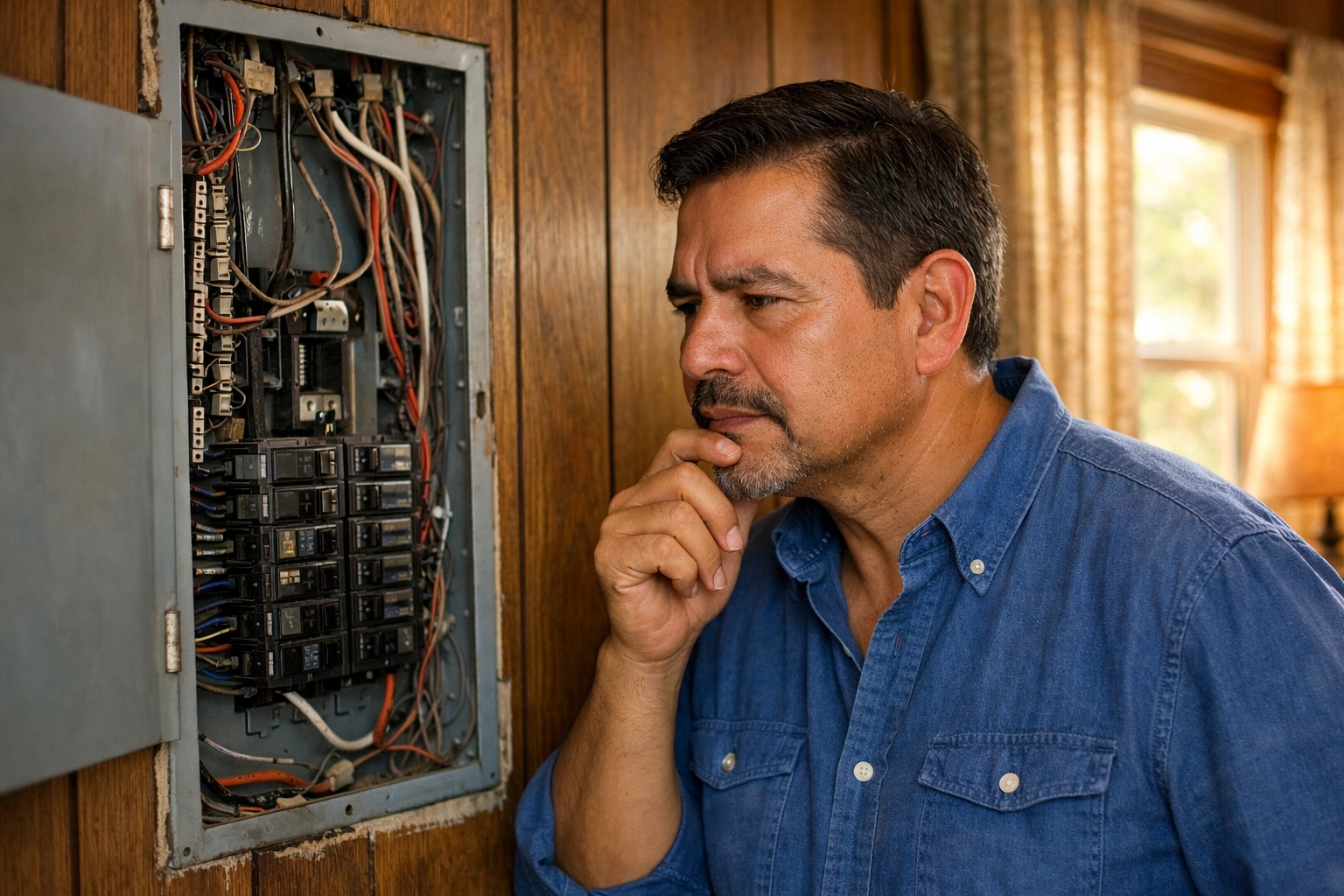
Here's what that really means for your home: aluminum behaves differently than copper over time, and those differences create potential hazards.
Aluminum expands and contracts more than copper. Every time electricity flows through aluminum wire, it heats up slightly. When it heats, it expands. When it cools, it contracts. Do this thousands of times over 50 years, and connections at outlets and switches gradually loosen.
Loose connections create resistance. Resistance creates heat. Heat near wood framing and insulation? That's where fires start.
Aluminum oxidizes when exposed to air. You know how a copper penny turns green over time? Aluminum does something similar: it forms a thin oxide layer. This layer actually resists electrical flow, which means the connection has to work harder. More work equals more heat.
In Georgia's humid climate, this oxidation process accelerates. Basements, crawl spaces, and areas near bathrooms are especially vulnerable.
Aluminum is softer than copper. When an electrician tightens a screw on a copper wire, that connection stays tight. Aluminum is softer. Over time, the metal slowly deforms under pressure: electricians call this "creeping." The result? More loose connections.
According to the U.S. Consumer Product Safety Commission, homes with aluminum wiring are 55 times more likely to reach fire hazard conditions than homes wired with copper.
That's not a typo. Fifty-five times.
Warning Signs Every Homeowner Should Recognize
Maria and Carlos Rodriguez bought their Duluth home three years ago. They knew about the aluminum wiring going in and had it inspected. Everything seemed fine: until Maria noticed the outlet behind their living room TV felt warm to the touch.
That warmth was a warning sign they caught early.
Here's what to watch for in your own home:
- Flickering lights that aren't caused by a faulty bulb
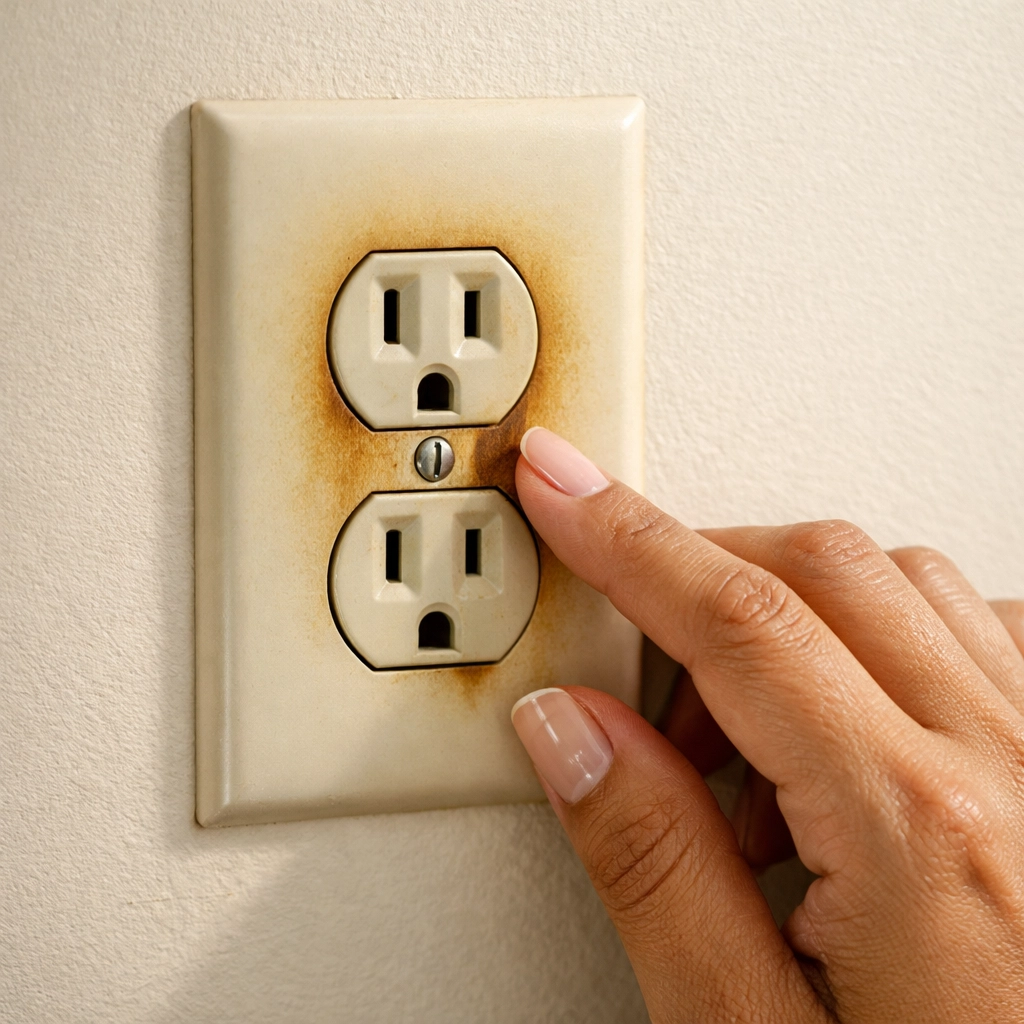
- Warm or discolored outlet covers (especially a brown or yellowish tint)
- Burning plastic smells near outlets or switches with no obvious source
- Buzzing or crackling sounds from light switches
- Breakers that trip repeatedly without an obvious overload
Any of these signals means you need a licensed electrician to inspect your system immediately. Not next month. Now.
How Aluminum Wiring Affects Your Home Insurance in Georgia
This is where many Georgia homeowners get blindsided.
Insurance companies view aluminum wiring as a liability. Some carriers will insure homes with aluminum wiring but charge significantly higher premiums. Others require specific upgrades before they'll issue a policy. And some? They'll deny coverage entirely until the wiring situation is addressed.
When the Hernandez family in Suwanee went to renew their homeowner's policy last year, their insurance company requested an electrical inspection. When the inspector noted aluminum wiring, they received a letter: upgrade the connections within 60 days or find another carrier.
What this means for buying or selling:
If you're purchasing an older Georgia home, expect the aluminum wiring to come up during the inspection. This often becomes a negotiation point: either the seller addresses it, the price gets adjusted, or you factor the upgrade cost into your budget.
If you're selling, know that aluminum wiring will likely reduce your pool of potential buyers. Many people simply don't want to deal with it, and lenders may require certain fixes before approving a mortgage.
Your Options: From Simple Fixes to Complete Rewiring
You have choices here. The right solution depends on your home's condition, your budget, and your long-term plans.
Option 1: Complete Rewiring
This is the gold standard. A licensed electrician removes all the aluminum branch circuit wiring and replaces it with modern copper.
The pros: Eliminates the hazard entirely, increases home value, makes insurance simple, and gives you peace of mind for decades.
The cons: It's the most expensive option, typically running $2 to $4 per square foot. For a 2,000-square-foot home, you're looking at roughly $4,000 to $8,000 or more depending on accessibility and local labor costs.
Complete rewiring also involves opening walls, which means patching and repainting afterward.
Option 2: COPALUM Crimping
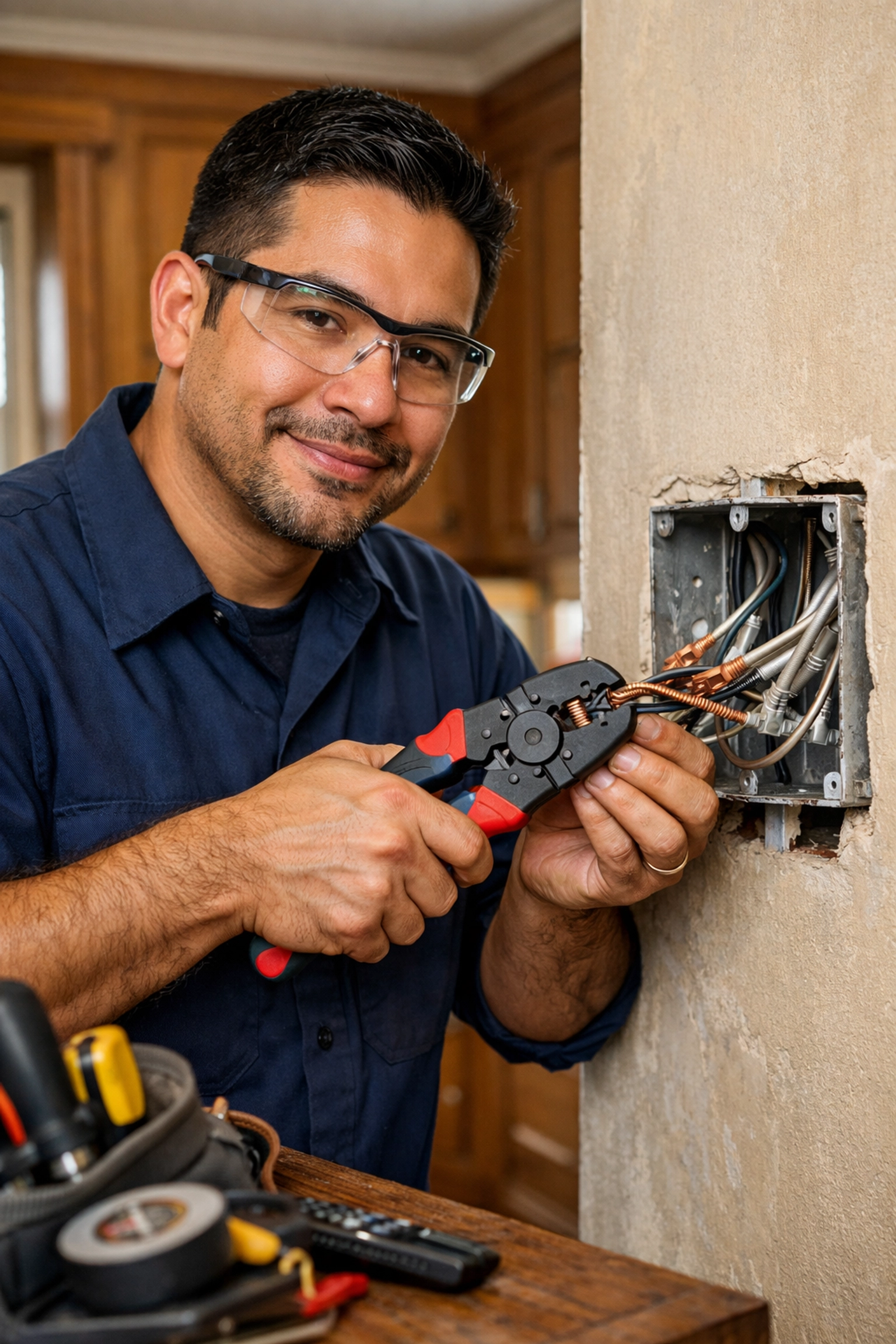
This method uses a special tool to permanently attach a short copper wire (called a pigtail) to the existing aluminum wire at every connection point. The copper pigtail then connects to the outlet or switch.
The pros: Much less expensive than complete rewiring, doesn't require opening walls, and when done correctly, it's considered a permanent repair by the Consumer Product Safety Commission.
The cons: The COPALUM system requires specialized equipment, and not every electrician has it. You'll need to find a contractor specifically trained and equipped for this method.
Option 3: AlumiConn Connectors
These are set-screw connectors specifically designed for joining aluminum to copper. They're easier to find than COPALUM-certified electricians and still provide a reliable connection.
The pros: More accessible than COPALUM, less expensive than complete rewiring, and acceptable to many insurance companies.
The cons: Requires professional installation at every single connection point in your home. Cutting corners here defeats the purpose entirely.
Option 4: Aluminum-Compatible Devices
Some outlets and switches are specifically rated for aluminum wiring: look for devices marked "CO/ALR." Replacing standard devices with CO/ALR-rated ones reduces risk at those connection points.
The pros: Relatively affordable and straightforward.
The cons: This is really a partial solution. It addresses device connections but doesn't fix junction boxes, splices in walls, or connections at your panel.
What We Recommend for Georgia Homeowners
If your home has aluminum wiring, here's the smartest path forward:
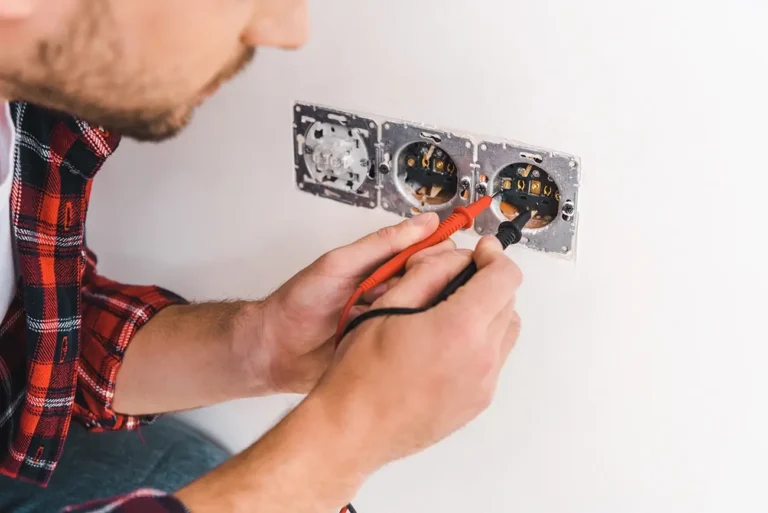
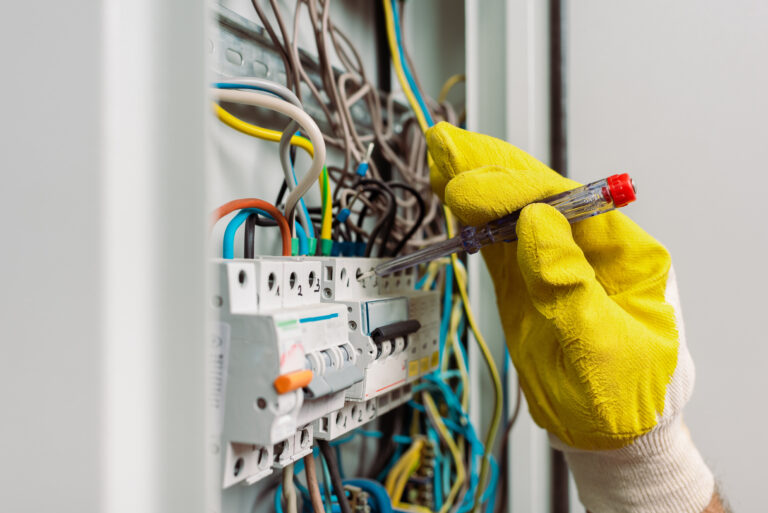
Step 1: Get a thorough electrical inspection from a licensed professional. Not a general home inspector: an electrician who can assess every accessible connection point.
Step 2: Based on that inspection, discuss your options. If your wiring shows signs of overheating or deterioration, faster action is needed. If everything looks stable, you may have more flexibility.
Step 3: Whatever solution you choose, get documentation. Your insurance company will want proof of the work, and future buyers will appreciate having records.
Step 4: Even after repairs, stay vigilant. Know the warning signs and check your outlets periodically.
The Bottom Line on Aluminum Wiring
Aluminum wiring doesn't automatically mean your home is dangerous. It means your home needs attention and monitoring that copper-wired homes don't require.
Thousands of families throughout Gwinnett County and Metro Atlanta live safely in homes with properly maintained aluminum wiring systems. The key word there is maintained.
If you're in an older Georgia home and you're not sure what's behind your walls, finding out is the first step. The team at Radiant Electric can inspect your system, explain exactly what you're dealing with, and walk you through your options: no pressure, no scare tactics, just straight answers.
Because when it comes to your family's safety, knowing beats guessing every single time.