7 Mistakes You’re Making with the New Georgia Electrical Code
Imagine Marcus, a homeowner in Gwinnett County, spending his Saturday morning in the garage. He’s finally installing that new sump pump he bought after the last heavy rain, and he’s feeling pretty good about his DIY skills. He’s followed a few YouTube tutorials, wired it up just like his old one, and expects it to work perfectly.
But when the local inspector stops by later that week, Marcus gets some frustrating news. His brand-new installation has already failed inspection. Why? Because as of January 1, 2026, the rules for electrical work in Georgia have changed.
If you are planning a renovation, an upgrade, or even a small repair, you might be following outdated advice. Georgia has officially adopted the 2023 National Electrical Code (NEC) with very specific 2026 Georgia State Amendments. These amendments actually make some things easier for homeowners, but they also introduce new requirements that catch many DIYers off guard.
This isn't about scaring anyone. Electrical codes exist to ensure your home is a safe place for your family. Think of these rules as a blueprint for safety, rather than a list of chores. Our goal here is to translate the technical jargon into everyday language so you can plan your projects with confidence.
Here are the seven most common mistakes homeowners are making with the new 2026 Georgia Electrical Code: and how you can avoid them.
1. Skipping GFCI Protection for Dishwashers and Sump Pumps
In the past, many homeowners (and even some pros) didn't worry about GFCI protection for appliances like dishwashers or sump pumps, especially if they were hardwired directly into the wall.
The New Georgia Rule: Under the 2026 amendments, specific appliances: including dishwashers and sump pumps: must have Ground Fault Circuit Interrupter (GFCI) protection.
Here’s what that really means: A GFCI is like a high-speed safety switch. It monitors the flow of electricity and shuts the power off in a fraction of a second if it detects the current is "leaking" somewhere it shouldn't (like through water or a person). Because dishwashers and sump pumps deal with water, the state now requires this extra layer of protection to prevent shocks.
The Fix: If you are installing a new dishwasher or sump pump, ensure the circuit is protected by a GFCI breaker in your panel or a GFCI outlet.

2. Forgetting the Outdoor Emergency Disconnect
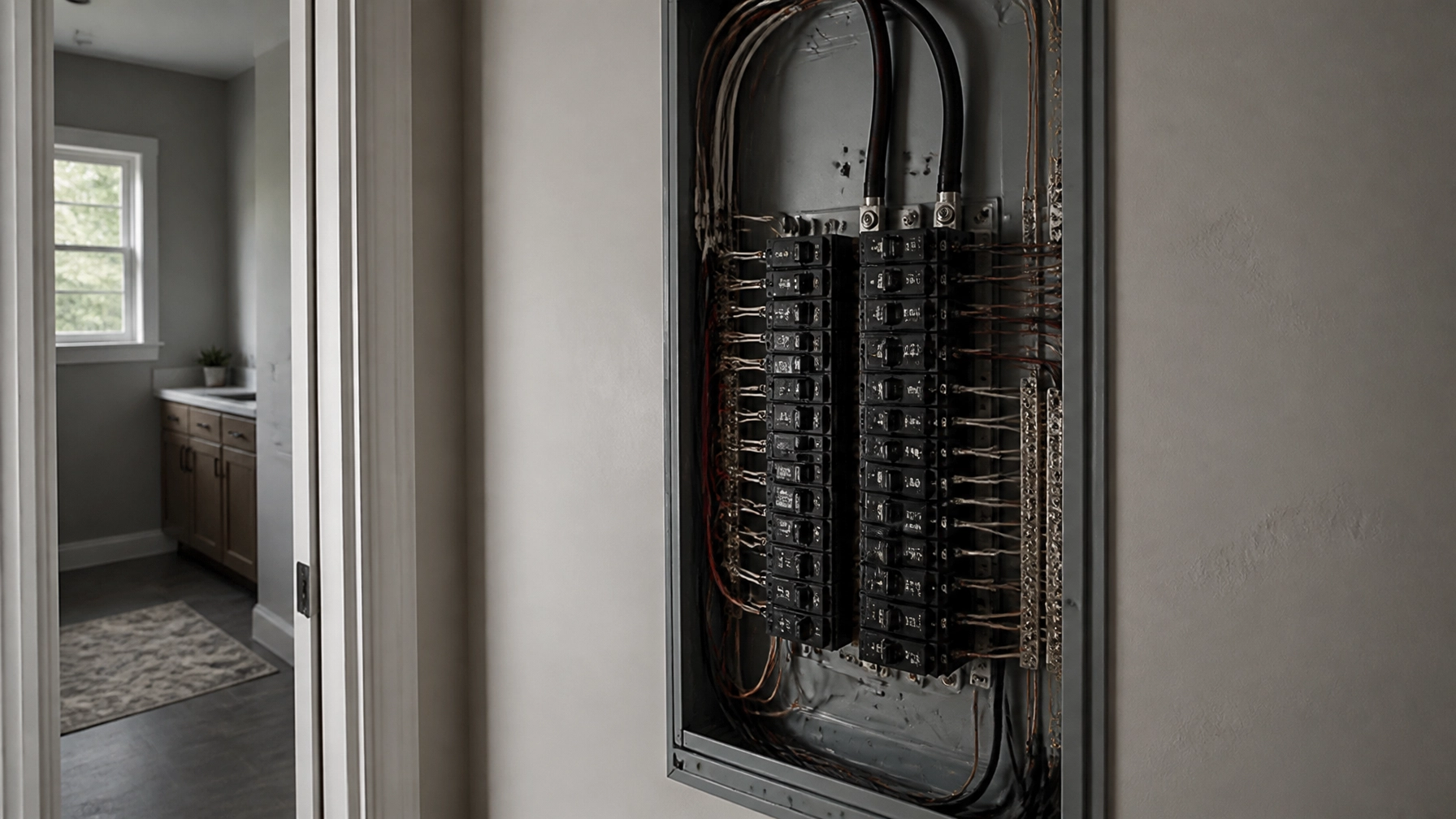
If you are planning to upgrade your electrical panel or move your meter, you are likely performing what’s called a "service upgrade." Many homeowners think they can just swap the old panel for a new one in the same spot.
The New Georgia Rule: All new homes and significant service upgrades now require an emergency disconnect located on the outside of the house.
Here’s what that really means: Imagine a fire breaks out in your home. When first responders arrive, they need a way to shut off all power to the house immediately without having to run into a burning building to find your main panel. This outdoor switch allows them to cut the power safely from the exterior.
The Fix: If you're doing a panel upgrade, you must factor in the installation of a clearly labeled exterior disconnect box. It’s a major safety signal for emergency crews.

3. Over-Complicating Your Kitchen Island Outlets
For a while, national headlines told homeowners they had to install "pop-up" outlets directly into their expensive stone or quartz kitchen islands. This led to a lot of stress (and a lot of drilled holes in beautiful countertops).
The New Georgia Rule: Georgia’s 2026 amendments officially allow you to put outlets on the side of the island or peninsula again.
Here’s what that really means: You don't have to cut into your countertop if you don't want to. While the national code was pushing for pop-ups to prevent cords from hanging over the edge, Georgia realized that side-mounted outlets are often more practical for many families.
The Fix: You still need outlets on your island for small appliances, but you can choose to mount them on the vertical cabinetry as long as they are within the height requirements.

4. Misunderstanding Where You Actually Need AFCIs
AFCI (Arc-Fault Circuit Interrupter) breakers are designed to prevent fires by detecting "arcs": think of them as tiny, hot sparks caused by a loose wire or a nail driven through a wall into a cable.
The New Georgia Rule: Georgia has actually removed the requirement for AFCI protection in kitchens and laundry areas. However, they are still required in almost every other room, like bedrooms, living rooms, and dens.
Most people think that because Georgia relaxed the rule for kitchens, they don't need AFCIs anywhere. That’s a mistake that will fail an inspection instantly.
The Fix: Use AFCI breakers for your living spaces to protect against hidden fire hazards, but save yourself some money and potential "nuisance tripping" by using standard or GFCI breakers (as required) in your kitchen and laundry zones.
5. Putting the Refrigerator on a GFCI (When You Don't Have To)
We've all heard the horror stories: a family goes on vacation, a GFCI outlet trips, and they come home to a refrigerator full of spoiled food.
The New Georgia Rule: Georgia’s 2026 amendments clarify that GFCI protection is required for kitchen outlets that serve the countertop.
Here’s what that really means: If your refrigerator outlet is tucked away behind the fridge and isn't within 6 feet of the sink, it generally does not need to be on a GFCI circuit. Georgia made this distinction to prevent the exact scenario of a "nuisance trip" ruining your groceries.
The Fix: Check the distance from your sink. If the outlet is more than 6 feet away and doesn't serve the counter, you can likely use a standard outlet, providing more reliability for your appliances.
6. Using GFCI on Outdoor AC Units
Under some versions of the national code, there was a push to put outdoor air conditioning (HVAC) units on GFCI protection.
The New Georgia Rule: Georgia has specifically exempted outdoor HVAC equipment from the GFCI requirement.
Here’s what that really means: Some modern AC units naturally "leak" a tiny bit of electricity during start-up. While this is safe, it’s enough to trip a sensitive GFCI breaker. By exempting these units, Georgia is preventing homeowners from having their AC cut out in the middle of a 95-degree July afternoon for no reason.
The Fix: Ensure your outdoor unit is properly grounded and has a standard disconnect, but don't feel pressured to add a GFCI breaker unless a specific manufacturer's instruction requires it.
7. Skipping Surge Protection Because "It's Not Mandatory"
This is perhaps the most common mistake for homeowners looking to save a few dollars during a panel upgrade.
The New Georgia Rule: While the national code wants whole-home surge protection to be mandatory, Georgia’s 2026 amendments make it optional for one- and two-family homes.
Most homeowners believe that if the code doesn't require it, they don't need it. But here is the reality: modern homes are filled with sensitive electronics: from your smart fridge to your EV charger. Georgia is famous for its lightning storms and grid fluctuations.
The Fix: Even though it's not a legal "must" in Georgia, installing a whole-home Surge Protective Device (SPD) is a smart move. It acts like a lightning rod for your electrical system, catching massive spikes in voltage before they can fry your expensive appliances.

Takeaways for a Successful Project
Keeping up with code changes can feel like a full-time job, but staying informed helps you avoid costly "redo" work. If you're working on a project in Metro Atlanta or Gwinnett County, keep these simple do’s and don’ts in mind:
- DO check if your dishwasher or sump pump is GFCI protected.
- DO install an outdoor disconnect if you are upgrading your main service.
- DON'T feel forced into countertop pop-up outlets for your kitchen island.
- DON'T assume national "how-to" videos apply to Georgia's specific 2026 rules.
- DO consider a safety inspection before starting a major renovation to see where your home stands.
If Marcus had known about the specific dishwasher and sump pump rules in the 2026 amendments, he could have saved himself a failed inspection and a whole lot of stress. Electrical systems are like the "nervous system" of your home: they are complex, but when handled with the right knowledge, they keep everything running smoothly.
If you're feeling unsure about a project, a professional electrical panel upgrade or a dedicated EV charger installation can ensure your home meets every local standard.
Stay safe, stay informed, and enjoy your home improvement journey!