Whole House Generator vs. Backup Battery: Which Is Better for Your Atlanta Home?
You're sitting in your Atlanta home during another summer thunderstorm when the lights flicker and go out. Again. Your neighbor's generator kicks on immediately while you're fumbling for flashlights and worrying about your food spoiling. Sound familiar?
This isn't about scaring anyone: it's about helping you make the smartest choice for reliable backup power. The decision between a whole house generator and a backup battery system comes down to your specific needs, budget, and long-term goals. Let's break down exactly what each option offers so you can decide what works best for your situation.
Understanding Whole House Generators
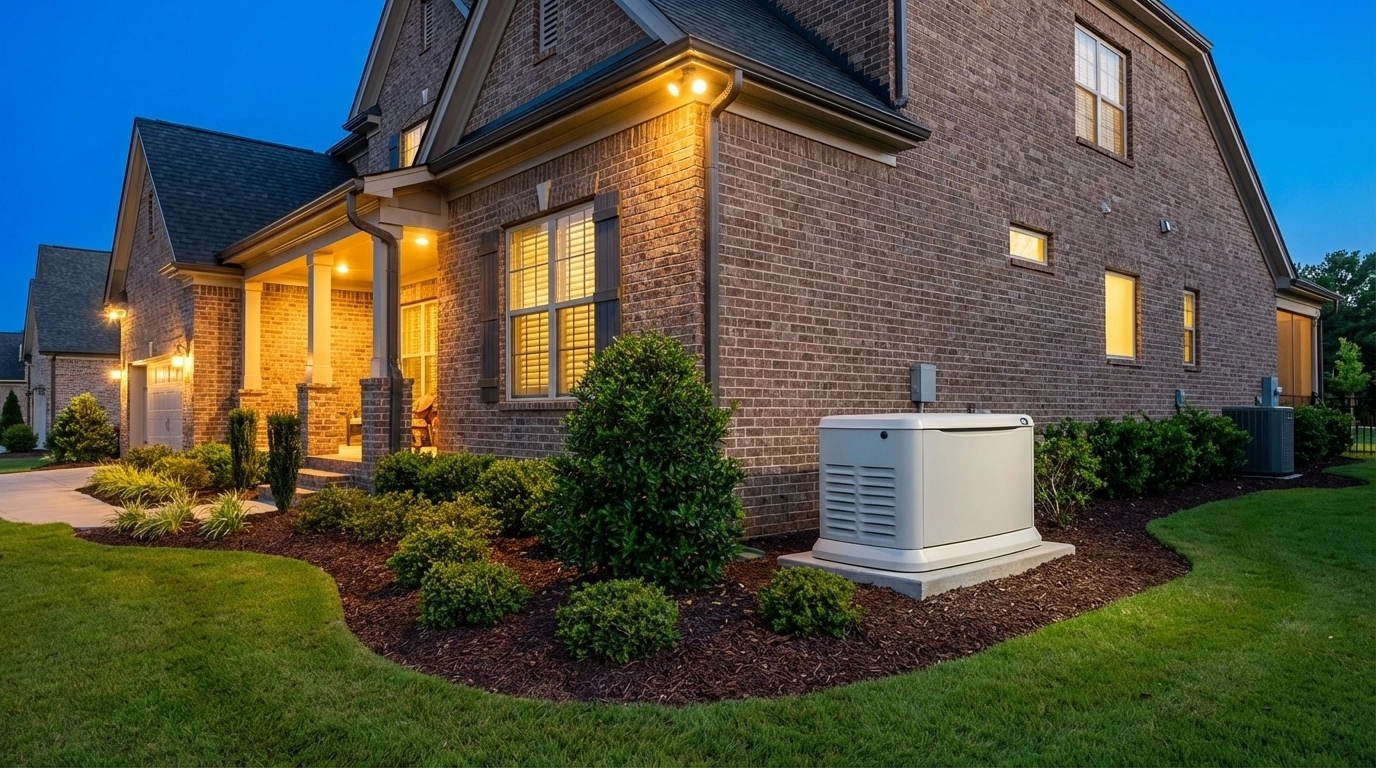
A whole house generator creates electricity by burning fuel: typically natural gas or propane. When your power goes out, it automatically detects the outage and switches on within seconds, keeping your entire home running normally.
Here's what that really means: You won't even notice the power went out. Your air conditioning keeps running during those brutal Atlanta summers, your refrigerator stays cold, and your security system remains active.

The Major Advantages of Generators
Lower upfront investment. A quality whole house generator typically costs between $7,000 and $15,000 for the unit itself, plus installation. That's significantly less than most battery systems right out of the gate.
Unlimited runtime during outages. As long as you have fuel, your generator keeps running. During extended outages: like those ice storms that can knock out power for days: this becomes invaluable. You're not watching the clock wondering when your backup power will run out.
Higher power capacity. Most whole house generators produce 10 to 24+ kilowatts of power. Here's what that really means: You can run your central air, electric water heater, all your lights, appliances, and electronics simultaneously without making tough choices about what to power.
Proven longevity. Quality generators last 20 to 30 years with proper maintenance. That's decades of reliable backup power from one investment.
The Real Drawbacks You Need to Consider
Ongoing fuel costs add up fast. Natural gas generators can cost $20-40 per day to operate during outages. Propane costs even more. During extended outages, you're looking at hundreds of dollars in fuel costs alone.
Maintenance requirements are significant. Generators need professional servicing at least once annually, costing $200-600 each time. They also require regular testing, oil changes, and filter replacements. Skip this maintenance, and your generator might fail when you need it most.
Noise and environmental impact. Generators produce noise: typically 60-70 decibels, similar to a conversation or background music. They also burn fossil fuels, creating emissions.
Most people think generators are "set it and forget it" systems. The reality is they require ongoing attention and investment to remain reliable.
Backup Battery Systems Explained
Battery backup systems store electricity from the grid or solar panels, then supply that stored power during outages. Modern systems use lithium-ion technology similar to electric vehicle batteries but designed specifically for home use.
Here's what that really means: Your home switches seamlessly to battery power during outages, running silently in the background. You might not even realize the power went out until you notice your neighbors' houses are dark.

Why Batteries Are Gaining Popularity
Virtually maintenance-free operation. Unlike generators, battery systems require minimal yearly maintenance with almost no associated costs. No oil changes, no filter replacements, no annual service calls.
Completely silent operation. Batteries produce zero noise. Your neighbors won't know your backup system is running, and you won't be disturbed by engine sounds during nighttime outages.
Environmental benefits. Battery systems produce no emissions during operation. When paired with solar panels, they run on clean, renewable energy.
Long-term cost advantages. While the upfront cost is higher, battery systems have extremely low operating costs. If you pair them with solar panels, your "fuel" is literally free sunlight.
The Limitations You Should Understand
Higher initial investment. Whole-home battery systems typically cost $25,000-30,000 before incentives. Even smaller systems that power essential circuits start around $15,000-20,000.
Limited storage capacity. Most home batteries store 10-15 kilowatt-hours of energy. Here's what that really means: You'll need to be strategic about what you power during extended outages. You might run your refrigerator, lights, and Wi-Fi, but probably not your central air conditioning for hours on end.
Shorter lifespan. Battery systems typically last 10-12 years before needing replacement. That's about half the lifespan of a quality generator.
Weather dependency with solar. If your battery system charges from solar panels, cloudy weather during extended outages can limit your ability to recharge. However, batteries can also charge from the grid when power returns.
Head-to-Head Comparison
| Factor | Whole House Generator | Backup Battery System |
|---|---|---|
| Upfront Cost | $7,000–$15,000 | $25,000–$30,000 |
| Power Output | 10–24+ kW | 5–15 kW (expandable) |
| Runtime During Outage | Unlimited with fuel | 8-24 hours typical use |
| Annual Maintenance | $200–$600 | Under $100 |
| Operating Cost | $20-40/day during outages | Near zero with solar |
| Lifespan | 20–30 years | 10–12 years |
| Noise Level | 60-70 decibels | Silent |
| Environmental Impact | Emissions from fuel | Zero emissions |
| Installation Complexity | Moderate (gas line required) | Moderate to complex |

What Works Best for Atlanta Homes
Atlanta's climate and weather patterns create specific considerations for backup power decisions.
Hot, humid summers mean air conditioning is essential. During summer outages, running your AC becomes a priority, not a luxury. Generators handle this demand easily, while battery systems may struggle to power central air for extended periods.
Severe weather events are typically short-duration. Ice storms, thunderstorms, and high winds cause most Atlanta power outages, but they usually last hours rather than days. This plays to battery systems' strengths: they excel at handling brief outages without the noise and emissions of generators.
Many Atlanta homes are suitable for solar panels. The city gets plenty of sunshine year-round, making solar-plus-battery combinations particularly attractive. You can reduce your electricity bills during normal times while maintaining backup power capability.
Making Your Decision
Choose a generator if: You need the lowest upfront cost, want unlimited runtime during extended outages, require maximum power output for large homes, and don't mind ongoing maintenance and fuel costs. Generators make sense for families who prioritize immediate reliability and comprehensive power coverage.
Choose a battery system if: You can invest more upfront for long-term savings, value silent and clean operation, plan to install solar panels, and primarily need backup power for shorter outages. Battery systems work well for environmentally conscious homeowners planning to stay in their homes long-term.
Consider both if: Budget allows and you want maximum reliability. Some homeowners install battery systems for daily energy management and brief outages, with a generator as backup for extended power loss. This combination provides the best of both worlds but requires significant investment.
The Bottom Line for Atlanta Homeowners
The "better" choice depends entirely on your priorities and situation. If you're looking at pure backup power capability and have budget constraints, a generator delivers reliable performance at a lower initial cost. If you're thinking long-term, value environmental benefits, and can handle the higher upfront investment, a battery system: especially paired with solar: often provides better overall value.
Don't rush this decision. Both systems represent significant investments that will serve your family for years to come. Consider your typical power usage, local outage patterns, environmental priorities, and budget flexibility.
Most importantly, either choice is better than no backup power at all. Too many Atlanta families learn this lesson the hard way during their first extended outage.
Ready for Reliable Backup Power? Talk to Radiant Electric
You're not alone in sorting this out. Our licensed, insured, and reliable electricians can size the right system, explain your options in plain English, and give you an upfront, transparent price. Here's what that really means: you get code-compliant installs, no surprises, and backup power that works when you need it.
What do you need today?
- Schedule a whole-house generator consultation
- Request a free, no-obligation quote
- Upgrade, service, or maintain your existing generator
- Explore battery or generator-plus-battery options
We proudly serve Gwinnett County and Metro Atlanta, including Decatur, Marietta, Smyrna, Sandy Springs, and nearby communities. Same-day service is available for small repairs.
Ready to get started? Visit https://radiantelectricatl.com/ to request your free quote and consultation—Radiant Electric is here to keep your home powered and safe.