Whole House Generator Atlanta vs. Portable Generators: Which Is Safer for Your Family?
Picture this: It's 2 AM on a January night in Decatur. The wind is howling, and suddenly everything goes dark. The heat stops. The refrigerator goes silent. Your kids are calling out from their rooms, confused and a little scared.
This is the moment when having backup power isn't just convenient: it's essential.
The Williams family in Marietta found themselves in exactly this situation last winter. Marcus and Tanya had been debating whether to invest in a whole house generator Atlanta homeowners increasingly rely on, or just grab a portable unit from the hardware store. That cold, dark night made the decision for them.
But here's the thing: this isn't about scaring anyone. It's about helping you understand the real differences between these two options so you can make the safest choice for your family.
Understanding Your Two Main Options
Before we dive into the safety comparison, let's break down what we're actually talking about.
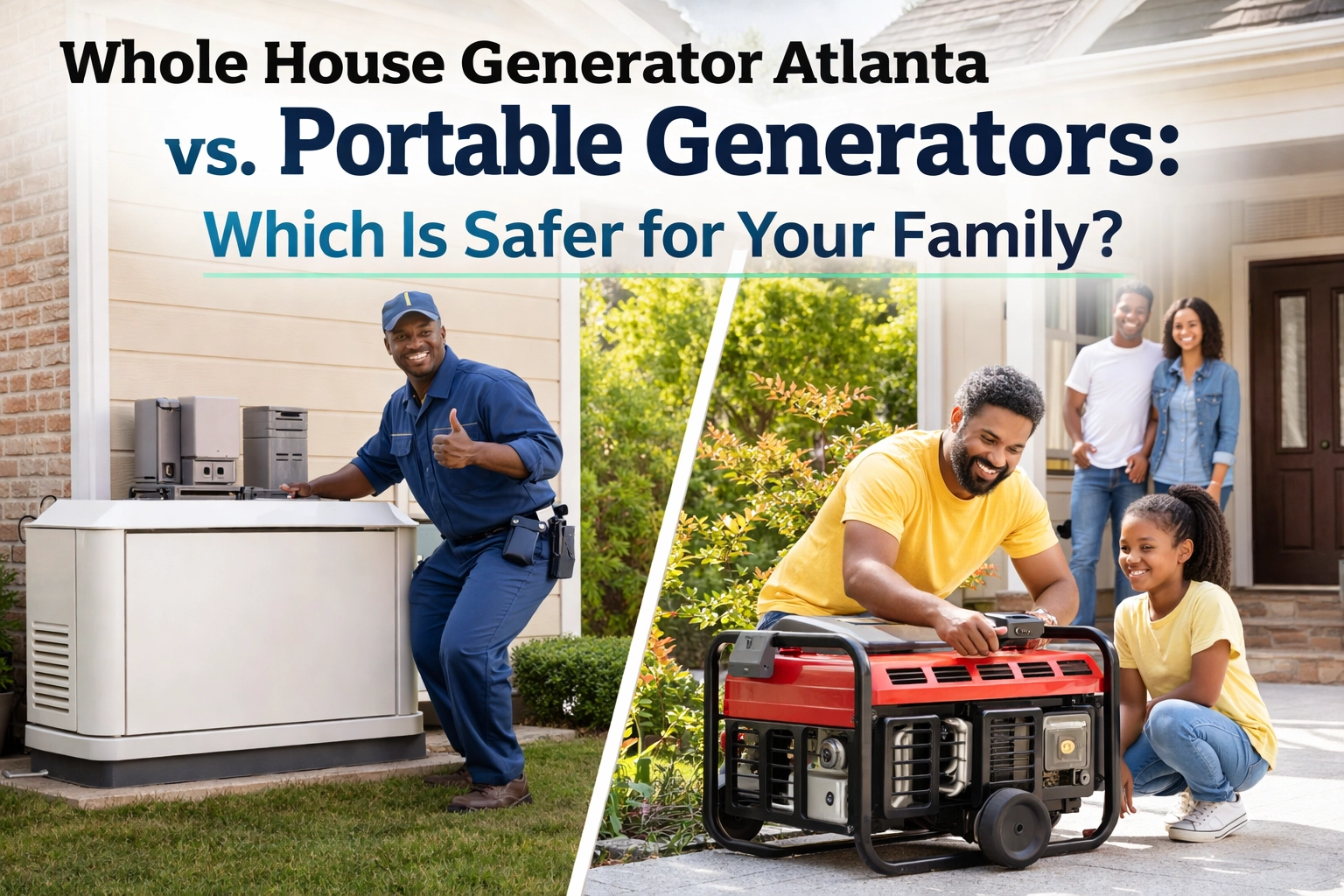
Whole house generators (also called standby generators) are permanently installed outside your home. They're wired directly into your electrical panel and run on natural gas or propane. When the power goes out, they kick on automatically: usually within seconds.
Portable generators are exactly what they sound like. You wheel them out when you need them, fill them with gasoline, and plug in your appliances using extension cords.
Both will keep your lights on. But when it comes to keeping your family safe, they're not created equal.

The Carbon Monoxide Question: This Is the Big One
Here's the most critical safety difference between these two options, and it's not even close.
Carbon monoxide (CO) is colorless and odorless. You can't see it. You can't smell it. And portable generators produce a lot of it.
Every year, families across Georgia end up in emergency rooms: or worse: because of improper portable generator use. The Consumer Product Safety Commission reports that portable generators are responsible for the majority of CO-related deaths during power outages.
Here's what that really means for your family: If you're running a portable generator, it must be operated outdoors, at least 20 feet away from your home, and away from all windows, doors, and air conditioning units. No exceptions.
Most people think cracking a garage door is enough ventilation. It's not. CO can build up to deadly levels even with a partially open door.
Whole house generators, on the other hand, are designed with proper ventilation built into their installation. They're positioned away from your home according to local safety codes, and professional installers ensure exhaust is directed safely away from living spaces.
The Williams family we mentioned earlier? Marcus told us the automatic operation was what sold them. "I didn't want Tanya out in a storm trying to set up a generator in the dark," he said. "With the standby unit, we don't even have to think about it."
Electrical Safety: Where Installation Matters
Beyond carbon monoxide, there are significant electrical safety differences to consider.
The dangers of backfeeding: This is a term that sounds technical, but here's what it really means: when someone plugs a portable generator directly into a wall outlet (which you should never do), electricity can flow backward through your home's wiring and out to the utility lines.
This creates two serious problems:
- It can kill utility workers who are trying to restore power to your neighborhood
- It can damage your home's electrical system and connected appliances
A whole house generator Atlanta installation includes a transfer switch: a device that automatically disconnects your home from the utility grid when the generator turns on. This makes backfeeding physically impossible.

With portable generators, you're typically running extension cords throughout your house. This creates its own set of risks:
- Overloaded cords can overheat, potentially causing fires
- Trip hazards throughout your home, especially dangerous for children and elderly family members
- Limited power capacity means you might be tempted to daisy-chain power strips, which is a fire hazard
Practical Safety Considerations for Atlanta Families
Living in the Atlanta metro area: whether you're in Marietta, Decatur, Sandy Springs, or Gwinnett County: means dealing with specific weather challenges.
Summer storms can knock out power for hours or even days. Winter ice storms, while less frequent, can cause extended outages. And let's not forget the occasional tornado warning.
Here's what this means for generator safety:
With a portable generator, you need to:
- Store gasoline safely (a fire hazard itself)
- Go outside in potentially dangerous weather to start and refuel it
- Monitor it regularly to prevent overheating
- Bring it inside or secure it when the storm passes (theft is common during outages)
With a whole house generator, you:
- Stay safely inside while it operates automatically
- Never handle fuel during an emergency
- Have consistent, reliable power to your entire home
- Maintain it on a regular schedule when weather is good
The Thompson family in Sandy Springs shared their experience with us. Denise explained, "We had a portable generator for years. Every time the power went out, my husband James was out there in the rain or cold, messing with gas cans and extension cords. We finally got a whole house generator installed, and honestly? The peace of mind is worth every penny."

Capacity and What It Means for Your Family's Safety
Here's something many homeowners don't consider: running out of power during an emergency is its own safety risk.
Portable generators typically produce between 3,000 and 7,500 watts. That sounds like a lot, but let's break it down:
- Refrigerator: 100-400 watts
- Window AC unit: 500-1,500 watts
- Space heater: 1,500 watts
- Sump pump: 800-1,000 watts
- Well pump: 1,000-2,000 watts
Add in some lights and charge a few phones, and you're already pushing the limits. If you try to run too many appliances, the generator can overheat or overload: creating fire and electrical hazards.
A whole house generator is sized specifically for your home's needs. During installation, a licensed electrician calculates your power requirements and recommends an appropriately sized unit. No guessing. No overloading.
The Installation Factor: Why Professional Matters
Here's an important caveat: improper installation of any generator can create serious hazards.
A whole house generator Atlanta installation that isn't done correctly can lead to:
- Carbon monoxide infiltrating your home
- Electrical fires
- Electrocution risks
- Damage to your home's electrical system
This is exactly why working with licensed, experienced professionals matters. At Radiant Electric, our team handles whole house generator installations throughout the Atlanta metro area, including Lawrenceville, Smyrna, Norcross, and beyond.
We ensure every installation meets local safety codes, proper ventilation requirements, and electrical standards.

Making the Right Choice for Your Family
So which option is safer? The evidence strongly favors whole house generators for families who want reliable, safe backup power.
Choose a whole house generator if:
- You want automatic operation without going outside during emergencies
- Carbon monoxide safety is a top priority
- You need to power essential systems like medical equipment, HVAC, or sump pumps
- You want whole-home coverage without extension cords
- You prefer a permanently installed, professionally maintained system
A portable generator might work if:
- You only need to power a few small devices occasionally
- You're committed to following all safety protocols every single time
- You have a safe outdoor location at least 20 feet from your home
- Budget is your primary concern
The bottom line: when it comes to family safety, whole house generators provide significantly more protection through their enclosed design, automatic operation, professional installation, and elimination of the most common generator hazards.
Ready to Protect Your Family?
Power outages aren't a matter of if: they're a matter of when. The question is whether you'll be prepared when it happens.
If you're considering a whole house generator Atlanta installation, our team at Radiant Electric is here to help. We serve families throughout the metro area and can help you determine the right size and type of generator for your home's specific needs.
Don't wait for the next storm to make this decision. Contact us today to schedule a consultation and take the first step toward reliable, safe backup power for your family.