Whole House Generator Atlanta: Are You Making These 7 Common Mistakes Before the Next Storm?
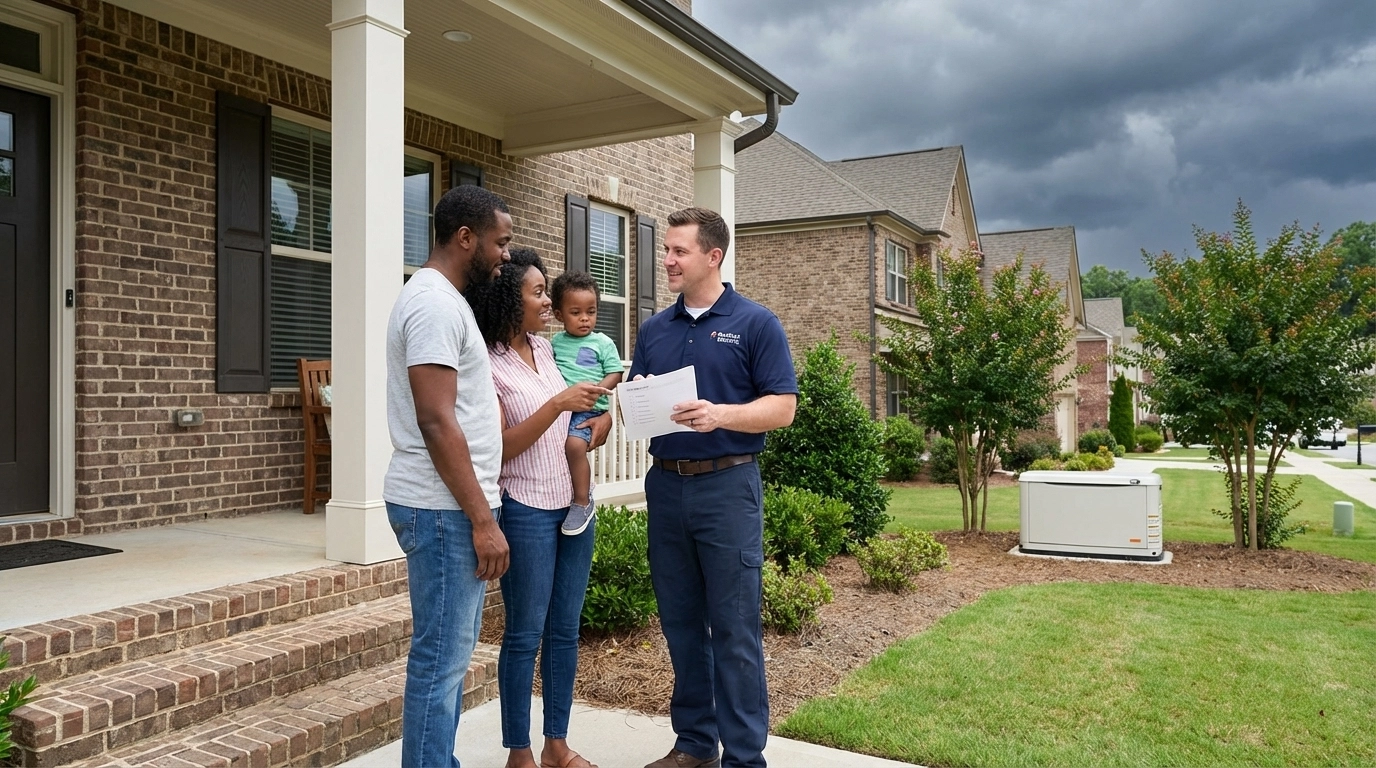
Picture this: The weather service just issued a severe thunderstorm warning for Metro Atlanta. You're feeling pretty confident because you finally invested in that whole house generator last year. Then the power goes out, you hit the switch, and… nothing. Or worse, your generator kicks on for about 10 minutes before shutting down completely.
This isn't about scaring anyone: it's about making sure your investment actually works when you need it most. After installing generators across the Atlanta area for years, we've seen the same mistakes over and over again. The good news? They're all preventable if you know what to look for.
Here are the seven most common generator mistakes that could leave you sitting in the dark during the next storm that rolls through Georgia.
Mistake #1: Getting the Size Completely Wrong
Here's the thing most people don't realize: guessing your generator size is like playing electrical roulette. We see homeowners do quick mental math: "Let's see, my AC unit, plus the fridge, plus some lights…": and think they've got it figured out.
But here's what that really means: Your air conditioner doesn't just sip power like a table lamp. When it kicks on, it draws three to five times more electricity for those first few seconds than it does while running. Same goes for your refrigerator, your sump pump, and pretty much anything with a motor.
An undersized generator will literally give up within 10 minutes of a power outage. Your fridge stops working, your sump pump quits, and if you're on well water, your pumps shut down too. Meanwhile, an oversized unit wastes money on installation and fuel costs without giving you any extra benefit.
The solution? A proper load calculation that accounts for both running watts and startup surge watts. This means looking at every appliance you want to keep running and understanding how much power each one actually needs, not just during normal operation, but during those critical first moments when they're starting up.

Mistake #2: Putting Your Generator in a Dangerous Spot
We've all seen it: generators tucked into garages, covered porches, or basements because "it's out of the weather." This is one of those mistakes that can literally be deadly.
Generators produce carbon monoxide, which is odorless and invisible. Even with garage doors wide open, CO can seep through walls, windows, and ventilation systems into your home. We're talking about a gas that can make you unconscious before you even realize there's a problem.
Here's what proper placement looks like: Your generator needs to sit at least 10 feet away from any windows, doors, or air intake vents. It should be on level ground in an open area where exhaust can dissipate freely. Think of it like a car engine: you wouldn't run your car in a closed garage, and the same principle applies here.
Many Atlanta homeowners worry about weather exposure, but modern generators are built to handle Georgia's climate. Rain won't hurt a properly installed unit, but poor ventilation definitely will.
Mistake #3: Skipping the Permit Process
Most people think permits are just government red tape, but here's the reality: Atlanta area building codes exist because generators can be genuinely dangerous when installed incorrectly.
Skipping permits doesn't just risk fines: it can void your homeowner's insurance if something goes wrong. More importantly, those codes cover critical safety requirements like how close your generator can be to your house, what materials to use for fuel lines, and how to properly ground the entire system.
Here's what that really means: Without proper permits and inspections, you have no guarantee your installation meets basic safety standards. When the next storm hits and your family depends on that generator, you want to know it was installed right.
Each area around Atlanta: whether you're in Marietta, Alpharetta, or Gwinnett County: has specific requirements. A professional installer familiar with local codes ensures everything gets done properly the first time.
Mistake #4: Cutting Corners on Fuel Lines
This is where things get technical, but stick with me because it's important. Many installations fail because the fuel line is too small to deliver enough gas to your generator.
Think of it like trying to drink a thick milkshake through a coffee stirrer: the demand is there, but the delivery system can't keep up. When your generator can't get enough fuel, it runs inefficiently or stops working entirely, especially when you're asking it to power multiple systems during an outage.
Here's what proper fuel line installation involves: The line size has to match your generator's fuel requirements exactly. This isn't just about the diameter of the pipe: it's about pressure, flow rate, and the type of regulator used to control gas delivery.
Standard home gas regulators often can't deliver the proper pressure for a whole-house generator. You need a regulator sized specifically for your unit's requirements, and that's something most homeowners wouldn't know to check.

Mistake #5: Overlooking the Transfer Switch
The transfer switch is basically the brain that tells your electrical system to switch from grid power to generator power. When this isn't installed correctly, you end up with circuits that overload, breakers that keep tripping, or critical systems that don't get power when they should.
Most people think the transfer switch is just a simple on/off device, but here's what's actually happening: It has to safely disconnect your home from the electrical grid (to protect utility workers), then connect specific circuits to your generator without overloading anything.
Every home's electrical panel is different. Your transfer switch installation has to account for your specific breaker configuration, wire sizes, and which circuits you want prioritized during an outage. Get this wrong, and you might have power to your garage door opener but not your refrigerator.
This is definitely not a DIY project. The complexity of safely connecting generator power to your home's electrical system requires someone who understands both your generator's capabilities and your electrical panel's limitations.
Mistake #6: Ignoring Proper Grounding and Wiring
Here's where electrical safety gets really important. Your generator has to be properly grounded, which means creating a safe path for electrical current if something goes wrong. Poor grounding can result in electrical shocks, equipment damage, or even electrical fires.
Here's what that really means: Electrical current always wants to find the easiest path to the ground. If your generator isn't properly grounded, that path might be through you, your family, or your home's structure instead of through a designated grounding system.
AC and DC wiring also need to be kept separate, and communication wires should run in different conduits to prevent interference. Using substandard materials or connections creates safety risks that might not show up until your generator is under full load during an actual outage.
Professional installers understand these requirements and have the tools to test grounding systems properly. This isn't an area where you want to discover problems during a storm.
Mistake #7: Trying to Go the DIY Route
We get it: whole house generator installation is expensive, and DIY videos make it look straightforward. But here's the reality: this is one of those projects where the cost of getting it wrong far exceeds the cost of doing it right the first time.
Here's what we see when homeowners attempt DIY installation: Incorrectly sized fuel lines, inadequate clearances, faulty transfer switch connections, and violations of local building codes. Sometimes the generator appears to work fine until you actually need it during an outage, then everything falls apart.
Professional installers bring more than just technical knowledge: they understand local regulations, have relationships with inspectors, and carry insurance that covers any installation issues. They also know how different generator brands integrate with various electrical panel types and local utility requirements.
The investment in professional installation pays for itself in reliability, safety, and peace of mind. When the next major storm system moves through Atlanta, you want absolute confidence that your backup power will work exactly as intended.

Getting Ready for Storm Season
Atlanta's weather patterns are becoming more unpredictable, and summer storm season can knock out power for days at a time. Your whole house generator should be a reliable safety net, not another source of stress during bad weather.
Before the next severe weather warning, have a qualified professional review your generator installation. Make sure your fuel lines are properly sized, your transfer switch is correctly configured, and everything meets current local codes. It's much easier to address these issues during calm weather than during an emergency.
Remember, a properly installed generator isn't just about convenience: it's about keeping your family safe, your food fresh, your medical devices running, and your basement dry. Getting these seven fundamentals right ensures your generator will be ready when Georgia weather does what it does best: surprise everyone.