The Truth About Space Heaters: What Homeowners Need to Know Before Winter
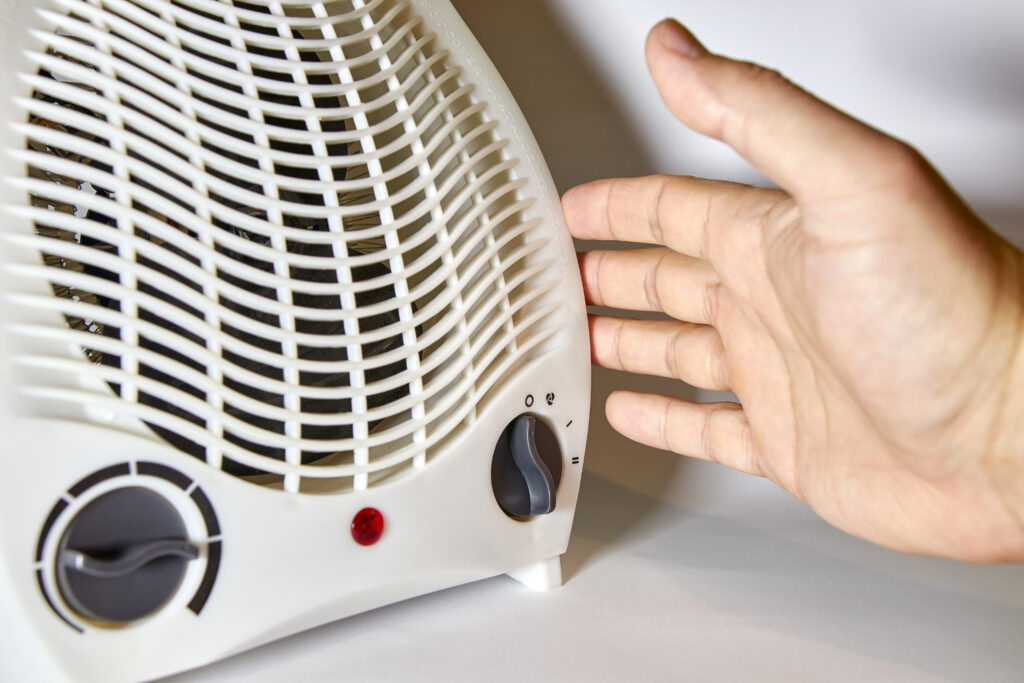
When temperatures drop, homeowners reach for the quickest, simplest solution to warm up a cold room: the space heater. It’s easy, convenient, and usually inexpensive. But what most people don’t realize is that space heaters are one of the leading causes of electrical fires and emergency electrical calls every winter. They’re small, but they pull an enormous amount of power—often more than the circuits they’re plugged into can safely handle.
Most electrical problems tied to space heaters don’t start with flames or smoke. They start with small signs homeowners brush off: a warm outlet, a faint burning smell, lights dimming when the heater turns on, a breaker that trips “sometimes,” or a plug that feels hotter than it should. These are signals, not quirks. And they’re the early stages of overheating wiring, failing outlets, or circuit overload.
Space heater safety is not about scaring anyone out of using them. They can be used safely when homeowners understand what they’re really asking their electrical systems to do. This guide breaks down how space heaters interact with wiring, why older homes struggle the most, and what you need to know before plugging one in this winter.
Why Space Heaters Push Electrical Systems to the Limit
To understand why space heaters are risky, you need to understand one thing: they draw a massive amount of power.
Most space heaters run at 1,500 watts, which is the maximum a standard household outlet is designed to handle on a shared circuit. That number alone should tell you something. When you plug in a space heater, you’re essentially maxing out the circuit the moment it switches on.
A typical bedroom or living room circuit often supports:
TVs
Gaming systems
Lamps
Chargers
Fans
Sound systems
Internet equipment
Electric blankets
Air purifiers
Add a 1,500-watt heater to that mix and you’re asking the circuit to deliver far more than it was designed for, especially in older homes where wiring has already aged.
The result is the familiar flicker or dimming lights when the heater starts up. That flicker is the wiring struggling to deliver the power the heater demands.
If the wiring can’t handle the load, several things can happen:
The breaker trips.
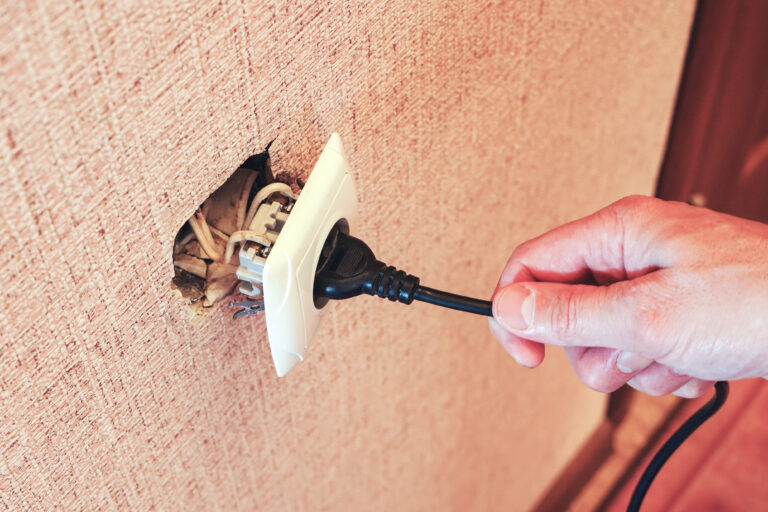
The outlet overheats.
The plug melts.
The wiring behind the wall heats up.
Or worst of all—the insulation begins to break down and ignite.
The heater itself isn’t dangerous. The way it interacts with your electrical system is what creates risk.
Why Older Homes Are at Higher Risk During Winter
Homes built before the 90s, and especially those built before the 70s, were never designed for the electrical usage families have today. The wiring used back then may not have grounding, may be aluminum instead of copper, may have brittle insulation, or may share circuits in ways that push the system beyond its capability.
Old wiring behaves differently under heat. When a space heater plugs into it, the wiring heats up rapidly, the insulation begins to dry and crack, and any loose connections begin to arc. Arcing is one of the leading causes of electrical fires. And it doesn’t require flames to start—it requires only a tiny electrical spark landing on dry, overheated insulation.
Homeowners often assume the house is “fine” because everything has been working for years. But winter is the season that exposes long-standing weaknesses. The sudden load of a space heater is often the thing that pushes a borderline circuit over the edge.
If your home is older, or if your outlets haven’t been inspected in years, using a space heater without understanding the condition of your wiring is like asking an old rope to carry a heavy weight—it might hold, or it might snap under pressure.
The Warning Signs a Space Heater Is Overloading Your System
Space heater-related electrical problems rarely begin dramatically. They show up in subtle ways:
You turn on the heater and the lights dim.
You feel warmth on the outlet or wall plate.
You hear a faint buzzing sound when the heater runs.
Your breaker trips occasionally—but not always.
The heater plug feels hot to the touch.
There’s a faint “warm plastic” smell that goes away once the heater is turned off.
The circuit struggles when multiple devices run at once.
Homeowners often dismiss these signs or chalk them up to “old wiring quirks,” but they are the electrical system calling for attention. These symptoms indicate that the circuit cannot handle the load being placed on it.
If any of these things happen, the heater needs to be unplugged immediately and the circuit should be evaluated.
Understanding Why Breakers Trip When Using a Space Heater
A breaker trips when a circuit is carrying more electricity than it can safely handle. When a heater is pulling 1,500 watts, and everything else on the circuit is pulling another 500–1,000 watts, you’re well past the safe limit.
Some homeowners get annoyed with tripping breakers and ask for a “bigger breaker” or “stronger fuse.” That’s not an upgrade—it’s a fire hazard. If a breaker doesn’t trip when a circuit overheats, the wiring inside the wall becomes the weakest point in the system. And wire heating behind the drywall is the last thing any homeowner should ever risk.
Breakers are supposed to protect you from overheating wiring. When a space heater keeps tripping the breaker, it’s not the heater being dramatic—it’s the breaker doing its job.
Why You Should Never Use an Extension Cord or Power Strip With a Space Heater
This is the most common—and most dangerous—mistake homeowners make. Extension cords are not designed to handle the heat load of a 1,500-watt heater. Even heavy-duty ones can melt internally or cause the plug to overheat long before the cord shows visible signs of damage.
Power strips are even worse. Most are rated for only a fraction of what a space heater demands. Plugging a heater into a strip is one of the fastest ways to overload and ignite it.
If your heater cord doesn’t reach, you don’t need an extension. You need a different outlet—or a dedicated circuit installed for the heater.
How Many Space Heaters Can Safely Run in a Home?
Most homeowners assume they can run multiple heaters as long as they’re plugged into different rooms. But each room usually shares circuits with nearby spaces. Many bedrooms share a circuit. Living rooms often share one with hallways or adjoining rooms. Kitchens use dedicated circuits, but they’re usually maxed out by existing appliances.
Most homes cannot safely run more than one heater on the same electrical service without risking overload.
If multiple heaters are necessary, an electrician can determine where the circuits are located and whether any of them can support the load. But guessing is not safe.
Space Heaters and Fire Risk: The Truth Behind the Statistics
Nearly every winter, local fire departments respond to house fires caused by space heaters. Many of these fires begin not with the heater itself, but with the outlet or wiring behind it. Old outlets loosen over time. Wires expand and contract with heat. Heat from the heater accelerates this process, and a loose connection begins arcing.
Arcing produces enough heat to ignite surrounding insulation.
That’s why the most dangerous space heater fires often start behind the wall, not at the unit itself.
And once a fire starts inside a wall, homeowners rarely have enough warning to stop it before it spreads.
Space heaters do not inherently cause fires—unsafe electrical systems do. But the combination of an outdated circuit and a high-wattage heater is one of the most common triggers.
How Homeowners Can Use Space Heaters Safely
Safe heater use always comes down to one rule:
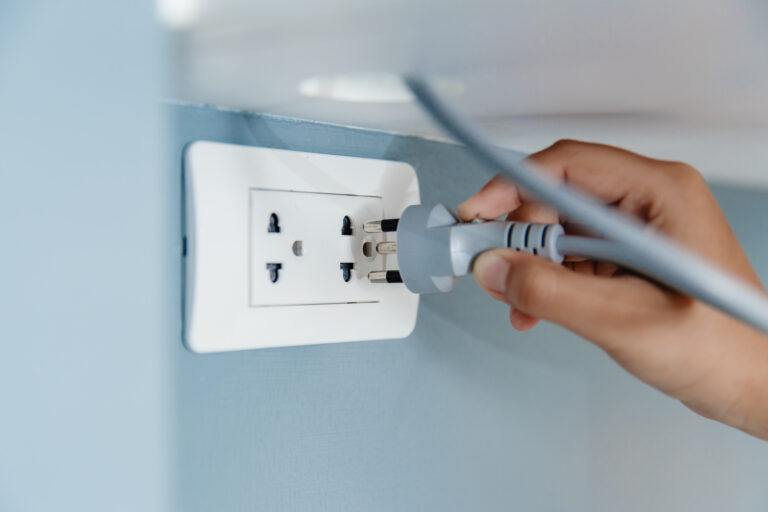
Plug the heater directly into a properly functioning outlet with modern wiring and a healthy circuit behind it.
But safe use also means knowing the heater’s limits and understanding what your home’s electrical system can realistically handle.
Here’s what safe usage looks like in real life:
Use the heater on a dedicated outlet.
Turn off other heavy devices on the same circuit.
Never leave the heater unattended.
Keep it far away from curtains, bedding, or flammable materials.
Stop using it if the outlet feels warm.
Don’t use it in bathrooms or damp rooms unless specifically designed for those areas.
Unplug it when not in use.
Space heaters are meant to be supplemental heat—not the primary heat source for an entire area of the home.
Why an Electrical Inspection Is Crucial Before Winter Heating
Most homeowners wait until a heater causes a breaker to trip before taking action. But by the time it trips, the wiring has already been pushed beyond its comfort zone.
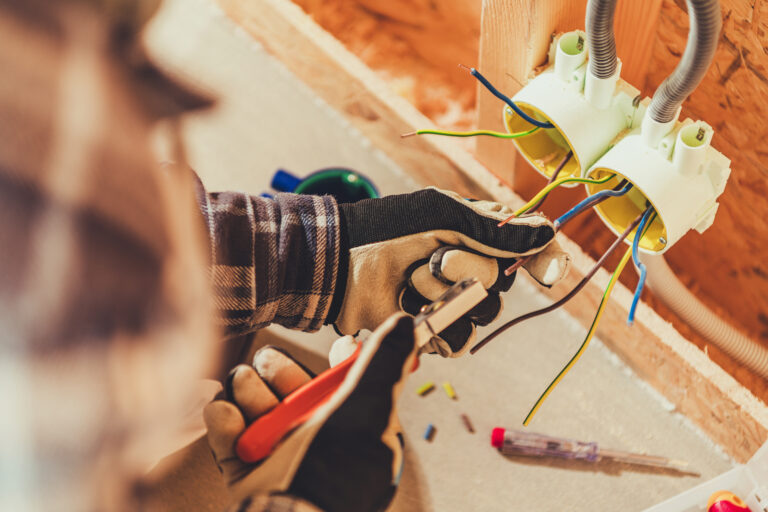
A pre-winter electrical inspection can identify:
loose outlets
overloaded circuits
damaged wiring
corroded or worn breakers
heat-damaged outlets
outdated panels
insufficient grounding
high-load areas of the home
These are the exact conditions that turn space heater use into a hazard. Catching them early makes heater use significantly safer and extends the life of your appliances and electrical system overall.
How Radiant Electric Helps Homeowners Use Heaters Safely
Radiant Electric evaluates whether the circuit can support a heater, checks the wiring behind outlets, ensures breakers are operating correctly, and can install dedicated circuits in rooms that regularly need supplemental heat.
This not only makes winter safer—it makes it easier. No more guessing. No more tripping breakers. No more worrying about overheating outlets.
A home with safe wiring can use a heater confidently. A home with outdated wiring needs attention before a heater ever gets plugged in.
Space Heaters Aren’t Dangerous — Unprepared Electrical Systems Are
A space heater is just a tool. It’s neither safe nor unsafe on its own. What determines safety is the electrical system supplying it. A heater doesn’t know whether the wiring behind your walls is brand new or forty years old. It doesn’t know whether the outlet is tight or loose. It doesn’t know whether the circuit can support its load. It just pulls power—1,500 watts of it—and the wiring must respond.
Using a heater responsibly means respecting your electrical system’s limits. Before plugging one in this winter, make sure your wiring, outlets, and breakers are capable of supporting the demand. If you’re unsure, Radiant Electric can evaluate your system and make sure your home stays safe, warm, and protected.