The Truth About 2026 Georgia Code: Is Your Kitchen Technically “Illegal” Now?
If you have been browsing home renovation forums or chatting with neighbors over the backyard fence in Atlanta lately, you might have heard some whispers that have you looking at your toaster and refrigerator with a bit of suspicion. There is a rumor floating around that recent updates to the Georgia electrical code have effectively made most existing kitchens "illegal."
Before you start imagining code enforcement officers knocking on your door to shut down your Sunday brunch, let’s clear the air. This isn't about scaring anyone. At Radiant Electrical, we believe that education is the best tool a homeowner can have. The truth is actually a lot more refreshing than the rumors suggest: the 2026 Georgia electrical code changes have actually made things easier and more flexible for homeowners, not harder.
Whether you are planning a full-scale home electrical repair in Atlanta or just curious about why your kitchen is wired the way it is, understanding these updates will save you money, time, and a whole lot of frustration.
The Relatable Reality of "Nuisance Tripping"
Consider Marcus, a homeowner in the Cascade Heights area of Atlanta. Last year, Marcus decided to upgrade his kitchen with a high-end, professional-grade refrigerator. Within a week, he was waking up to a warm fridge and melted ice cream because the GFCI outlet: the one with the "test" and "reset" buttons: had tripped for no apparent reason.
Marcus isn't alone. For years, the electrical code required GFCI (Ground Fault Circuit Interrupter) protection for almost everything in the kitchen. While GFCIs are incredible lifesavers: they act like a high-speed safety gate that snaps shut the moment they detect electricity "leaking" where it shouldn't: they are also incredibly sensitive. High-powered appliance motors, like the ones in your fridge or your dishwasher, can sometimes create a tiny "leak" during their normal startup cycle. To the GFCI, that looks like a life-threatening surge, so it cuts the power.
The 2026 Georgia amendments were designed specifically to address this "nuisance tripping" while keeping your family safe.
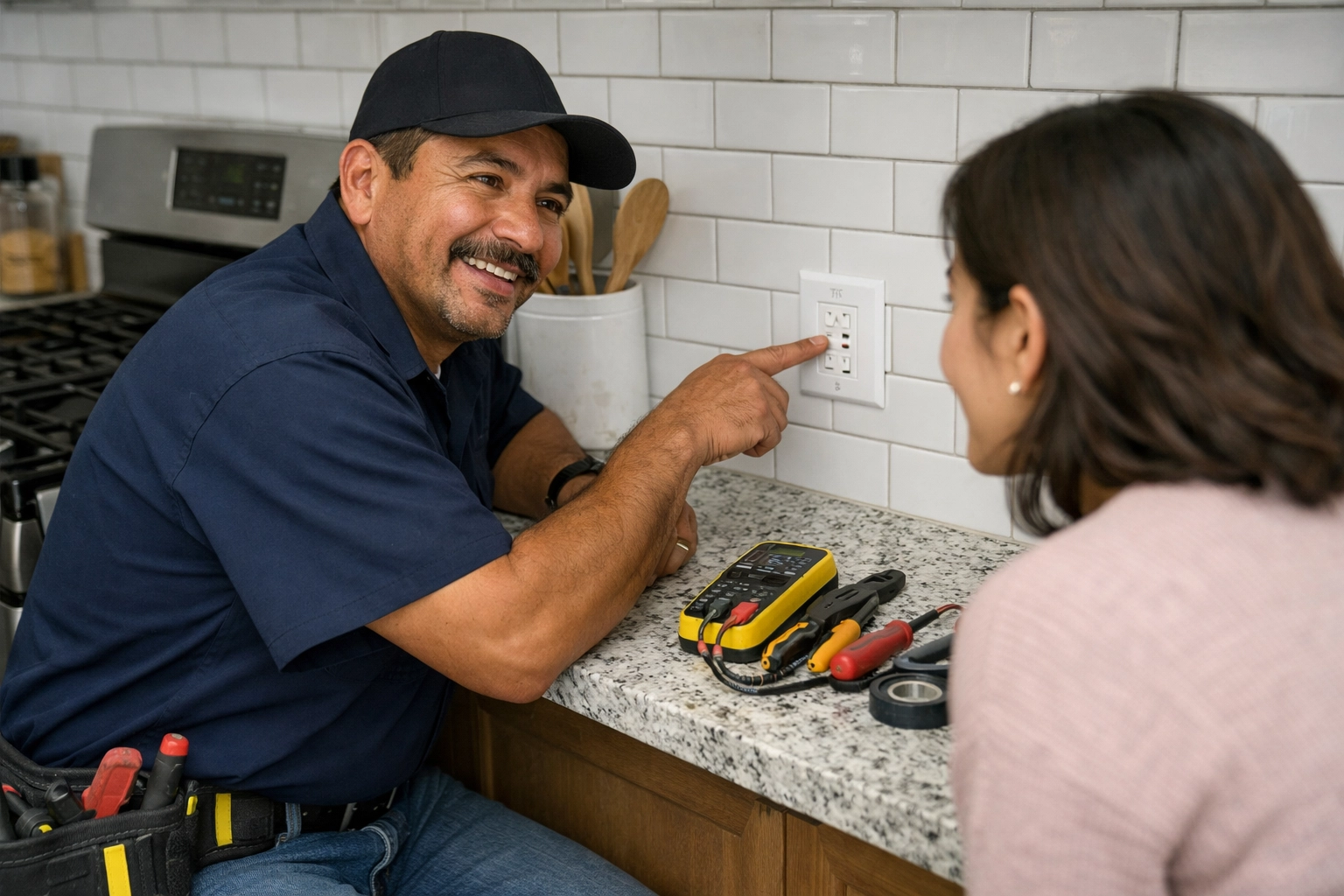
A professional Mexican electrician shows a homeowner how GFCI protection works and why nuisance tripping happens.
1. The Great GFCI Relaxation: Fridges and Ranges
The biggest headline for 2026 is that the state of Georgia has officially relaxed the requirements for GFCI protection on major kitchen appliances.
What changed?
Previously, the code was pushing for almost every outlet in the kitchen to have GFCI protection. As of the 2026 amendments, Georgia now exempts refrigerators and other kitchen appliances from this requirement unless the outlet actually serves the countertop surface.
Here’s what that really means:
If your refrigerator is plugged into a dedicated outlet hidden behind the unit, it no longer needs to be GFCI protected. This is a huge win for homeowners. It means your food stays cold because the "safety gate" won't accidentally trip every time the compressor kicks on.
Furthermore, GFCI protection is no longer a requirement for:
- Electric ranges and wall-mounted ovens
- Counter-mounted cooking units (cooktops)
- Microwave ovens (built-in)
- Clothes dryers (in the laundry area)
Most people think that removing safety features makes a home less safe. However, the experts behind the Georgia code recognized that the modern construction of these appliances already includes significant internal safety measures. By removing the GFCI requirement, they are simply reducing the number of times you have to reset a breaker in the dark.
2. The Island Outlet Revolution
If you’ve looked at a modern kitchen magazine lately, you’ve probably seen beautiful, sweeping quartz or marble islands. Until recently, if you wanted one of those in Georgia, the code required you to have "pop-up" outlets installed directly into the countertop surface.
For homeowners like Tasha in Marietta, this was a major design headache. "I spent thousands on a beautiful piece of stone," she told us, "and the code was telling me I had to cut a hole right in the middle of it for a plastic outlet."
The 2026 Update:
The 2026 amendment reversed this requirement. You are no longer forced to put outlets in the countertop. Instead, you are once again allowed to install outlets on the sides of islands and peninsulas.
Here’s what that really means:
You can maintain that sleek, "waterfall" edge look or that uninterrupted slab of stone while still having the power you need for your stand mixer or laptop. This change acknowledges that while we need power on islands to prevent people from stretching cords across walkways (a major tripping and burn hazard), we shouldn't have to sacrifice the beauty of our homes to get it.
If you are working with an electrician in Marietta to plan a renovation, this is one of the first things you should discuss. It changes the entire aesthetic of your kitchen layout.

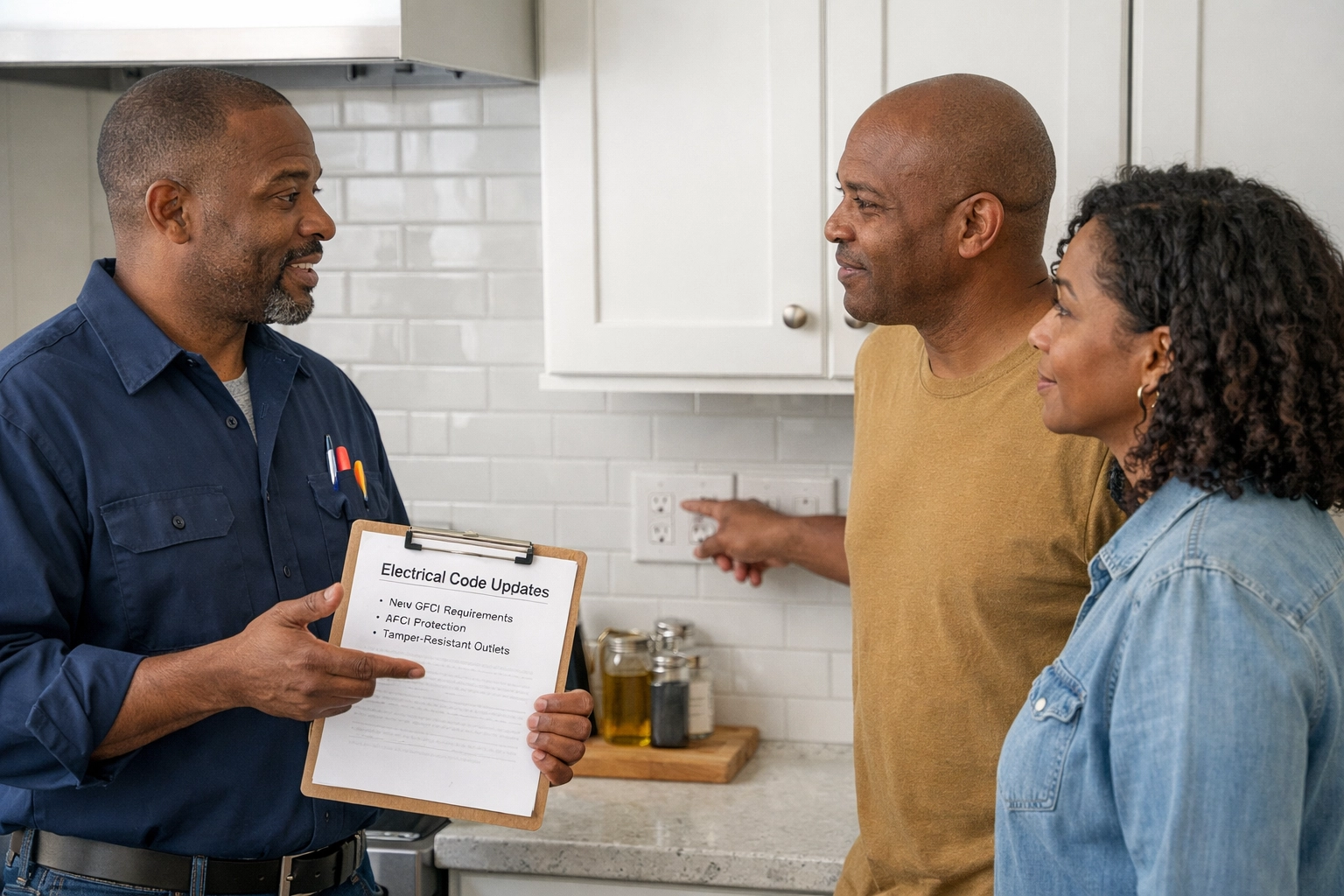
An African American electrician walks a homeowner through the updated island-outlet rules with a clean, side-mounted installation.
3. AFCI Requirements: Simpler is Better
While GFCI protects people from shocks, AFCI (Arc-Fault Circuit Interrupter) protection is designed to prevent fires. It looks for "arcing": which is essentially electricity jumping through the air, like a tiny bolt of lightning, often caused by a frayed wire or a loose connection.
Think of wires heating up like the coils on an old electric stovetop; if they get too hot or "spark," the AFCI shuts the system down before a fire can start.
The 2026 Update:
In a surprising move, Georgia has reduced the AFCI requirements for kitchens and laundry areas. These areas are no longer strictly required to have AFCI protection under the new state amendments.
Why the change?
Much like the GFCI issues, AFCI breakers are notorious for "nuisance tripping" when used with large motors or older appliances. By removing this requirement for kitchens, the state is acknowledging that the benefit of preventing rare arc-faults in these specific rooms was being outweighed by the daily frustration of power loss for homeowners.
Does This Make Your Kitchen "Illegal"?
When people use the word "illegal," they usually mean "out of code." But here is the secret of the electrical world: Your home is generally "grandfathered" in.
If your kitchen was built in 2015, it was built to 2015 codes. It isn't "illegal" today just because the rules changed in 2026. However, if you decide to do a major renovation, or if you are selling your home and the buyer’s inspector finds safety hazards, that is when the current code matters.
The 2026 changes are actually good news for those looking to bring their homes up to date. It means you have fewer expensive breakers to buy and more flexibility in where you put your plugs. If you're worried about your current setup, our team at Radiant Electrical can perform a comprehensive safety inspection to ensure your "grandfathered" system is still performing safely. You can check out our full range of services to see how we can help.
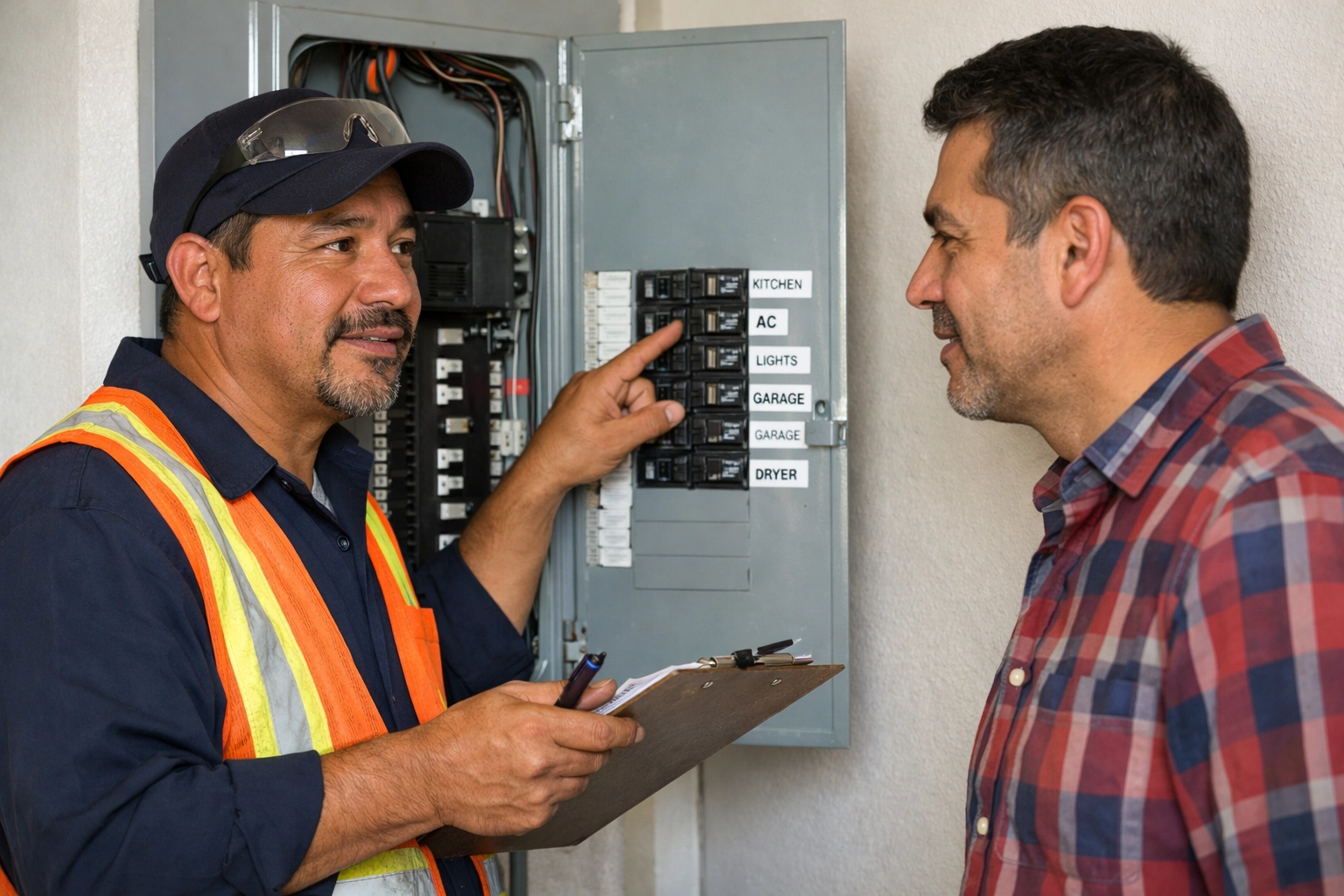
A professional Mexican electrician reviews an open, labeled panel with a homeowner during a safety inspection.
Managing the "Signals" Your Home is Sending
We often tell our clients to look at their electrical system like a language. Your home is always talking to you; you just have to know how to listen. We don't want you to panic, but we do want you to recognize "signals" that might mean it’s time for a professional to step in.
- The Warm Touch: If an outlet feels warm to the touch, that is a signal that electricity is meeting resistance. Think of it like a crowded hallway where everyone is bumping into each other: that friction creates heat.
- The Flicker: If your lights dim when the microwave starts, your kitchen "highway" is likely overcrowded.
- The Buzz: Electricity should be silent. If you hear a hum or a buzz near your circuit breakers, that’s a warning that a connection is loose.
These aren't "failures" yet: they are warnings. Addressing them now with a qualified electrician in Atlanta can prevent a much more expensive repair down the road.
Summary of the 2026 Georgia Code Changes
To keep things simple, here is a quick cheat sheet for the new rules:
- Refrigerators: No longer need GFCI if the outlet is dedicated and not serving a counter.
- Stoves/Ovens: No longer need GFCI protection.
- Island Outlets: Can be placed on the sides of cabinets again (no more mandatory pop-ups).
- AFCI Protection: Requirement removed for kitchens and laundry rooms.
Why Professional Guidance Matters
Even though the code has relaxed, electricity is still something that requires respect. Georgia’s code changes are designed to balance modern lifestyle needs with fundamental safety. While it might be tempting to try a "DIY" fix now that the rules are simpler, the complexity of your home’s overall load calculation remains the same.
At Radiant Electrical, we take pride in being Gwinnett County's trusted electrical experts. We serve homeowners across the metro area, from Smyrna to Suwanee. We don't just "fix wires": we ensure that your home’s most vital system is working for you, not against you.

An African American and Mexican electrician team reviews code notes and next steps with a homeowner in a real kitchen setting.
Taking the Next Step
If you are planning a kitchen refresh or if you’re tired of your refrigerator tripping the breaker every time the wind blows, now is the perfect time to act. The 2026 Georgia Code is on your side, and so is Radiant Electrical.
Don't let rumors about "illegal" kitchens stress you out. Whether you need a quick consultation or a major home electrical repair in Atlanta, we are here to help.
Clear Takeaway: The 2026 Georgia Code updates are designed to reduce "nuisance" power outages and give you more design freedom in your kitchen.
Ready to make sure your home is up to speed? Contact us today to schedule an inspection or to discuss your next project. We'll help you navigate the code so you can get back to enjoying your home.