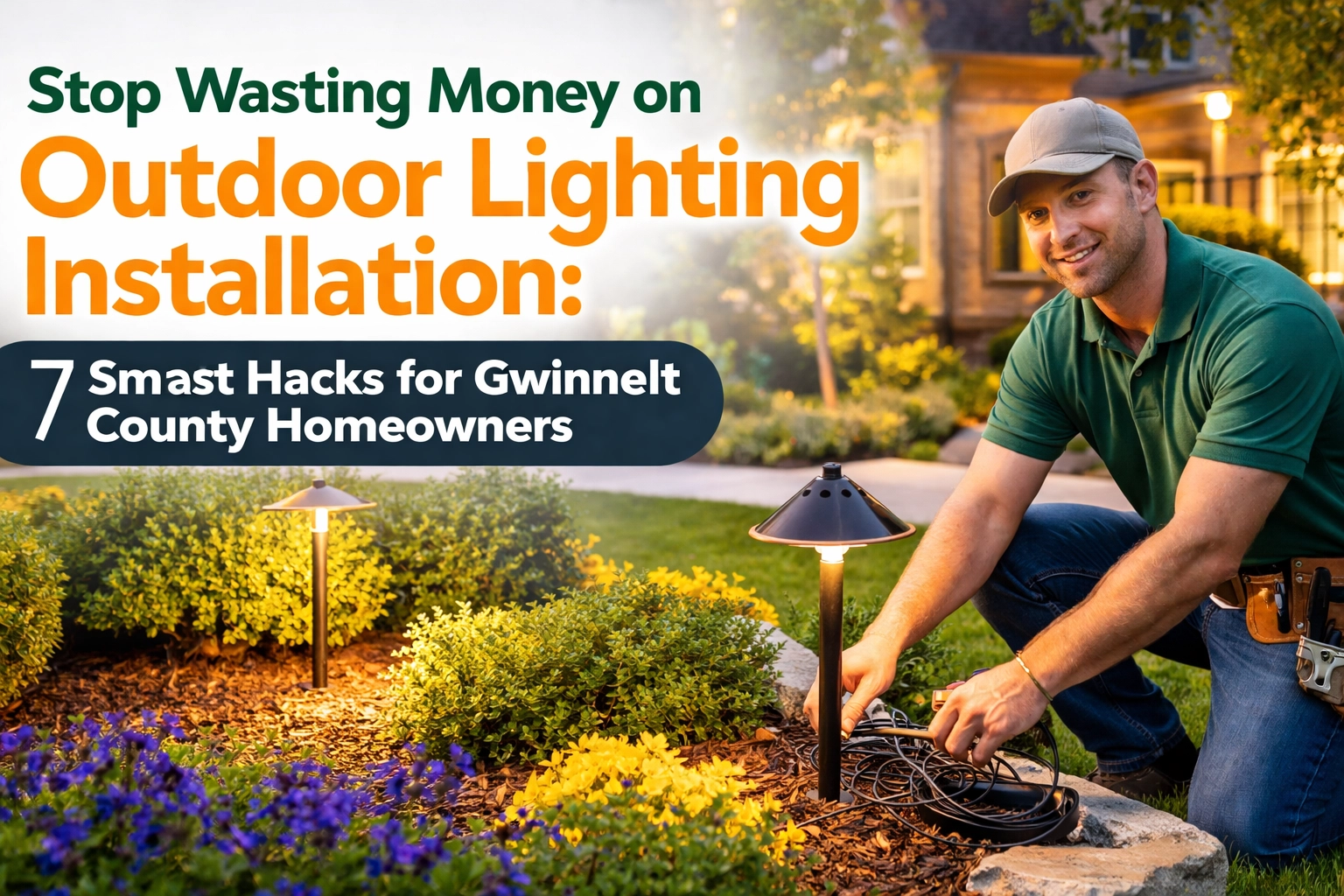
Stop Wasting Money on Outdoor Lighting Installation: 7 Smart Hacks for Gwinnett County Homeowners
You've noticed the neighbors have stunning landscape lighting that transforms their home at dusk. Their walkways glow warmly, their architectural features pop, and their property looks secure and inviting. Meanwhile, you're wondering whether upgrading your outdoor lighting will drain your wallet faster than a leaky faucet drains your water bill.
Here's the good news: outdoor lighting installation in Gwinnett County doesn't have to break the bank. This isn't about scaring you away from a project that genuinely enhances your home's value, safety, and curb appeal. It's about making informed decisions that maximize every dollar you invest.
Whether you live in Lawrenceville, Duluth, or anywhere across Gwinnett County, these seven smart hacks will help you illuminate your property without illuminating your credit card statement.
Hack #1: Switch to LED Fixtures and Watch Your Energy Bills Plummet
Most homeowners think all outdoor lights consume roughly the same amount of energy. That assumption costs them hundreds of dollars every year.
LED lighting uses approximately 75% less energy than traditional incandescent bulbs. Here's what that really means for your monthly expenses: a 10-watt LED produces the same brightness as a 60-watt incandescent. Run ten outdoor fixtures for six hours nightly, and you're looking at roughly $15 per year with LEDs versus $90 with incandescent bulbs.
The savings compound quickly across a full outdoor lighting installation in Gwinnett County. Most professional systems include 15-25 fixtures, which means annual energy savings of $150-$300 depending on your setup.
LEDs also last 25,000 to 50,000 hours compared to 1,000 hours for incandescent bulbs. That's potentially 25 years of service before replacement: eliminating the hassle and expense of constantly swapping out burnt bulbs in hard-to-reach fixtures.
The takeaway: LED fixtures cost slightly more upfront but pay for themselves within 12-18 months through reduced energy consumption and virtually zero replacement costs.
Hack #2: Install Smart Timers to Eliminate Wasted Runtime
Running your outdoor lights from dusk until dawn sounds logical. It's also wildly inefficient.
Think about it: how much foot traffic does your property see at 3 AM? Unless you're hosting late-night gatherings regularly, those hours represent pure waste.
Smart timers and astronomical clocks automatically adjust your lighting schedule based on actual sunset and sunrise times. These devices cost $30-$100 and can reduce your lighting runtime by 30-40% without compromising security or aesthetics.
Here's a practical schedule that maximizes impact:
- Dusk to 11 PM: Full brightness for evening activities and visibility
- 11 PM to 5 AM: Reduced brightness or motion-activated only
- 5 AM to dawn: Full brightness for early risers
Modern smart timers connect to your smartphone, allowing adjustments when you're away. Hosting a late dinner party? Extend the runtime from your phone. Going on vacation? Set randomized patterns that make your home appear occupied.
The takeaway: Smart timers pay for themselves within months by eliminating unnecessary runtime while maintaining security and convenience.
Hack #3: Prioritize Strategic Placement Over Fixture Quantity
Here's where many homeowners waste significant money: they assume more fixtures equals better lighting. In reality, strategic placement of fewer, higher-quality fixtures outperforms scattered installations of cheaper alternatives.
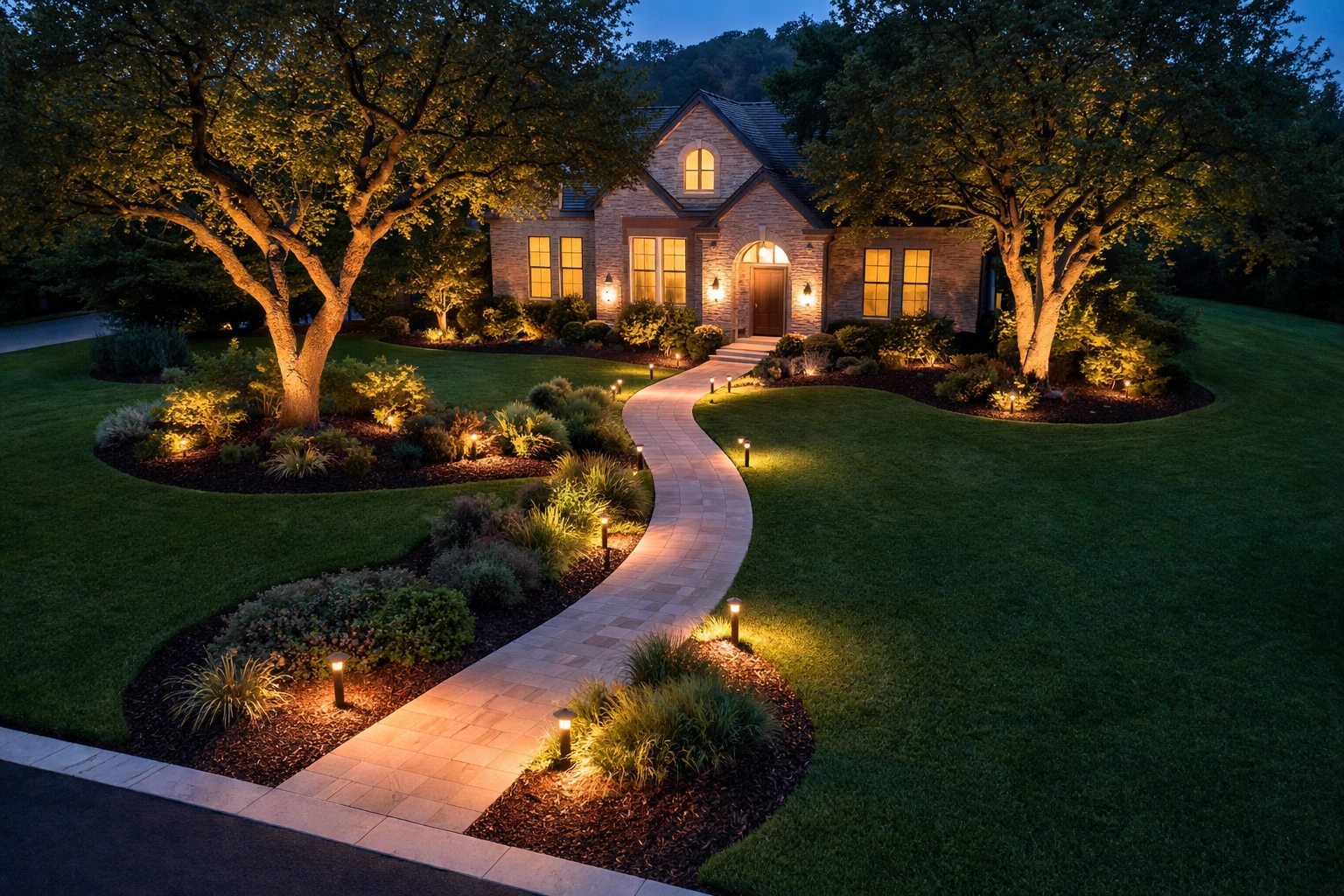
Professional outdoor lighting installation in Gwinnett County focuses on three primary zones:
Security zones include entry points, garage areas, and blind spots around your property's perimeter. These locations benefit from brighter, motion-activated fixtures that deter unwanted visitors while alerting you to activity.
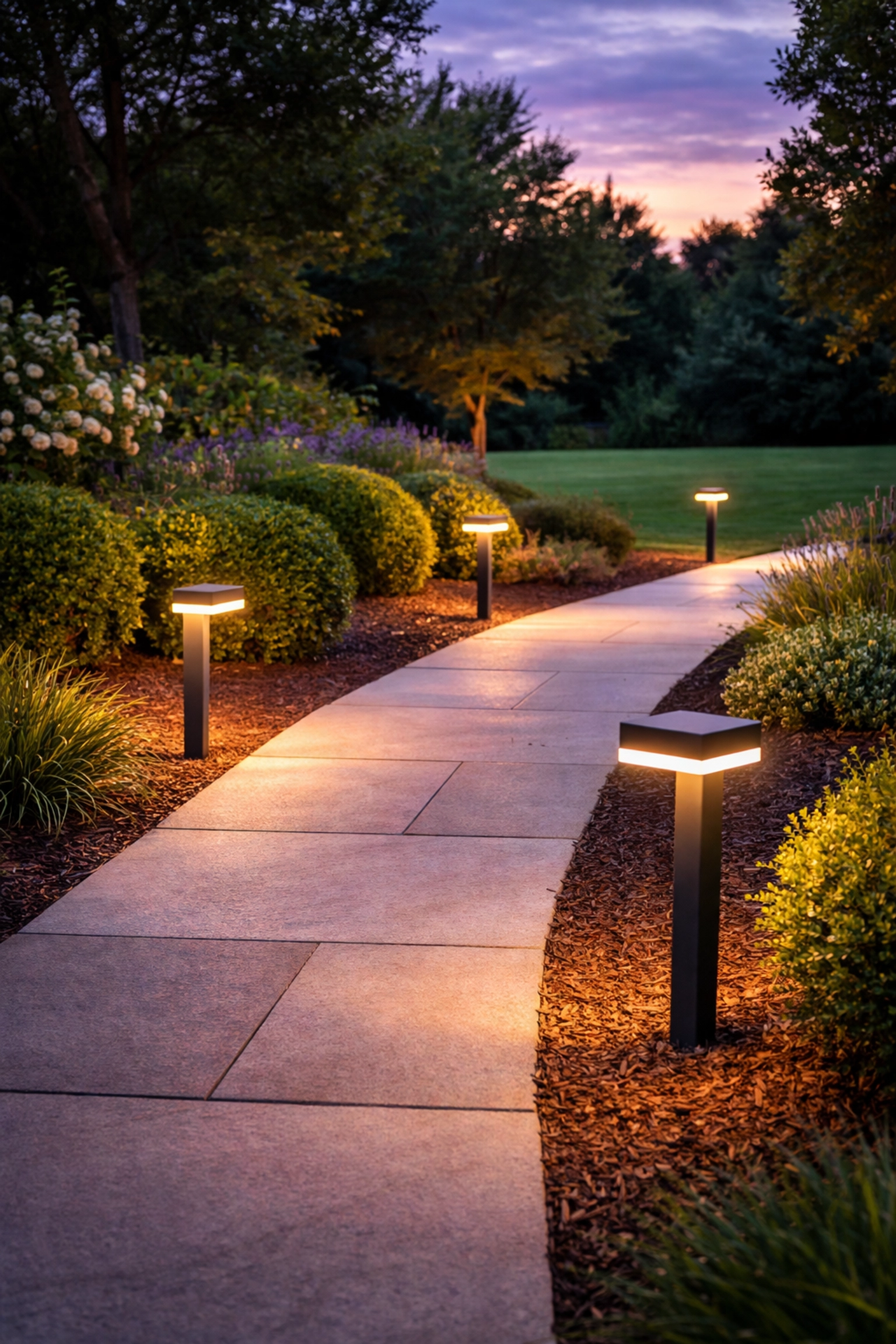
Functional zones encompass walkways, stairs, and gathering areas where family and guests need safe navigation. Pathway lights spaced 8-10 feet apart provide adequate illumination without excessive fixtures.
Aesthetic zones highlight architectural features, mature trees, and landscaping elements that enhance curb appeal. Well-placed uplights and downlights create dramatic effects with minimal fixtures.
A common mistake? Installing 20+ pathway lights when 12 strategically positioned fixtures would provide better coverage. Over-lighting not only wastes money on unnecessary fixtures: it creates harsh, unflattering illumination that diminishes your home's appearance.
The takeaway: Work with a professional to map your property's lighting needs before purchasing fixtures. Fewer, well-placed lights always outperform quantity over quality.
Hack #4: Choose Low-Voltage Systems for Safety and Savings
When planning outdoor lighting, you'll encounter two primary options: line voltage (120V) and low voltage (12V). Most residential outdoor lighting installations benefit significantly from low-voltage systems.
Low-voltage systems cost less to install, operate more safely, and provide greater flexibility. The transformer converts your home's standard 120V power to 12V, meaning the wiring throughout your yard carries minimal electrical current. This reduces installation complexity and eliminates serious shock hazards.
From a cost perspective:
- Low-voltage fixtures typically cost $50-$150 each
- Underground wiring runs $3-$5 per linear foot
- Transformers range from $150-$400 depending on capacity
Line-voltage systems require deeper trenching, conduit installation, and more extensive permit requirements: all of which add substantial labor costs. Unless you're illuminating large commercial-scale areas, low-voltage provides everything most Gwinnett County homeowners need.
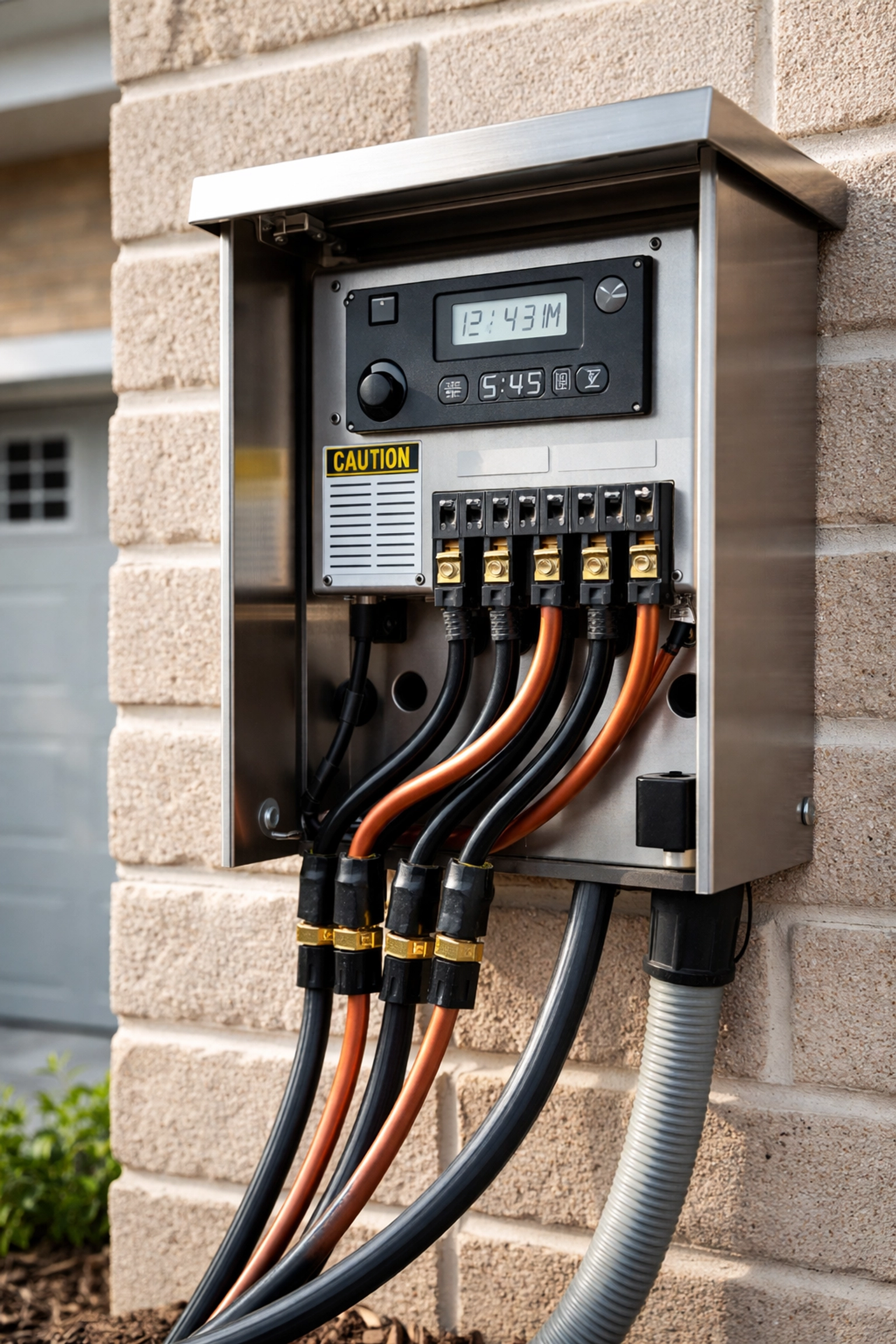
The takeaway: Low-voltage systems offer the ideal balance of performance, safety, and affordability for residential outdoor lighting installation in Gwinnett County.
Hack #5: Invest in Quality Transformers and Wiring
Homeowners often focus entirely on visible fixtures while neglecting the infrastructure that powers them. This approach leads to frustrating problems: flickering lights, inconsistent brightness, and premature system failures.
Your transformer is the heart of your outdoor lighting system. Undersized transformers struggle to power multiple fixtures, causing voltage drops that dim lights furthest from the power source. Oversized transformers waste energy and money.
Calculate your total wattage requirements (add up all fixture wattages), then select a transformer rated for 20-25% more capacity. This overhead accommodates future expansion and ensures consistent performance across all zones.
Quality wiring matters equally. Thin, cheap cables create resistance that reduces brightness and generates heat. Professional-grade 12-gauge or 10-gauge direct-burial cable costs slightly more but eliminates voltage drop issues and lasts decades underground.
The takeaway: Spending an extra $100-$200 on quality transformers and wiring prevents thousands in future repairs and replacements.
Hack #6: Plan for Future Expansion From Day One
Your outdoor lighting needs will evolve. Maybe you'll add a patio next year, install a pool in three years, or finally landscape that neglected side yard.
Smart homeowners install infrastructure that accommodates future expansion during the initial installation. Running additional cable runs while trenches are open costs a fraction of what you'd pay to dig new trenches later.
Ask your electrician to:
- Install a transformer with 30-40% spare capacity
- Run extra cable to potential future lighting zones
- Include junction boxes at strategic expansion points
- Document cable locations for future reference
This forward-thinking approach adds perhaps $200-$400 to your initial project but saves $1,000+ when you eventually expand your system.
The takeaway: Planning for expansion during initial installation transforms future upgrades from major projects into simple fixture additions.
Hack #7: Partner With a Licensed Local Electrician
DIY outdoor lighting installation sounds appealing: until you're troubleshooting flickering fixtures at 10 PM or discovering your underground cables weren't buried deeply enough to survive Georgia's freeze-thaw cycles.
Professional installation by a licensed Gwinnett County electrician ensures your system performs correctly from day one and continues performing for years. Licensed electricians understand local codes, optimal fixture placement, and the technical requirements that separate impressive installations from mediocre ones.
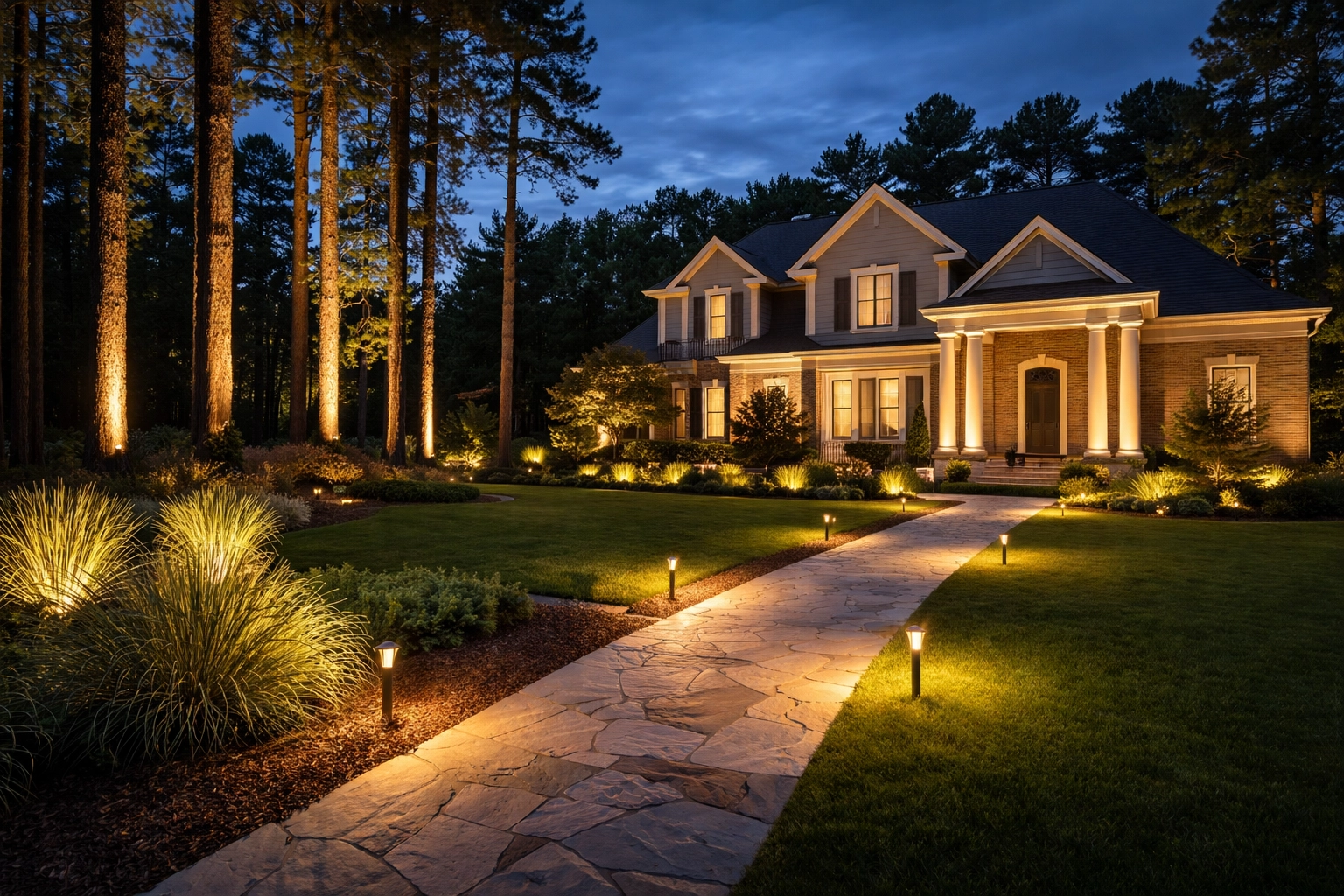
Professional installations also include warranties covering both labor and equipment. When issues arise: and with complex electrical systems, occasional issues are inevitable: you have expert support rather than YouTube tutorials and guesswork.
The cost difference between DIY and professional installation often narrows significantly when you factor in:
- Tools and equipment you'd need to purchase
- Permit fees and inspection requirements
- Time investment (often 20+ hours for moderate installations)
- Potential repair costs from installation errors
The takeaway: Professional outdoor lighting installation in Gwinnett County delivers superior results, peace of mind, and long-term reliability that justifies the investment.
Ready to Illuminate Your Property the Smart Way?
Outdoor lighting transforms how you experience your home: from enhanced security to stunning curb appeal to comfortable evening gatherings. By implementing these seven hacks, you'll maximize that transformation while minimizing unnecessary expenses.
The key is approaching your project strategically: prioritize LED efficiency, leverage smart timers, focus on placement over quantity, and partner with professionals who understand Gwinnett County's specific requirements.
At Radiant Electric, we specialize in designing outdoor lighting systems that balance beauty, security, and budget. Our licensed electricians serve homeowners throughout Gwinnett County, delivering installations that perform flawlessly year after year.
Your beautifully illuminated home is closer than you think: and far more affordable than you might expect.