
GFCI/AFCI Requirements Explained for Older Homes
You're blow-drying your hair in your 1985 ranch home in Gwinnett County. The bathroom outlet looks like any other outlet. But here's the thing: it's missing critical safety technology that could save your life if water ever made contact with that electrical connection.
This isn't about scaring anyone. It's about understanding what your older home might be missing and making informed decisions about your family's safety.
If your Atlanta-area home was built before the early 2000s, there's a good chance it lacks some essential protective devices that are now required by electrical codes. The two big ones? GFCI outlets and AFCI breakers. These aren't just fancy upgrades: they're proven lifesavers that modern homes are required to have.
Let's break down what these devices actually do, where they're needed, and what this means for your older home.
What Are GFCIs and AFCIs? (The Plain English Version)
You've probably seen GFCI outlets before. They're the ones with the "Test" and "Reset" buttons, usually found in bathrooms and kitchens. But what do they actually do?
GFCI stands for Ground Fault Circuit Interrupter. Here's what that really means: this device constantly monitors the flow of electricity through the outlet. If it detects that electricity is "leaking" somewhere it shouldn't be: like through water, or through you: it cuts the power in a fraction of a second. We're talking about 1/40th of a second. That's faster than a heartbeat.
GFCIs prevent electrical shock. Period.

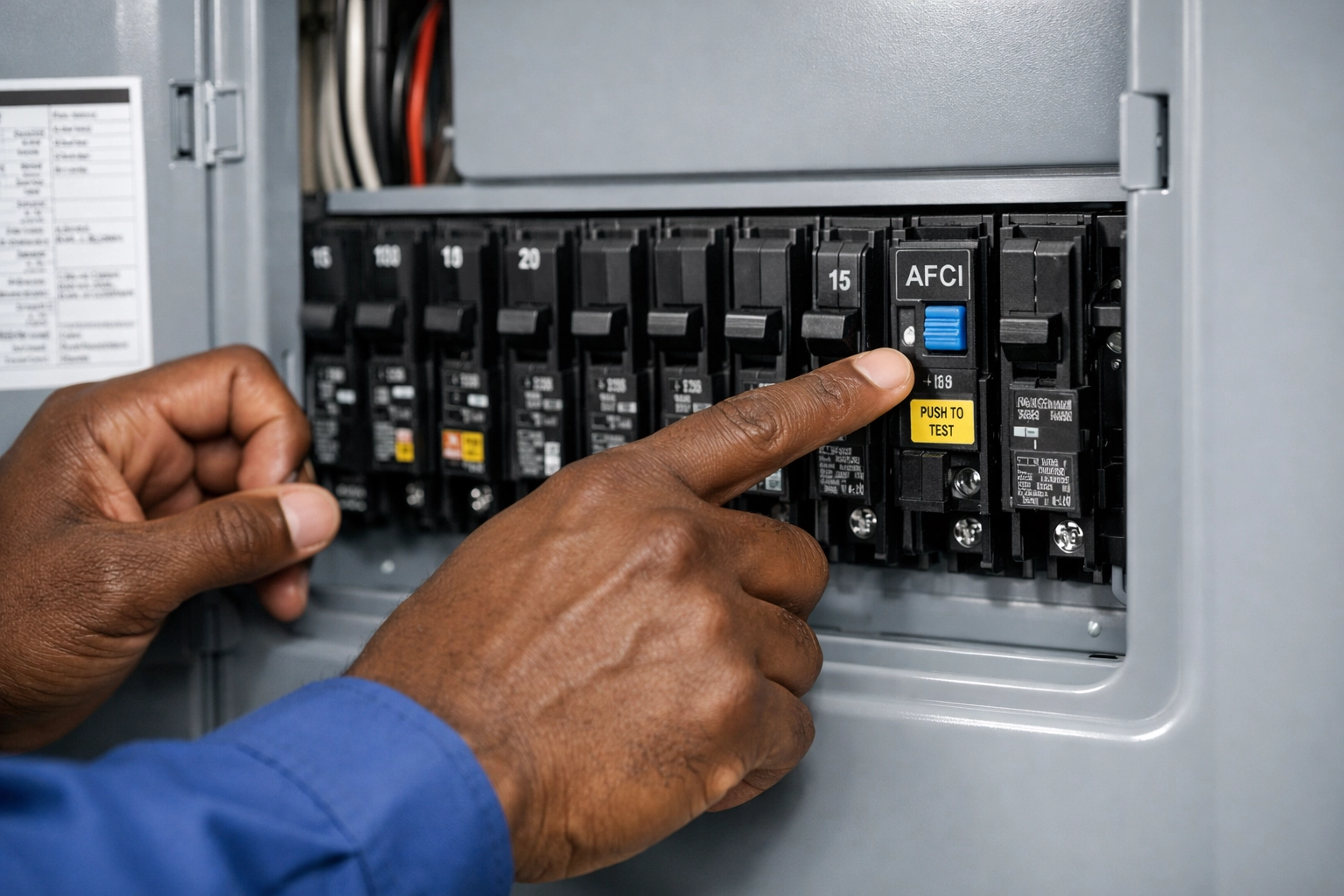
AFCI stands for Arc Fault Circuit Interrupter. These are typically found in your electrical panel as special breakers, not at the outlet. An arc fault happens when electricity jumps across a gap: maybe because of damaged wiring, a loose connection, or a cord that's been pinched behind furniture.
Here's why that matters: arc faults generate intense heat. Think about it like a tiny lightning bolt happening inside your wall. That heat can ignite insulation, wood, or other materials. AFCIs detect these dangerous arcs and shut down the circuit before a fire can start.
GFCIs prevent shock. AFCIs prevent fires. Both are essential.
Where Are These Devices Required Today?
Current electrical codes: specifically the National Electrical Code (NEC): require these protective devices in specific locations throughout your home.
GFCI Protection Is Required In:
- Bathrooms (all outlets)
- Kitchens (outlets serving countertop areas)
- Garages
- Outdoor outlets
- Laundry areas
- Crawl spaces and unfinished basements
- Pool and spa areas
Basically, anywhere moisture might be present. Water and electricity are a dangerous combination, and GFCIs are your first line of defense.
AFCI Protection Is Required In:
- Bedrooms
- Living rooms and family rooms
- Dining rooms
- Hallways and closets
- Sunrooms and recreation rooms
- Libraries, dens, and studies
- Kitchens and laundry rooms (added in 2014)
Notice the pattern? AFCIs are required in the spaces where your family spends the most time and where electrical fires would be most dangerous.
The Timeline: When Did These Requirements Start?
This is where it gets important for older homes in the Atlanta area.
GFCI requirements started appearing in the NEC back in the 1970s, but they expanded significantly over the decades. If your home was built before 1990, you likely have bathrooms and kitchens without GFCI protection.
AFCI requirements are newer:
- 2002: AFCIs became required in bedroom circuits
- 2008: Requirements expanded to living rooms, family rooms, and dining rooms
- 2014: Kitchens and laundry areas were added
So here's the reality check: if your Decatur bungalow was built in 1965, or your Lawrenceville split-level went up in 1988, these protective devices probably weren't installed during construction. That's not because anyone did anything wrong: they simply weren't required at the time.
What Does This Mean for Your Older Home?
Marcus and Tanya recently purchased a charming 1970s home in Sandy Springs. During the inspection, they learned the house had zero GFCI outlets and no AFCI protection anywhere. The inspector noted it as a safety concern but not a code violation: because older homes aren't automatically required to meet current codes.
Here's the key distinction: existing homes are typically "grandfathered in" under the codes that existed when they were built. You're not breaking any laws by having a 1980s home without AFCIs.
But here's the thing. Just because something is legal doesn't mean it's safe.
The electrical hazards that GFCIs and AFCIs protect against haven't changed. Ground faults still cause electrocution. Arc faults still cause fires. The only difference is that newer homes have better protection built in.
Most homeowners think their older home's electrical system is fine because "nothing bad has happened yet." That's understandable. But these protective devices exist specifically to prevent the first incident from becoming a tragedy.
Signs Your Older Home Needs GFCI/AFCI Upgrades
Walk through your home and check these areas:
In bathrooms and kitchens: Do you see outlets with Test/Reset buttons? If not, you likely don't have GFCI protection where you need it most.
At your electrical panel: Look at your breakers. Standard breakers just have an on/off switch. AFCI breakers have a test button and are usually labeled. If all your breakers look the same and there are no test buttons, you probably don't have AFCI protection.
Outdoors and in the garage: These outlets absolutely should have GFCI protection. If they don't, that's a priority upgrade.

The Good News: Retrofitting Is Often Straightforward
Here's something that surprises a lot of homeowners: adding GFCI and AFCI protection to an older home usually doesn't require rewiring the whole house.
For GFCI protection: A licensed electrician can often replace standard outlets with GFCI outlets in about 15-30 minutes per location. In many cases, a single GFCI outlet can protect multiple downstream outlets on the same circuit.
For AFCI protection: Your electrician can replace standard breakers with AFCI breakers in your existing panel. This provides protection for the entire circuit without touching any wiring in your walls.
The cost is reasonable: especially when you consider what you're protecting. We're talking about a few hundred dollars to significantly reduce your risk of electrical shock and fire.
Special Considerations for Atlanta-Area Homes
Older homes in Gwinnett County, Atlanta, and surrounding areas often share some common characteristics:
- Aluminum wiring (common in homes built between 1965-1973) requires special attention when installing AFCIs
- Older two-prong outlets may need additional work to add proper grounding before GFCI installation
- Fuse boxes instead of breaker panels may require a panel upgrade to accommodate AFCI breakers
A qualified electrician can assess your specific situation and recommend the best approach. Every home is different, and cookie-cutter solutions don't always work.
When Should You Prioritize These Upgrades?
Some situations call for immediate attention:
- You're doing any renovation work : This often triggers requirements to bring affected areas up to current code
- You have young children : Kids are naturally curious and more vulnerable to electrical hazards
- You've experienced any electrical issues : Flickering lights, tripped breakers, or outlets that spark are warning signs
- You're selling your home : Buyers and inspectors will note the lack of these safety devices
Even without these triggers, upgrading your protection is simply smart homeownership.
The Bottom Line
Your older Atlanta-area home has character, history, and charm. It also probably has some gaps in electrical safety protection that modern homes don't have.
GFCIs protect you from electrical shock. AFCIs protect you from electrical fires. Both are proven, affordable technologies that can be added to most older homes without major renovation.
This isn't about bringing your entire house up to 2026 codes. It's about making targeted upgrades in the areas that matter most: bathrooms, kitchens, bedrooms, and living spaces where your family spends their time.
Have questions about what your home needs? The team at Radiant Electric can evaluate your current setup and recommend practical upgrades that fit your budget and priorities. Sometimes peace of mind is just a few outlet swaps away.