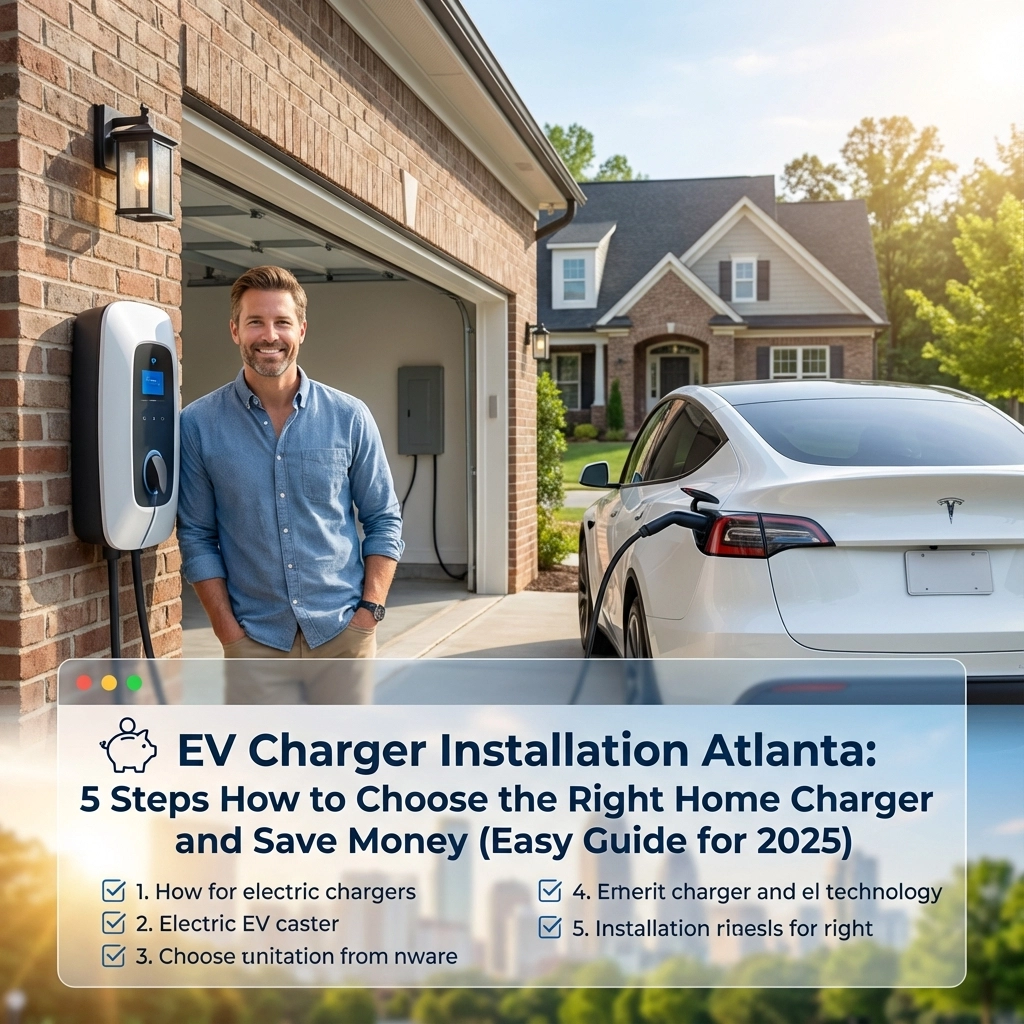
EV Charger Installation Atlanta: 5 Steps How to Choose the Right Home Charger and Save Money (Easy Guide for 2025)
If you're one of the thousands of Atlanta residents who've made the switch to electric vehicles, you're probably tired of hunting down public charging stations or dealing with super slow charging from your regular wall outlet. Trust me, you're not alone. Most EV owners realize pretty quickly that a home charging station isn't just a nice-to-have: it's practically essential.
The good news? Installing an EV charger at your Atlanta home doesn't have to break the bank or turn into a massive headache. With some smart planning and the right approach, you can get faster charging, better convenience, and actually save money in the long run.
This isn't about scaring anyone with complicated technical stuff. We're going to walk through exactly how to choose the right charger for your home and your budget, step by step.
Step 1: Check If Your Home's Electrical System Can Handle It
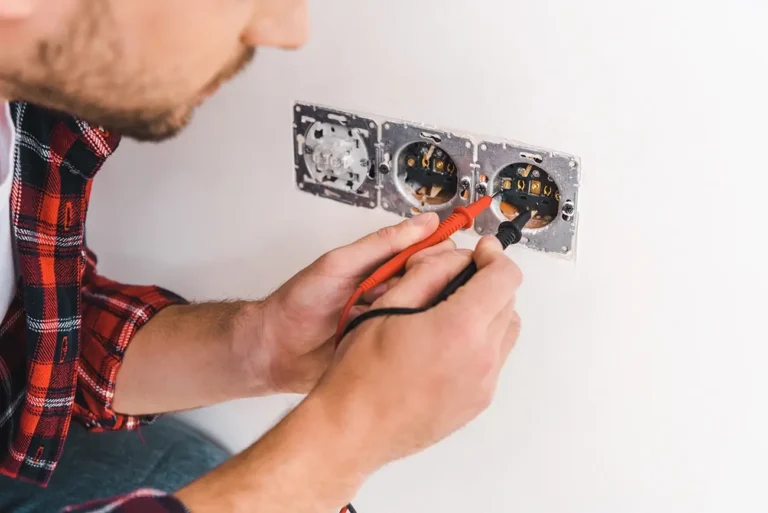
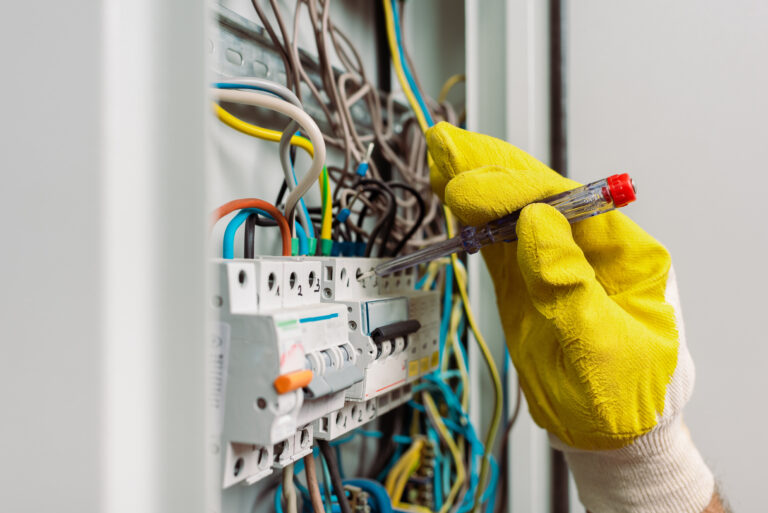
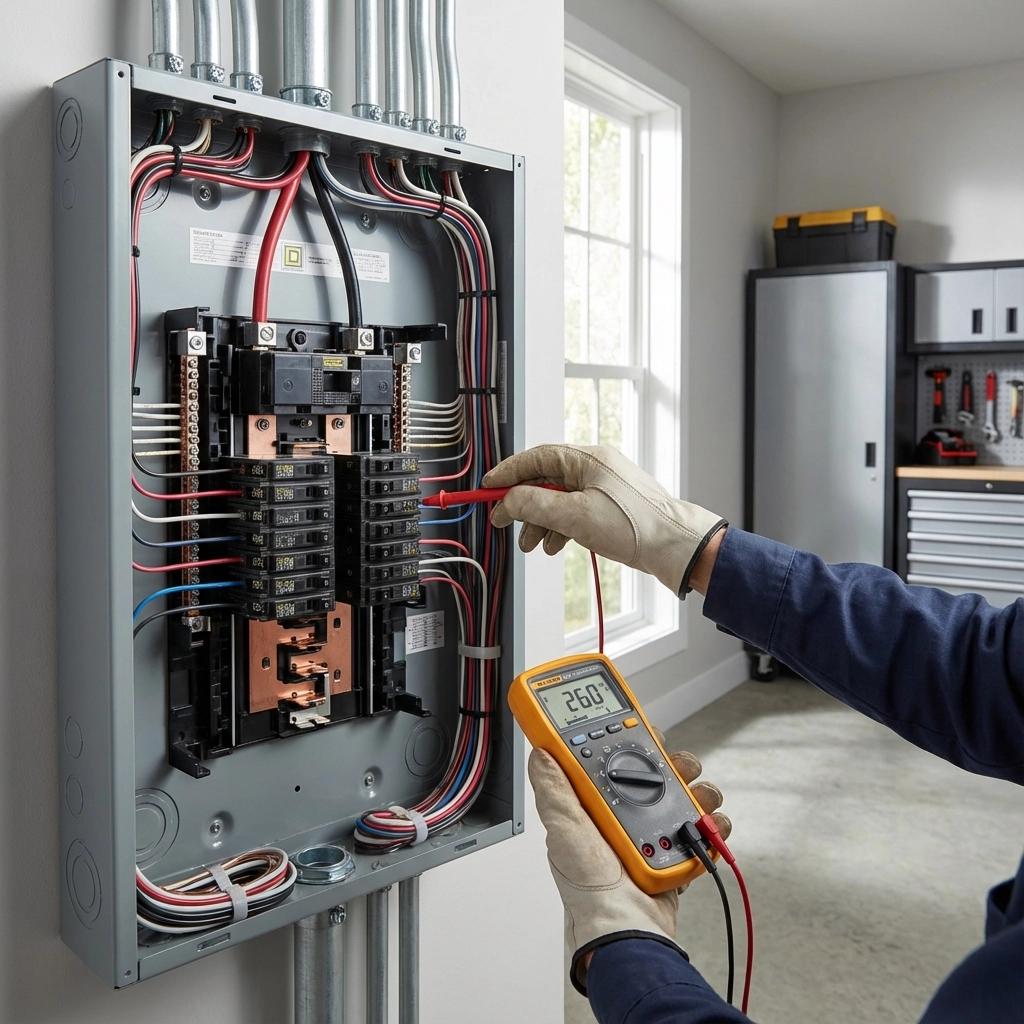
Before you get excited about any specific charger, you need to know what your house can actually support. Here's what that really means: your electrical panel (that gray box with all the circuit breakers) needs to have enough capacity to power a new charging station without overloading your system.
Most people think they can just plug any charger into any outlet, but that's not how it works with the faster charging options. A Level 2 charger: which is what you actually want for daily use: requires a dedicated 240-volt circuit, similar to what powers your dryer or electric range.
Here's the reality check: If your home was built more than 15-20 years ago, there's a decent chance you'll need some electrical upgrades. This doesn't mean your house is outdated or dangerous: it just means it wasn't designed with electric vehicles in mind.
The smart move is to have a licensed electrician assess your panel before you buy anything. They'll tell you exactly what's possible and what it'll cost. Some homes need a simple dedicated circuit (around $300-500 in additional costs), while others might need panel upgrades (which can add $1,500-3,000 to your project).
Getting this assessment first saves you from buying the wrong charger or discovering surprise costs after you've already committed.
Step 2: Choose Between Level 1 and Level 2 (Spoiler: You Want Level 2)
Let's clear up the confusion about charging levels because this decision affects everything else: your daily routine, your electric bill, and your overall satisfaction with your EV.
Level 1 charging uses your regular household outlet (120 volts). It's free to set up since you already have outlets, but it's painfully slow. We're talking 3-5 miles of range per hour of charging. For most electric vehicles, that means 20+ hours for a full charge. If you drive more than 30-40 miles per day, Level 1 charging becomes a real problem.
Level 2 charging uses 240 volts and charges 5-7 times faster than Level 1. Most EVs get a full charge in 4-8 hours with Level 2, which means you can plug in after dinner and wake up with a full battery every morning.
Here's the thing most people don't realize: Level 2 isn't just about speed: it's about flexibility. With Level 1, you're essentially tied to a very rigid charging schedule. Miss a night or drive more than usual, and you're scrambling. Level 2 gives you breathing room.
The upfront cost difference might seem significant (Level 2 requires installation while Level 1 doesn't), but when you factor in the convenience and the ability to actually use your EV like a normal car, Level 2 pays for itself pretty quickly.
Step 3: Pick the Perfect Location (It's More Important Than You Think)
Where you install your charger affects both how much you'll pay upfront and how convenient it'll be to use every day. Most homeowners either go with their garage or their driveway, and each has pros and cons.
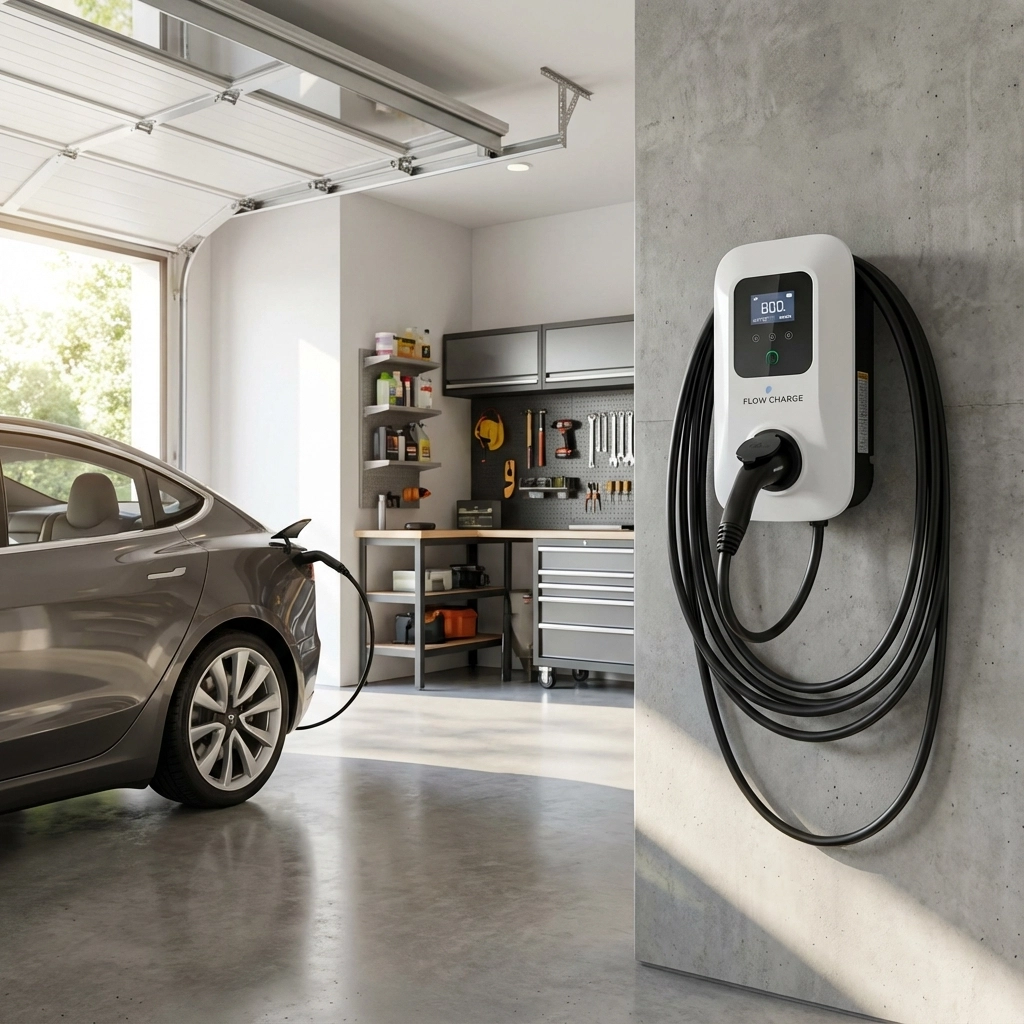
Garage installation is usually the sweet spot if you have one. Your charger stays protected from Atlanta's unpredictable weather (especially those sudden summer storms), and you're not dealing with extension cords or weather-related wear and tear. Plus, garage installations often cost less because the electrical run from your panel is usually shorter.
Driveway installation works great if you don't have a garage or if your garage is used for storage. Modern outdoor chargers are built to handle Georgia's humidity and heat, but you'll want to make sure you're getting one that's properly weather-rated.
Here's what really matters for location planning: the distance from your electrical panel to where you park. Every extra foot of distance means more wiring, more labor, and higher installation costs. If you have flexibility in where you park, choosing a spot closer to your panel can save you hundreds.
Also think about cable management. You want the charger positioned so the cable reaches your car's charging port without creating a tripping hazard across walkways or driveways.
Step 4: Decide on Smart Features (They Can Actually Save You Money)
This is where you can get smart about long-term savings. Basic EV chargers just… charge your car. Smart chargers give you control over when and how they charge, and that control translates directly into lower electric bills.
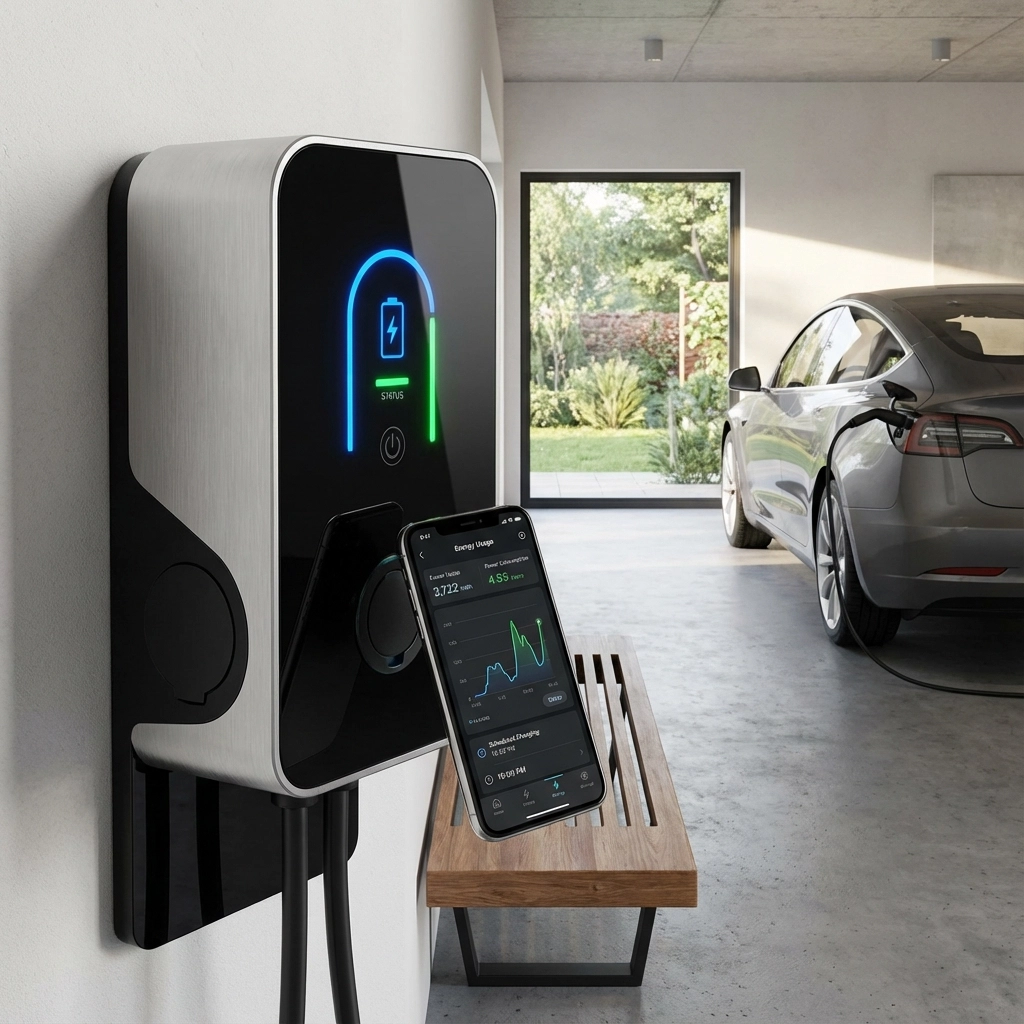
Wi-Fi connectivity lets you schedule charging during off-peak hours when electricity rates are lowest. Here in Georgia, that can mean charging for 40-50% less per kilowatt-hour during certain overnight hours compared to peak afternoon rates. Over a year, that difference adds up to real money.
Smart chargers also let you monitor your energy usage through smartphone apps. You can see exactly how much your charging costs, track your usage patterns, and even set charging limits if you want to manage your electric bill more precisely.
Load management features are especially useful if you have multiple high-power appliances. Some smart chargers can communicate with your home's electrical system to avoid overloading circuits when your AC, water heater, and other appliances are running simultaneously.
The premium for smart features typically runs $200-400 more than basic chargers, but the energy savings and convenience often justify the cost within the first year.
Step 5: Get Multiple Quotes and Verify Credentials
This step is crucial, and it's where a lot of homeowners either save money or end up overpaying. Not all electricians have experience with EV charger installations, and the quality of work can vary significantly.
What you're looking for in an installer:
- Current Georgia electrical license and proper insurance
- Specific experience with EV charger installations (ask how many they've done)
- Familiarity with local permit requirements and inspection processes
- Transparent pricing that breaks down equipment, labor, and permit costs separately
Questions to ask every potential installer:
- Do they handle permit applications and inspections for you?
- What warranty do they provide on their installation work?
- Can they install the charger model you want, or do they only work with certain brands?
- How long will the installation take from start to finish?
Getting 3-4 quotes gives you a realistic price range and helps you spot unusually high or low estimates that might indicate quality issues. Remember, the cheapest quote isn't always the best value if it means poor workmanship or shortcuts on safety.
Money-Saving Strategies That Actually Work
Buy your charger separately if possible. Many electricians mark up equipment significantly. If you can purchase the charger yourself and have them install it, you often save 20-30% on the hardware cost.
Bundle with other electrical work. If you've been considering outlet installations, panel upgrades, or other electrical projects, doing everything at once reduces overall labor costs.
Time your installation strategically. Many electrical contractors offer better rates during slower seasons (typically late fall and early winter) when demand for AC-related electrical work drops off.
Consider future needs now. If you think you might get a second EV in the next few years, installing conduit for a second charger during your initial installation costs much less than running new electrical later.
Research rebates and incentives. Georgia Power and other utilities occasionally offer rebates for residential EV charger installations. Federal tax credits may also apply depending on your specific situation.
Atlanta-Specific Considerations
Permit requirements: Most Atlanta Metro municipalities require permits for Level 2 EV charger installations. Permit fees typically run $75-150, and the inspection process usually adds 1-2 weeks to your timeline. Choose an installer who handles permits and inspections as part of their service.
Weather planning: Georgia's humidity and occasional severe weather mean outdoor installations need proper weatherproofing and surge protection. Don't skimp on weather-rated equipment if you're installing outside.
HOA considerations: If you live in a community with homeowner association rules, check their guidelines for electrical installations and exterior modifications before you start planning.
The bottom line: installing an EV charger at your Atlanta home is straightforward when you plan it right. Focus on getting your electrical assessment first, choose Level 2 charging for daily convenience, pick a location that minimizes installation costs, and work with experienced installers who handle all the permitting details.
Most homeowners spend between $800-2,200 for a complete Level 2 installation, and the convenience and potential energy savings make it one of the better investments you can make as an EV owner.
Ready to get started? Contact our team for a free assessment and quote. We'll walk through your specific situation and help you choose the right charging solution for your home and budget.