
Ceiling Fan Installation Atlanta: The Simple Trick to Cut Your Heating Bill This Winter
You know that feeling when you walk into your living room, glance at the thermostat, and realize you've cranked the heat up again? Your energy bill is climbing, but somehow the room still feels chilly at floor level while the air near the ceiling feels like a sauna.
This isn't about scaring anyone with massive utility bills, it's about sharing a surprisingly simple solution that most Atlanta homeowners don't know about.
Here's the thing: that ceiling fan you've been ignoring all winter? It might be your secret weapon for staying warm and saving money.
The Simple Trick Most Homeowners Miss
Marcus and Denise, a couple living in Gwinnett County, couldn't figure out why their heating bills kept climbing every December. Their HVAC system was only three years old. The house was well-insulated. Yet every month, the bill crept higher.
The solution wasn't a new furnace or better windows. It was flipping a tiny switch on their ceiling fan.
The trick: Run your ceiling fan in reverse (clockwise direction) during winter.
That's it. That's the simple change that can reduce your heating costs by up to 10%.
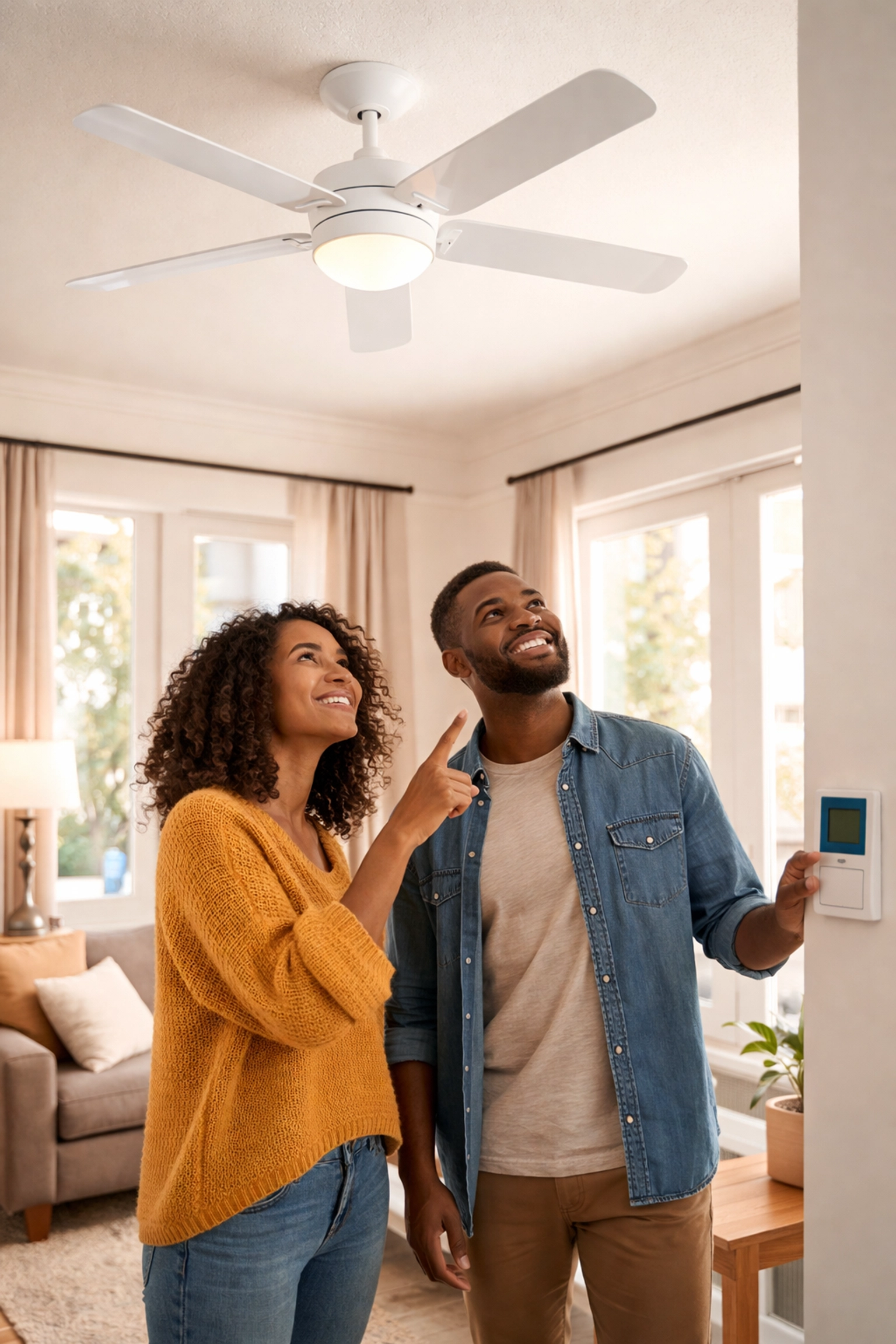
Most people think ceiling fans are strictly for summer cooling. Homeowners often believe running a fan in winter would make rooms colder. But here's what that really means when we talk about "reverse mode", instead of pushing cool air down on you, the fan gently pulls air upward, which pushes the warm air trapped at your ceiling down along the walls and back into your living space.
Why Warm Air Gets Stuck at Your Ceiling
Here's a quick science refresher that explains everything.
Warm air rises. Cold air sinks. This is basic physics, but it has real consequences for your comfort and your wallet.
Your heating system works hard to warm up your home. That heated air immediately floats up to the ceiling, sometimes 10 to 15 degrees warmer up there than at floor level where you're actually sitting. Meanwhile, your thermostat (usually mounted at eye level on a wall) reads the cooler air in the middle of the room and tells your furnace to keep running.
You're essentially paying to heat your ceiling while your feet stay cold.
The ceiling fan fix redistributes that trapped warm air throughout the entire room. The clockwise rotation creates a gentle updraft that pushes warm ceiling air down along the walls, creating a continuous circulation pattern. Your thermostat reads a warmer temperature, your furnace runs less, and you feel more comfortable.
The Real Numbers: How Much Can You Actually Save?
Running a ceiling fan costs almost nothing compared to your heating system.
- A typical ceiling fan uses 10 to 120 watts depending on size and speed
- Your furnace or heat pump uses thousands of watts per hour
- Running fans in reverse can cut heating costs by up to 10%
For a family in Atlanta spending $200 a month on winter heating, that's potentially $20 back in your pocket every month, just from flipping a switch.
Keisha, a homeowner in Snellville, was skeptical when her electrician mentioned this trick during a ceiling fan installation in Atlanta. She decided to test it out. After one billing cycle, she noticed her gas bill dropped noticeably even though December had been colder than usual.
"I thought he was just trying to sell me something," she laughed. "Turns out it actually works."

How to Set Your Ceiling Fan to Winter Mode
Every ceiling fan has a small switch, usually located on the motor housing. Here's how to find it and use it:
- Turn off the fan completely and wait for the blades to stop
- Locate the direction switch on the side of the fan motor (you may need a step stool)
- Flip the switch to reverse the blade direction
- Turn the fan back on at low speed
Important: In winter mode, you should barely feel any breeze. If you feel a strong draft, the fan is still in summer mode or running too fast. The goal is gentle air circulation, not a wind chill effect.
Not sure which direction is clockwise? Stand directly under the fan and look up. The blades should be rotating clockwise (the top of the blade moves to the right). If you're still unsure, here's an easy test: if you feel a direct breeze on your face, it's in summer mode. If you don't feel much of anything but notice the room warming up more evenly, you've got it right.
Why Professional Ceiling Fan Installation Matters in Atlanta
Here's where we need to talk about something important, especially for homes in Gwinnett County and the greater Atlanta area.
Many older Atlanta homes have wiring that wasn't designed for modern ceiling fans. The electrical boxes in the ceiling might not be rated for the weight and movement of a fan. The wiring might be outdated or incompatible with newer fan models.
A ceiling fan that's improperly installed can:
- Wobble dangerously
- Create electrical hazards
- Fall from the ceiling (yes, this happens)
- Fail to operate in both directions correctly
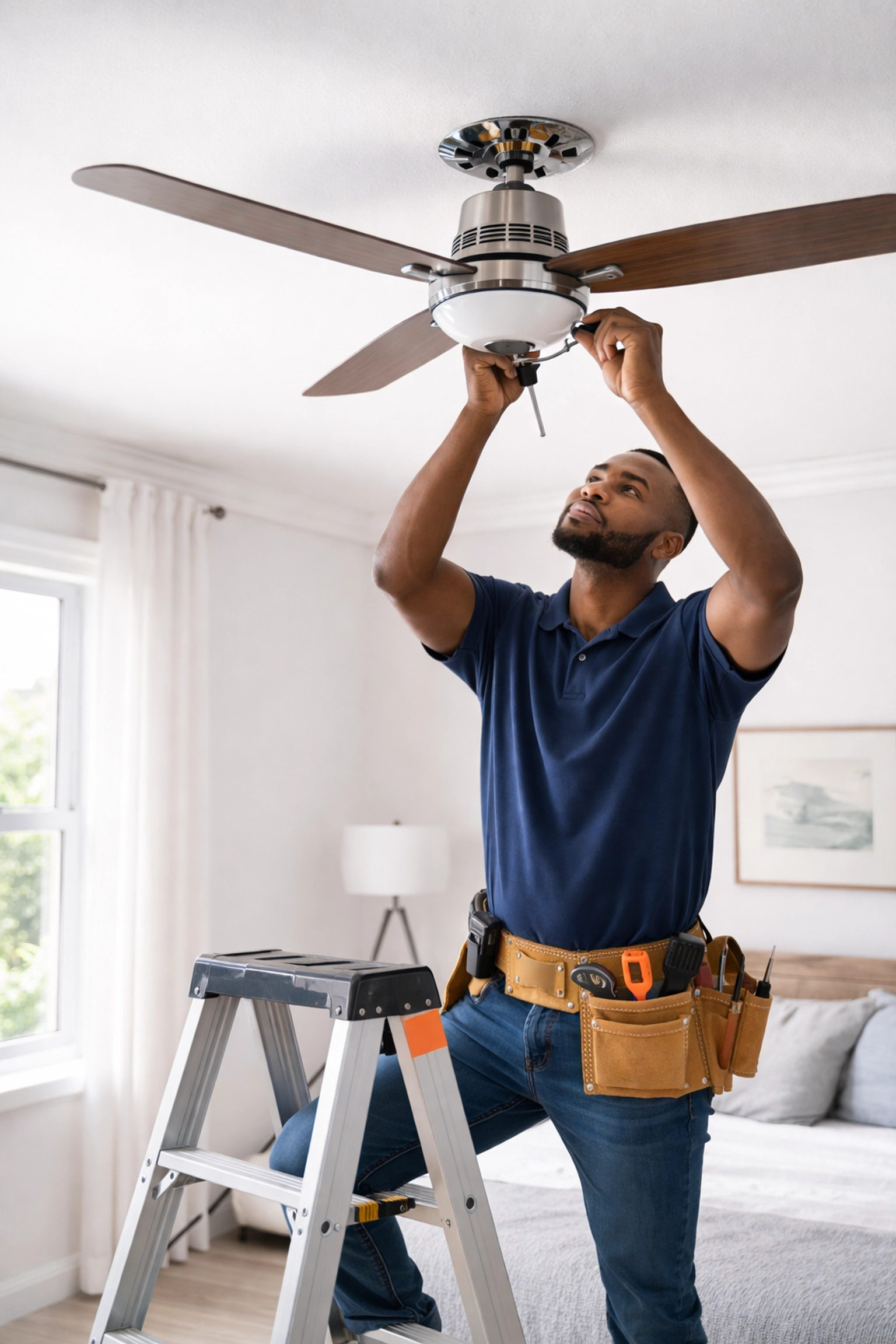
Atlanta's humid climate also creates unique challenges. Moisture can affect electrical connections over time, and a professionally installed fan will have proper sealing and secure mounting to withstand these conditions year after year.
Jerome, who recently moved into a 1980s ranch home in Duluth, learned this the hard way. He installed a ceiling fan himself, and it worked fine for about six months. Then it started wobbling. Then sparking. A call to Radiant Electric revealed that the original electrical box wasn't fan-rated and had started to pull away from the ceiling joist.
"I thought I was saving money doing it myself," Jerome said. "Ended up costing more to fix than if I'd just hired a professional from the start."
Choosing the Right Ceiling Fan for Winter Efficiency
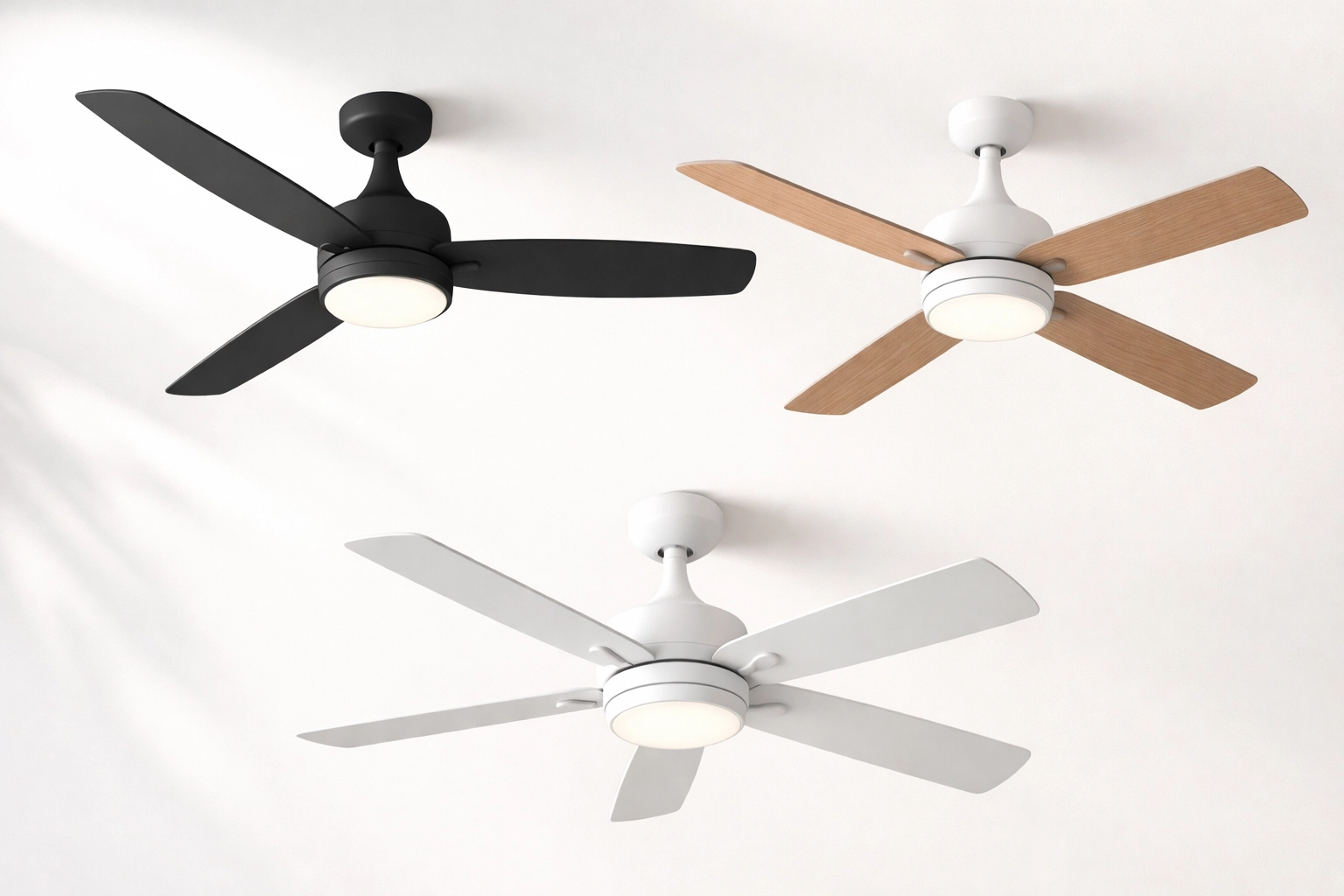
Not all ceiling fans are created equal when it comes to winter heating efficiency.
Look for these features:
- Reversible motor (most modern fans have this, but double-check)
- Multiple speed settings so you can run it on low during winter
- Appropriate blade span for your room size (52" for most bedrooms and living rooms)
- Energy Star rating for maximum efficiency
Room size guide:
| Room Size | Recommended Blade Span |
|---|---|
| Up to 75 sq ft | 29-36 inches |
| 76-144 sq ft | 36-42 inches |
| 144-225 sq ft | 44-50 inches |
| 225-400 sq ft | 50-54 inches |
| Over 400 sq ft | 54+ inches or multiple fans |
For great rooms, open floor plans, or homes with vaulted ceilings: common in newer Gwinnett County construction: you may need multiple fans or a larger industrial-style fan to effectively circulate warm air.
Additional Tips to Maximize Your Winter Savings
Using your ceiling fan correctly is just one piece of the puzzle. Here are a few more ways to keep your Atlanta home warm without breaking the bank:
- Run fans in occupied rooms only. There's no benefit to circulating air in empty rooms.
- Keep fans on the lowest speed setting. You want circulation, not a breeze.
- Lower your thermostat by 2-4 degrees. The improved air circulation will compensate.
- Check all your fans have working reverse switches. If a switch is broken, the fan won't help in winter.
- Clean your fan blades regularly. Dust buildup reduces efficiency and can throw off balance.
Ready to Start Saving on Your Heating Bill?
The bottom line is simple: if you have ceiling fans in your Atlanta home, you have an untapped tool for reducing your winter heating costs. Flip that switch to clockwise, run it on low, and let physics do the work.
If your ceiling fans are outdated, improperly installed, or you're ready to add new fans to rooms that don't have them, professional ceiling fan installation in Atlanta is an investment that pays for itself through energy savings and improved comfort.
The team at Radiant Electric serves homeowners throughout Atlanta, Gwinnett County, and surrounding areas with expert electrical services: including ceiling fan installation that's done right the first time.
Don't let another winter pass paying to heat your ceiling. That warm air belongs down where you can actually enjoy it.