Whole House Generator Atlanta: Is Your Home Ready for Georgia's Grid Strain? Here's What Experts Say
Picture this: It's the middle of a sweltering Atlanta summer, your AC just kicked off during a power outage, and you're staring at a fridge full of groceries that won't last the night. Or maybe it's a winter storm that's knocked out power to your Marietta neighborhood for the third time this year. Sound familiar?
Here's the thing: this isn't about scaring anyone. Georgia's electrical grid faces real challenges, and smart homeowners are getting ahead of the problem. Let's talk about what's actually happening with our power infrastructure and whether your home is ready for what experts are calling an inevitable strain on the system.
Georgia's Grid Reality Check
Georgia's electrical infrastructure is showing its age, and the numbers tell the story. According to the Department of Energy, 70% of U.S. transmission lines are at least 25 years old and nearing the end of their expected lifecycle. That's not just a national problem: it's happening right here in our backyard.
What that really means is more frequent outages, especially during peak demand periods like those July heat waves when everyone's cranking their AC, or during severe weather events that seem to hit Georgia harder each year.
Most people think the grid is bulletproof, but electrical engineers will tell you otherwise. The system was designed decades ago for much smaller populations and energy demands. Now we're asking it to handle everything from electric vehicle charging to smart homes packed with electronics.
Warning Signs Your Home Isn't Ready
Here are the signals that your home might struggle during the next extended outage:
Your circuit breaker trips frequently during high-demand periods. This usually means your electrical panel is already maxed out handling your normal daily load. Add the stress of switching to backup power, and you might be looking at bigger problems.
You've experienced outages lasting more than 6 hours in the past two years. If your neighborhood has a track record of extended outages, that pattern typically gets worse, not better, as infrastructure ages.
You rely on medical equipment or work from home. This isn't just about convenience anymore: it's about necessity. Remote work setups, CPAP machines, and other essential devices need reliable power.
Your home has all-electric systems. No power means no heat, no hot water, no cooking, and no way to preserve food. That's a recipe for expensive hotel bills and food replacement costs.
What Atlanta Electrical Experts Actually Recommend
We've talked to dozens of homeowners across the metro area, and here's what electrical professionals consistently recommend for Georgia homes:
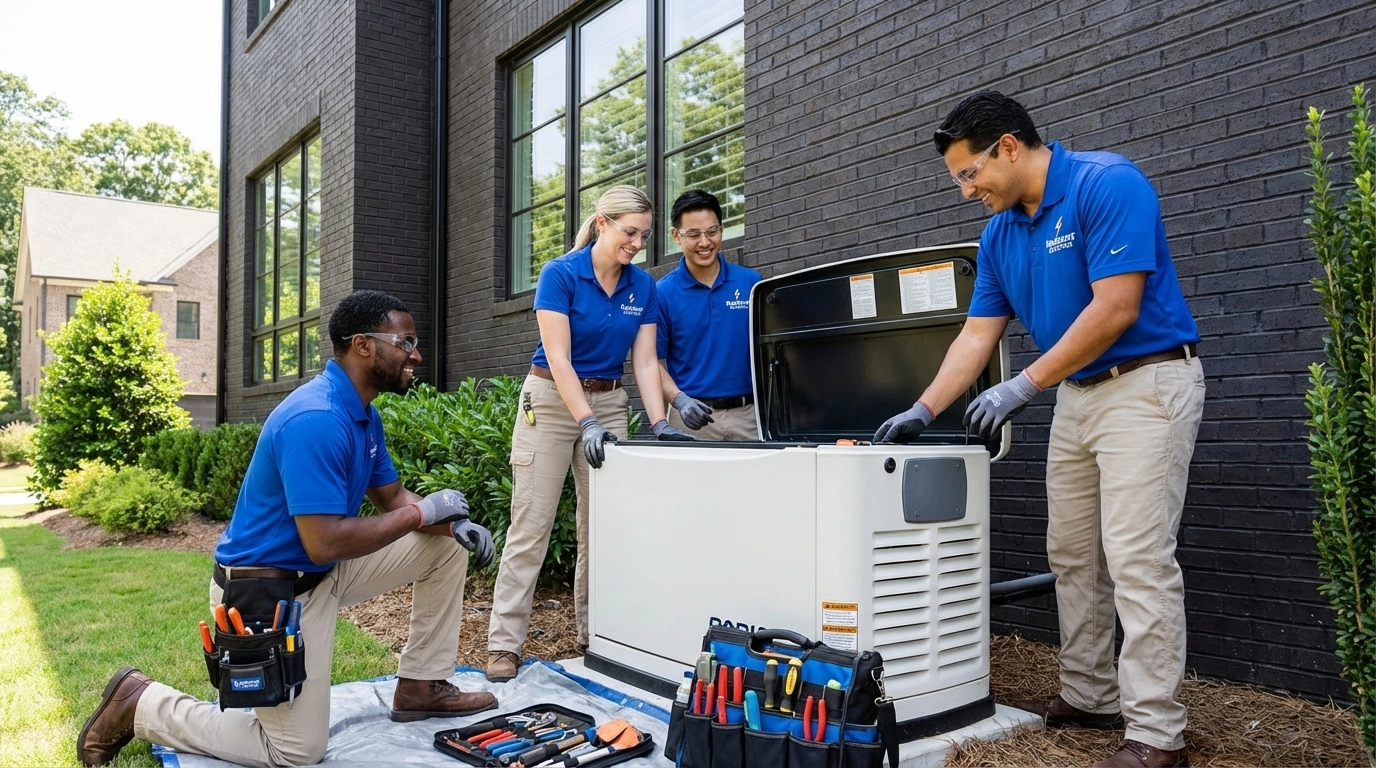
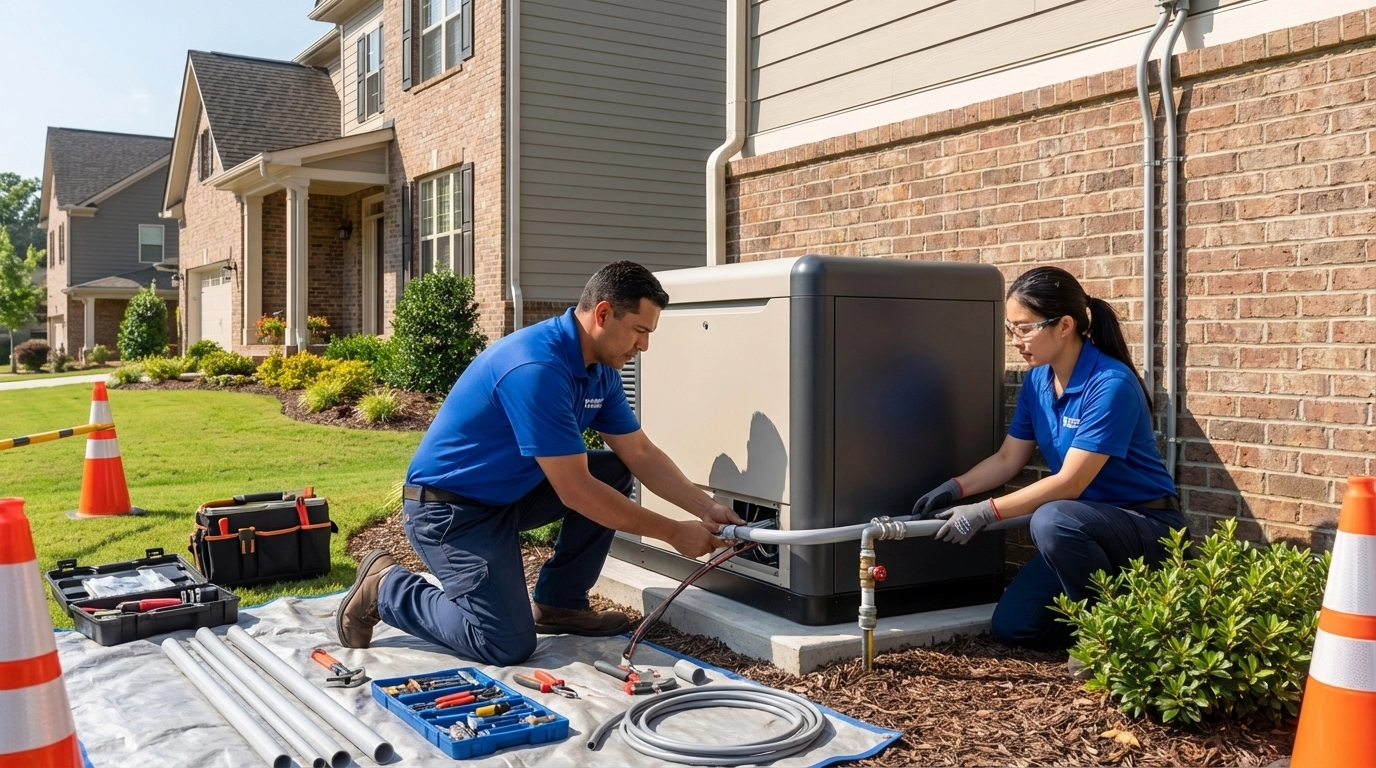
Get a whole house generator if you can swing the investment. Unlike portable generators that require you to drag them outside, set them up, and carefully manage what gets power, whole house systems kick on automatically within seconds of detecting an outage.
Size it correctly for your actual needs. Most Atlanta homes need between 14kW to 22kW of backup power. That's enough to run your essential systems: AC, refrigerator, lights, outlets: plus a few extras like your home office setup.
Don't wait until the next major storm. Installation typically takes 6-8 weeks from ordering to completion, and that timeline stretches during peak season when everyone's scrambling for backup power.
Here's what homeowners often believe: they think a small portable generator will handle their needs. The reality? Those units typically max out around 5,000-7,500 watts. Your central AC alone probably uses 3,000-5,000 watts. Add your refrigerator, some lights, and maybe your home office, and you're already maxed out.
The Real Cost Breakdown
Let's talk numbers because that's usually the first question. Most Atlanta homeowners invest between $7,000 and $15,000 for a complete whole house generator installation. Here's how that breaks down:
- Generator unit: $2,000-$7,500 depending on size and brand
- Installation labor: $3,000-$5,000 for proper electrical work and gas connections
- Permits and inspections: $100-$500 (required in most Georgia municipalities)
- Additional electrical work: $500-$2,000 if your panel needs upgrades
Before you write that off as too expensive, consider this: experts consistently point to 3-5% increases in home value after installation. A Consumer Reports study found that whole house generators can deliver up to 150% ROI depending on your location and installation costs.
But the real value isn't just financial. During the last major outage in your area, how much did you spend on:
- Hotel rooms to escape the heat or cold?
- Meals out because you couldn't cook?
- Replacing spoiled food?
- Lost productivity from working elsewhere?

Those costs add up fast, and they repeat every time the power goes out.
Popular Generator Options for Atlanta Homes
Here's what we're seeing most often in local installations:
Generac Guardian 22kW ($10,000-$14,000 installed): The most popular choice for larger homes. Runs on natural gas or propane, comes with a 5-year warranty, and handles most whole-home electrical loads.
Kohler 20RESCL ($11,000-$15,000 installed): Premium option that runs quieter than most competitors. Great if you live in a close neighborhood where noise might be an issue.
Champion 14kW ($7,000-$10,000 installed): Entry-level pricing with shorter warranty periods. Works well for smaller homes or those focusing on essential systems only.
Briggs & Stratton 20kW ($9,000-$13,000 installed): Good middle-ground option with solid reliability and competitive pricing.
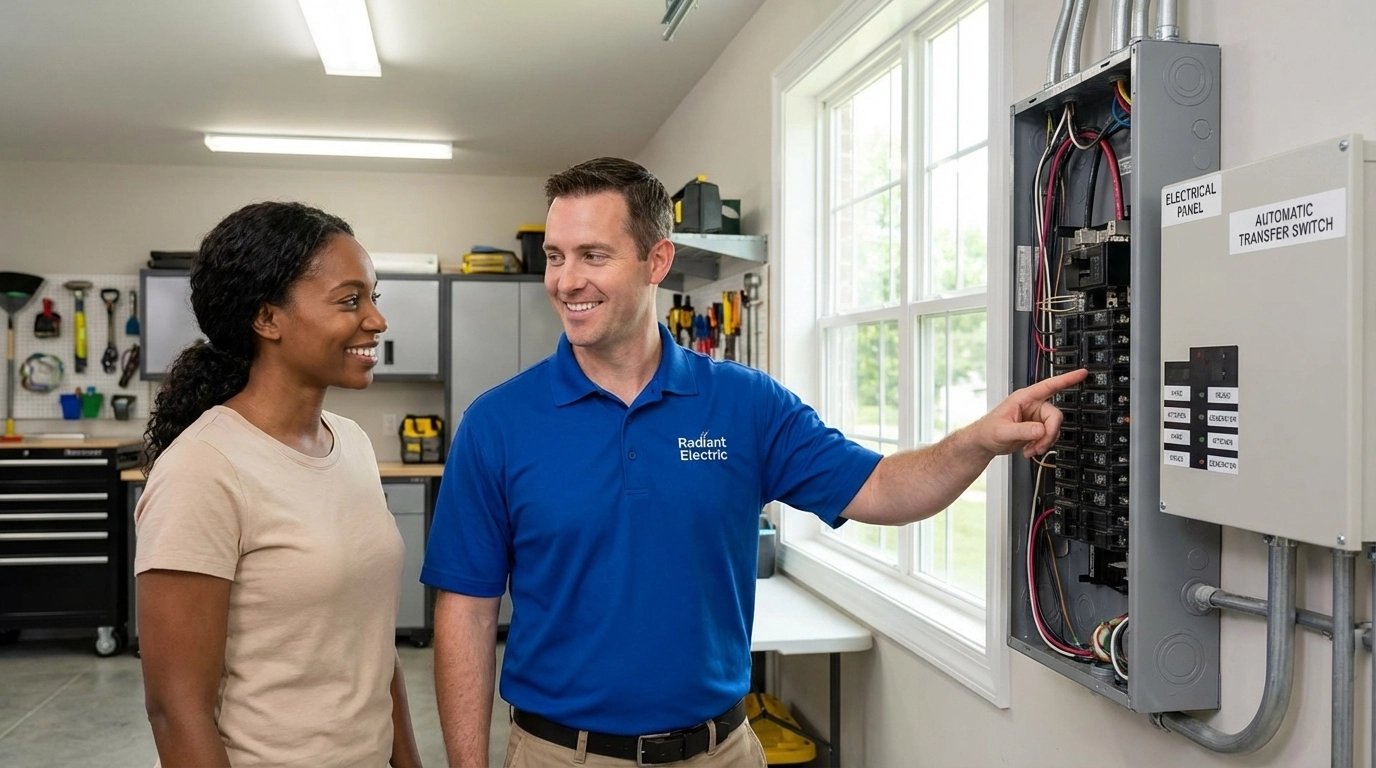
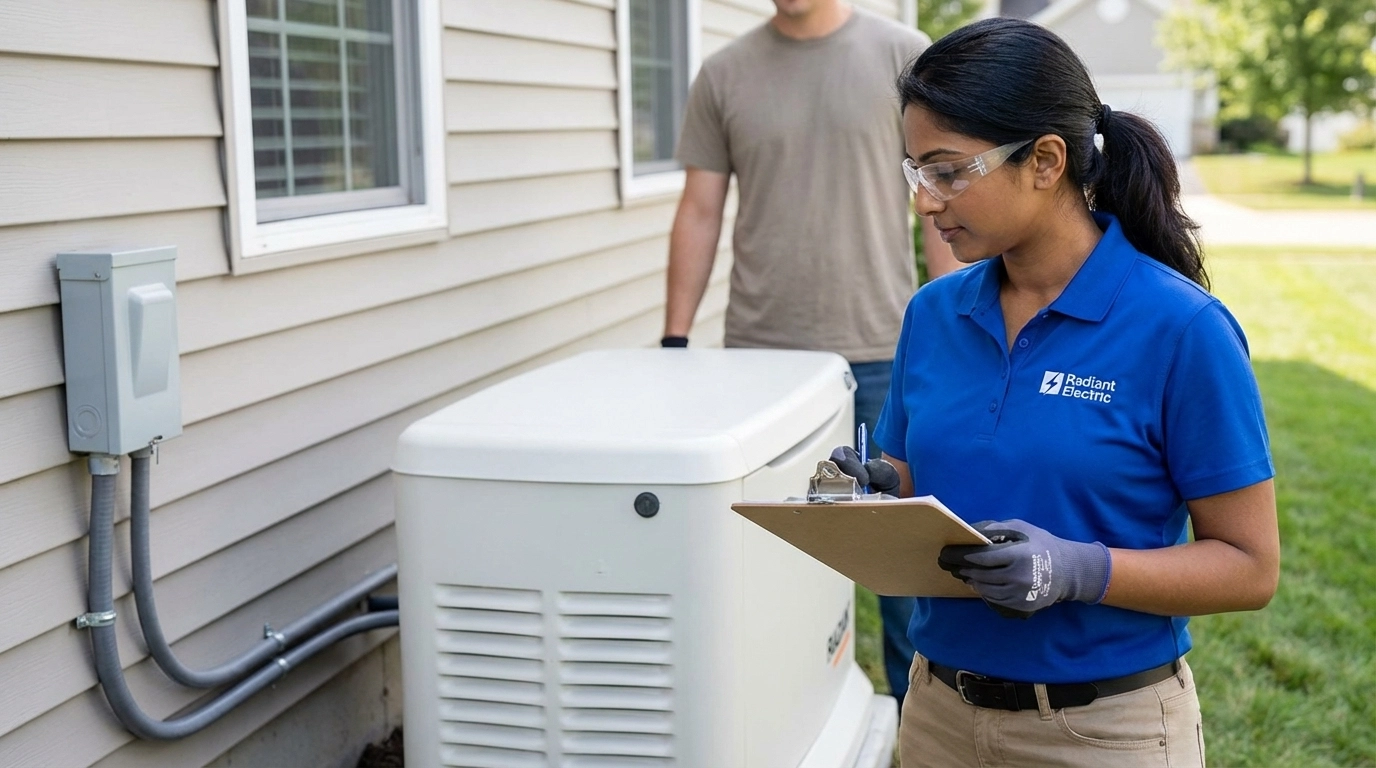
Most electrical contractors will do a free evaluation to help you size the system correctly. They'll look at your electrical panel, calculate your typical load requirements, and factor in what you absolutely need during an outage versus what would be nice to have.
Your Home Readiness Checklist
Before any installation can happen, your electrical system needs to be ready. Here's what professionals check:
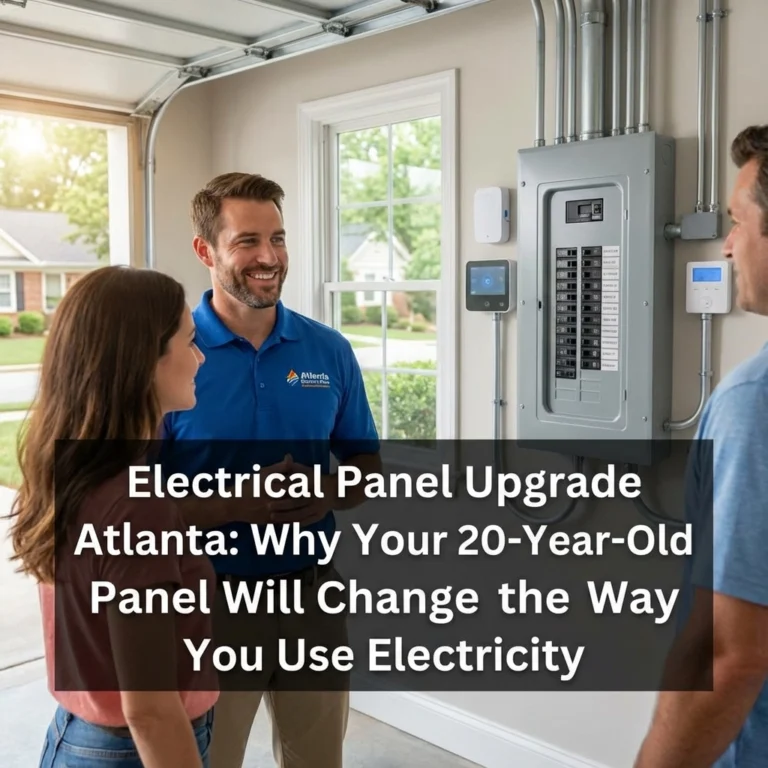
Electrical panel capacity and age. Panels older than 20 years or already running near capacity often need upgrades before adding a generator transfer switch.
Gas line availability and sizing. Natural gas generators need adequate gas supply, which might mean upgrading your meter or running new lines.
Proper placement location. Generators need to be positioned at least 5 feet from windows and air intake systems, with adequate clearance for service access.
Local permit requirements. Most Atlanta-area municipalities require permits and inspections for generator installations.
Existing electrical loads. A good contractor will evaluate what you actually need powered during outages versus your total electrical capacity.
Making the Decision That's Right for Your Home
Here's the bottom line: if you value uninterrupted comfort and can't afford to be without power for hours or days, experts overwhelmingly recommend whole house generators as worthwhile long-term investments for Georgia homes.
The decision ultimately comes down to your outage frequency, risk tolerance, and budget. But with Georgia's aging grid infrastructure and increasingly severe weather patterns, the security and peace of mind these systems provide increasingly justifies the upfront investment.
If extended power losses are rare in your specific area and budget is tight, a quality portable generator might suffice for essential needs. However, for most Atlanta homeowners dealing with the realities of our electrical grid, a whole house system offers the best combination of convenience, protection, and long-term value.
The key is getting ahead of the problem rather than scrambling for solutions after you've already experienced a multi-day outage. Because by then, you're just hoping the next storm doesn't hit before you get your backup power sorted out.
Ready to evaluate your home's readiness for Georgia's next power challenge? Radiant Electric's certified electricians provide comprehensive generator consultations and professional installations throughout the Atlanta metro area. Contact us today for a free assessment of your backup power needs and honest recommendations for your specific situation.