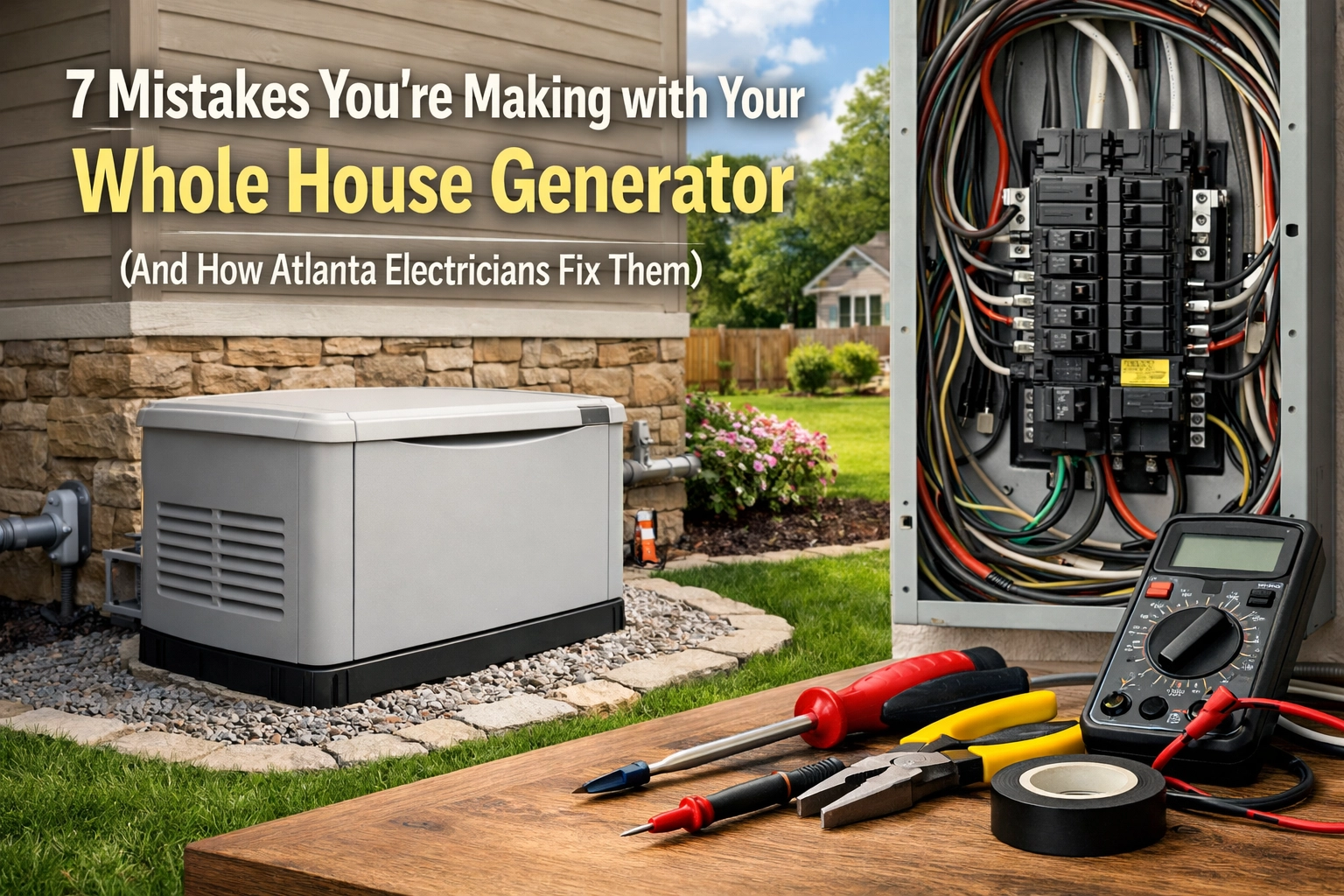
7 Mistakes You’re Making with Your Whole House Generator (And How Atlanta Electricians Fix Them)
It is 9:00 PM on a humid Tuesday night in Southwest Atlanta. The sky has turned that heavy, bruised shade of purple we all recognize right before a summer storm breaks. Suddenly, the wind picks up, a transformer pops down the street, and your entire neighborhood goes pitch black.
For many homeowners, this is the moment of truth. You spent thousands on a whole house generator in Atlanta specifically for this scenario. You wait for that reassuring hum to kick in: the sound of your lights coming back on and your AC hum returning. But instead? Silence. Or worse, a sputtering sound followed by a metallic "clunk."
If your generator fails when you need it most, it usually isn’t because the machine is "broken." Most of the time, it’s because of a common mistake made during installation or planning. This post isn’t about scaring anyone or making you feel like you’ve made a bad investment. It’s about education. At Radiant Electric, we believe a well-informed homeowner is a safe homeowner.
Here is what most people get wrong about their backup power systems, and how professional Atlanta electricians ensure your home stays bright when the rest of the block is in the dark.
1. Choosing the Wrong "Size" for Your Home's Needs
Most homeowners believe that if they buy a "large" generator, it will automatically cover everything. Others try to save a few dollars by getting the smallest unit possible. Both approaches lead to the same result: a system that fails under pressure.
When we talk about "size" in the generator world, we aren’t talking about the physical dimensions of the unit. We are talking about kilowatts (kW): the amount of electrical power the unit can produce.
Consider the story of a family over in Cascade Heights. They installed a 14kW unit thinking it was plenty. However, they didn't account for "startup surge." When their central air conditioning kicked on at the same time as their refrigerator and water heater, the generator stalled.
The Signal: Your generator starts, but as soon as a major appliance turns on, the whole system shuts down or the lights flicker aggressively.
The Fix: Professional electricians perform a detailed "load calculation." We look at the running wattage of your appliances and, more importantly, the surge wattage required to get motors spinning. This ensures your whole house generator in Atlanta is perfectly matched to your lifestyle.
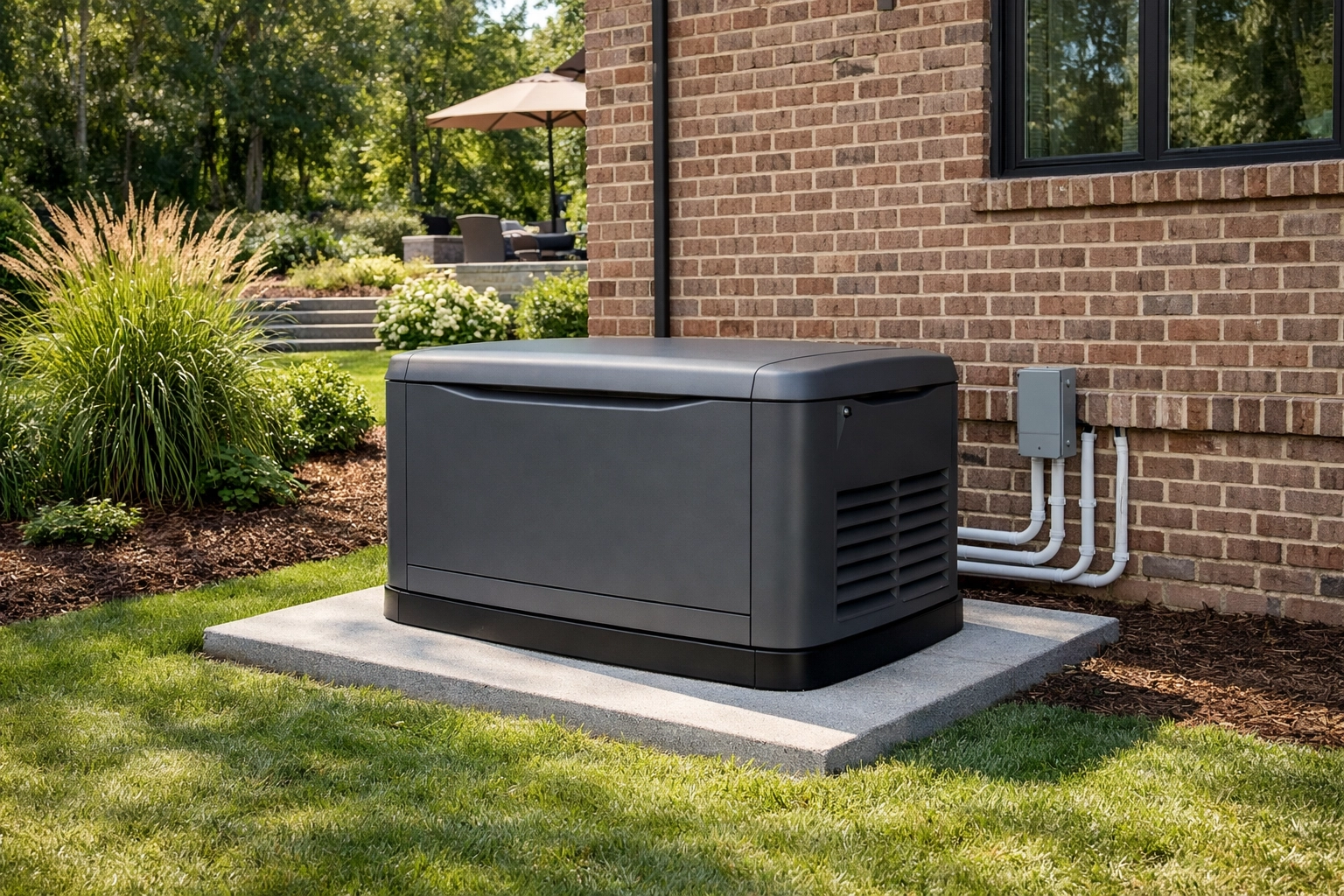
Caption: A close-up of a high-capacity whole house generator unit installed on a level concrete pad with proper clearance.
2. Placing the Unit Too Close to the House
This is perhaps the most dangerous mistake we see. A generator is essentially a large engine. Like your car, it produces exhaust. If a generator is placed too close to windows, doors, or vents, carbon monoxide (CO) can seep into your living spaces.
Most people think, "I'll just put it under the porch to keep it dry." In reality, that traps the heat and the fumes.
The Signal: Your CO detectors go off while the generator is running, or you notice a faint smell of exhaust inside your home.
The Fix: We follow strict distance requirements. Typically, a unit must be at least 5 to 10 feet away from any openings in the house (windows, doors, vents). We also ensure the exhaust is pointed away from the structure. It’s about creating a "safety zone" that allows the engine to breathe without putting your family at risk.
3. Using Undersized Fuel Lines
Imagine trying to run a marathon while breathing through a cocktail straw. That is exactly what happens to a generator when the gas lines are too small.
Whole house generators usually run on natural gas or liquid propane. These machines require a high volume of fuel to maintain a steady speed. If the pipe bringing gas to the unit is too narrow, or if the gas regulator isn't rated for the demand, the engine will "starve."
The Signal: The generator "hunts" or "surges" (the engine speed goes up and down) or it simply won't start when the weather gets cold.
The Fix: We coordinate with gas plumbers or handle the sizing ourselves to ensure the fuel line diameter matches the manufacturer's spec for the distance of the run. A 22kW generator needs a lot more "juice" than a gas grill.
4. Skipping the Transfer Switch (The "Backfeeding" Danger)
Some homeowners try to save money by "backfeeding" their home: plugging a generator into a dryer outlet or another 240V plug to power the house. This is incredibly dangerous and illegal.
When you backfeed, the power doesn't just go into your house; it goes back out through your meter and into the utility lines on the street. This can electrocute utility workers who are trying to fix the power lines, thinking they are dead.
The Signal: Aside from being a major fire hazard, backfeeding is often indicated by hot wires or melted outlets.
The Fix: We install a dedicated Automatic Transfer Switch (ATS). Here’s what that really means: it acts like a traffic cop. When the grid goes down, the ATS physically disconnects your home from the street before it allows the generator to send power to your panel. It’s the only safe way to manage backup power. You can learn more about safe electrical setups on our blog.
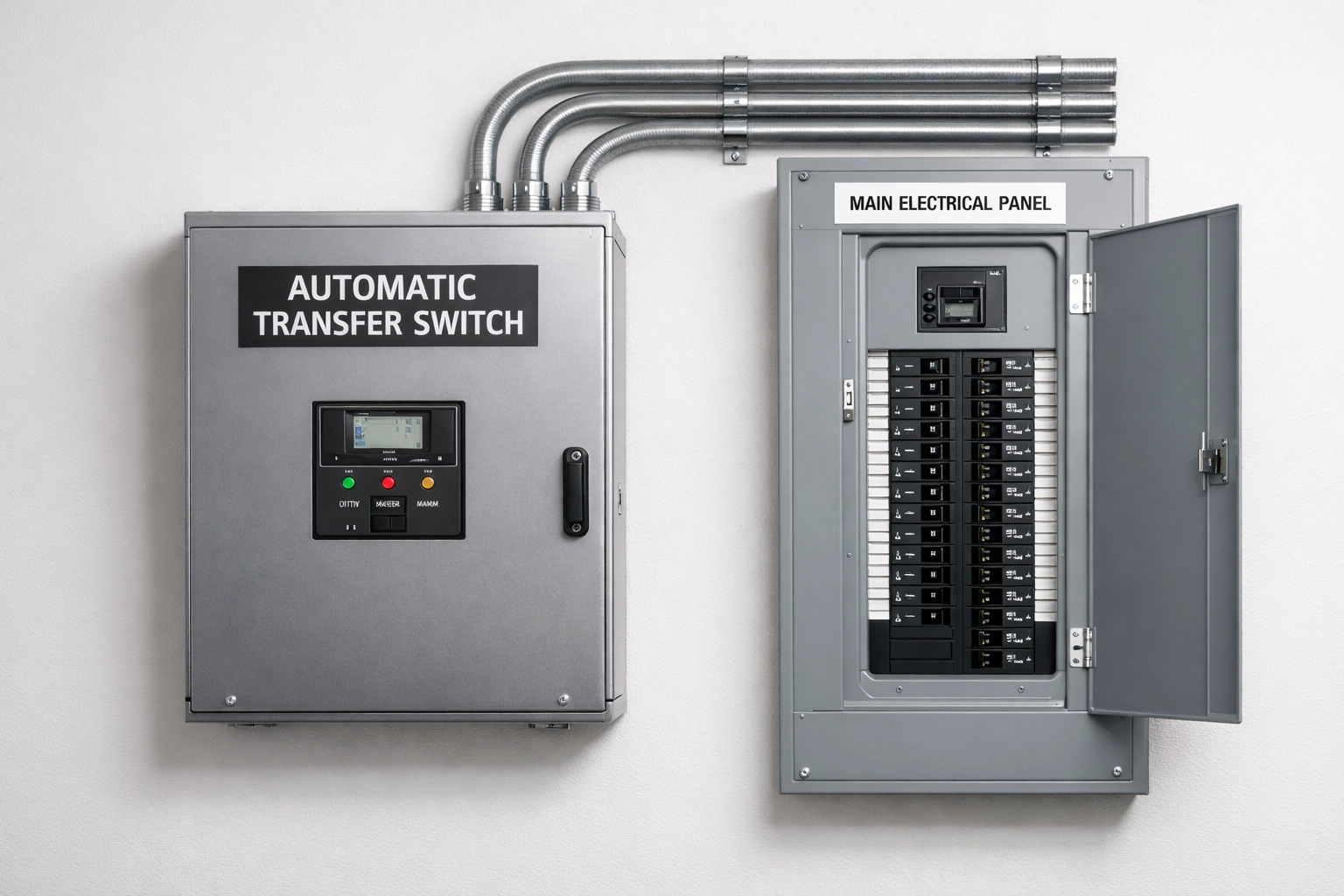
Caption: A professional installation of an automatic transfer switch mounted next to a main electrical panel.
5. Ignoring Local Atlanta Codes and Permits
It is a common misconception that because you own the land, you can install whatever equipment you want. In reality, Atlanta has specific building and electrical codes that must be met. These codes cover everything from the thickness of the concrete pad to the type of wiring used.
Skipping the permit process might save you a few hundred dollars today, but it will cost you thousands later. If there is ever a fire or an electrical issue, and the insurance company finds out the generator wasn't permitted or inspected, they may deny your claim.
The Signal: You receive a "Notice of Violation" from the city, or your home fails a dynamic inspection during a sale.
The Fix: At Radiant Electric, we handle the paperwork. We ensure the installation meets the 2026 Georgia Electrical Code standards, protecting both your safety and your property value.
6. The "Set It and Forget It" Mentality (Maintenance)
A generator is a machine with oil, filters, and a battery. Most people assume that because it's "automatic," it will always be ready. However, dead batteries account for over 50% of all generator failures.
Think of it like a car that sits in the garage for six months. If you don't start it or maintain the battery, it likely won't turn over when you finally need to drive it.
The Signal: The "Exercise" light on your unit is flashing red, or the unit makes a clicking sound but won't start during its weekly self-test.
The Fix: Regular maintenance is key. This includes:
- Checking oil levels and changing the filter annually.
- Testing the battery voltage.
- Clearing debris (leaves and spider webs) from the intake vents.
- Verifying the software/firmware is up to date.
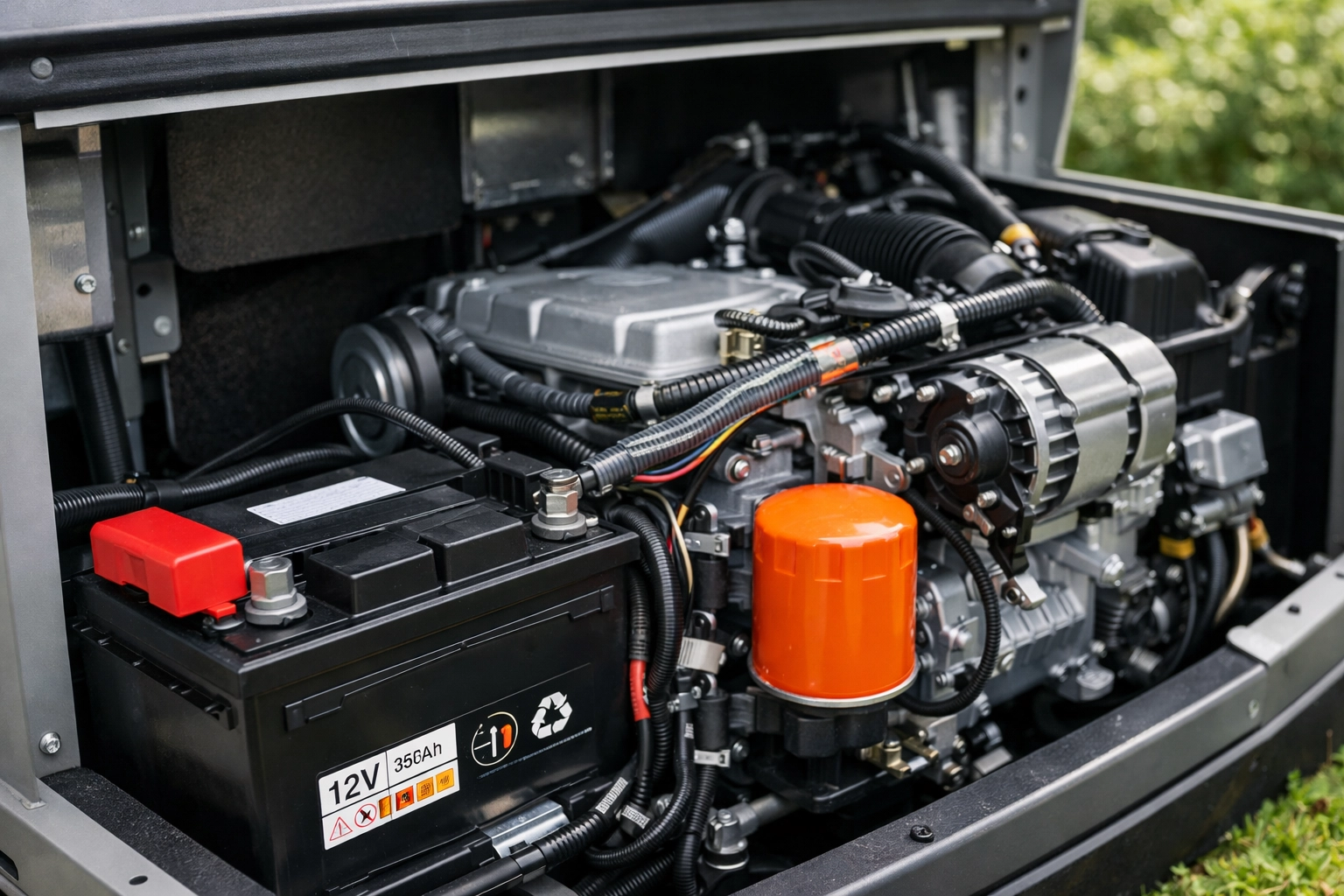
Caption: The interior components of a generator during a routine maintenance check, showing the battery and oil filter.
7. The DIY Trap
We love a good DIY project, but a whole house generator in Atlanta is not the place to "figure it out as you go." Installing a generator involves high-voltage electricity, explosive gas lines, and structural requirements.
One small mistake: like using the wrong gauge of wire or failing to ground the unit properly: can lead to a house fire. Wires heating up because they are too small is like a stovetop coil getting red hot; eventually, something is going to ignite.
The Signal: You notice a "burning" smell near the unit or your breakers are constantly tripping for no apparent reason.
The Fix: Hire a licensed, insured electrician. We have the specialized tools to test the system under load and ensure every connection is torqued to the exact manufacturer specification.
Understanding the "Why" Behind the Warning
When we tell you that your generator needs a specific clearance or a certain size gas regulator, it’s not about making the job more expensive. It’s about reliability.
In Atlanta, we deal with everything from ice storms that snap pine limbs to summer thunderstorms that knock out power for days. Your generator is your home's "life support" during those times. If the installation is flawed, the machine becomes a liability rather than an asset.
Quick Checklist for Atlanta Homeowners:
- Location: Is it 5+ feet from windows?
- Fuel: Is the gas line properly sized for peak demand?
- Safety: Do you have a professional transfer switch?
- Compliance: Was it inspected by the city?
- Upkeep: Has the battery been tested in the last 6 months?
Final Thoughts
A whole house generator is one of the best investments you can make for your home’s resilience. By avoiding these seven common mistakes, you ensure that your investment actually provides the peace of mind you paid for.
Don't wait for the next storm to find out if your system was installed correctly. If you have concerns about your current setup or are looking to install a new whole house generator in Atlanta, reach out to a professional who knows the local codes and the unique needs of Georgia homes.
Takeaway: Proper installation and regular maintenance turn a "backup plan" into a "guarantee."
For more tips on keeping your home's electrical system in top shape, check out our full list of services or read more on our blog. Stay safe, stay powered!