How Old Wiring Creates Hidden Safety Risks in Your Home
Most homeowners never think about the wiring behind their walls. You flip a switch, the lights turn on, an outlet powers your phone charger, and everything seems fine. Because electrical systems usually work quietly for decades, it’s easy to assume they’ll work forever. But wiring ages just like everything else in a home. And the older it gets, the more unpredictable—and dangerous—it can become.
Wiring doesn’t announce that it’s deteriorating. It doesn’t leak, sag, or discolor in a way you can see. Instead, it breaks down in silence, hidden behind drywall, insulation, and framing. Most homeowners don’t discover the condition of their wiring until something goes wrong: flickering, burning smells, tripped breakers, or heat marks on outlets. By the time those symptoms appear, the wiring has usually been failing for years.
This is why understanding the risks of old wiring matters. It’s not about fear. It’s about awareness. It’s about knowing how wiring behaves over time and recognizing warning signs before they escalate. It’s about protecting your home from problems that begin invisibly but end dramatically.
Let’s take a deep look at how wiring ages, why older wiring systems fail, and what homeowners can do to keep their electrical systems safe and reliable.
Why Older Wiring Isn’t Equipped for Modern Power Demands
Most homes built before the 1990s were designed for a very different lifestyle. Back then, a typical home had a few lamps, a TV, a stereo, maybe a microwave, and a couple of kitchen appliances. Computers weren’t common. Chargers didn’t exist. Air fryers, gaming systems, smart speakers, home offices, and dozens of high-powered devices weren’t part of anyone’s daily life.
Today, even a modest home pulls more power than a large home did thirty years ago.
Modern power demands include:
- multiple large appliances
- high-wattage HVAC systems
- smart home devices
- entertainment setups
- LED lighting systems
- EV chargers
- space heaters
- computers and network equipment
Older wiring simply wasn’t built for this load. It handles it—until it doesn’t.
As more devices plug in, the wiring heats up more often and more intensely. Over time, insulation breaks down, connections loosen, and circuits become strained. That strain shows up in ways homeowners usually overlook: dimming, tripping breakers, faint buzzing, outlets that feel warm, and lights that flicker when appliances turn on.
These aren’t quirks. They’re warnings.
The Hidden Risks of Wiring Installed Decades Ago
Wiring doesn’t fail dramatically at first. It fails quietly, in stages. The insulation becomes brittle. The copper inside begins to oxidize. Screw terminals loosen as metal expands and contracts through seasons. Wire coatings dry out, crack, or peel. Junction boxes become crowded with connections that no longer sit tightly. All of this happens without a single visible sign until something pushes the wiring beyond its limit.
Here are some of the most common types of older wiring and the risks they bring.
Cloth-Covered Wiring (Common in Homes Built Before the 1960s)
Cloth wiring is exactly what it sounds like: electrical conductors wrapped in fabric insulation instead of modern plastic. When it was installed, it was considered state-of-the-art. But cloth insulation does not age well.
Over time, cloth dries out and becomes fragile. It flakes apart, exposing the wire underneath. Exposed wire can arc against metal boxes, framing, or other wires. It only takes one spark in the wrong place for ignition to occur.
Cloth wiring also lacks grounding, which means it cannot safely redirect electrical faults.
Many homeowners with cloth wiring have no idea it exists until an electrician opens a wall or attic. By then, the insulation often looks like old lint—crumbled and unsafe.
Aluminum Wiring (A Major Fire Risk in Homes Built in the 60s–70s)
In the 1960s and 70s, copper prices skyrocketed. Builders turned to aluminum wiring as a cheaper alternative. Unfortunately, aluminum behaves differently than copper—it expands and contracts at a much higher rate, and it oxidizes when exposed to air.
That expansion and contraction loosen the screws that hold wiring in place at outlets and switches. Loose wiring causes arcing. Arcing creates heat. Heat damages insulation. Damaged insulation increases arcing—which can eventually ignite.
The scariest part is that aluminum wiring can be present for decades without showing outward symptoms. A single loose connection hidden behind an outlet plate can cause temperatures to rise each time the circuit is used.
Many house fires reported as “electrical” in older homes can be traced back to aluminum wiring failures.
Knob and Tube Wiring (Found in Very Old Homes)
Knob and tube wiring is one of the oldest electrical systems used in residential homes. It consists of ceramic knobs and tubes that hold wires in place. When it was installed, it was considered safe. Today, it’s extremely outdated.
The biggest risks include:
- no grounding
- loose open-air wire routing
- fabric insulation that deteriorates
- splices made outside of electrical boxes
- difficulty handling today’s electrical load
Knob and tube wiring wasn’t built for modern appliances. Even if it hasn’t failed yet, the way households use electricity today places stress on the system that it was never intended to carry.
Insurance companies often refuse coverage for homes with active knob and tube wiring because the risk is too great.
How Age Affects Wiring Performance Over Time
Every time electricity flows through a wire, it generates heat. Over decades, this heating and cooling cycle causes metal fatigue. As the wire expands and contracts, it loosens the screws and connectors meant to hold it firmly in place.
Loose connections are one of the most common—and most dangerous—electrical issues in older homes. When electricity encounters a loose connection, it jumps across the gap, creating tiny electrical arcs. You won’t hear them. You won’t see them. But they generate intense heat.
A single arc can reach thousands of degrees.
That’s why electrical fires in older homes often start silently and without warning.
The wiring doesn’t need to be overloaded to fail. It only needs one compromised connection to become a hazard.
Signs Your Home’s Wiring Is Aging or Failing
Most homeowners assume wiring lasts forever. But just like plumbing, roofing, or HVAC equipment, wiring wears out. The signs are easy to miss if you’re not looking for them. Electrical systems try to warn you before something serious happens, but the warnings are subtle.
Here are the behaviors that commonly appear when wiring is past its safe lifespan:
Lights flickering when appliances turn on.
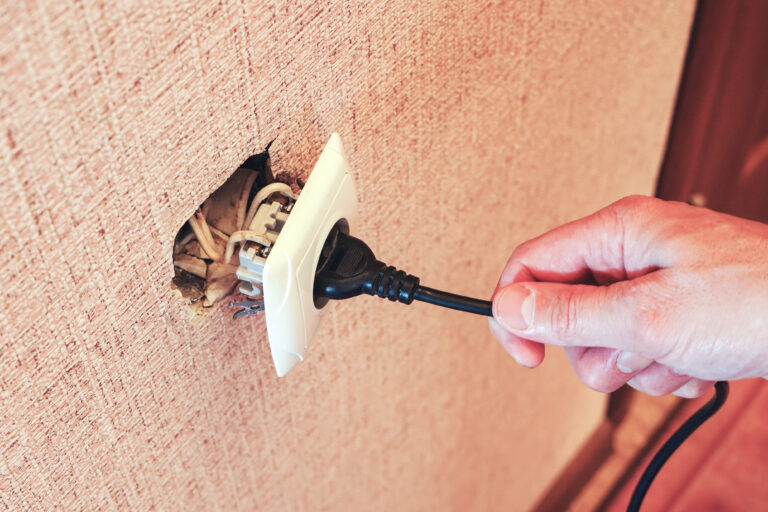
Outlets that feel warm.
Burning smells near switches or outlets.
Frequent breaker trips.
Outlets that spark when plugging something in.
Buzzing or crackling noises behind walls.
Discolored outlet covers.
Breaker panels warm to the touch.
None of these symptoms are “normal.” They indicate wiring that is loose, overloaded, deteriorated, or unsafe.
Older Wiring and Modern Appliances Don’t Mix Well
Modern appliances are highly sensitive. They contain circuit boards, control modules, processors, sensors, and digital components that older appliances didn’t have. These parts rely on stable voltage. Old wiring struggles to maintain that stability.
When wiring becomes unstable, it sends voltage spikes or drops through the circuit. Those fluctuations wear down appliances and cause premature failure.
That sudden “my refrigerator died out of nowhere” moment often has a cause.
So does the “my AC keeps blowing fuses.”
So does the “my lights burn out faster than they should.”
Old wiring doesn’t always fail dramatically. Most of the time, it kills appliances quietly over years before finally showing itself.
The Role of the Electrical Panel in Older Homes
Older wiring rarely travels alone—it usually comes with an aging electrical panel. Panels installed in the 70s, 80s, or 90s were never designed for today’s electrical loads. Breakers from that era weaken over time, and panel components degrade.
When breakers become unreliable, they may fail to trip during dangerous conditions. That silence places the wiring under even more stress.
Upgrading a panel isn’t just about adding capacity. It’s about restoring the safety backbone of the entire home. If old wiring and old breakers are working together, the risk increases significantly.
Why Rewiring Is Not Just a Safety Upgrade — It’s a Modern Necessity
Rewiring a home used to be considered a “major renovation project” that homeowners avoided unless they were forced into it. Today, it’s increasingly seen as a necessary update—just like replacing a failing HVAC system or updating plumbing.
Rewiring protects the home from electrical fires, stabilizes voltage, supports modern appliances, and reduces the risk of costly repairs down the line. It is one of the few home improvements that directly increases safety while also improving everyday function.
A properly rewired home runs smoother. Lights stop flickering. Breakers stop tripping. Outlets stay cool. Appliances last longer. The entire system becomes more predictable and efficient.
How Radiant Electric Evaluates Old Wiring Safely and Thoroughly
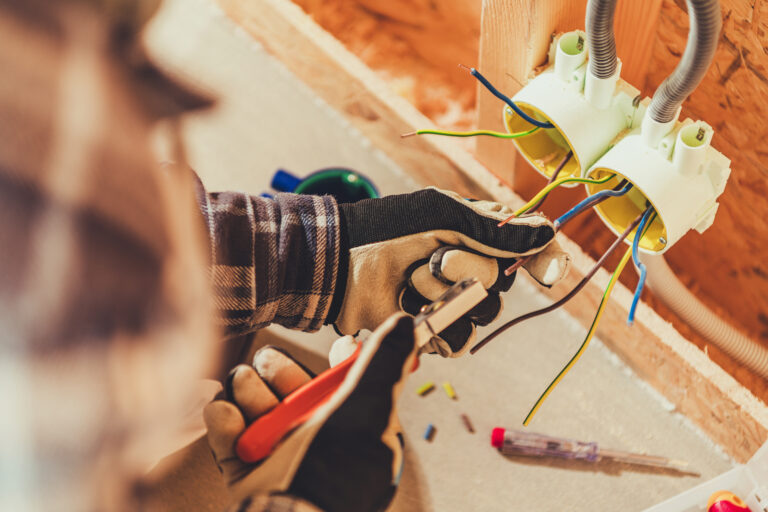
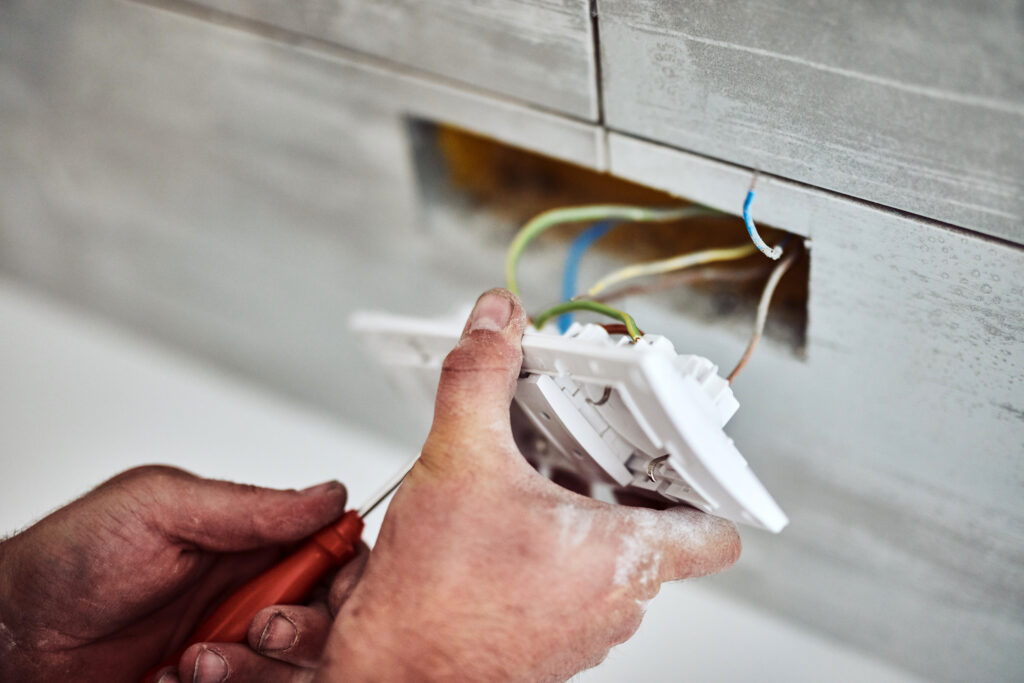
Diagnosing the condition of old wiring isn’t guesswork. It requires opening panels, checking outlets, testing circuits, inspecting connections, and evaluating the grounding system. A proper assessment looks at not just the wiring, but how the entire electrical system is interacting.
Radiant Electric identifies risks early, explains the findings clearly, and guides homeowners through the safest solutions—whether that means repairing specific circuits, upgrading the panel, or performing a whole-home rewire.
The goal isn’t just to fix a symptom. It’s to correct the problem behind it so the home remains safe for years to come.
Old Wiring Is Not Something to Ignore
A home can look modern on the outside and still hide decades-old wiring behind its walls. Age doesn’t improve wiring. It weakens it. And weakened wiring doesn’t always fail loudly. It often fails quietly, gradually, and unnoticed.
Understanding the risks allows homeowners to make informed decisions before they experience an emergency. If your home shows signs of aging wiring, or if you simply don’t know what type of wiring you have, it’s time for a professional evaluation.
Electrical safety starts with awareness—and old wiring is one of the most important parts of the home to keep an eye on. Radiant Electric is here to help homeowners identify risks early and restore the safety and reliability of their electrical systems.